Crepey Neck Skin: Why It Happens and What Actually Works
The neck ages faster than your face — here's the science behind why, and the treatments with real evidence behind them
Why Your Neck Shows Age Before Your Face Does
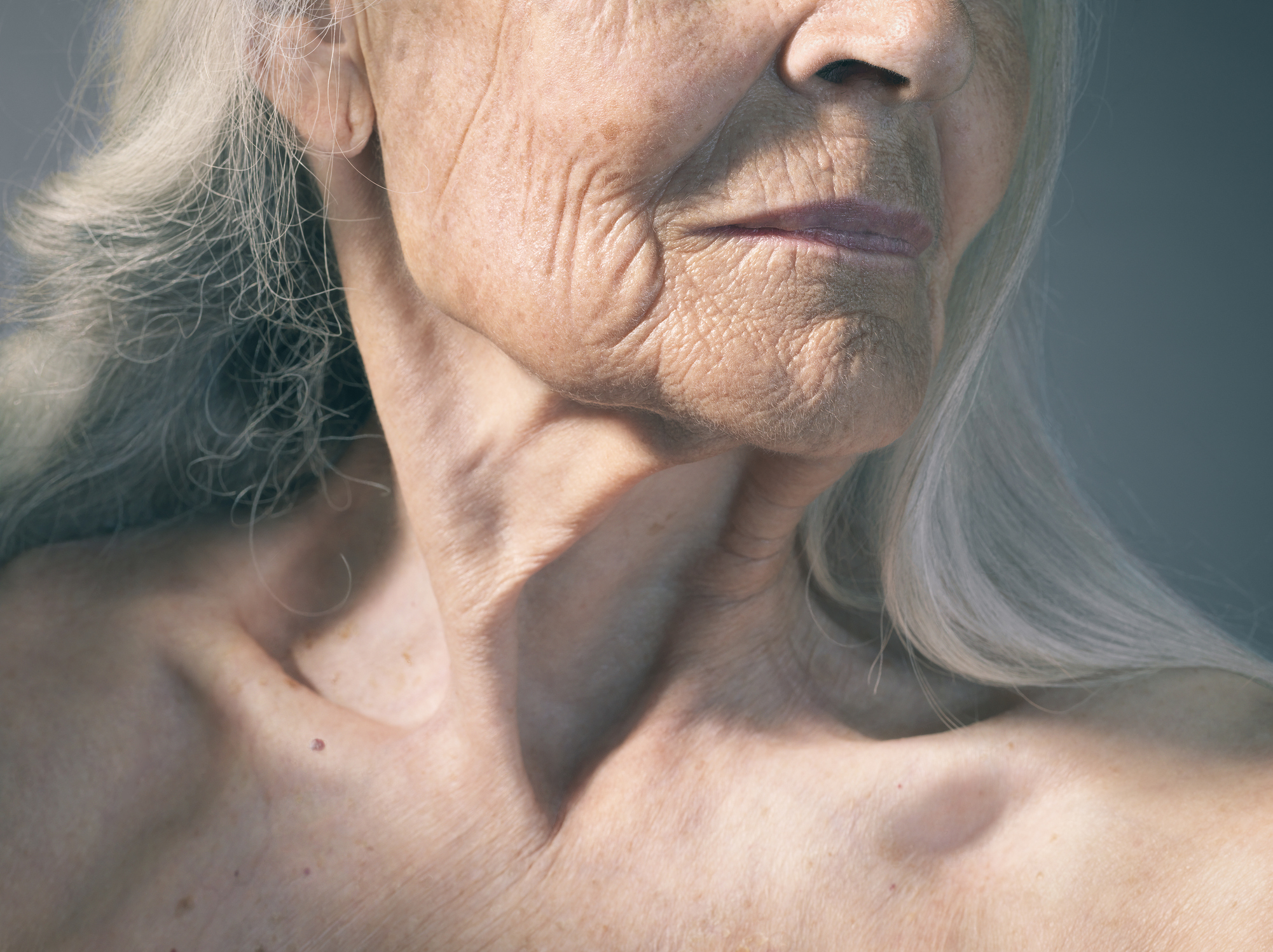
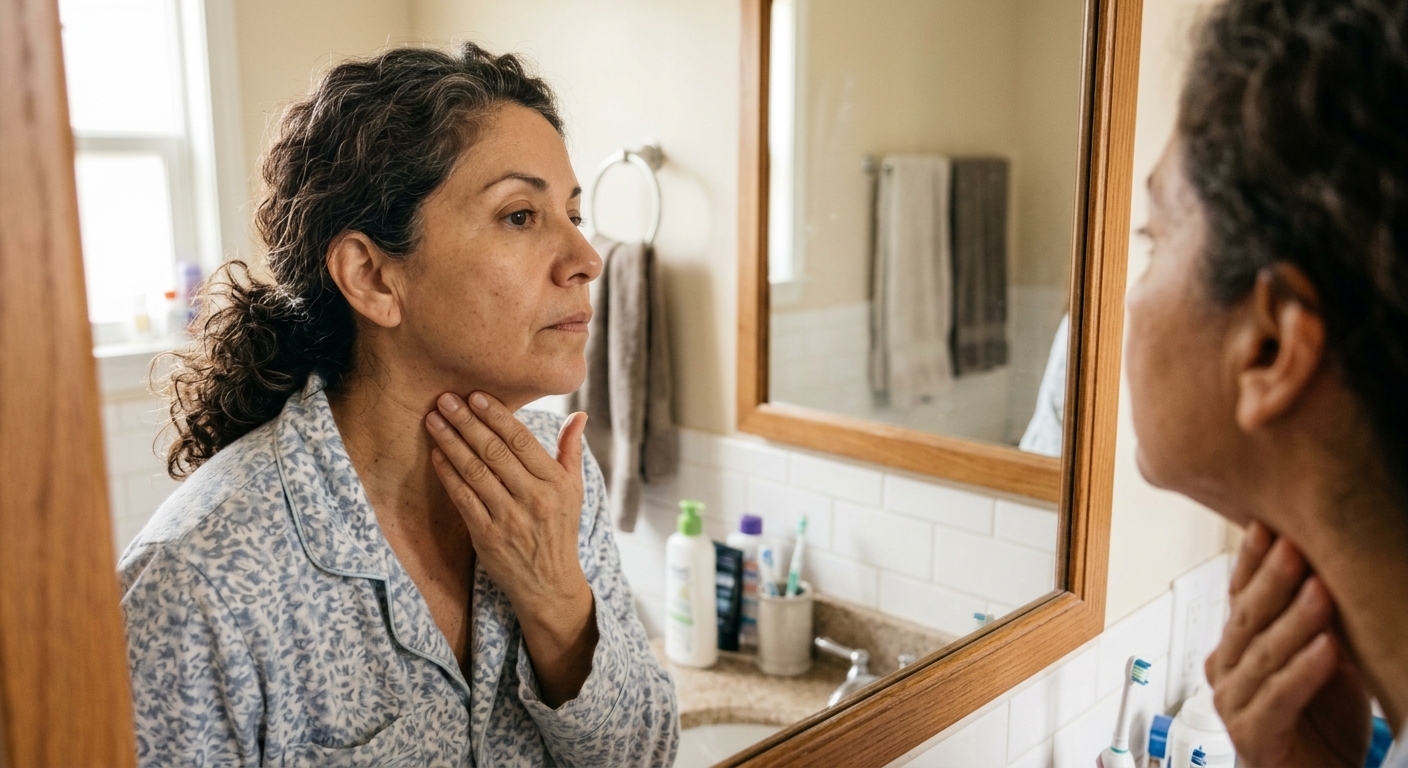
Look at a fifty-year-old’s face, then look at her neck. There’s often a striking mismatch. The face, diligently moisturized and SPF-treated for years, holds up reasonably well. The neck, largely ignored in the skincare routine, tells a different story: thin, crepey skin with fine paper-like wrinkling that responds to every movement.
This isn’t a coincidence. The neck ages faster than the face, and for reasons that are entirely predictable once you understand the anatomy.
The anterior neck has a measurably thinner dermis than facial skin — particularly than cheek skin, which is supported by fat compartments and a denser sebaceous gland network. Sebum forms the acid mantle that retards water loss and provides partial UV protection. The neck, with far fewer sebaceous glands, has a weaker skin barrier, higher transepidermal water loss, and less inherent UV shielding. Then compound that with the fact that most people apply sunscreen religiously to the face while completely skipping the neck — a site receiving nearly as much annual solar irradiance.
The mechanical toll is also unique. No other skin surface executes as many complex movements — flexion, rotation, extension — repeated hundreds of times per day. Those movements fold skin at predictable anatomical crease lines. When the underlying collagen scaffold is intact, the skin springs back. When it isn’t, the folds deepen into permanent horizontal lines.
What’s Actually Happening in the Dermis
Crepey skin — that distinctive thin, finely wrinkled texture that resembles crepe paper — is the clinical signature of severe dermal collagen and elastin loss. To understand how to treat it, you need to understand the mechanism.
The dermis is approximately 70–80% collagen by dry weight, mostly type I fibrils arranged in a dense, organized scaffold that gives skin its tensile strength and volume. With age, this scaffold is dismantled from two directions simultaneously: production falls and destruction rises.
Varani et al. (2006) showed that dermal fibroblasts from elderly subjects produced 32% less type I procollagen than fibroblasts from young subjects — and identified why [2]. Fibroblasts require mechanical tension from the collagen matrix they sit within to function optimally. As collagen degrades, fibroblasts lose their structural tether, become physically smaller, and produce even less collagen. It’s a degenerative feedback loop.
Meanwhile, matrix metalloproteinases (MMPs) — the enzymes that degrade collagen — are chronically elevated in aged skin. Quan and Fisher (2015) documented that MMP-1, MMP-3, and MMP-9 remain constitutively upregulated in aging dermis, while TGF-β receptor II expression — the signaling pathway that drives new collagen synthesis — simultaneously declines by approximately 59% [3]. The breakdown machinery stays running; the building machinery shuts down.
Elastin undergoes parallel deterioration. Shin et al. (2019) detail how MMP-12, activated by UV radiation and intrinsic aging processes, selectively degrades elastin fibers [5]. At chronically sun-exposed sites like the neck, a secondary process called solar elastosis replaces functional elastin with dysfunctional, disorganized material. The visible result: skin that no longer snaps back after movement, hanging loosely and folding into crepey wrinkling instead.
The dermis is approximately 70–80% collagen by dry weight, mostly type I fibrils arranged in a dense, organized scaffold that gives skin its tensile strength and volume.
The Treatments with Real Evidence
Retinoids: The Gold Standard
Retinol and its prescription-strength counterpart tretinoin work by binding retinoic acid receptors in keratinocytes and fibroblasts, triggering a cascade that upregulates procollagen gene expression and simultaneously suppresses MMP activity. This directly addresses both arms of the collagen-destruction feedback loop.
The clinical evidence is substantial. Griffiths et al. (1993) published a landmark double-blind RCT in the New England Journal of Medicine: patients treated with 0.1% tretinoin for 10–12 months showed an 80% increase in type I collagen formation compared to a 14% decrease with vehicle [1]. For neck skin specifically — which is thinner and more sensitive than facial skin — Kafi et al. (2007) demonstrated that OTC-strength 0.4% retinol applied to body skin in elderly subjects for 24 weeks significantly improved fine wrinkling, increased type I procollagen staining, and elevated glycosaminoglycan expression [4]. Non-prescription retinol stimulates collagen through the same mechanism as prescription tretinoin; it simply requires conversion to active retinoic acid in the skin, which takes longer.
For additional reading on retinol specifically formulated for neck skin and the distinctions between crepey texture and turkey neck (which involves platysmal muscle changes), our dedicated guides provide deeper context.
Microfocused Ultrasound (HIFU)
For significant laxity and crepiness, in-office microfocused ultrasound is the most evidence-backed non-surgical option. It works differently from topicals: focused ultrasound energy creates discrete thermal injury zones in the deep dermis and SMAS layer without disrupting the epidermis, triggering a wound-healing response that drives new collagen and elastin production over three to six months.
Oh et al. (2023) elucidated the molecular mechanism: HIFU treatment decreased Caveolin-1 levels, increased ERK1/2 phosphorylation, and suppressed p53 activity in aged fibroblasts — effectively reactivating the collagen-synthetic capacity of aging cells while reducing MMP-1 expression [6]. The FDA has specifically cleared Ulthera for neck and submental tissue lifting. The neck requires careful parameter adjustment due to its thinner dermis, so practitioner experience matters significantly.
The Delivery Problem with Conventional Retinol
Retinol’s efficacy is undisputed. The challenge is getting it to work on neck skin — thin, barrier-compromised, and reactive — without the irritation that derails consistent use. Conventional retinol formulations achieve dermal penetration partly through chemicals that transiently disrupt the stratum corneum. On facial skin, this produces the familiar retinol purging: peeling, redness, sensitivity. On neck skin with its weaker baseline barrier, these irritation effects are amplified. Many people abandon retinol before it has time to produce the structural collagen changes clinical trials document at four to twelve weeks.
Nanoretinol addresses this directly. Biomimetic lipid nanoparticles encapsulate the retinol molecule and carry it through the skin barrier via the same mechanism skin cells use to exchange materials — without chemical disruption. Clinical data from North Biomedical shows Nanoretinol was 232% more effective in collagen recovery and 73% more effective in elastin recovery versus conventional retinol, with significantly reduced cytotoxicity. For neck skin in particular, where the barrier is thinner and more reactive, the gentler delivery mechanism makes sustained use far more feasible than conventional formulas allow.
Applied nightly to the neck and décolletage, starting with three nights per week before building to nightly use, nanoparticle-delivered retinol provides the collagen-stimulating mechanism of retinoids without the barrier disruption that typically derails neck skincare routines.
Non-prescription retinol stimulates collagen through the same mechanism as prescription tretinoin; it simply requires conversion to active retinoic acid in the skin, which takes longer.
For comparison with similar body areas, see our guides on crepey skin on the arms and how to tighten loose skin.
What Won’t Work
No topical product will restore the structural collagen lost to decades of photodamage and intrinsic aging in one bottle. Creams containing collagen as an ingredient cannot penetrate the dermis — the collagen molecule is far too large to pass through the skin barrier and functions only as a surface humectant.
Firming creams that temporarily tighten the skin via film-forming polymers or astringents produce an immediate visible effect that reverses within hours. They are not building anything structurally.
The treatments that produce durable structural improvement — retinoids, HIFU, fractional laser — all work by triggering the skin’s own collagen synthesis machinery. That machinery is the target. Products that bypass it and claim equivalent results are providing moisturization, not collagen restoration.
Building a Neck Routine That Works
The neck routine should mirror the face routine, not lag behind it by years. At minimum:
SPF daily, applied to the full neck and décolletage every morning. This prevents the ongoing UV-driven MMP activity that is accelerating the collagen loss you are trying to reverse.
Retinol nightly, starting two to three times per week and building tolerance gradually before moving to nightly use.
Barrier support, with a ceramide-containing moisturizer applied morning and night to the neck. Thin-skinned, low-sebum neck skin benefits substantially from the lipid replenishment that ceramides provide.
If crepiness is already pronounced, a consultation for microfocused ultrasound addresses structural laxity that topicals alone cannot fully reverse. But retinol, applied consistently for six months or more, produces measurable collagen increases that slow and partially reverse the progression.
The neck rarely needs expensive specialist intervention to improve. It mostly needs to stop being ignored.
References
-
Griffiths CE, Russman AN, Majmudar G, Singer RS, Hamilton TA, Voorhees JJ. “Restoration of collagen formation in photodamaged human skin by tretinoin (retinoic acid).” New England Journal of Medicine. 1993;329(8):530–535. doi:10.1056/NEJM199308193290803
-
Varani J, Dame MK, Rittie L, Fligiel SEG, Kang S, Fisher GJ, Voorhees JJ. “Decreased collagen production in chronologically aged skin: roles of age-dependent alteration in fibroblast function and defective mechanical stimulation.” American Journal of Pathology. 2006;168(6):1861–1868. doi:10.2353/ajpath.2006.051302
-
Quan T, Fisher GJ. “Role of age-associated alterations of the dermal extracellular matrix microenvironment in human skin aging: a mini-review.” Gerontology. 2015;61(5):427–434. doi:10.1159/000371708
-
Kafi R, Kwak HSR, Schumacher WE, Cho S, Hanft VN, Hamilton TA, King AL, Neal JD, Varani J, Fisher GJ, Voorhees JJ, Kang S. “Improvement of naturally aged skin with vitamin A (retinol).” Archives of Dermatology. 2007;143(5):606–612. doi:10.1001/archderm.143.5.606
-
Shin JW, Kwon SH, Choi JY, Na JI, Huh CH, Choi HR, Park KC. “Molecular mechanisms of dermal aging and antiaging approaches.” International Journal of Molecular Sciences. 2019;20(9):2126. doi:10.3390/ijms20092126
-
Oh S, Rhee DY, Batsukh S, Son KH, Byun K. “High-intensity focused ultrasound increases collagen and elastin fiber synthesis by modulating Caveolin-1 in aging skin.” Cells. 2023;12(18):2275. doi:10.3390/cells12182275