Turkey Neck: What's Really Happening Under the Skin and How to Tighten It
Loose, wrinkled neck skin has specific anatomical causes — and targeted solutions that go beyond scarves and turtlenecks
Why the Neck Ages Faster Than the Face
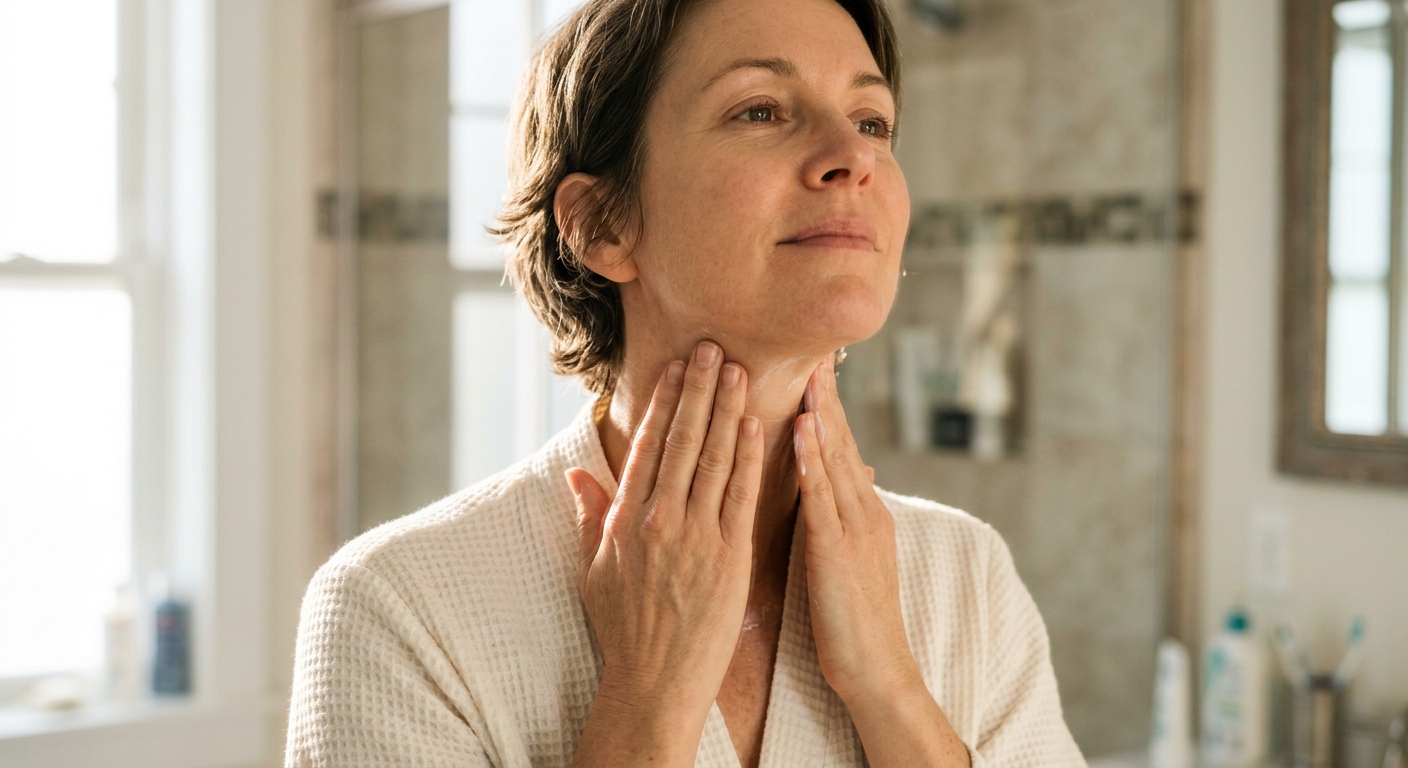
Look at your skincare shelf. Now count how many of those products you actually apply below your jawline. If the answer is zero, you are in the majority — and that habit gap is one reason the neck so often looks a decade older than the face sitting right above it.
Neck skin is structurally different from facial skin in ways that accelerate visible aging. It is thinner, produces less sebum, and has fewer oil glands, which means it dries out faster and loses moisture more readily [1]. The dermis of the neck contains less collagen density than the face, giving it less structural reserve to begin with. Add decades of sun exposure — the neck is one of the most chronically UV-exposed areas of the body — and you have a region that starts behind and falls further behind every year.
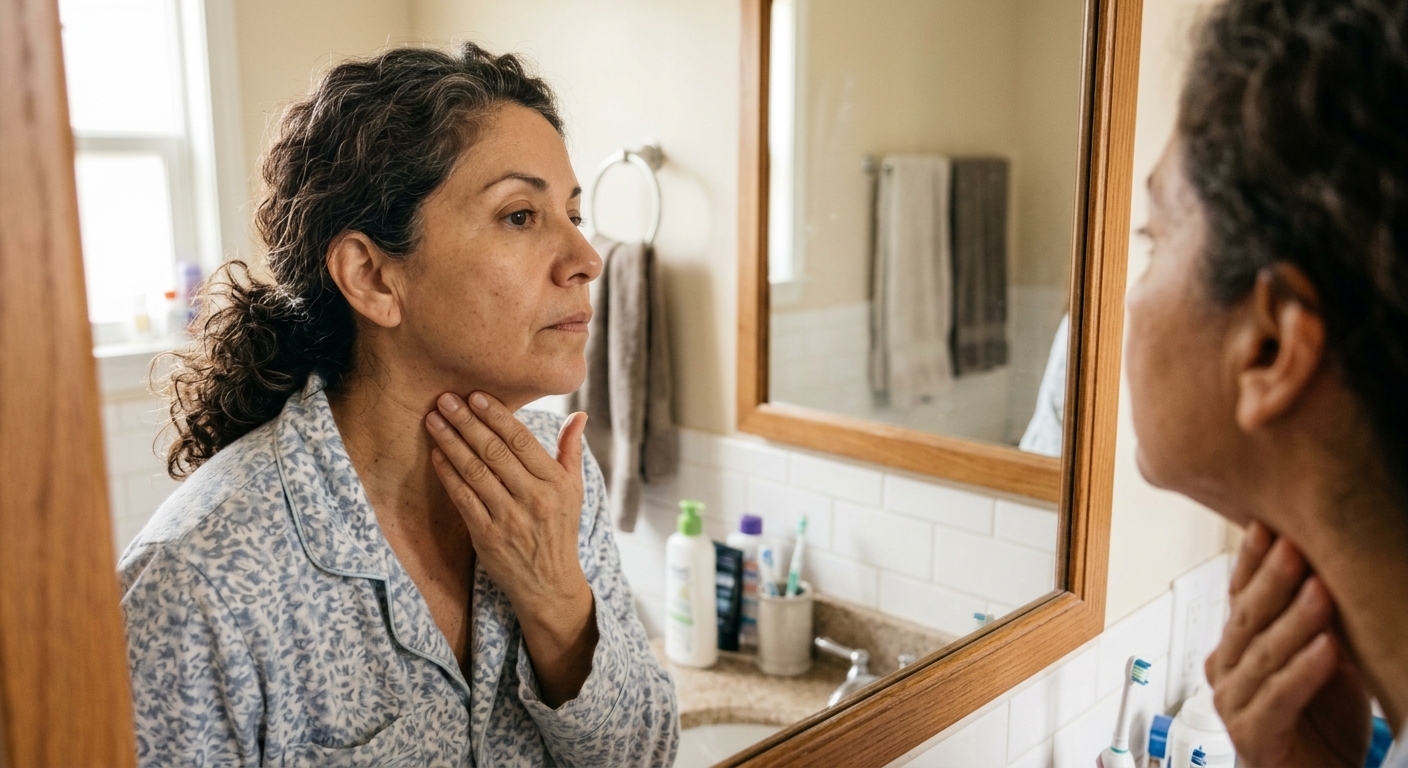
But skin quality is only part of the story. The platysma, a thin sheet of muscle that drapes from the chest up to the jawline, plays a unique role in neck aging. In youth, the two halves of the platysma connect tightly at the midline of the neck. As we age, those connections weaken and the muscle edges separate, creating the visible vertical bands that run from the chin to the collarbone [2]. Meanwhile, subcutaneous fat thins, bone in the mandible resorbs, and gravity does what gravity does. The combined effect — skin laxity, muscle banding, volume loss, and structural descent — is what we colloquially call turkey neck.
Most people notice significant changes beginning in their forties, though genetics, body composition, and cumulative sun exposure can shift that timeline in either direction.
The Three Layers of Neck Aging
Understanding what drives the turkey neck appearance helps you choose interventions that actually work, rather than buying products that address the wrong layer.
Layer 1: Skin Quality (Texture, Crepiness, Fine Lines)
The outermost changes — horizontal lines, crepey texture, roughness — are driven by the same dermal thinning that ages the face. Collagen degrades, elastin fibers fragment, and the extracellular matrix loses its density [3]. Chronic UV exposure amplifies all of these through increased MMP (matrix metalloproteinase) activity, which actively dismantles existing collagen faster than fibroblasts can replace it. A clinical trial specifically evaluating neck skin found that these surface-level aging signs were significantly improved after 12 to 16 weeks of treatment with a retinol-containing topical product, with over 80% of participants showing visible improvement in fine lines, crepiness, and texture [1].
Layer 2: Muscle and Structural Changes (Banding, Sagging)
The platysma muscle bands that create the vertical “ropey” appearance cannot be addressed by topical products. These require either neurotoxin injections to relax the muscle or, in more advanced cases, surgical intervention. Radiofrequency and ultrasound energy treatments can stimulate deep tissue contraction and collagen remodeling beneath the surface [4].
Understanding what drives the turkey neck appearance helps you choose interventions that actually work, rather than buying products that address the wrong layer.
Layer 3: Volume and Bone Loss (Jowling, Submental Fullness)
Fat redistribution and mandibular bone resorption create the loss of jawline definition that makes the neck appear heavier. This layer typically requires injectable treatments or surgical correction.
The encouraging news is that Layer 1 — skin quality — is entirely addressable with consistent topical care, and it is often the layer that makes the most visible daily difference.
What the Clinical Evidence Supports
Retinol for Neck Skin: Real Trial Data
A 2023 clinical study published in the Journal of Cosmetic Dermatology evaluated a retinol-containing topical treatment specifically formulated for the neck. Across multiple trials, the product produced statistically significant improvement in fine lines, wrinkles, crepiness, laxity, skin smoothness, and texture after 12 to 16 weeks. Improvements were documented through clinical evaluation, subject questionnaires, ultrasound imaging, digital photography, and skin biopsy biomarker analysis [1]. This is one of the few studies to evaluate retinol specifically on neck skin — most retinoid trials focus exclusively on the face.
The mechanism is consistent with what retinoids do on facial skin: retinol converts to retinoic acid, which suppresses MMP expression and stimulates new collagen synthesis by activating TGF-β signaling in dermal fibroblasts [5]. Because the neck starts with less collagen density than the face, even modest collagen restoration can produce noticeable improvement in texture and firmness.
However, neck skin is more reactive than facial skin. Starting a retinoid on the neck every three days — applied over a moisturizer — is the standard recommendation, gradually increasing frequency as tolerance builds.
Addressing the Delivery Problem
Traditional retinol formulations face an even larger challenge on the neck than on the face. The neck’s thinner skin and reduced sebaceous activity mean that conventional retinol — which requires chemical penetration enhancers or petroleum-based vehicles to cross the skin barrier — often causes disproportionate irritation relative to the amount of active ingredient that actually reaches dermal fibroblasts.
This is where delivery technology becomes critical. Nanoretinol® by North Biomedical® uses biomimetic lipid nanoparticles that pass through the epithelial barrier by mimicking the structure of skin cell membranes — the body recognizes them as “self” and allows passage without disrupting the barrier. The clinical result is +232% more effective collagen recovery and +73% more effective elastin recovery compared to conventional retinol, with significantly reduced irritation [6]. For neck skin that is both more sensitive and more structurally depleted than the face, this delivery advantage matters.
The clinical result is +232% more effective collagen recovery and +73% more effective elastin recovery compared to conventional retinol, with significantly reduced irritation.
Sunscreen: The Non-Negotiable
The neck receives substantial cumulative UV exposure, often without protection. Extending your daily broad-spectrum SPF 30+ to the neck and décolletage is the single most impactful preventive measure. The landmark Hughes et al. study demonstrated that daily sunscreen users showed 24% less skin aging than intermittent users [7] — and the neck, with its thinner skin and higher UV exposure, likely benefits even more than the face.
In-Office Treatments for Advanced Cases
For neck banding and moderate to severe laxity, topical products alone will not produce dramatic results. Evidence-supported in-office options include:
- Radiofrequency microneedling: Combines mechanical collagen induction with thermal energy to stimulate deep tissue remodeling
- Ultrasound energy (Sofwave, Ultherapy): Non-invasive tightening through deep tissue contraction
- Biostimulatory fillers: Diluted Radiesse or Sculptra injected superficially to stimulate new collagen production over time
- Platysmaplasty: Surgical tightening of the platysma muscle for severe cases
These can be combined with daily topical retinol for a comprehensive approach that addresses both skin quality and structural changes.
A Practical Neck Care Routine
If your neck care currently consists of nothing, here is how to build a routine that targets the biology of neck aging:
Morning: Apply a vitamin C serum to the neck and décolletage, followed by broad-spectrum SPF 30+. Reapply sunscreen if the neck is exposed throughout the day.
Evening: After cleansing, apply a retinol product to the neck. Start with every third night for the first two weeks, then every other night, then nightly as tolerance allows. Follow with a ceramide-containing moisturizer to support barrier function. The neck benefits from slightly more moisturizer than the face.
Weekly: Consider a hyaluronic acid serum on mornings when the neck feels particularly dry or crepey. The hydration plumping effect is temporary but visually softens fine horizontal lines.
Consistency matters more than intensity. The 16-week clinical trial timeline is a realistic expectation for visible neck improvement with retinol [1]. Resist the urge to apply a higher concentration than your neck tolerates — irritation and barrier disruption set back progress.
Starting Earlier Changes the Trajectory
If your neck still looks good in your thirties or early forties, this is the window where prevention delivers the highest return. Extending your face products below the jawline — especially retinol and sunscreen — costs nothing extra and significantly slows the progression of all three layers of neck aging. By the time visible turkey neck appears, you are already working against years of accumulated collagen loss.
The neck does not need an entirely separate product lineup. It needs the same evidence-backed ingredients your face is already getting — retinol, antioxidants, SPF — applied consistently to an area most people forget exists until they notice it in a photograph.
References
- Sullivan K, et al. “Evaluation of a retinol containing topical treatment to improve signs of neck aging.” Journal of Cosmetic Dermatology. 2023;22(10):2755-2764. doi:10.1111/jocd.15904
- Cotofana S, et al. “The Facial Aging Process From the ‘Inside Out’.” Aesthetic Surgery Journal. 2021;41(10):1107-1119. doi:10.1093/asj/sjab252
- Shin JW, et al. “Human Skin Aging and the Anti-Aging Properties of Retinol.” Biomolecules. 2023;13(11):1614. doi:10.3390/biom13111614
- Sadick NS, et al. “Neck Rejuvenation: A Comprehensive Approach.” Dermatologic Surgery. 2019;45(S1):S68-S76. doi:10.1097/DSS.0000000000001828
- Mukherjee S, et al. “Retinoids in the treatment of skin aging: an overview of clinical efficacy and safety.” Clinical Interventions in Aging. 2006;1(4):327-348. PMID: 18046911
- North Biomedical LLC. “Nanoretinol® vs. Conventional Retinol: Efficacy in Collagen and Elastin Recovery.” Clinical Study Summary, 2024. https://northbiomedical.com/documents/Nanoretinol-Study_Summary.pdf
- Hughes MC, et al. “Sunscreen and prevention of skin aging: a randomized trial.” Annals of Internal Medicine. 2013;158(11):781-790. doi:10.7326/0003-4819-158-11-201306040-00002