Crepey Skin on Arms: Why It Happens and How to Firm It Up
The science behind tissue-paper skin and what actually reverses it
What Makes Arm Skin Turn Crepey
Run your finger along the inside of your upper arm and you’ll notice something the skin on your face never had to deal with: almost zero sebaceous glands. That means the inner arm has been running on minimal natural moisture protection for decades — and it shows.
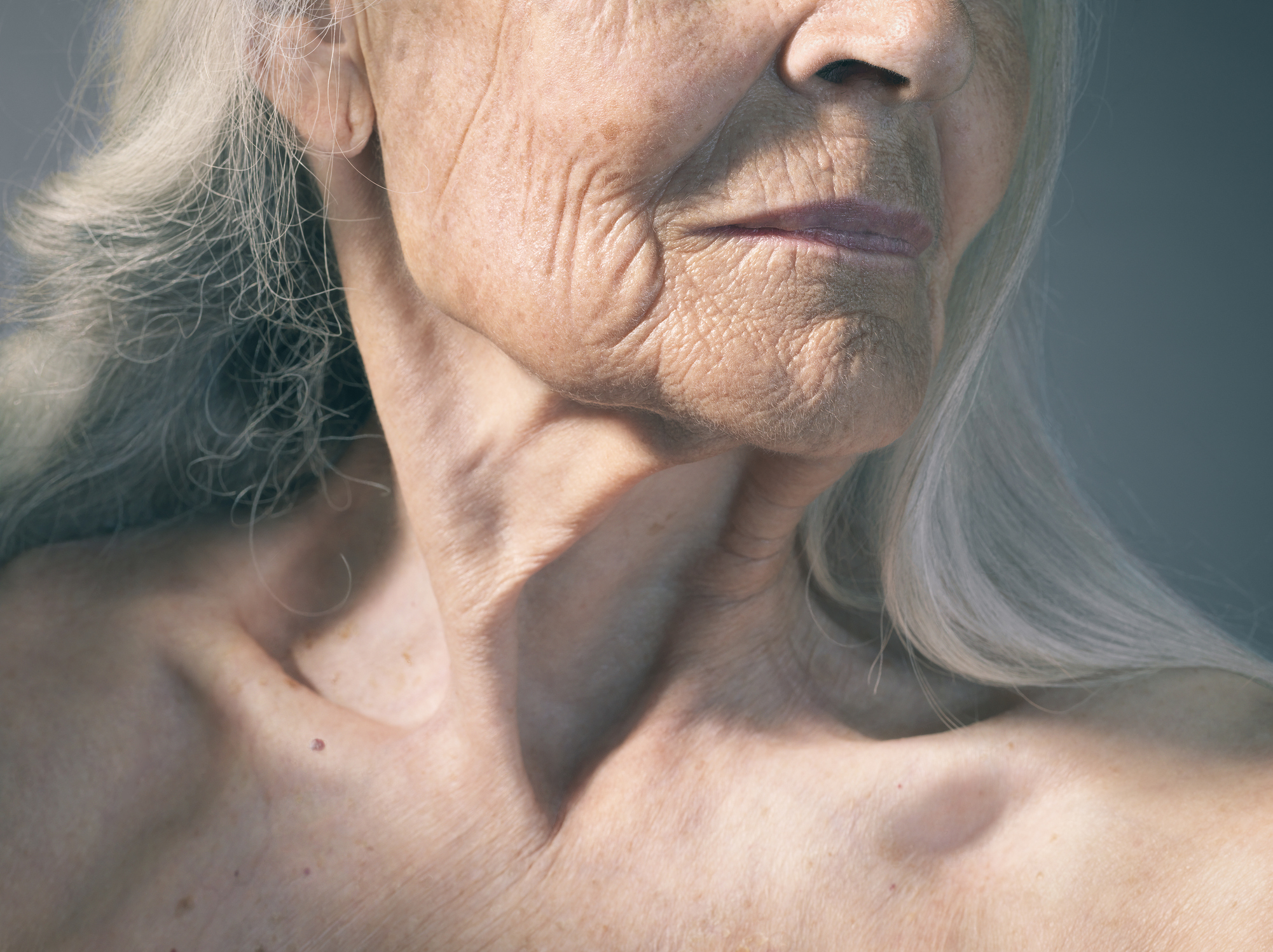
Crepey skin gets its name from crepe paper, and the comparison is uncomfortably accurate. The tissue thins, loses its bounce, and develops a finely wrinkled, almost translucent texture that refuses to snap back when pinched. Unlike standard wrinkles that form along expression lines, crepiness is a surface-wide structural collapse. It signals that the dermis — the thick middle layer responsible for firmness — has lost a meaningful percentage of its collagen and elastin scaffolding [1].
Arms are particularly vulnerable because they receive chronic UV exposure without the daily sunscreen ritual most people reserve for their face. A 2006 study in the American Journal of Pathology confirmed that collagen synthesis declines significantly with chronological aging, driven by reduced fibroblast function and impaired mechanical stimulation within the dermal matrix [1]. Layer that age-related decline on top of years of cumulative sun damage, and arm skin crosses the crepey threshold faster than almost any other body site.
The Two Forces Behind the Collapse
Understanding crepey arms means separating two overlapping processes: intrinsic aging and photoaging.
Intrinsic aging gradually shrinks the dermis. After age 25, collagen production drops by roughly 1% per year. By 50, the cumulative deficit is significant — fibroblasts become smaller, less metabolically active, and less responsive to the growth factors that once kept them productive [2]. The extracellular matrix that surrounds them grows fragmented, creating a vicious cycle: degraded collagen leads to weaker mechanical signals, which leads to even less new collagen.
Photoaging accelerates everything. Ultraviolet radiation activates matrix metalloproteinases (MMPs) — enzymes that chew through collagen and elastin. A single episode of significant sun exposure can upregulate MMP expression for days. Multiply that by thousands of afternoons in short sleeves, and the collagen network in the upper arms sustains damage that far outpaces the body’s repair capacity.
The combination produces a distinctive look: thin, translucent skin with fine cross-hatched wrinkling, visible veins, and easy bruising. It’s not vanity — it’s a structural deficit that also impairs the skin’s barrier function.
What Doesn’t Work (and Why)
Heavy body lotions make the surface feel smoother temporarily, but they cannot rebuild dermal architecture. Standard moisturizers sit on the stratum corneum — the outermost dead-cell layer — and trap water. That plumps the top layer for a few hours. Once the occlusive film fades, so does the effect. A well-designed body serum for crepey skin earns its lighter texture only when it carries a structural active and is paired with enough barrier support to keep that hydration from evaporating. The same ceiling applies to a plain body oil, which can seal water in but never supply it.
Run your finger along the inside of your upper arm and you’ll notice something the skin on your face never had to deal with: almost zero sebaceous glands.
Similarly, body scrubs and dry brushing address surface texture without reaching the dermis where the actual structural loss is occurring. These approaches aren’t harmful, but marketing them as “crepey skin solutions” overpromises what surface exfoliation can deliver.
The challenge is getting active ingredients through the skin barrier and into the dermal layer where fibroblasts live — a problem that conventional formulations have struggled with for decades.
Treatments That Actually Reach the Dermis
Topical Retinoids
Retinoids remain the most evidence-backed topical option for rebuilding dermal collagen. Tretinoin and retinol both stimulate fibroblast activity, increase procollagen synthesis, and inhibit MMPs [3]. A landmark review of retinoid clinical trials found consistent histological improvements: increased epidermal thickness, new collagen deposition in the papillary dermis, and improved elastic fiber organization after 12 to 24 weeks of use. Our guide to the best retinol body lotion covers how to choose one for arms specifically.
A 2021 randomized, double-blind, split-body clinical trial specifically studied upper arm rejuvenation in women aged 40 to 60. The active formulation produced significant improvements in crepiness, laxity, and overall photodamage scores versus placebo, confirmed by both clinical grading and biopsy analysis showing increased collagen and elastin density [4].
Peptide Complexes
Signal peptides like palmitoyl pentapeptide-4 (Matrixyl) communicate directly with fibroblasts, stimulating collagen and fibronectin production. They don’t replace retinoids but complement them — addressing the signaling side of the repair equation while retinoids handle the gene expression side.
Alpha Hydroxy Acids
Glycolic and lactic acid at appropriate concentrations (8–12% for body use) thin the dead cell layer, improve moisture retention, and modestly stimulate collagen synthesis. They’re a useful addition to a retinoid-based routine, particularly for the arms where the stratum corneum tends to be thicker than on the face. The sequencing for that sits in our body skin care routine.
Professional Treatments
Fractional laser resurfacing and microneedling create controlled micro-injuries that trigger a wound-healing cascade, resulting in new collagen and elastin. These deliver faster visible results than topicals alone but require multiple sessions and come with downtime. For significant crepiness, combining professional treatments with a consistent topical retinoid regimen at home produces the strongest outcomes [3].
Here’s what most “firming lotions” won’t tell you: retinol is notoriously unstable.
The Delivery Problem Most Products Ignore
Here’s what most “firming lotions” won’t tell you: retinol is notoriously unstable. It degrades on contact with air, light, and heat. Even when it survives the jar, conventional formulations struggle to push it past the skin barrier in meaningful quantities.
The skin barrier is designed to keep things out — it does its job extremely well. Traditional retinol formulations rely on penetration enhancers that partially disrupt the lipid matrix of the stratum corneum. This works to a degree, but it’s the biological equivalent of forcing a door open: some cargo gets through, but the door takes damage in the process. That’s why conventional retinol often causes burning, redness, and peeling.
Lipid nanoparticle encapsulation solves both problems simultaneously. The nanoparticles protect retinol from degradation and mimic the structure of natural skin lipids — the body recognizes them as “self” and allows passage through the barrier without disrupting it [5]. It’s a fundamentally different delivery mechanism: instead of breaking the barrier down, it works with it.
Nanoretinol® uses this biomimetic approach. At just 0.2% retinol concentration, it delivers +232% more collagen recovery and +73% more elastin recovery compared to conventional retinol in head-to-head testing [6]. The low concentration is the point — superior delivery means less retinol is wasted on the surface, and more reaches the fibroblasts that actually need it.
For the arms specifically, this matters because the skin there is less tolerant of irritating formulations than facial skin. A gentle, effective delivery system means you can maintain consistent daily use without the redness cycle that causes most people to abandon their retinol body care within the first month.
Building an Arm-Firming Routine That Sticks
Consistency beats intensity. The women in clinical trials who saw structural improvement used their products daily for 12+ weeks. Here’s a practical approach:
Morning: Apply a broad-spectrum SPF 30+ to arms whenever they’ll be exposed. This single step prevents further MMP activation and protects whatever collagen you’re rebuilding.
Evening: After showering, apply a retinoid-based body treatment to damp skin. Follow with a moisturizer containing ceramides or hyaluronic acid to lock in hydration and support barrier recovery.
Weekly: Consider adding a glycolic acid body treatment (once or twice per week) to enhance penetration and address surface texture.
Start with every-other-night application for the first two weeks, then transition to nightly use as tolerated. Arm skin typically adjusts faster than facial skin, but patience during the initial adaptation period prevents the irritation that derails long-term compliance.
What Realistic Improvement Looks Like
Clinical studies show measurable firmness improvement within 8 weeks, with continued gains through 24 weeks [4]. The skin won’t return to its 25-year-old state — the goal is to thicken the dermis enough that the crepey texture smooths out visibly and the skin regains enough elasticity to resist gravity’s pull.
The key insight: arm skin responds well to treatment because the fibroblasts are still functional — they just need the right signals. Deliver those signals consistently, protect the skin from further UV damage, and the tissue-paper texture resolves more than most people expect. The skin above the knees crepes for many of the same reasons; our guide to knee wrinkles covers that area specifically.
References
- Varani J, Dame MK, Rittie L, et al. “Decreased Collagen Production in Chronologically Aged Skin: Roles of Age-Dependent Alteration in Fibroblast Function and Defective Mechanical Stimulation.” Am J Pathol. 2006;168(6):1861-1868. doi:10.2353/ajpath.2006.051302
- Shin JW, Kwon SH, Choi JY, et al. “Molecular Mechanisms of Dermal Aging and Antiaging Approaches.” Int J Mol Sci. 2019;20(9):2126. doi:10.3390/ijms20092126
- Mukherjee S, Date A, Patravale V, et al. “Retinoids in the treatment of skin aging: an overview of clinical efficacy and safety.” Clin Interv Aging. 2006;1(4):327-348. doi:10.2147/ciia.2006.1.4.327
- Kavali CM, Few JW, Tromovitch TA, et al. “A Randomized, Double-Blind, Split-Body, Placebo-Controlled Clinical Study to Evaluate the Efficacy and Tolerability of a Topical Body Firming Moisturizer for Upper Arm Rejuvenation.” Aesthet Surg J. 2021;41(6):NP472-NP483. doi:10.1093/asj/sjaa134
- Iqbal B, Ali J, Baboota S. “Use of Retinoids in Topical Antiaging Treatments: A Focused Review of Clinical Evidence for Conventional and Nanoformulations.” Adv Pharm Bull. 2022;12(4):649-665. doi:10.34172/apb.2022.069
- North Biomedical LLC. “Nanoretinol® vs. Conventional Retinol: Efficacy in Collagen and Elastin Recovery.” Clinical Study Summary, 2024.