Eyebrow Thinning After 40: Why Your Brows Are Disappearing and What Actually Works
The hormonal, follicular, and skin-level changes that thin the brows mid-life — and the evidence-backed interventions that bring them back
You notice it in a candid photo, or in the strange brightness above your eyelid one morning — your eyebrows are not what they were a decade ago. The tails are sparser. The arch is thinner. Penciled-in strokes vanish under the bathroom light. Roughly half of women report measurable changes in hair texture and density during the menopausal transition, and the brows are usually the first place it shows.
It looks cosmetic. It’s actually a hair follicle aging on a clock.
What Happens to the Hair Follicle After 40
A healthy eyebrow hair cycles through three phases: an active growth phase (anagen), a brief regression phase (catagen), and a rest phase (telogen) before falling out and starting over. The visible thickness of your brow depends almost entirely on how long each follicle spends in anagen — the longer the growth phase, the longer and thicker the resulting hair.
With age, that math changes. According to a 2023 review in Biomedicines, the anagen phase shortens, follicles miniaturize, and “the stem cells at the base of the follicle decline — sometimes to the point of exhaustion” [1]. The follicle is still there. It’s just running on a shorter clock and producing finer, lighter hair shafts with each cycle.
At the same time, blood flow to the follicle decreases, and the dermal papilla — the cluster of cells that signals the follicle to grow — loses metabolic capacity. The result: a structurally intact follicle that simply can’t produce a robust hair anymore.
The Estrogen Factor
Eyebrows don’t thin uniformly across all 40+ women. The pattern often correlates with the menopausal transition, and the biology explains why.
Estrogen receptors are present in hair follicles, in epidermal keratinocytes, and in dermal fibroblasts. In pre-menopausal women, higher estrogen levels promote and prolong the anagen phase — which is exactly why women in pregnancy often report fuller hair and brows. When estrogen declines during peri-menopause and menopause, the proportion of follicles in anagen drops noticeably, particularly across the frontal scalp and brows [1].
Topical minoxidil 2% has the best randomized trial data for eyebrow density.
This is also why hormone replacement therapy sometimes restores partial brow density — not always, not predictably, but mechanistically consistent.
The Thyroid Clue — Lateral Third Loss
There’s one pattern worth pausing on. If your eyebrow thinning is concentrated in the outer third — the tail end nearest your temple — and you have other symptoms like fatigue, cold intolerance, or dry skin, this can be a sign of hypothyroidism. A 2022 clinical review in the American Journal of Clinical Dermatology described the lateral brow as a diagnostic clue for thyroid dysfunction worth investigating with bloodwork [2].
If the thinning is symmetric and gradual across the whole brow, it’s more likely the hormonal-aging pattern. But the lateral-third pattern is worth a TSH test.
What Actually Helps: The Clinical Evidence
Minoxidil — The Strongest Direct Evidence
Topical minoxidil 2% has the best randomized trial data for eyebrow density. A 2014 split-face randomized, double-blind, placebo-controlled study in the Journal of Dermatology tested 2% minoxidil lotion applied to one brow versus placebo on the other for 16 weeks. The minoxidil side showed significantly better outcomes across global photographic assessment, eyebrow diameter, hair count, and patient satisfaction [3].
It works by extending the anagen phase and increasing follicle perfusion. It is not, however, FDA-approved for brow use specifically, and it must be applied carefully to avoid migration into the eye area.
Bimatoprost — Approved for Lashes, Used Off-Label for Brows
Bimatoprost 0.03% (Latisse) is FDA-approved for eyelashes. A 2023 randomized trial compared it head-to-head with minoxidil for brow hypotrichosis and found “significant improvement in all three groups” — meaning both work, with bimatoprost showing slightly faster onset and minoxidil showing better long-term tolerability.
The Retinoid Angle
Topical retinoids are not first-line for eyebrow thinning, but the cellular mechanism is increasingly well-mapped. A 2025 review in Annals of Medicine and Surgery described how retinoids “extend the anagen phase and counteract follicular miniaturization” via Wnt/β-catenin signaling — the same pathway estrogen activates in pre-menopausal follicles [4]. The review also noted that tretinoin can improve percutaneous absorption of minoxidil by threefold, making the combination more effective than minoxidil alone.
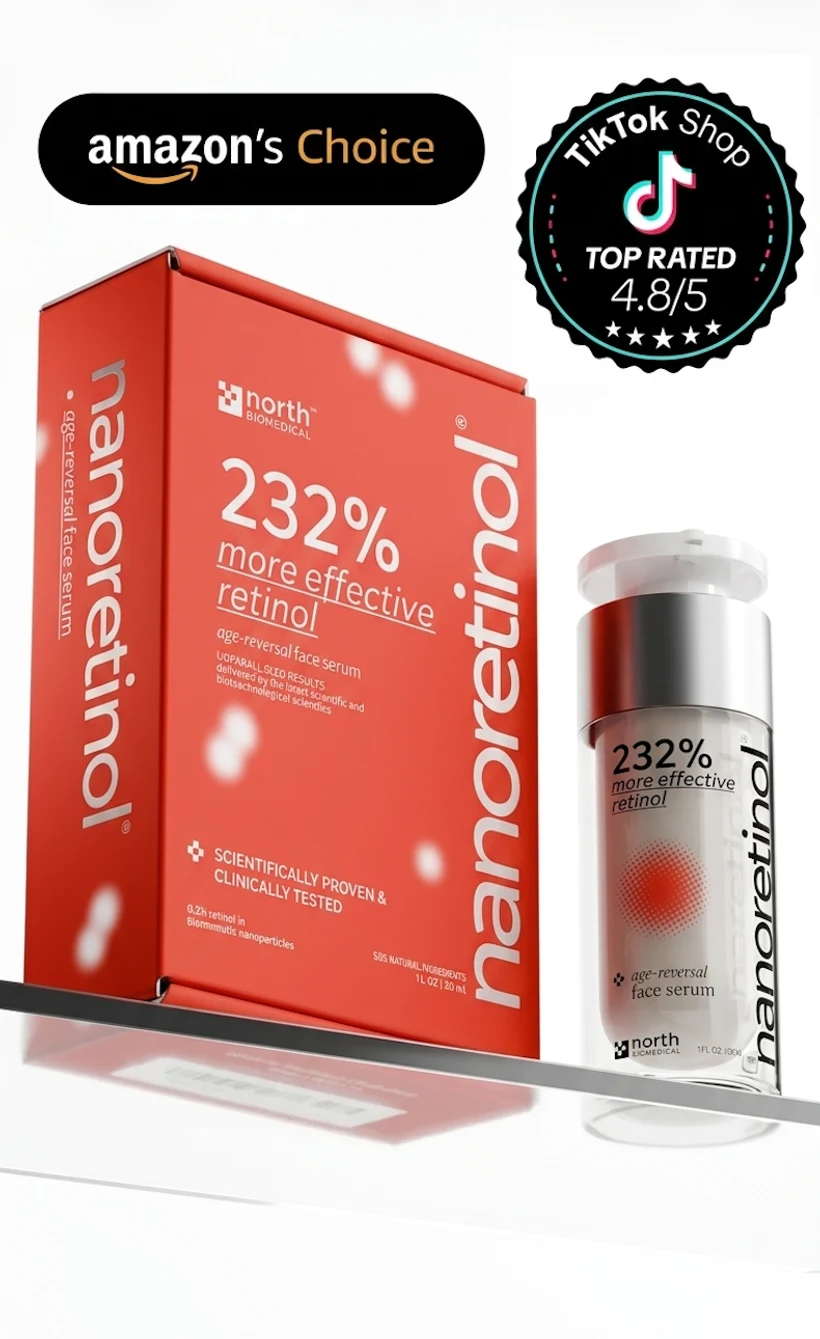
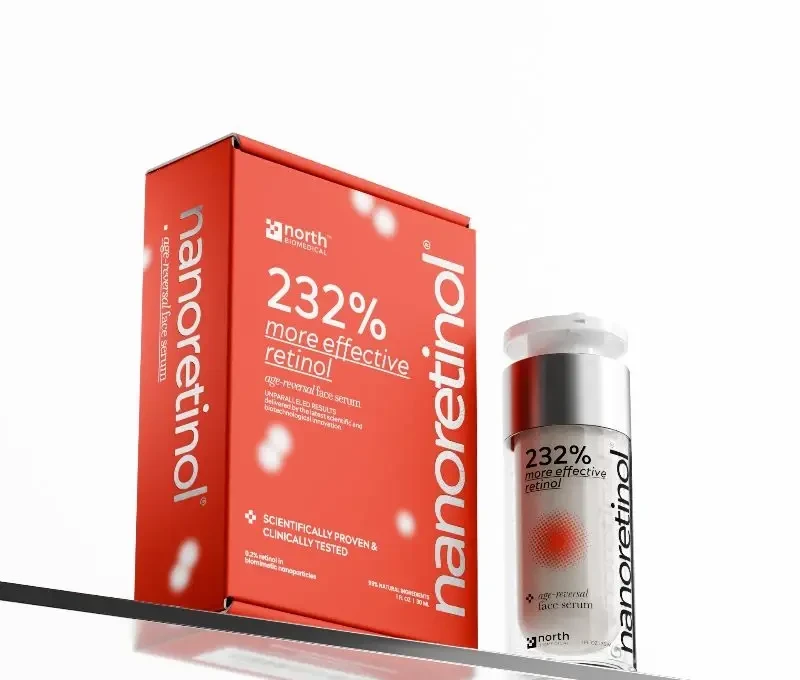
The encapsulated nanoparticles pass through the epithelial barrier without breaking it — the body recognizes them as “self” — and deliver retinol at the cellular level using a 0.2% concentration that minimizes irritation in thin, reactive skin.
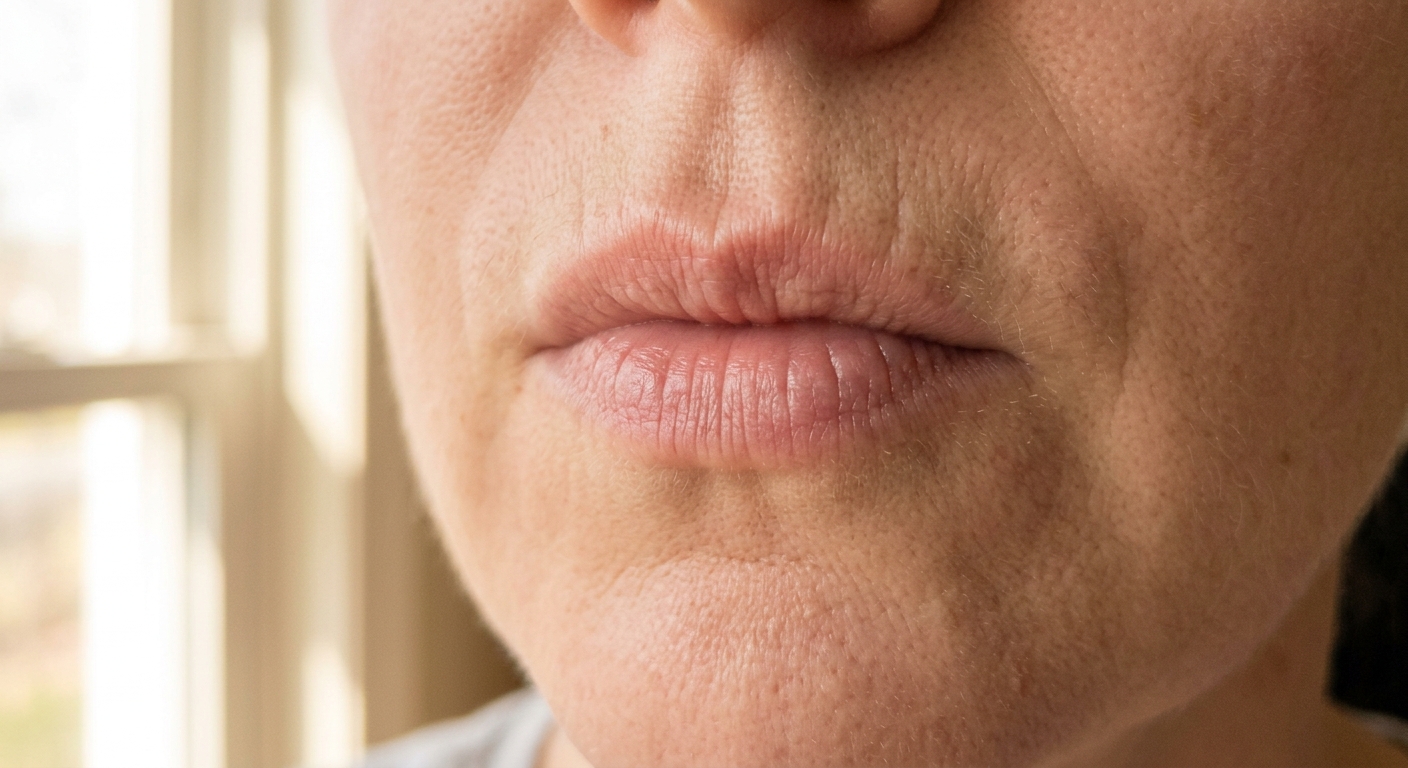
The skin around the brow also ages. Forehead lines, hooded eyelids, and thinning periorbital skin all change the visual frame around your eyebrows. Improving the skin itself can make existing brow hair read denser, even before any change in follicle output.
Why Most Retinol Products Won’t Work Near the Brow
There’s a delivery problem. The skin above the eye is among the thinnest on the face, and conventional retinol formulations rely on chemical penetration enhancers — petroleum derivatives and detergents — that disrupt the lipid barrier to drive retinol in. Apply that anywhere near the orbital area and you get redness, peeling, and stinging that drives most people to stop within a week.
This is exactly the type of zone where Nanoretinol’s biomimetic lipid nanoparticle delivery becomes the difference between a workable regimen and one you abandon. The encapsulated nanoparticles pass through the epithelial barrier without breaking it — the body recognizes them as “self” — and deliver retinol at the cellular level using a 0.2% concentration that minimizes irritation in thin, reactive skin. For applying close to the brow, that tolerability profile matters far more than nominal percentage.
For more on the broader retinol delivery problem, see encapsulated retinol and does retinol thin skin.
A Practical Stack
Eyebrow regrowth is months, not weeks. A realistic evidence-based approach:
- Rule out thyroid involvement if the thinning is lateral-third concentrated. A blood test costs almost nothing and rules out a treatable cause.
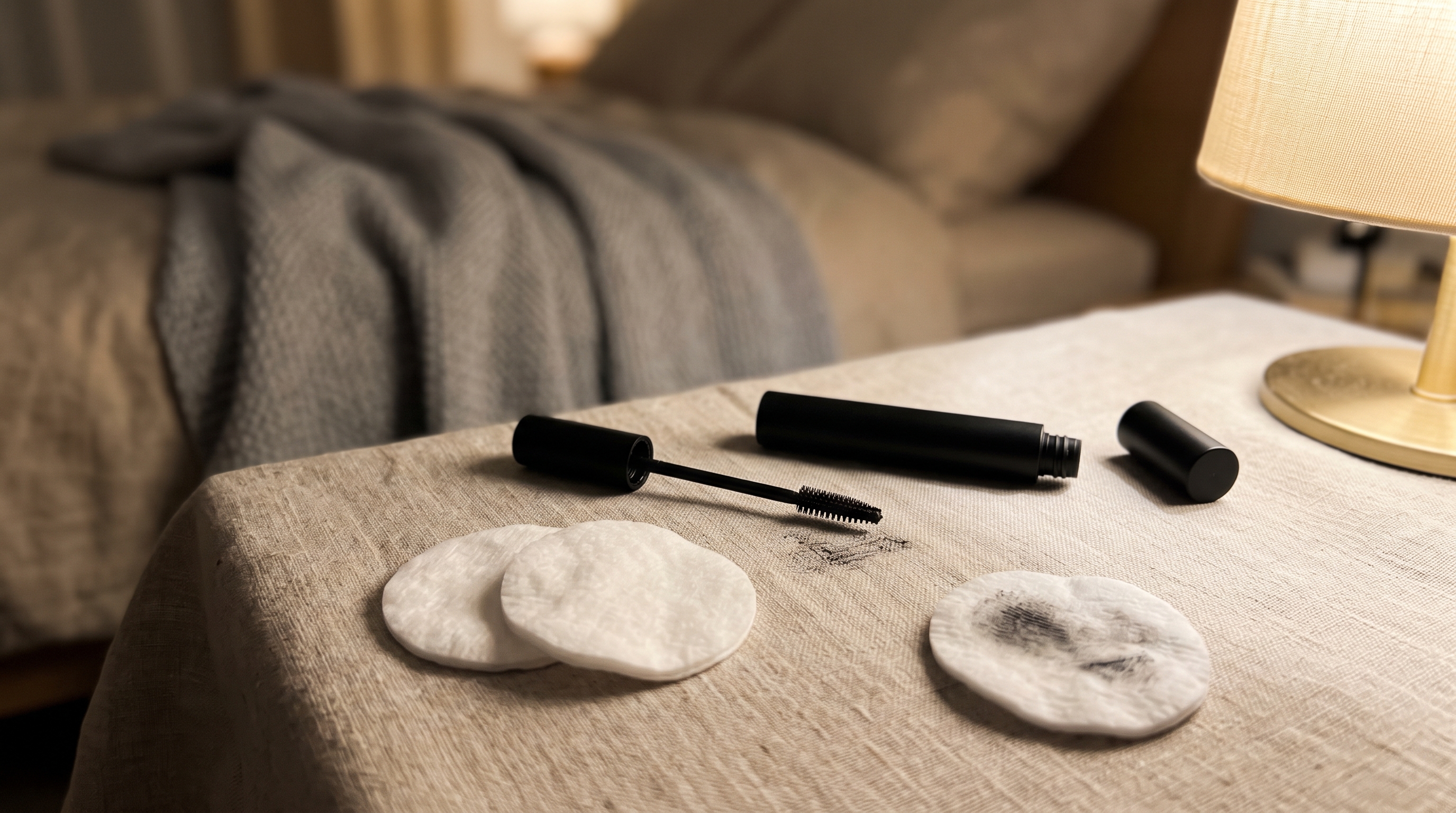
- Address the brow follicle directly with a once-daily minoxidil 2% application, used carefully along the brow line, away from the lash line. If sparse lashes are part of the same picture, our guide to the best mascara for older women covers which formulas add definition without overloading a fragile lash.
- Improve the surrounding skin with a tolerable retinol applied to forehead and upper eye area to support the follicle environment and improve absorption of brow-targeted actives.
- Stop tweezing aggressively. Repeated plucking over years contributes to permanent follicle damage. Let the hair grow even if it looks unruly during the regrowth window.
- Be patient. Visible difference at 12–16 weeks; meaningful difference at 6 months. Stop too soon and the gains regress.
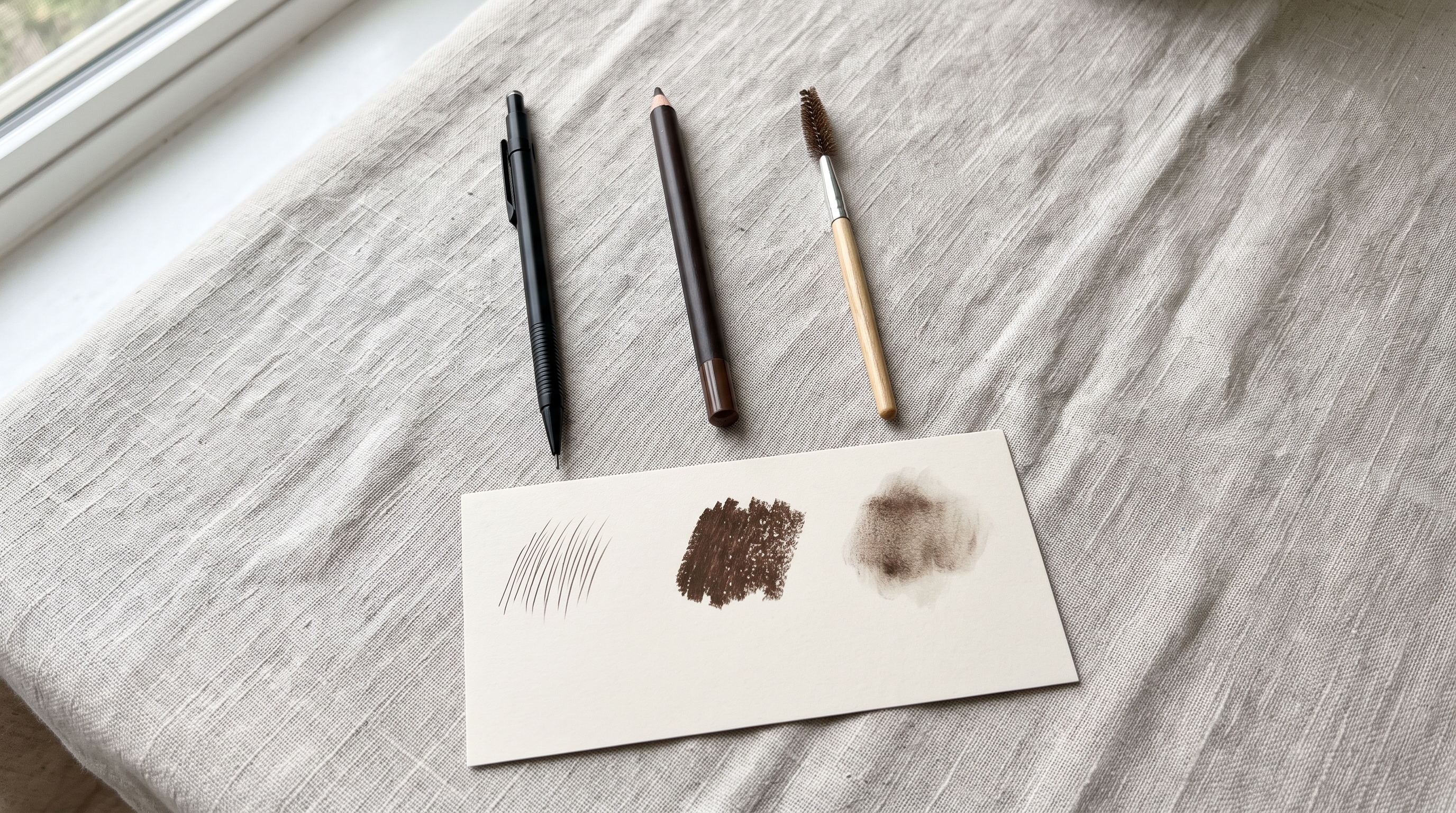
If you want the broader hormonal context, perimenopause skin changes and estrogen and skin cover the cascade that drives most of these shifts. While regrowth takes months, the guide to the best eyebrow pencil for older women shows how to rebuild sparse shape immediately without drawing a solid block.
References
-
Rinaldi F, Trink A, Mondadori G, Giuliani G, Pinto D. “The Menopausal Transition: Is the Hair Follicle ‘Going through Menopause’?” Biomedicines. 2023;11(11):3041. doi:10.3390/biomedicines11113041
-
Nguyen B, Hu JK, Tosti A. “Eyebrow and Eyelash Alopecia: A Clinical Review.” American Journal of Clinical Dermatology. 2022;23(2):187-200. doi:10.1007/s40257-022-00729-5
-
Lee S, Tanglertsampan C, Tanchotikul M, Worapunpong N. “Minoxidil 2% lotion for eyebrow enhancement: a randomized, double-blind, placebo-controlled, split-face comparative study.” Journal of Dermatology. 2014;41(2):149-152. doi:10.1111/1346-8138.12275
-
Irfan H, Raza AA, Chowdhry HA, Mobin MB, Samadi A. “The mechanistic insights into the application of retinoids and possible adjunct therapeutic treatment to androgenic alopecia.” Annals of Medicine and Surgery. 2025;87(12):8563-8571. doi:10.1097/MS9.0000000000004153
-
North Biomedical LLC. “Nanoretinol vs. Conventional Retinol: Efficacy in Collagen and Elastin Recovery.” Clinical Study Summary, 2024. https://northbiomedical.com/documents/Nanoretinol-Study_Summary.pdf