Hair, Skin and Nails Vitamins: Does Biotin Do Anything for Your Skin?
The best-selling beauty supplement, examined honestly — and what your skin actually needs instead
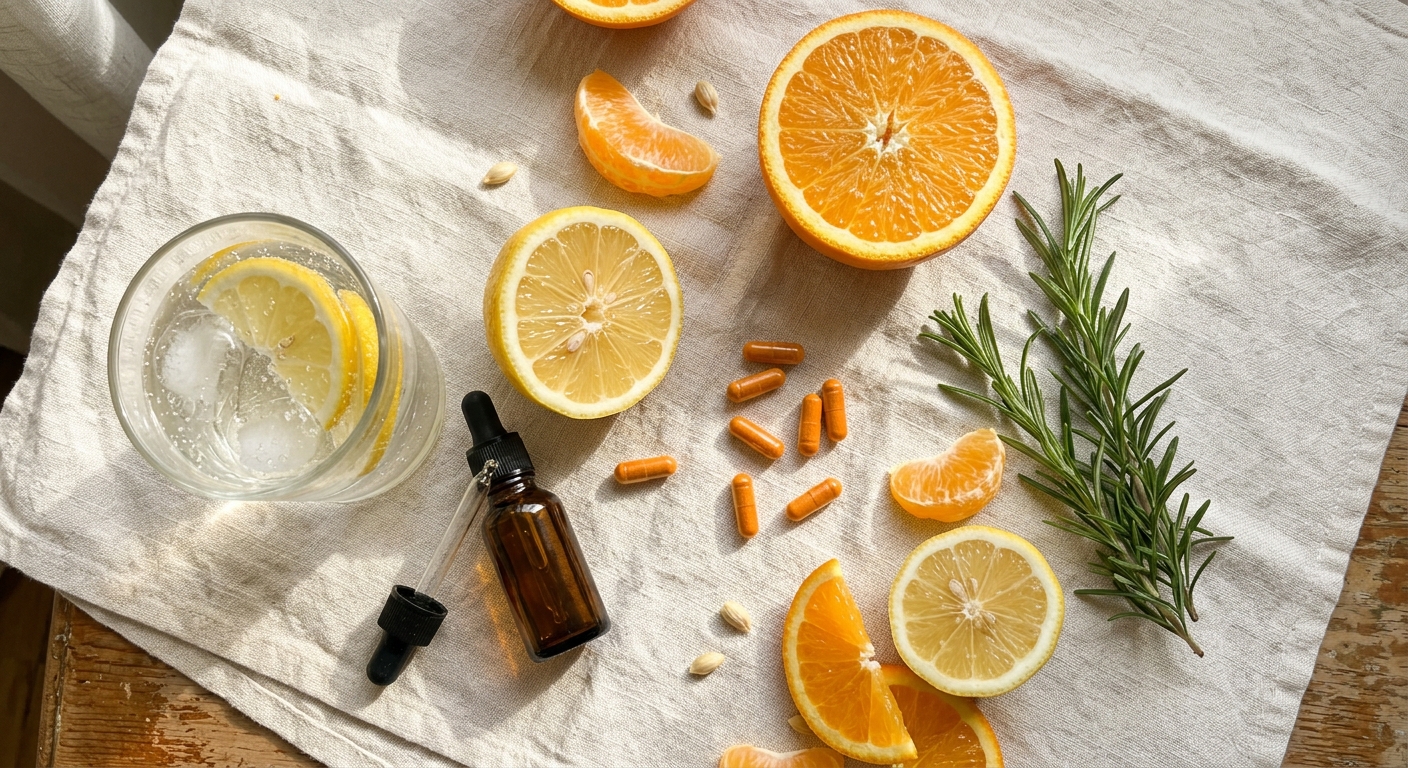
They are among the best-selling supplements in the country: gummies, capsules, and softgels promising stronger hair, harder nails, and glowing skin, usually built around one headline ingredient — biotin. The hair-skin-nails category moves enormous volume, and the bottles practically sell themselves on the strength of that third word: skin.
But popularity is not evidence. If you are buying one of these for your complexion specifically, it is worth knowing what biotin does in the body, what it does not, and where the real returns on a skincare budget actually are.
What Biotin Is For
Biotin, or vitamin B7, is a genuine and essential nutrient. It works as a cofactor for enzymes that metabolize fats, carbohydrates, and proteins, and it plays a role in producing keratin — the structural protein in hair and nails.
Biotin is a cofactor for building keratin and metabolizing fat, which means it has almost nothing to do with the collagen and elastin that keep skin looking firm and smooth.
That distinction is the whole story. The “skin” on the label rides along on biotin’s connection to keratin, but the qualities most people want from their skin — firmness, elasticity, fewer fine lines — are governed by entirely different proteins that biotin does not build.
If you are buying one of these for your complexion specifically, it is worth knowing what biotin does in the body, what it does not, and where the real returns on a skincare budget actually are.
The Deficiency Catch
Here is the part the marketing leaves out. Biotin supplementation reliably helps one group of people: those who are deficient in it.
In every documented case where biotin improved hair or nails, the person started out deficient — and true deficiency is genuinely rare in people eating a normal diet.
A systematic review of the published cases found that biotin produced improvement only in patients with an underlying deficiency or a specific pathological condition, not in otherwise healthy individuals [1]. Dermatologists reviewing the evidence have reached the same conclusion: outside of a true deficiency, the case for biotin supplementation to improve hair, nails, or skin is weak, and the routine recommendation of it deserves rethinking [2].
In other words, if your levels are already normal — as they are for most people — adding more biotin does not push hair, nails, or skin past their baseline. You cannot top up a tank that is already full and expect it to overflow into better skin.
The Risk Nobody Mentions
Megadosing biotin is not just unhelpful for most people; it carries a specific, documented hazard. Supplements marketed for hair, skin, and nails often contain biotin at hundreds of times the recommended daily amount, and at those levels it can distort common laboratory blood tests.
It targets the proteins that actually determine how your skin looks, rather than the keratin pathway that determines how your nails grow.
The interference is real and clinically meaningful. High circulating biotin can produce falsely high or falsely low results on widely used immunoassays, including thyroid panels and the troponin test used to diagnose heart attacks. A published case report documented a patient whose abnormal thyroid and calcium results normalized only after stopping a daily biotin supplement [3]. Most people taking these products have no idea to mention them before bloodwork. For a popular beauty gummy, that is a surprisingly high price for a benefit you likely will not feel.
What Your Skin Actually Needs
Step back and the logic clarifies. Skin looks youthful when it has abundant, well-organized collagen and elastin and holds water at the surface. Aging skin looks the way it does because collagen production slows and existing collagen breaks down faster than it is rebuilt. No oral keratin cofactor addresses that.
A few nutrients genuinely support skin when intake is inadequate — vitamin C is required for collagen synthesis, and zinc and vitamin A play real roles — which is why a balanced diet beats a single-ingredient gummy. Our overview of the best vitamins for skin separates the nutrients with evidence from the ones with hype. But for most well-fed adults, the bottleneck is not raw nutrients in the bloodstream. It is the signal that tells skin cells to keep building.
The Lever That Actually Moves Skin
If the goal is firmer, smoother, more even skin, the most evidence-backed intervention is not a supplement aisle purchase — it is a topical retinoid applied directly to the skin. Retinoids instruct fibroblasts to manufacture new collagen at the source. A controlled study showed that even cosmetic-strength retinol improved the appearance of naturally aged skin, with biopsies confirming increased collagen production [4]. That is something no hair-skin-nails gummy has ever demonstrated.
The usual obstacle is that conventional retinol is harsh — it forces its way through the skin barrier and leaves redness and peeling behind, so people quit before they see results. Nanoretinol is designed around that problem. By encapsulating retinol in biomimetic lipid nanoparticles that the skin accepts as its own, it delivers the active across the barrier without the chemical damage of traditional formulations — gentler on the skin, with more of the active reaching the cells that build structure. It targets the proteins that actually determine how your skin looks, rather than the keratin pathway that determines how your nails grow.
If firmness is also on your list, pairing a proven topical with the slow, steady support of dietary protein and, if you like, collagen supplementation is a far more rational plan than a single megadosed B-vitamin.
The Honest Bottom Line
Hair-skin-nails vitamins are not dangerous in moderation, and if you have a documented biotin deficiency, they help. But for the average person buying them for their skin, biotin is the wrong tool aimed at the wrong protein — and at high doses it can quietly compromise important medical tests. Your skin’s appearance is decided by collagen and elastin, not keratin. Spend accordingly, and put your effort where the biology actually responds.
References
- Patel DP, Swink SM, Castelo-Soccio L. “A review of the use of biotin for hair loss.” Skin Appendage Disorders. 2017;3(3):166-169. doi:10.1159/000462981
- Lipner SR. “Rethinking biotin therapy for hair, nail, and skin disorders.” Journal of the American Academy of Dermatology. 2018;78(6):1236-1238. doi:10.1016/j.jaad.2018.02.018
- Rosner I, Rogers E, Maddrey A, Goldberg DM. “Clinically significant lab errors due to vitamin B7 (biotin) supplementation: a case report following a recent FDA warning.” Cureus. 2019;11(8):e5470. doi:10.7759/cureus.5470
- Kafi R, Kwak HS, Schumacher WE, et al. “Improvement of naturally aged skin with vitamin A (retinol).” Archives of Dermatology. 2007;143(5):606-612. doi:10.1001/archderm.143.5.606