How Long Does Retinol Take to Work? A Science-Based Timeline
Week-by-week expectations backed by clinical trial data — not marketing promises
You’ve committed to retinol. You applied it last night, checked the mirror this morning, and saw… nothing. Maybe a little dryness. No glow, no transformation, no “new skin.” So the question arrives quickly: how long does retinol actually take to work?
The honest answer from clinical research: it depends on what you’re measuring. Texture changes can appear within weeks. Wrinkle reduction takes months. Collagen remodeling operates on a timeline measured in seasons, not days. Here’s what the science says you should expect — and why patience isn’t just a virtue with retinol, it’s a biological requirement.
Why Retinol Can’t Work Overnight
To understand the timeline, you need to understand the mechanism. Retinol doesn’t mask wrinkles or temporarily plump skin like a moisturizer. It reprograms how your skin cells behave.
Once retinol penetrates the skin, enzymes convert it through a two-step pathway: retinol → retinaldehyde → retinoic acid. Retinoic acid then binds to nuclear receptors (RARs) inside skin cells, altering gene expression. This triggers a cascade: faster epidermal turnover, increased collagen synthesis, reduced activity of collagen-degrading matrix metalloproteinases (MMPs), and normalization of melanocyte function [1].
None of these processes happen in a single cell cycle. Epidermal turnover alone takes roughly 28 days in young skin and slows to 40–60 days with age. You’re essentially asking your skin to rebuild itself from the inside out. That takes time.
Weeks 1–2: The Adjustment Phase
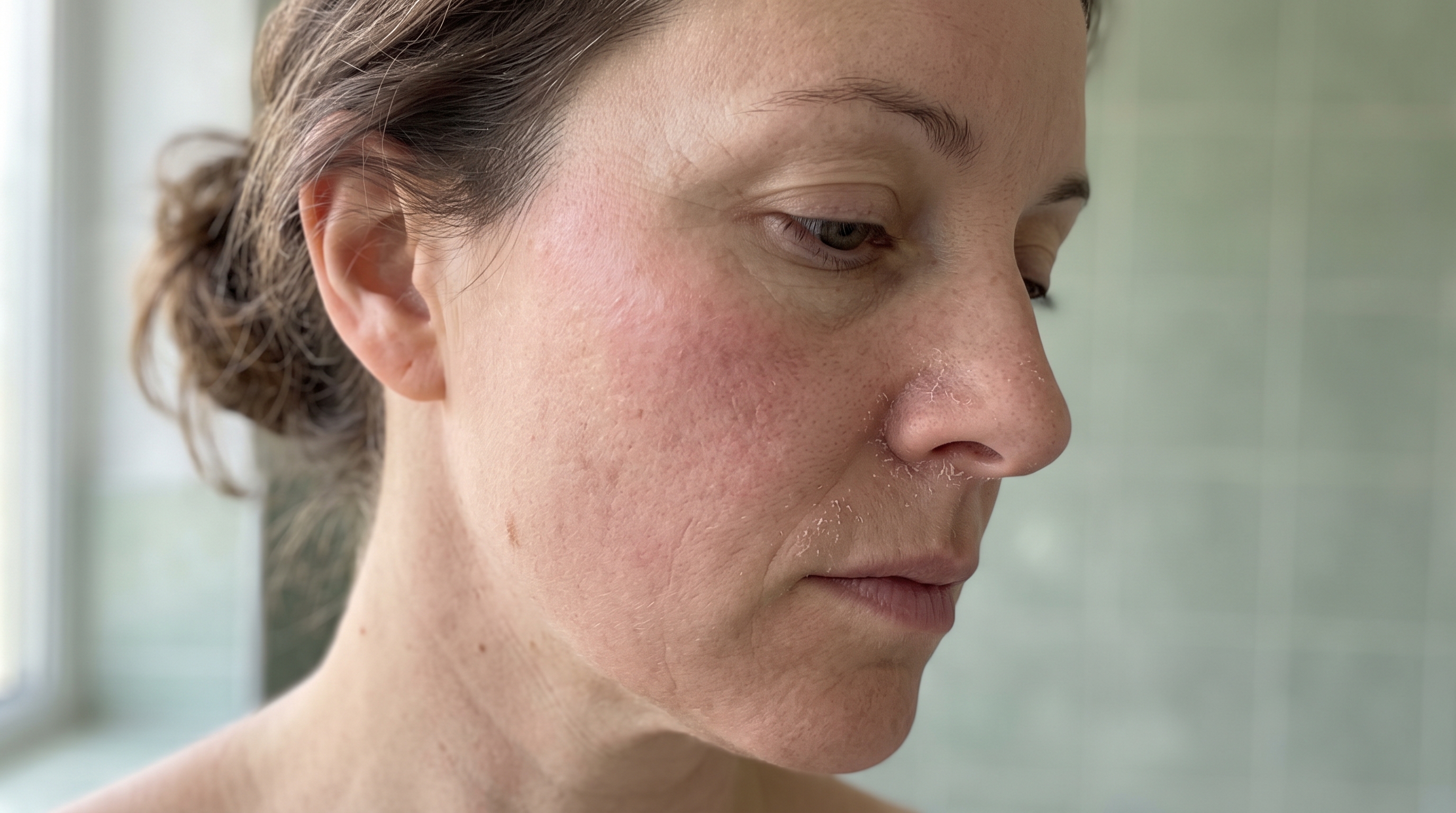
What you’ll notice: Possible dryness, mild flaking, slight tightness. Some users experience what’s colloquially called the “retinol purge” — a temporary increase in breakouts as accelerated cell turnover pushes existing microcomedones to the surface.
What’s happening biologically: Retinoic acid is beginning to interact with nuclear receptors. Epidermal cell division is accelerating. The stratum corneum (outermost skin layer) is adjusting to a faster turnover rate, which initially compromises the moisture barrier before it adapts [2].
Clinical evidence: The Zasada et al. study (2020) documented that mild-to-moderate irritation was most common in the first 2–4 weeks, with symptoms diminishing as the skin adapted. Notably, the 0.5% retinol group experienced more intense initial irritation than the 0.3% group without proportionally better outcomes [3].
What to do: This phase is normal and temporary. Don’t increase frequency. If irritation is significant, reduce to every other night. Our application guide covers the practical method dermatologists actually recommend.
Here’s what the science says you should expect — and why patience isn’t just a virtue with retinol, it’s a biological requirement.
Weeks 4–6: The Texture Shift
What you’ll notice: Smoother skin texture. Pores may appear slightly refined. Skin tone begins to even out. The dryness and flaking from weeks 1–2 typically resolve as the barrier adapts.
What’s happening biologically: Accelerated epidermal turnover means newer, less damaged cells are reaching the surface faster. One full cell turnover cycle has completed (or is completing). Glycosaminoglycan production — the molecules that hold water in your skin — is increasing, improving hydration from within [4].
Clinical evidence: A 2020 controlled trial observed measurable improvements in skin texture and evenness by week 8 (56 days), with improvements in roughness parameters detectable through profilometric analysis even earlier [3]. The changes at this stage are primarily epidermal — the dermis (deeper layer where collagen lives) is still in the early phases of remodeling.
Weeks 8–12: Visible Anti-Aging Results Begin
What you’ll notice: Fine lines appear softer. Hyperpigmentation spots are fading. Overall skin radiance improves noticeably. Friends might comment that you “look well” without being able to pinpoint why.
What’s happening biologically: Collagen synthesis is measurably increasing. Multiple cell turnover cycles have replaced older, damaged epidermal cells with healthier ones. MMP inhibition means your existing collagen is being broken down more slowly, while new collagen production accelerates — a dual mechanism that compounds over time [1].
Clinical evidence: The landmark Kafi et al. study (2007) at the University of Michigan showed statistically significant wrinkle reduction after 24 weeks of retinol use, but noted that biochemical changes — increased procollagen I and glycosaminoglycan expression — were already occurring well before the clinical endpoints [4]. A systematic review of cosmeceuticals for anti-aging confirmed that retinol’s collagen-stimulating effects become clinically apparent within the 8–12 week window for most formulations [5].
Months 3–6: Deep Structural Remodeling
What you’ll notice: Wrinkle depth measurably reduced. Skin firmness improved. Elasticity is noticeably better. These are the results that persist — structural changes, not surface effects.
What’s happening biologically: Dermal remodeling is in full effect. Type I and Type III procollagen production has increased substantially. The ratio of intact collagen to degraded collagen has shifted favorably. New elastic fiber formation contributes to skin resilience [4][6].
Clinical evidence: The Kafi study demonstrated significant fine wrinkling score reductions (-1.64 on a 0–9 scale vs -0.08 for vehicle) at 24 weeks, with biopsy-confirmed increases in both glycosaminoglycan expression and procollagen I immunostaining [4]. A comprehensive review of retinoid clinical evidence noted that maximum anti-aging benefits typically plateau between months 6 and 12, after which maintenance use preserves the gains [6].
Clinical evidence: A 2020 controlled trial observed measurable improvements in skin texture and evenness by week 8 (56 days), with improvements in roughness parameters detectable through profilometric analysis even earlier.
Month 6 and Beyond: Maintenance Territory
After six months of consistent use, you’ve likely achieved the majority of retinol’s anti-aging potential. Continued use maintains the collagen synthesis upregulation and cell turnover acceleration. Stopping retinol means these processes gradually revert to baseline — though not immediately. Think of it like exercise: the benefits accumulate with consistency and slowly decline with discontinuation.
Why Some People See Results Faster
Three variables determine your personal timeline:
Concentration and formulation. Higher concentrations may produce faster visible effects but also more irritation, which can force reduced application frequency and paradoxically slow progress. The Zasada study found that 0.3% retinol delivered comparable outcomes to 0.5% with significantly better tolerability [3].
Delivery technology. This is the variable most people overlook. Traditional retinol formulations lose substantial potency before the molecule reaches target cells in the dermis. A review of nanoformulations versus conventional retinol formulations found that lipid nanoparticle delivery systems enhanced both efficacy and the speed of visible results, precisely because more active compound reaches the cells that matter [6].
Skin condition at baseline. Someone with significant photodamage may see more dramatic early improvements simply because there’s more room for change. Conversely, someone with minimal sun damage may notice subtler, slower improvements that are nonetheless occurring at the cellular level.
Prescription retinoic acid runs on a related but distinct schedule, with its own week-by-week trial data set out in how long tretinoin takes to work.
How Nanoretinol® Compresses the Timeline
The timeline above reflects conventional retinol formulations, where the limiting factor is often delivery — how much retinol survives degradation and actually penetrates to the dermis.
Nanoretinol® by North Biomedical® uses biomimetic lipid nanoparticles that bypass the epithelial barrier without chemical penetration enhancers. The nanoparticles are recognized as “self” by your skin cells, allowing direct passage rather than forced penetration. In clinical trials, this delivered measurable results within 56 days: +61% increase in skin firmness and +56% increase in elasticity — outcomes that typically require 12–24 weeks with conventional formulations. The retinol itself is also protected from degradation inside the nanoparticle shell, meaning more active molecule reaches target cells per application. When you solve the delivery problem, the biological timeline compresses because cells receive therapeutic levels of retinol from the start, rather than the fraction that survives traditional formulation challenges.
Setting Realistic Expectations
Here’s the condensed timeline based on clinical evidence:
Weeks 1–2: Adjustment (dryness, possible purge) Weeks 4–6: Texture and tone improvements Weeks 8–12: Fine line reduction, hyperpigmentation fading Months 3–6: Structural wrinkle reduction, firmness improvement Month 6+: Maintenance of accumulated benefits
The single most common reason people “fail” with retinol is abandoning it during weeks 2–4, when initial irritation peaks but visible benefits haven’t yet appeared. Understanding that retinol operates on your skin’s biological clock — not your expectations — is the difference between frustration and results.
For a deeper look at the cellular mechanisms driving these changes, see our article on how retinol works. And if you’re choosing your first retinol product, our beginner’s guide covers everything you need to start safely, while when to start using retinol answers the question of timing that usually comes first.
References
-
Mukherjee S, Date A, Patravale V, Korting HC, Roeder A, Weindl G. “Retinoids in the treatment of skin aging: an overview of clinical efficacy and safety.” Clinical Interventions in Aging. 2006;1(4):327-348. doi:10.2147/ciia.2006.1.4.327
-
Kligman AM, Grove GL, Hirose R, Leyden JJ. “Topical tretinoin for photoaged skin.” Journal of the American Academy of Dermatology. 1986;15(4 Pt 2):836-859. doi:10.1016/s0190-9622(86)70242-9
-
Zasada M, Budzisz E. “A Clinical Anti-Ageing Comparative Study of 0.3 and 0.5% Retinol Serums: A Clinically Controlled Trial.” Skin Pharmacology and Physiology. 2020;33(2):102-116. doi:10.1159/000508168
-
Kafi R, Kwak HS, Schumacher WE, Cho S, Hanft VN, Hamilton TA, King AL, Neal JD, Varani J, Fisher GJ, Voorhees JJ, Kang S. “Improvement of naturally aged skin with vitamin A (retinol).” Archives of Dermatology. 2007;143(5):606-612. doi:10.1001/archderm.143.5.606
-
Lau M, Mineroff Gollogly J, Wang JY, Jagdeo J. “Cosmeceuticals for antiaging: a systematic review of safety and efficacy.” Archives of Dermatological Research. 2024;316(5):173. doi:10.1007/s00403-024-02908-2
-
Milosheska D, Roškar R. “Use of Retinoids in Topical Antiaging Treatments: A Focused Review of Clinical Evidence for Conventional and Nanoformulations.” Advances in Therapy. 2022;39(12):5351-5375. doi:10.1007/s12325-022-02319-7