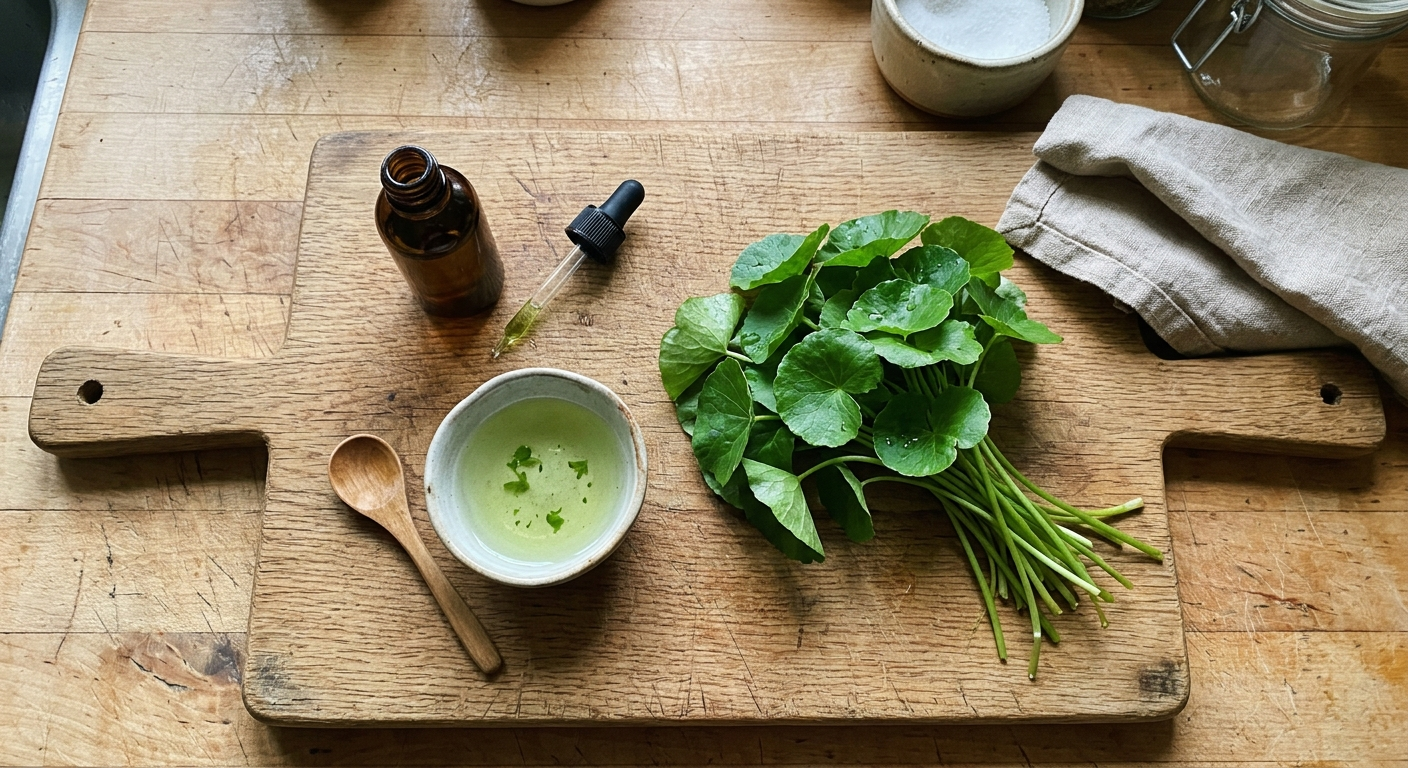
Madecassoside for Skin: The Calming Ingredient That Quietly Boosts Collagen
A 6-month split-face trial in women aged 45-60 found this little-known triterpene rebuilt the elastic fiber network on biopsy. Most people have never heard of it.
If your skin barrier feels permanently angry — red after washing, stinging when you apply almost anything, recovering slowly from any active ingredient you try — you are not in a category that responds well to the standard recommendations. Niacinamide and ceramides help. They don’t fix it. The thing that actually quiets reactive aging skin while also building collagen is an ingredient most consumers have never been told about.
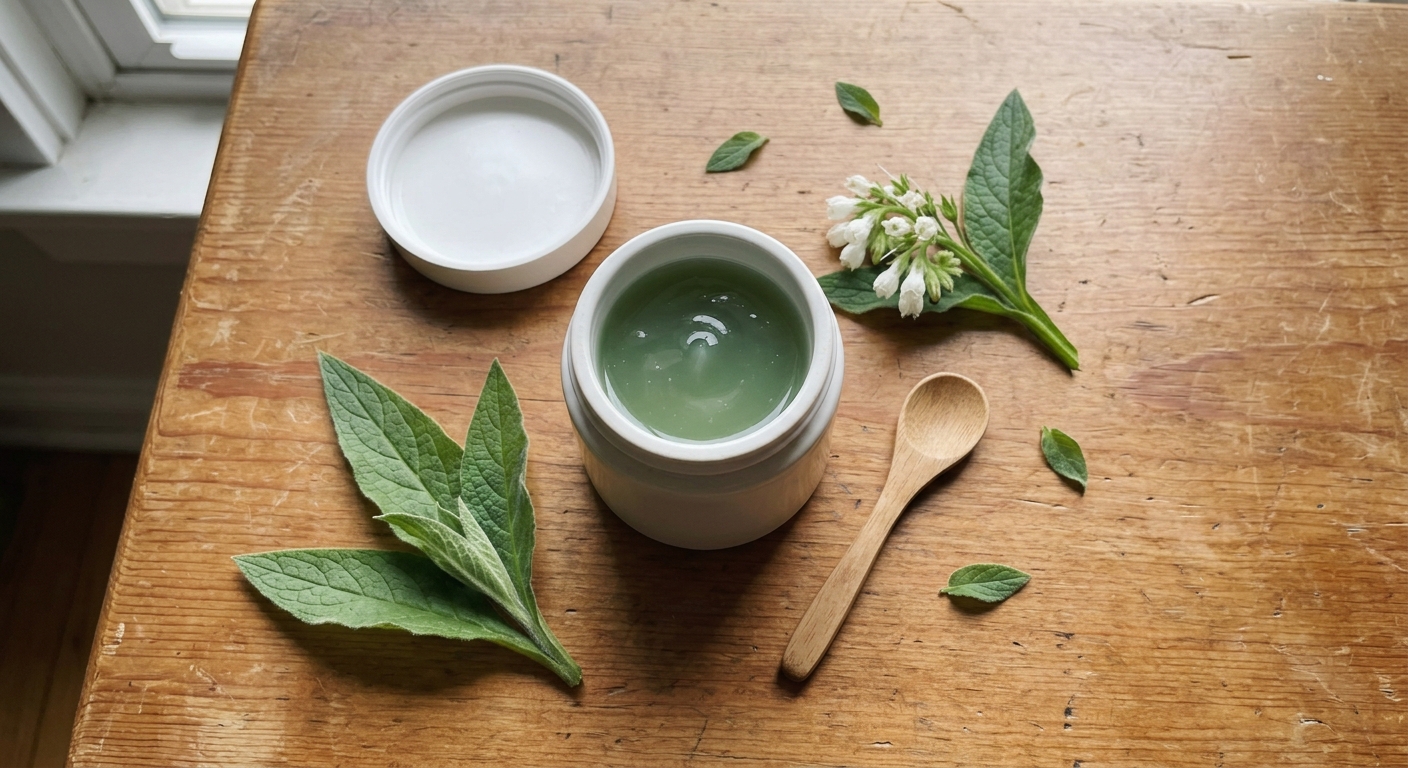
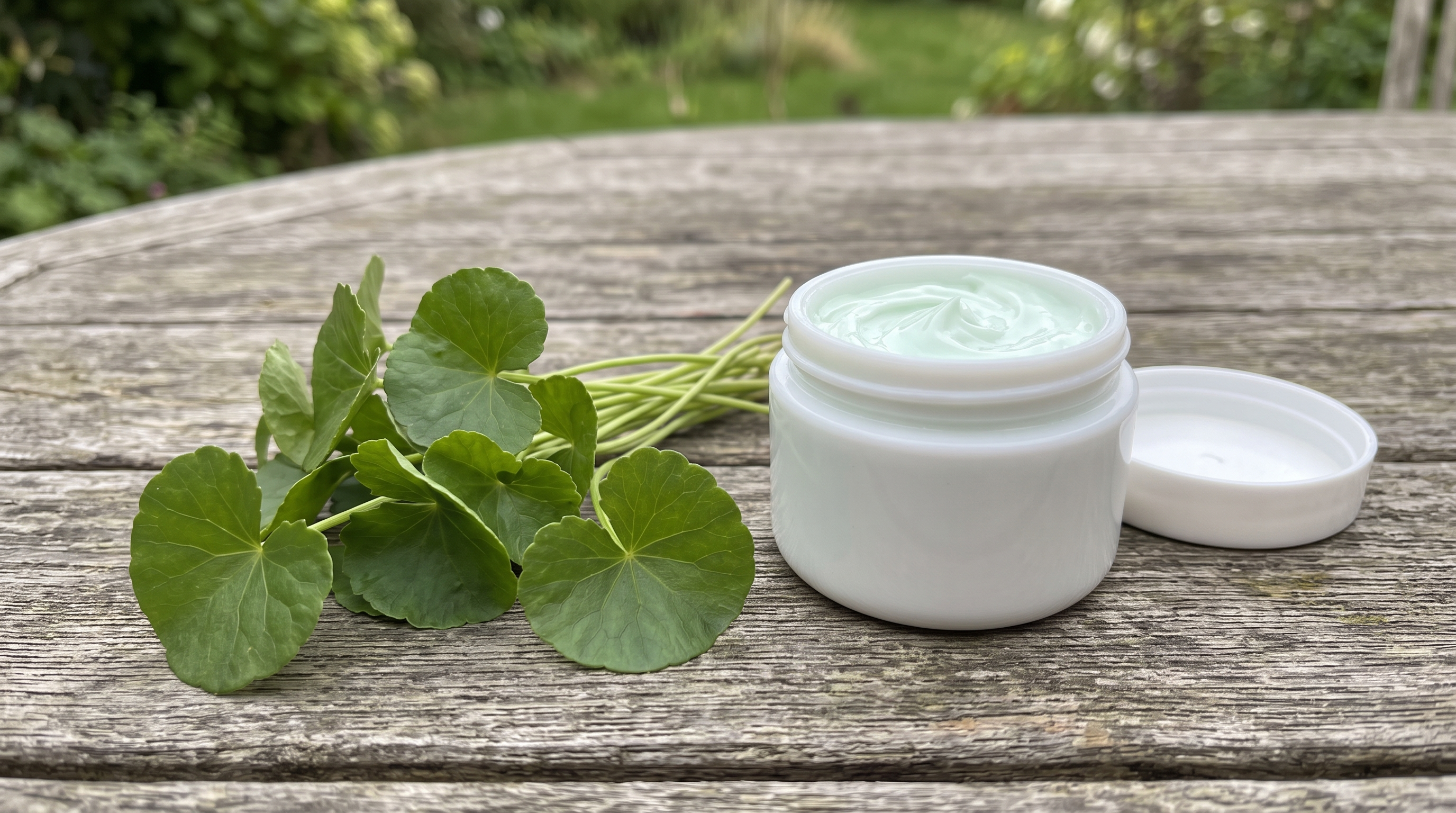
Madecassoside is one of four triterpene saponins extracted from Centella asiatica, the marsh-pennywort herb used in South and Southeast Asian medicine for centuries to heal wounds and tighten skin. In the last twenty years, dermatology research has worked out why the centuries-old practitioners were onto something.
What Madecassoside Actually Is
Centella asiatica contains four active triterpenes: asiaticoside, madecassoside, asiatic acid, and madecassic acid. Most cosmetic labels say “Centella asiatica extract” — which means anything from a generic plant water to a standardized 95% triterpene complex. The bioactivity depends entirely on which triterpenes are present and at what concentration.
Madecassoside is the most-studied of the four for skin applications. It has two distinct properties that rarely show up in the same molecule: it suppresses inflammation strongly enough to calm reactive skin, and it stimulates fibroblast collagen synthesis well enough to rebuild dermal structure. Most anti-inflammatory ingredients are passive — they reduce damage but don’t drive repair. Madecassoside does both.
The Collagen Mechanism
The foundational paper came out of France in 1990. Maquart’s group showed that the triterpene fraction of Centella asiatica stimulated collagen synthesis in cultured human fibroblasts in a dose-dependent way [1]. Four years later, the Bonté laboratory isolated each triterpene individually and demonstrated their differential effects on Type I collagen production — confirming that the saponins, not the rest of the plant matrix, were doing the work [2].
What makes madecassoside mechanistically interesting is how it triggers collagen synthesis. A 2006 study published in Planta Medica traced the signaling pathway and found that the related triterpene asiaticoside induces Type I collagen synthesis through Smad2/3 phosphorylation — but independently of the canonical TGF-β receptor kinase [3]. In plain language: madecassoside hijacks the downstream signaling that growth factors use, but without binding the receptor. This is unusual, and it’s part of why the ingredient appears to play well with retinoids and peptides rather than competing with them.
The Clinical Trial That Should Have Been Bigger News
The most important paper for mature-skin readers is a 6-month split-face study published in Experimental Dermatology in 2008. Twenty women aged 45-60 with photoaged facial skin applied a topical formulation containing 5% vitamin C and 0.1% madecassoside on one side of the face, and a vehicle control on the other [4].
Most cosmetic labels say “Centella asiatica extract” — which means anything from a generic plant water to a standardized 95% triterpene complex.
The treated side showed statistically significant improvements in wrinkle depth, skin firmness, and hydration. More striking — biopsy analysis at six months showed reconstruction of the elastic fiber network in the dermis. Elastin restoration on biopsy is a rare finding in topical cosmetic trials. Most “anti-aging” creams produce changes you can see on a chromameter but not in a histology slide.
This is the single clinical study that justifies madecassoside’s reputation in the dermatology literature. It was funded by a major skincare conglomerate, which is worth noting — but the methodology is sound, the comparator was vehicle, and the biopsy endpoint is hard to fake.
Why It Calms Skin
The anti-inflammatory side of madecassoside is documented through a series of mechanistic papers. Li and colleagues showed in a mouse arthritis model that madecassoside suppresses TNF-α, IL-6, COX-2, and prostaglandin E2 — the four cytokines and inflammatory mediators most commonly elevated in chronically irritated skin [6]. These are also the same mediators that drive the burning sensation and redness when retinoids disrupt the barrier.
In a direct comparison of asiaticoside and madecassoside in a burn-wound model, both compounds accelerated re-epithelialization and collagen deposition, with madecassoside showing the stronger anti-inflammatory action [7]. And Liu’s 2008 study using oral madecassoside in mouse burn models documented dose-dependent acceleration of wound closure, suppression of inflammatory cell infiltration, promoted angiogenesis, and enhanced fibroblast-driven epithelialization [5].
For aging skin specifically, this matters because inflammaging — the chronic, low-grade inflammation that drives skin aging at the cellular level — is one of the most modifiable contributors to barrier dysfunction in your 40s and 50s. A primer on inflammaging in skin covers why mid-life skin reacts more dramatically to triggers it would have shrugged off at 30.
What This Means for Your Routine
Where madecassoside earns its place is alongside actives that drive results but cause irritation. Retinoids are the obvious example. Acid exfoliants (glycolic, lactic, salicylic) are the next. Vitamin C at low pH is the third.
A practical sequence looks like this:
- Cleanse and pat dry.
- A madecassoside-containing serum or essence at 0.1-1%. This buffers the barrier and primes it for what comes next.
- Your active layer — a retinoid at night, vitamin C in the morning.
- Moisturizer to seal.
Most people end up using madecassoside as damage control for their retinol.
The point of putting madecassoside first is two-fold. It pre-emptively dampens the inflammatory response that the active will trigger, and it begins the fibroblast collagen response so the active is layering onto already-stimulated tissue.
For very reactive skin, Centella asiatica extracts at higher percentages, in a cream or a lighter centella toner, can be used alone for a period of weeks to settle the barrier before any active is introduced. This is the protocol Korean dermatologists use after laser resurfacing and intense IPL, and it generalizes well to mature skin that has been over-treated.
The Caveat the Cosmetic Industry Doesn’t Highlight
Madecassoside is anti-inflammatory enough to be useful and a saponin, which means it has mild surfactant properties at high concentrations. In poorly formulated products at high percentages, it can do exactly what salicylic acid does in poorly formulated products: strip the barrier it was supposed to support.
The dosing range with the strongest safety profile is 0.1-0.5% madecassoside in leave-on formulations. The 0.1% used in the Haftek clinical trial was sufficient to produce histologically visible elastin network reconstruction at six months — a reminder that more is not always better in cosmetic chemistry.
Also worth knowing: most products marketed as “madecassoside” or sold as a cica cream actually contain a triterpene complex (called TECA — Titrated Extract of Centella Asiatica) rather than isolated madecassoside. TECA contains all four triterpenes in roughly equal proportions and is the form used in the majority of the published research. If the label says “TECA 1%” or “Centella asiatica triterpenes 0.5%,” that’s more meaningful than “Centella asiatica leaf extract” with no concentration disclosed.
Where Nanoretinol Fits In
Madecassoside is a powerful supporting actor. The leading role — the one that drives the most measurable change in mature skin structure — still belongs to retinol. The problem, as discussed throughout this site, is that conventional retinol triggers exactly the inflammatory cascade madecassoside is designed to suppress. Most people end up using madecassoside as damage control for their retinol.
There’s a more elegant solution: a retinol that doesn’t trigger the cascade in the first place. Nanoretinol encapsulates 0.2% retinol inside biomimetic lipid nanoparticles — particles externally identical to skin cells, which the epithelial barrier recognizes as “self” and allows through intact. The barrier never has to be disrupted; the burning, peeling, and redness that normally bring on a search for cica serums simply don’t happen.
In the clinical study, Nanoretinol produced 232% greater collagen recovery and 73% greater elastin recovery than conventional retinol — with drastically lower cytotoxicity at the cellular level. The combination most worth considering for reactive mature skin: a madecassoside-rich serum to support the barrier, and Nanoretinol as the structural active that doesn’t need to be apologized for.
When to Reach for Madecassoside
A short list of situations where this ingredient earns its shelf space:
- Reactive, easily inflamed skin in your 40s or 50s
- Post-procedure recovery (laser, microneedling, peels)
- Pairing with a high-strength retinoid you’re not willing to give up
- Slow-to-recover skin barrier after a year of over-active product use
- Rosacea-prone aging skin that flares with most actives
Madecassoside won’t headline a routine. It earns its place by making the rest of the routine work. For mature skin that has been bullied into reactivity by years of well-intended products, that’s frequently the single missing piece.
References
- Maquart FX, Bellon G, Gillery P, Wegrowski Y, Borel JP. Stimulation of collagen synthesis in fibroblast cultures by a triterpene extracted from Centella asiatica. Connective Tissue Research. 1990;24(2):107-120. doi:10.3109/03008209009152427
- Bonté F, Dumas M, Chaudagne C, Meybeck A. Influence of asiatic acid, madecassic acid, and asiaticoside on human collagen I synthesis. Planta Medica. 1994;60(2):133-135. PMID: 8202564
- Lee J, Jung E, Kim Y, et al. Asiaticoside induces human collagen I synthesis through TGFbeta receptor I kinase (TbetaRI kinase)-independent Smad signaling. Planta Medica. 2006;72(4):324-328. PMID: 16557473
- Haftek M, Mac-Mary S, Le Bitoux MA, et al. Clinical, biometric and structural evaluation of the long-term effects of a topical treatment with ascorbic acid and madecassoside in photoaged human skin. Experimental Dermatology. 2008;17(11):946-952. doi:10.1111/j.1600-0625.2008.00732.x
- Liu M, Dai Y, Li Y, et al. Madecassoside isolated from Centella asiatica herbs facilitates burn wound healing in mice. Planta Medica. 2008;74(8):809-815. PMID: 18484522
- Li H, Gong X, Zhang L, et al. Madecassoside attenuates inflammatory response on collagen-induced arthritis in DBA/1 mice. Phytomedicine. 2009;16(6-7):538-546. doi:10.1016/j.phymed.2008.11.002
- Hou Q, Li M, Lu YH, Liu DH, Li CC. Burn wound healing properties of asiaticoside and madecassoside. Experimental and Therapeutic Medicine. 2016;12(3):1269-1274. doi:10.3892/etm.2016.3459