Microneedling Benefits: How Collagen Induction Therapy Turns Back the Clock on Aging Skin
What happens when you trick your skin into healing itself — and how to get the most from it
What Microneedling Actually Does to Your Skin
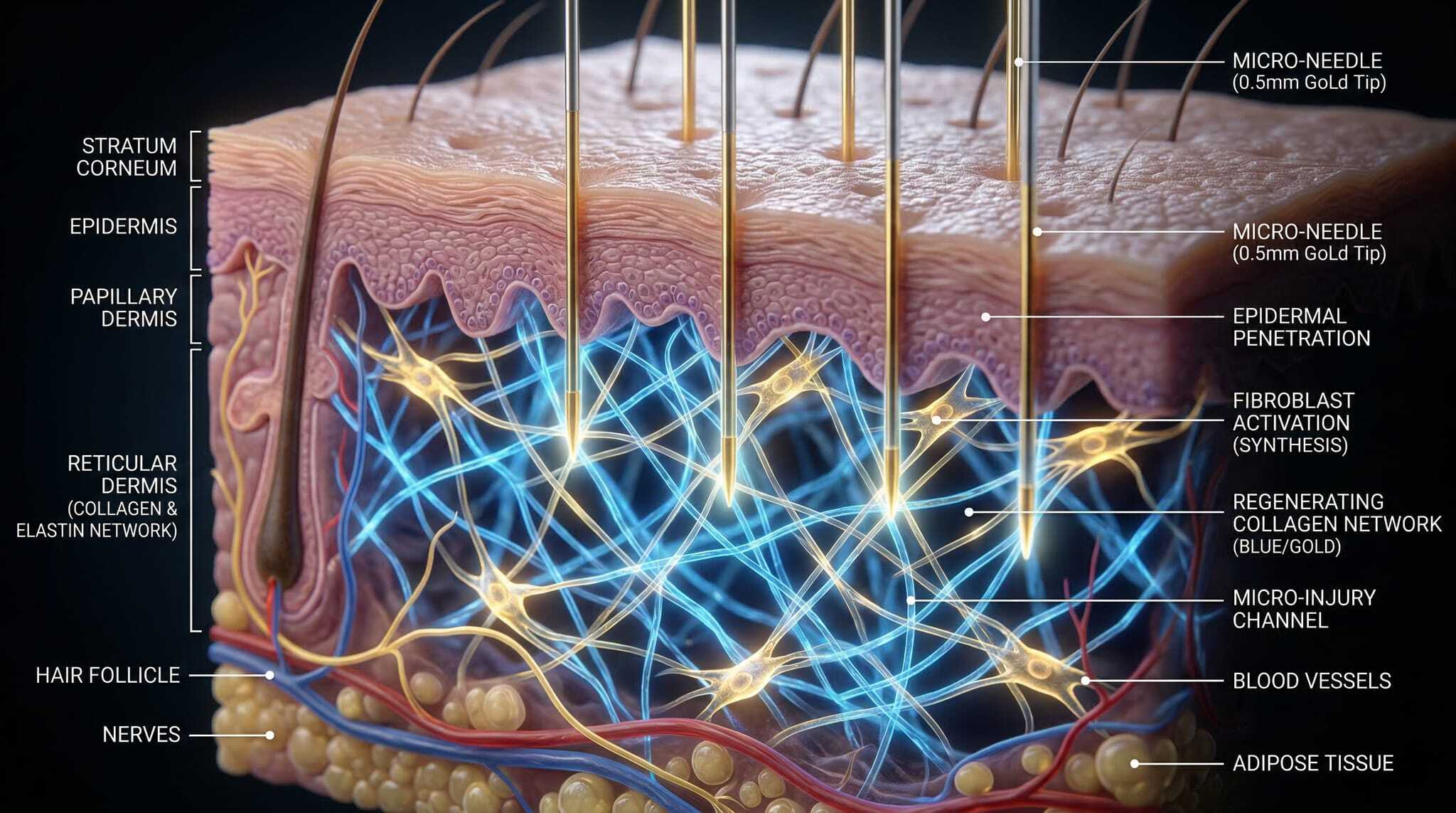
Microneedling sounds aggressive — hundreds of tiny needles puncturing your face — but the principle behind it is surprisingly elegant. You create hundreds of controlled micro-injuries in the skin. Your body responds by flooding the area with growth factors, fibroblasts, and the raw materials for new collagen and elastin. The result is skin that is structurally younger than it was before the procedure began.
The formal name for this process is collagen induction therapy (CIT), and it was first described in the mid-1990s when Orentreich and Orentreich demonstrated that subcision — inserting needles beneath depressed scars — triggered wound healing that filled and smoothed the skin surface [1]. By 2006, Dr. Desmond Fernandes had developed the first modern microneedling device, turning a surgical concept into a repeatable cosmetic procedure [2].
Today, microneedling is one of the most widely performed minimally invasive treatments in dermatology, used to address wrinkles, acne scars, hyperpigmentation, stretch marks, and overall skin texture.
The Three Phases of Collagen Induction
Understanding why microneedling works requires a quick look at how your skin heals. When a needle punctures the dermis, it triggers a cascade that unfolds in three distinct phases [1][3]:
Phase 1 — Inflammation (0–48 hours). The body releases platelets, neutrophils, and growth factors to the puncture site. Blood clotting begins, and pro-inflammatory cytokines signal the start of tissue repair. This is why skin looks flushed and slightly swollen immediately after treatment.
Phase 2 — Proliferation (2–5 days). Fibroblasts migrate to the wound site and begin secreting new collagen (type III), elastin, and glycosaminoglycans. New blood vessels form — a process called angiogenesis — delivering oxygen and nutrients to the repair zone. A fibronectin matrix forms that acts as a scaffold for the new tissue.
Phase 3 — Remodeling (weeks to months). The initial type III collagen is gradually replaced by stronger type I collagen. This remodeling continues for months after the procedure and is responsible for the progressive improvement patients notice in skin firmness and texture long after the redness has faded.
Histological examination confirms the scale of this response. After four microneedling sessions spaced one month apart, studies have documented a 400% increase in collagen and elastin deposition at six months — along with a thickened stratum spinosum and normalized rete ridges that persist at one year [1].
What the Clinical Evidence Actually Shows
Microneedling has been studied across a broad range of skin concerns. Here is what the strongest evidence supports:
Microneedling sounds aggressive — hundreds of tiny needles puncturing your face — but the principle behind it is surprisingly elegant.
Wrinkle reduction. Multiple clinical studies confirm that microneedling significantly reduces fine lines and wrinkles by stimulating collagen production. Singh and Yadav’s comprehensive review documented that microneedling leads to reorganization of old collagen fibers and deposition of new collagen, elastin, and capillaries — producing visible skin tightening, reduced pore size, and improved elasticity [3]. For how that response compares with what a fractional laser produces, see our microneedling vs laser breakdown.
Acne scars. This is arguably the best-studied application of microneedling. Comparative studies have shown microneedling to be more effective than traditional treatments like chemical peels and laser therapy for reducing atrophic acne scars, with higher patient satisfaction and fewer side effects — particularly important for darker skin tones where laser treatments carry a risk of post-inflammatory hyperpigmentation [4].
Hyperpigmentation and melasma. Microneedling disrupts melanin deposits in the upper dermis while stimulating skin renewal from below. Studies show improvement in melasma and sun-induced hyperpigmentation, though results are variable and multiple sessions are typically required [4].
Skin texture and tone. Even in the absence of specific conditions, microneedling improves overall skin quality by promoting dermal regeneration. The increased collagen density and improved vascular supply translate into smoother, firmer, more even-toned skin [3].
Professional vs. At-Home Microneedling
Not all microneedling is created equal, and the needle depth makes a significant difference.
Professional microneedling uses needle depths of 0.5 mm to 2.5 mm and is performed by dermatologists or trained aestheticians. At these depths, needles reach the dermis and trigger meaningful collagen induction. Professional treatments are recommended for acne scars, significant wrinkles, and hyperpigmentation.
At-home dermarollers typically use 0.25 mm to 0.5 mm needles. At these shallow depths, you are primarily improving product absorption and providing mild exfoliation, not generating substantial collagen induction [3]. Home devices can complement a good skincare routine, but they should not be expected to produce the same structural changes as professional treatment.
Regardless of the approach, proper sterilization is critical. Using a non-sterile device introduces bacteria directly into open micro-channels in the skin — a recipe for infection rather than rejuvenation.
Why Microneedling Enhances Topical Skincare
One of microneedling’s most underappreciated benefits is its ability to dramatically improve the absorption of topical products. The micro-channels created during treatment bypass the stratum corneum — the outermost barrier that normally blocks most ingredients from penetrating — allowing active ingredients to reach the deeper layers of skin where they can actually work [5].
For the retinol itself, delivery technology determines how much active ingredient actually reaches the dermis.
This is why dermatologists often apply serums containing hyaluronic acid, vitamin C, peptides, or growth factors immediately after microneedling. The absorption enhancement is substantial, and it transforms ingredients that might otherwise sit on the skin surface into genuinely effective treatments. Which serum belongs on freshly needled skin is a narrower question than it sounds, and we work through it in our guide to the best serum for microneedling.
It is also why the choice of what you apply after microneedling matters enormously. Anything placed on freshly microneedled skin has a fast track into the dermis — so this is not the moment for fragrance, essential oils, or harsh actives.
Microneedling and Retinol: Building Collagen From Two Directions
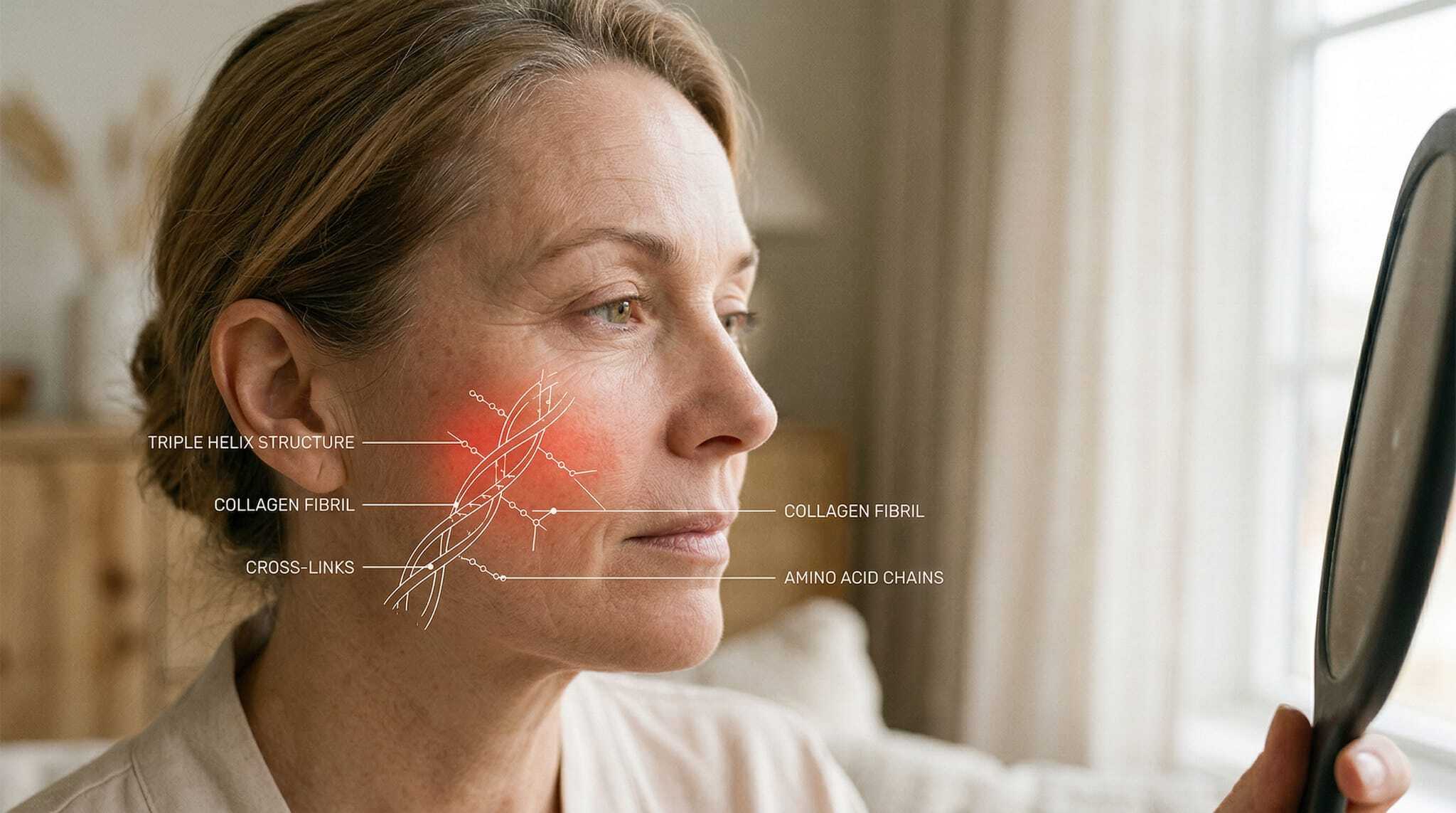
Microneedling and retinol both stimulate collagen production, but through completely different pathways. Microneedling triggers the wound-healing cascade. Retinol activates retinoid receptors on fibroblasts, directly upregulating the genes responsible for collagen synthesis.
Using both in a well-designed routine means you are driving collagen production from two independent directions — mechanical stimulation and biochemical signaling. Clinical data supports this combination approach: patients using retinol between microneedling sessions see enhanced and more sustained improvements in skin firmness and wrinkle depth compared to either treatment alone [5].
The timing matters, though. Retinol should not be applied immediately after microneedling — the micro-channels make skin hypersensitive, and retinol applied to compromised skin will cause unnecessary irritation. Most dermatologists recommend waiting 48 to 72 hours after professional microneedling before resuming retinol.
For the retinol itself, delivery technology determines how much active ingredient actually reaches the dermis. Conventional retinol formulations rely on chemicals and petroleum derivatives that break down the skin barrier to force penetration — a destructive mechanism that causes the burns, redness, and peeling that give retinol its reputation for harshness.
Nanoretinol® by North Biomedical® takes a fundamentally different approach. Its lipid nanoparticle encapsulation wraps retinol in biomimetic carriers that the skin recognizes as “self” — allowing passage through the epithelial barrier without damaging it. The result is +232% greater collagen recovery and +73% greater elastin recovery compared to conventional retinol. Combined with microneedling’s collagen induction, you are building structural support from both sides of the equation: the healing response generates new collagen and elastin, while Nanoretinol® sustains and amplifies that production between sessions.
What to Expect: Timeline and Maintenance
Microneedling is not a one-and-done treatment. Collagen remodeling takes time, and most dermatologists recommend three to six sessions spaced four to six weeks apart for optimal results.
Immediately after: Redness and mild swelling, similar to a moderate sunburn. This typically resolves within 24 to 48 hours.
Week 1–2: Skin may feel slightly rough as the healing cascade progresses. Minor flaking is normal.
Month 1–3: Gradual improvement in skin texture, tone, and firmness as new collagen deposition begins.
Month 3–6: The most significant visible changes. Type III collagen is remodeled into type I, producing measurable increases in skin thickness and elasticity [1].
Maintenance: Most patients benefit from maintenance sessions every three to six months to sustain results, since collagen loss continues at roughly 1% per year from age 25 onward.
Who Is a Good Candidate — and Who Is Not
Microneedling is safe for all skin tones, which is a significant advantage over laser treatments that carry higher risks for darker skin types [4]. Good candidates include anyone with fine lines, acne scarring, enlarged pores, mild skin laxity, or uneven texture.
However, microneedling is not appropriate for people with active acne, active skin infections, eczema or psoriasis flares, blood clotting disorders, or who are taking blood-thinning medications. Keloid-prone skin should be evaluated carefully, as the wound-healing stimulus could potentially worsen scarring in predisposed individuals [1].
As with any procedure that compromises the skin barrier, strict sun protection is essential during the healing period. A broad-spectrum SPF 30+ is non-negotiable for at least two weeks following treatment.
References
- McCormack HM, Azzopardi EA. “Microneedling.” StatPearls. Treasure Island (FL): StatPearls Publishing; 2026. NBK459344
- Fernandes D. “Minimally invasive percutaneous collagen induction.” Oral Maxillofac Surg Clin North Am. 2005;17(1):51-63. doi:10.1016/j.coms.2004.09.004
- Singh A, Yadav S. “Microneedling: Advances and widening horizons.” Indian Dermatol Online J. 2016;7(4):244-254. doi:10.4103/2229-5178.185468
- Jaiswal S, Jawade S. “Microneedling in Dermatology: A Comprehensive Review of Applications, Techniques, and Outcomes.” Cureus. 2024;16(9):e70033. doi:10.7759/cureus.70033
- Iriarte C, Awosika O, Rengifo-Pardo M, Ehrlich A. “Review of applications of microneedling in dermatology.” Clin Cosmet Investig Dermatol. 2017;10:289-298. doi:10.2147/CCID.S142450