Vitamin C Serum Benefits for Aging Skin: The Science-Backed Anti-Aging Powerhouse
How L-ascorbic acid fights photoaging, builds collagen, and fades dark spots — and why it works even better with the right retinol
Why Vitamin C Keeps Showing Up in Every Dermatologist’s Routine
Walk into any dermatology clinic and ask what single active ingredient most patients should be using alongside sunscreen. The answer, almost universally, is vitamin C. Not because it’s trendy — because it sits at the intersection of three aging pathways that matter most after 40: free radical damage, collagen decline, and hyperpigmentation.
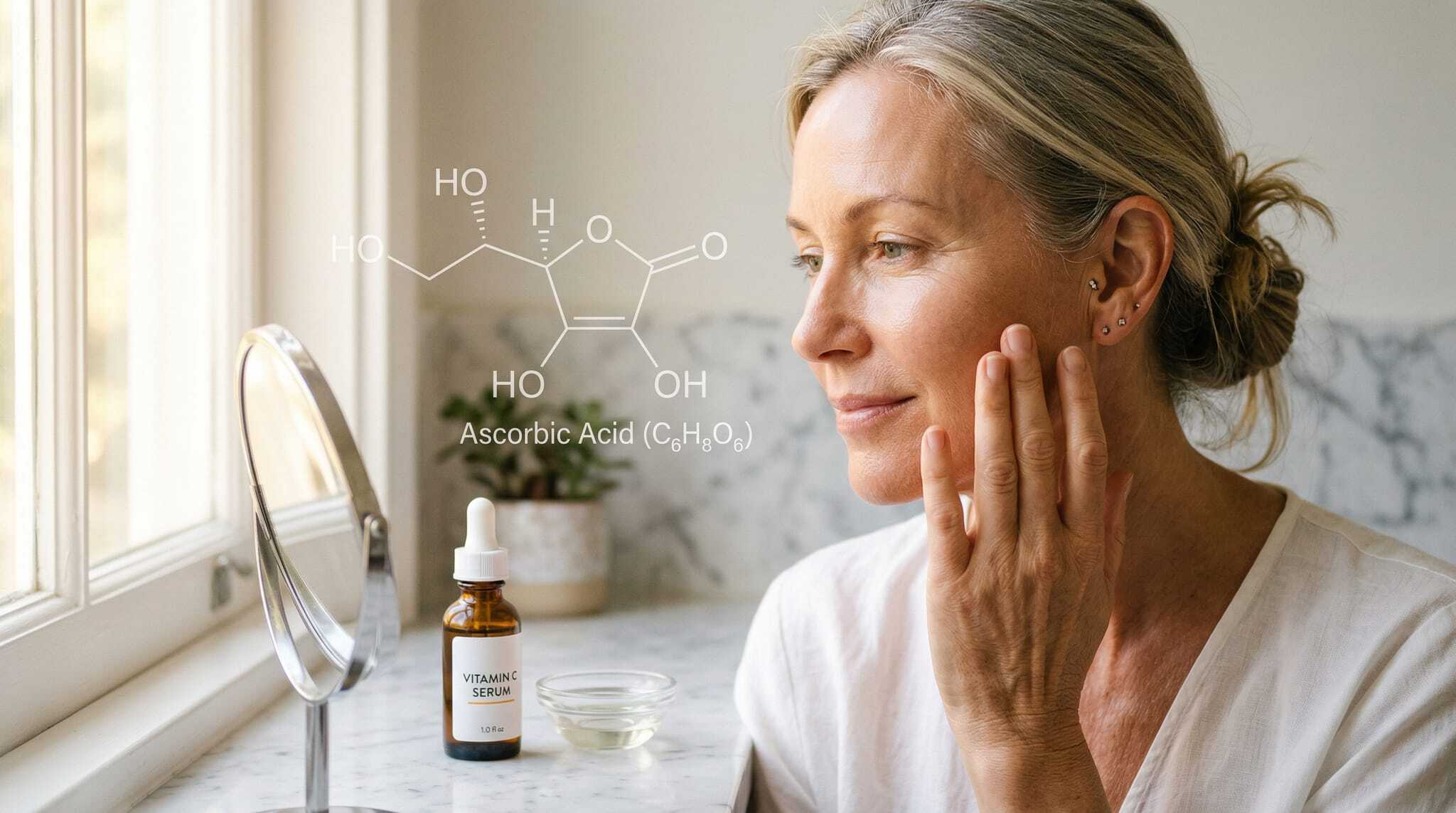
L-ascorbic acid — the biologically active form of vitamin C — is one of the most extensively studied molecules in dermatology. Decades of peer-reviewed research confirm that it does something remarkably few topical ingredients can: it both prevents further damage and partially reverses damage that’s already occurred [1]. Yet most people either use it incorrectly, choose unstable formulations, or abandon it before it has time to work.
This guide breaks down exactly what vitamin C does inside your skin, why concentration and formulation matter, and how to pair it with retinol for compounding anti-aging results, plus why a rinse-off vitamin C cleanser is no substitute.
The Three Mechanisms That Make Vitamin C Essential
Antioxidant Defense: Your Daily Shield Against Environmental Aging
Your skin faces a daily bombardment of reactive oxygen species (ROS) — generated by UV radiation, pollution, blue light, and normal metabolic processes. These free radicals strip electrons from cellular structures, degrading collagen fibers, damaging DNA, and triggering the inflammatory cascades that accelerate visible aging [2].
Vitamin C neutralizes these free radicals by donating electrons without becoming destructive itself. It’s a water-soluble antioxidant that operates in the aqueous compartments of your skin cells, complementing fat-soluble antioxidants like vitamin E. When both are present, vitamin E neutralizes free radicals in lipid membranes while vitamin C regenerates spent vitamin E — creating a recycling system that amplifies total antioxidant capacity [1].
This isn’t theoretical. A landmark double-blind study by Fitzpatrick and Rostan found that topical vitamin C applied to one side of the face for 12 weeks produced statistically significant improvements in fine wrinkling, tactile roughness, skin tone, and sallowness compared to the untreated side [3].
Collagen Synthesis: The Cofactor Your Fibroblasts Need
After age 25, collagen production declines roughly 1% per year. By your mid-40s, the cumulative deficit becomes visually apparent — loss of firmness, deeper nasolabial folds, and skin that doesn’t snap back the way it once did.
Vitamin C is not optional in collagen production. It serves as an essential cofactor for prolyl hydroxylase and lysyl hydroxylase — the enzymes that stabilize the collagen molecule’s triple-helix structure [4]. Without adequate vitamin C, fibroblasts still produce collagen, but the molecules are unstable and degrade rapidly. This is why scurvy — severe vitamin C deficiency — causes connective tissue breakdown throughout the body.
In skin, topical vitamin C has been shown to upregulate collagen gene expression in dermal fibroblasts, increasing both type I and type III collagen synthesis [4]. It also suppresses matrix metalloproteinases (MMPs), the enzymes that break down existing collagen. The net effect: more collagen produced, less collagen destroyed.
Brightening: How Vitamin C Fades Dark Spots
Hyperpigmentation — sun spots, melasma, post-inflammatory marks — is one of the most common complaints among women over 40. Vitamin C addresses this through a specific biochemical mechanism: it inhibits tyrosinase, the rate-limiting enzyme in melanin production [5].
Three factors determine whether the L-ascorbic acid in your bottle actually reaches your skin in active form.
Unlike hydroquinone, which can cause rebound hyperpigmentation and is restricted in several countries, vitamin C reduces melanin production without damaging melanocytes. The result is a gradual, even-toned brightening that typically becomes visible within 8–12 weeks of consistent use. Combined with its anti-inflammatory properties, it also helps prevent new dark spots from forming after UV exposure.
Concentration, pH, and Stability: Why Your Vitamin C Serum Might Not Be Working
Not all vitamin C serums are created equal. Three factors determine whether the L-ascorbic acid in your bottle actually reaches your skin in active form.
Concentration
Clinical studies demonstrating anti-aging benefits typically use concentrations between 10% and 20% [1]. Below 8%, efficacy drops significantly. Above 20%, irritation increases without proportional benefit — skin absorption plateaus around 20%, so higher concentrations waste active ingredient while stressing the barrier.
pH
L-ascorbic acid is only effectively absorbed through the stratum corneum at a pH below 3.5 [6]. Most effective formulations target a pH between 2.5 and 3.5. Higher pH values mean the vitamin C sits on the surface without penetrating. Formulations also drift out of that window as they oxidise, which is part of the wider question of whether skincare expires. It is also why a vitamin C face cream, which usually sits at a skin-friendly pH, tends to rely on more stable derivatives instead.
Stability
Here’s the paradox: L-ascorbic acid is the most potent form of vitamin C for skin, but it’s also the most unstable. It oxidizes rapidly when exposed to light, air, or water — which is why many vitamin C serums turn brown within weeks of opening. Oxidized vitamin C not only loses efficacy but can actually generate free radicals, doing the opposite of what you intended [6].
Look for serums in opaque, air-restrictive packaging. Derivatives like sodium ascorbyl phosphate and ascorbyl glucoside are more stable but convert to L-ascorbic acid at lower rates, requiring higher concentrations and longer timeframes to produce equivalent results, which is worth knowing before you buy a derivative-based vitamin C toner or vitamin C body lotion. The same trade-off matters even more around the eyes, where the skin is thinnest and a low-pH serum can sting, which is why we cover the gentler options separately in our guide to choosing a vitamin C eye cream for dark circles.
Vitamin C and Retinol: The Morning-Night Power Pair
If vitamin C is your shield, retinol is your rebuild signal. They work through completely different pathways — and that’s exactly why they complement each other so well.
Vitamin C protects existing structures from oxidative damage and stimulates collagen via the hydroxylase pathway. Retinol accelerates cell turnover, upregulates collagen gene expression through retinoic acid receptor activation, and restructures the dermal matrix over time [7]. One prevents destruction; the other drives reconstruction.
The conventional wisdom that you can’t use vitamin C and retinol together has been largely debunked. The key is timing: vitamin C in the morning (where its antioxidant properties complement sunscreen) and retinol at night (when cell turnover peaks and UV exposure isn’t a concern).
Oxidized vitamin C not only loses efficacy but can actually generate free radicals, doing the opposite of what you intended.
For women over 40 dealing with both photoaging and hormonal skin changes, this combination addresses the problem from both sides. Vitamin C handles the oxidative and pigmentation component; retinol addresses the structural decline in collagen and elastin that accelerates during perimenopause and menopause.
Why Delivery Technology Matters
One challenge with retinol is that conventional formulations often irritate the skin before they deliver meaningful results — the same barrier-penetration problem that affects vitamin C. Encapsulated retinol technologies solve this by protecting the retinol molecule during delivery and releasing it gradually within the dermis.
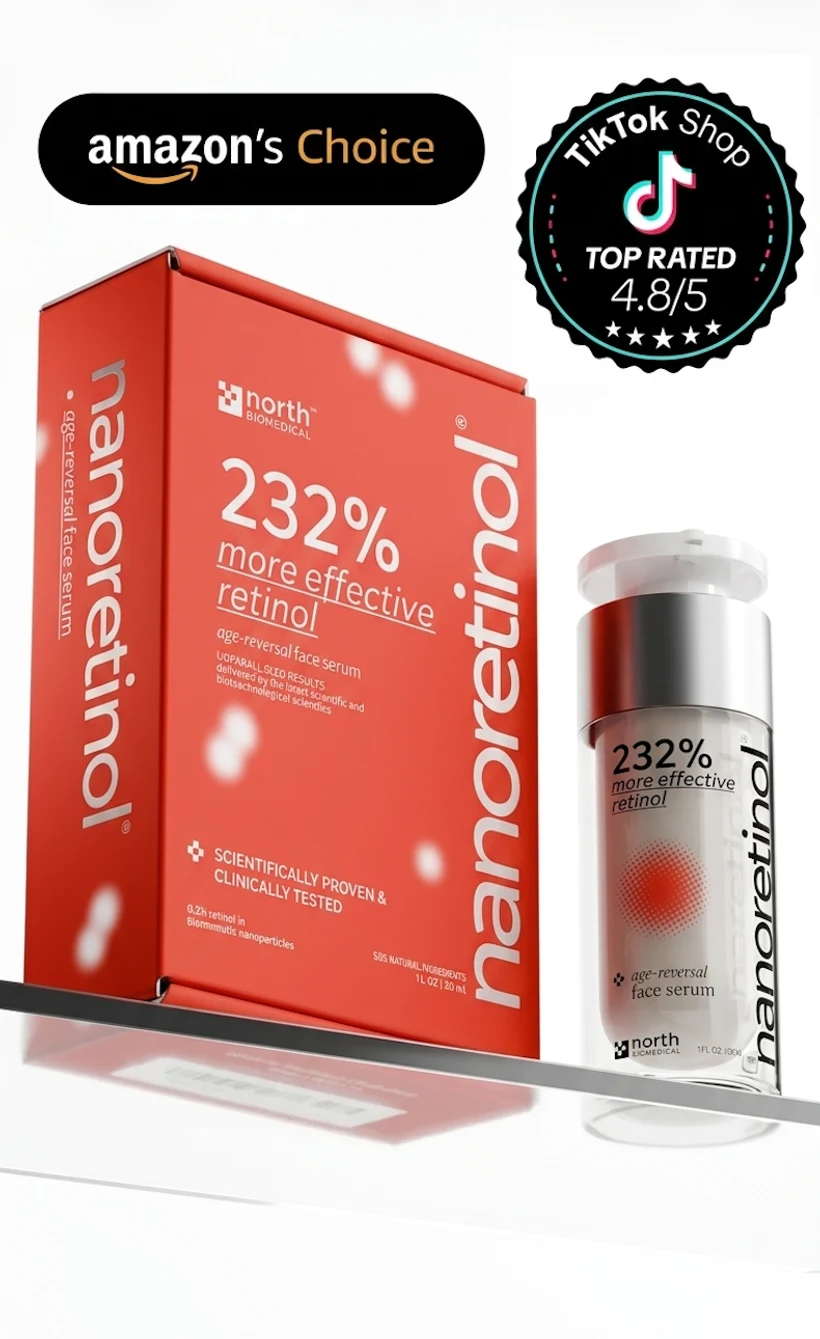
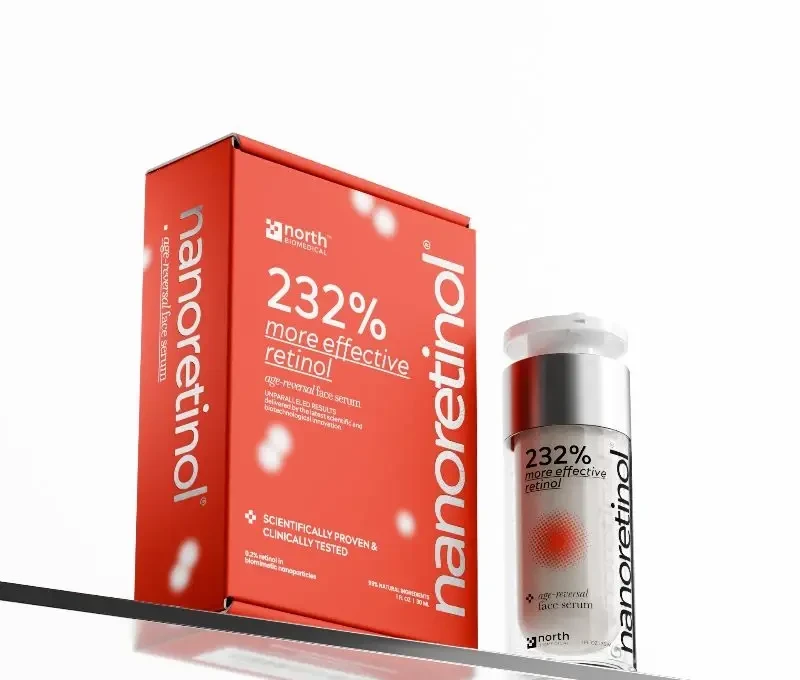
Nanoretinol® uses biomimetic lipid nanoparticles that the skin recognizes as its own cellular material, allowing retinol to bypass the epithelial barrier without the irritation caused by traditional chemical penetration enhancers. Clinical testing showed +232% greater collagen recovery and +73% greater elastin recovery compared to conventional retinol — with significantly reduced side effects [8]. For anyone who has tried retinol and given up due to redness, peeling, or sensitivity, this is the technological breakthrough that changes the equation.
When you pair a stable, properly formulated vitamin C serum in the morning with Nanoretinol® at night, you get the full spectrum of anti-aging defense: antioxidant protection, melanin regulation, and deep collagen rebuilding — without the irritation tradeoff.
How to Start Using Vitamin C the Right Way
Week 1–2: Apply every other morning after cleansing, before sunscreen. Start with a 10–15% L-ascorbic acid serum. A few drops spread across the face and neck is sufficient.
Week 3–4: If no irritation occurs, move to daily morning application. If you experience tingling that subsides within a minute, that’s normal (it’s the low pH). If stinging persists, your barrier may need support — add a hyaluronic acid serum or ceramide moisturizer between the vitamin C and sunscreen.
Month 2+: You should start noticing improved radiance and more even tone. Deeper improvements in fine lines and firmness typically take 12–24 weeks of consistent use [3].
Storage: Keep your vitamin C serum in a cool, dark place. If it turns dark orange or brown, it has oxidized — replace it. Some oxidation is inevitable once opened, so use the bottle within 2–3 months.
What the Evidence Actually Promises
Vitamin C is not a miracle ingredient — but it is one of the very few topical actives with decades of controlled clinical evidence behind it. Used consistently at the right concentration and pH, it measurably reduces fine wrinkles, fades hyperpigmentation, improves skin firmness, and provides daily photoprotection that sunscreen alone cannot achieve [1][3].
Its greatest strength may be its synergy with other proven actives. Paired with niacinamide for barrier support (we break down how to choose between them in niacinamide vs vitamin C), or with retinol for deep structural repair, vitamin C becomes the foundational layer of any evidence-based anti-aging routine — the ingredient that makes everything else work harder.
References
-
Pullar JM, Carr AC, Vissers MCM. “The Roles of Vitamin C in Skin Health.” Nutrients. 2017;9(8):866. doi:10.3390/nu9080866
-
Al-Niaimi F, Chiang NYZ. “Topical Vitamin C and the Skin: Mechanisms of Action and Clinical Applications.” Journal of Clinical and Aesthetic Dermatology. 2017;10(7):14-17. PMID: 29104718
-
Fitzpatrick RE, Rostan EF. “Double-blind, half-face study comparing topical vitamin C and vehicle for rejuvenation of photodamage.” Dermatologic Surgery. 2002;28(3):231-236. doi:10.1046/j.1524-4725.2002.01129.x
-
Boo YC. “Ascorbic Acid (Vitamin C) as a Cosmeceutical to Increase Dermal Collagen for Skin Antiaging Purposes: Emerging Combination Therapies.” Antioxidants. 2022;11(9):1663. doi:10.3390/antiox11091663
-
Telang PS. “Vitamin C in Dermatology.” Indian Dermatology Online Journal. 2013;4(2):143-146. doi:10.4103/2229-5178.110593
-
Pinnell SR, Yang H, Omar M, et al. “Topical L-ascorbic acid: percutaneous absorption studies.” Dermatologic Surgery. 2001;27(2):137-142. doi:10.1046/j.1524-4725.2001.00264.x
-
Mukherjee S, Date A, Patravale V, Korting HC, Roeder A, Weindl G. “Retinoids in the treatment of skin aging: an overview of clinical efficacy and safety.” Clinical Interventions in Aging. 2006;1(4):327-348. doi:10.2147/ciia.2006.1.4.327
-
North Biomedical LLC. “Nanoretinol® vs. Conventional Retinol: Efficacy in Collagen and Elastin Recovery.” Clinical Study Summary, 2024.