Skin Cycling With Retinol: Does the TikTok Trend Have Real Science Behind It?
The 4-night protocol explained — what's happening at the cellular level and why strategic rest matters
The 4-Night Idea That Went Viral — and Why It Actually Works
Skin cycling is one of the few social media skincare trends with real scientific underpinning. The concept — popularized by dermatologist Dr. Whitney Bowe on TikTok — is simple: instead of applying your active ingredients every single night, you rotate them strategically with recovery nights in between.
The standard skin cycling protocol follows a 4-night loop:
- Night 1: Chemical exfoliant (AHA, BHA, or both)
- Night 2: Retinol
- Night 3 & 4: Recovery (moisturizer, barrier repair, no actives)
- Repeat
It sounds intuitive, but the mechanism behind why this works goes deeper than most people realize. This isn’t just a way to “be gentle with your skin” — it’s a protocol that leverages how your skin actually processes and responds to active ingredients at the cellular level.
Night 1: Why Exfoliation Comes First
The first night sets up everything that follows. Chemical exfoliants — alpha-hydroxy acids (AHAs) like glycolic and lactic acid, or beta-hydroxy acids (BHAs) like salicylic acid — work by breaking the intercellular bonds holding dead skin cells together in the stratum corneum.
When the stratum corneum is thick and compacted with dead cells, active ingredients like retinol face a literal physical barrier before they even reach living cells. By clearing that layer first, you’re improving penetration efficiency for Night 2 [1].
The exfoliation phase also:
- Unclogs pores (BHAs are lipophilic, making them effective inside oil-filled follicles)
- Improves skin texture — clinical studies show AHAs stimulate collagen and elastin synthesis and enhance skin texture and luminosity [1]
- Kickstarts cell renewal by signaling that the outermost layer needs replacement
The cellular message sent by exfoliation is: start producing new cells. Retinol then amplifies and directs that message on Night 2.
Night 2: The Retinol Phase
This is where the long-term transformation happens. Retinol (vitamin A) is the most well-studied topical ingredient in dermatology with decades of clinical evidence confirming it works.
When retinol penetrates skin, it’s converted to retinoic acid — the biologically active form — which binds to nuclear retinoic acid receptors (RARs) and regulates the expression of hundreds of genes [2]. The key outcomes:
Collagen stimulation. Retinol significantly increases type I procollagen — the precursor to the structural collagen that keeps skin firm. A randomized controlled trial by Kafi et al. found that topical 0.4% retinol increased procollagen I immunostaining and glycosaminoglycan expression compared to vehicle-treated skin, resulting in significant improvement in fine wrinkling over 24 weeks [3].
This isn’t just a way to “be gentle with your skin” — it’s a protocol that leverages how your skin actually processes and responds to active ingredients at the cellular level.
Collagen protection. Beyond making new collagen, retinol suppresses CCN1 — a protein that promotes collagen degradation. By downregulating CCN1, retinol both builds new collagen and protects what’s already there [2].
Accelerated cell turnover. Retinol increases epidermal proliferation and normalizes differentiation, pushing newer, healthier cells to the surface more rapidly.
Night 2 works best after Night 1 because the freshly exfoliated skin allows retinol to penetrate more efficiently, reaching the dermal cells where it triggers collagen synthesis, while the dead-cell barrier is temporarily minimized.
Nights 3 and 4: The Recovery Phase (This Is Where the Magic Actually Happens)
This is the most underappreciated part of skin cycling — and the part that makes the whole system work.
Every time you apply an active like retinol or an AHA, you’re creating controlled stress on the skin. Retinol accelerates cell turnover faster than the barrier can keep pace. AHAs temporarily loosen the stratum corneum. Both are intentional disruptions that serve a purpose — but only if the skin is given time to consolidate the gains.
During recovery nights, the skin:
- Repairs intercellular lipids (ceramides, cholesterol, fatty acids) that form the moisture barrier
- Completes the collagen synthesis process triggered by retinol
- Normalizes transepidermal water loss (TEWL) levels
- Recalibrates inflammation responses
If you use actives every single night without recovery, the barrier never fully rebuilds between cycles. The cumulative effect is chronic barrier disruption — exactly the irritation, sensitivity, and dryness that causes people to abandon retinol prematurely.
The 4-night cycle prevents this by design.
What to use on recovery nights:
- Gentle cleanser, no actives
- A barrier-focused moisturizer with ceramides, fatty acids, or niacinamide
- Hyaluronic acid serum for hydration (see our article on retinol and hyaluronic acid for why this pairing is especially effective)
- A good broad-spectrum SPF in the morning — always
Who Benefits Most From Skin Cycling?
Skin cycling is particularly well-suited to three groups:
Retinol beginners. If you’ve never used retinol and want to build tolerance gradually, cycling is the ideal starting protocol. Rather than starting on consecutive nights and managing overwhelming adjustment effects, you introduce one retinol night per cycle with built-in recovery. Over 4-8 weeks, most people can tolerate retinol on more frequent nights [4].
If you use actives every single night without recovery, the barrier never fully rebuilds between cycles.
People with sensitive or reactive skin. The recovery phase provides essential buffer time. For those whose skin reacts intensely to actives, cycling dramatically reduces the cumulative irritation load. Our guide for sensitive skin covers additional strategies.
Advanced users hitting a plateau. Paradoxically, cycling can benefit experienced retinol users too — by alternating with AHA exfoliation, you’re maximizing the penetration window for retinol and adding a complementary mechanism (exfoliant-driven collagen stimulation) to the retinoid pathway.
How to Customize the Cycle
The 4-night protocol is a starting framework, not a fixed rule.
Extend recovery if needed. If 2 nights isn’t enough recovery time, try a 5- or 6-night cycle (3-4 recovery nights). Some people with very sensitive skin do best with 3 recovery nights indefinitely.
Adjust exfoliant strength. Start with a lower AHA percentage (5-10% glycolic or lactic) before moving to higher concentrations. BHAs (1-2% salicylic acid) are gentler and oil-soluble, making them better for acne-prone skin.
Layer intelligently on recovery nights. These nights are an opportunity to load on hydration. Hyaluronic acid layered under a ceramide moisturizer creates an optimal environment for barrier repair.
Don’t skip sunscreen. AHAs increase photosensitivity for several days after use. Retinol degrades in UV light and increases sun sensitivity too. Broad-spectrum SPF 30+ is non-negotiable on the mornings following both active nights [4].
Skin Cycling Is a Framework for Retinol Tolerance — Not a Shortcut
One critical clarification: skin cycling is not a way to get results faster. It’s a way to sustain results longer by preventing the barrier dysfunction that forces people to stop using retinol altogether.
The research on retinol is clear — consistent use over months and years drives meaningful collagen remodeling, wrinkle reduction, and skin texture improvement [3]. Skin cycling supports that consistency by making retinol tolerable enough to use indefinitely.
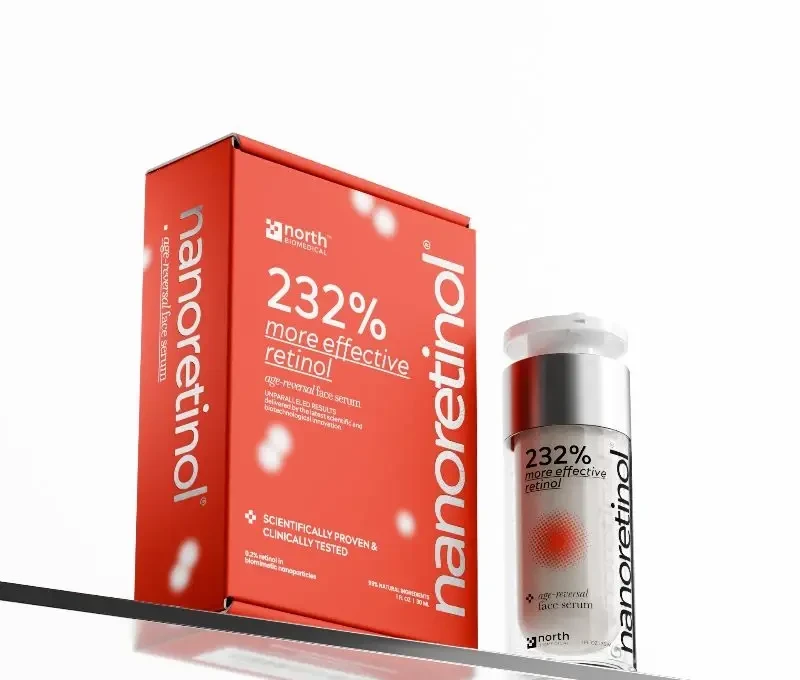
Why Nanoretinol® Makes Skin Cycling More Effective
Traditional retinol formulations create a delivery challenge: they must disrupt the skin barrier to penetrate, which conflicts with the barrier-repair goal of the recovery phase.
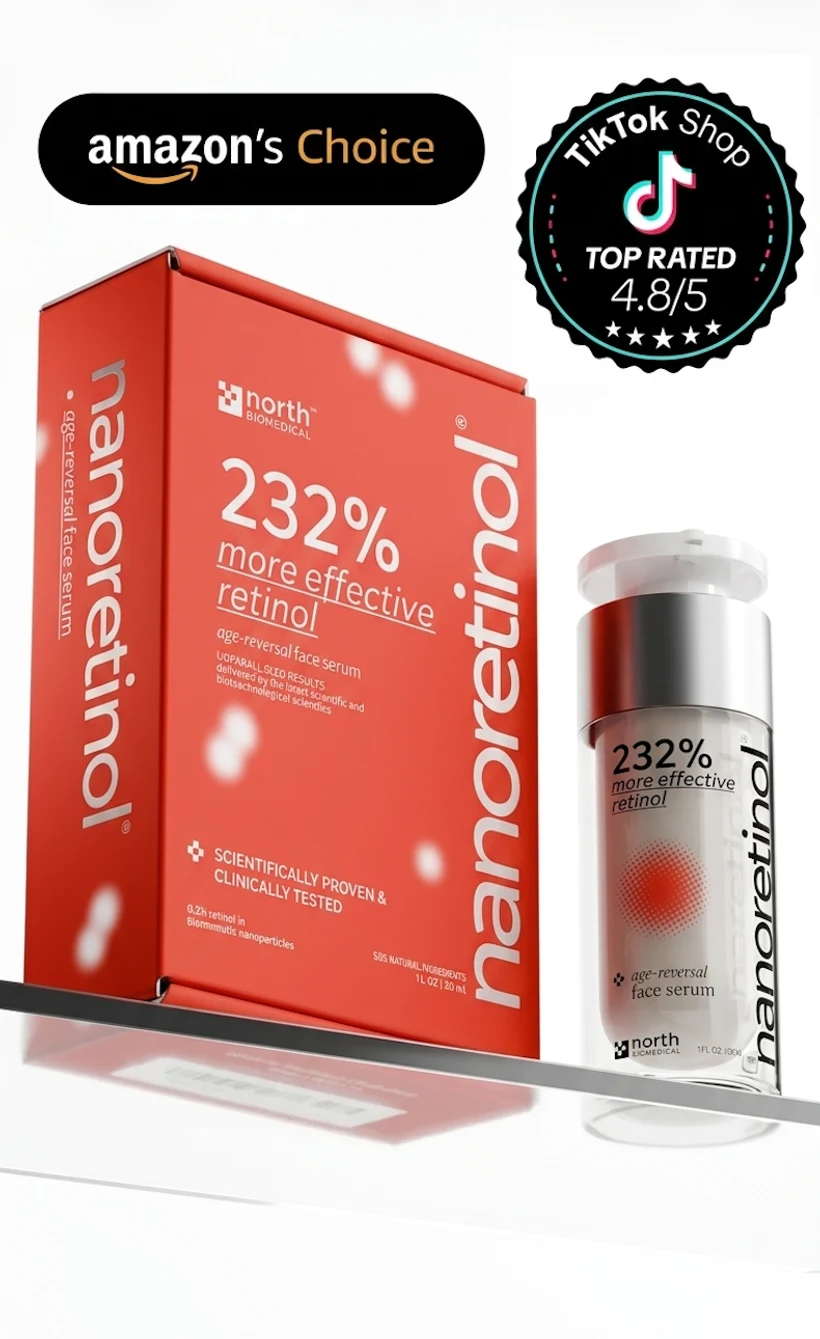
Nanoretinol® by North Biomedical® solves this through lipid nanoparticle encapsulation. The biomimetic particles are recognized as “self” by skin cells — they bypass the barrier without disrupting it, delivering a full payload of retinol directly to target cells [5]. This means:
- Less barrier disruption per dose compared to conventional retinol
- Reduced retinoid dermatitis — the skin adaptation period is gentler
- Higher bioavailable retinol reaching dermal fibroblasts where collagen synthesis occurs
In a skin cycling protocol, this matters significantly: the recovery nights can focus entirely on consolidating gains rather than repairing unnecessary damage. You get the full collagen-stimulating benefit of a retinol night without paying as high an inflammatory toll.
The result — clinically demonstrated +232% more collagen recovery than conventional retinol — reflects what happens when delivery efficiency meets intelligent protocol design.
Skin cycling is a smart framework. Nanoretinol® is the smarter ingredient to cycle with.
References
-
Almeman AA. “Evaluating the Efficacy and Safety of Alpha-Hydroxy Acids in Dermatological Practice: A Comprehensive Clinical and Legal Review.” Clin Cosmet Investig Dermatol. 2024;17:1861-1874. PMID:39050562
-
Quan T. “Human Skin Aging and the Anti-Aging Properties of Retinol.” Biomolecules. 2023;13(11):1614. doi:10.3390/biom13111614
-
Kafi R, Kwak HSR, Schumacher WE, et al. “Improvement of naturally aged skin with vitamin A (retinol).” Arch Dermatol. 2007;143(5):606-612. doi:10.1001/archderm.143.5.606
-
Draelos ZD, et al. “Top weapons in skin aging and actives to target the consequences of skin cell senescence.” J Eur Acad Dermatol Venereol. 2024;38 Suppl 4:15-22. doi:10.1111/jdv.19648
-
Mukherjee S, Date A, Patravale V, et al. “Retinoids in the treatment of skin aging: an overview of clinical efficacy and safety.” Clin Interv Aging. 2006;1(4):327-348. doi:10.2147/ciia.2006.1.4.327