Retinol Percentage Guide: 0.1%, 0.3%, 0.5% or 1%?
Why higher isn't always better, and how delivery technology changes the concentration equation entirely
What retinol percentage should you use? For many beginners, 0.1%–0.3% is a reasonable starting range; 0.5% may suit people who already tolerate retinol, while 1% carries a greater irritation risk and is not automatically more effective in real-world use. Formulation, stability, frequency, and tolerance all influence the dose the skin actually receives [2][4][5]. Body products routinely run higher than face products, and the best retinol body lotion explains why that number matters less than the vehicle carrying it.
These percentages apply to retinol, not retinaldehyde or prescription tretinoin. Numbers cannot be compared directly across different retinoids.
Retinol Percentage: The Short Answer
| Retinol percentage | Practical interpretation |
|---|---|
| Below 0.1% | A very gentle introduction, but evidence for visible anti-aging change is limited. |
| 0.1%–0.3% | A sensible beginner or sensitive-skin range; 0.3% has human clinical evidence [2]. |
| 0.5% | A step-up option for established users; may add irritation with only modest incremental benefit [2][3]. |
| 1% | A high OTC strength for experienced, tolerant users—not a default starting point. |
The best percentage is the lowest one that produces progress without repeatedly forcing you to stop because of irritation.
The Retinol Dose-Response Curve
In pharmacology, a dose-response curve describes the relationship between how much of a drug you administer and how much effect you get. For most drugs, this curve is sigmoidal: efficacy increases with dose up to a plateau, after which more drug produces diminishing returns and escalating side effects.
Retinol follows this pattern closely. Clinical trials have mapped the curve across OTC-relevant concentrations:
Below 0.1%: Subtherapeutic for Most
Concentrations below 0.1% retinol may provide mild antioxidant benefits but generally fall below the threshold for meaningful collagen stimulation or wrinkle reduction. A Cochrane review of photodamage interventions found that very low tretinoin concentrations (0.001% and 0.01%) failed to produce statistically significant improvements in photoaging, suggesting a minimum effective dose exists for retinoid-class molecules [1].
That said, extremely low concentrations aren’t useless — they can serve as a gentle introduction for sensitive skin before titrating up.
0.1%–0.3%: The Gentle Therapeutic Range
This is where measurable anti-aging activity begins. The Zasada et al. randomized controlled trial (2020) tested 0.3% retinol serum and found statistically significant improvements in skin roughness, pigmentation, wrinkle depth, and elasticity over 12 weeks. The 0.3% concentration delivered these results with minimal irritation — predominantly mild dryness that resolved within the first few weeks [2].
For retinol beginners, this range represents the sweet spot: strong enough to produce clinical results, gentle enough that most users can maintain consistent daily application without interruption.
0.5%: The Clinical Standard
Many dermatologists consider 0.5% the standard effective concentration for anti-aging in OTC retinol products. A 2013 clinical trial by Gold et al. specifically tested 0.5% retinol for photodamage treatment and found modest but measurable improvements in wrinkles and skin texture at 60–80 days. Notably, the researchers observed that results at this concentration were dose-dependent — higher concentrations in the same study produced more pronounced effects, but with correspondingly more irritation [3].
The Zasada study compared 0.3% and 0.5% retinol directly and found that while 0.5% produced slightly greater improvements in some parameters, it also caused “more frequent and more intense” adverse events. The clinical benefit difference between the two concentrations was modest relative to the tolerability gap [2].
0.5%–1.0%: Aggressive Territory
Concentrations approaching 1% retinol represent the upper bound of OTC formulations. At this level, anti-aging efficacy is well-documented, but the irritation profile escalates significantly. Dryness, redness, peeling, and stinging become common, particularly in the first 4–8 weeks [4].
Many dermatologists consider 0.5% the standard effective concentration for anti-aging in OTC retinol products.
A key finding from multiple studies: users of higher-concentration retinol products often reduce application frequency due to irritation — applying every other night or every third night instead of nightly. This reduces the total retinol exposure over time, potentially negating the concentration advantage [4].
Above 1%: Diminishing Returns
Very high OTC retinol concentrations (1–2%) exist but face two problems. First, retinol stability becomes increasingly difficult to maintain at higher concentrations — more molecule means more potential for degradation. Second, the dose-response curve plateaus: doubling the concentration doesn’t double the collagen response. It roughly doubles the irritation [4][5].
For stronger retinoid activity, dermatologists prescribe tretinoin (retinoic acid) rather than escalating retinol concentration, because tretinoin skips the conversion steps entirely and acts directly on nuclear receptors.
Why the Number on the Label Is Misleading
Here’s the part the marketing doesn’t tell you. The concentration listed on a retinol product describes how much retinol was added to the formulation at the time of manufacture. It tells you nothing about: How much survives to reach your skin. Retinol degrades rapidly when exposed to light, air, and heat. Studies on retinoid stability have shown that unprotected retinol can lose 50% or more of its activity within months of manufacture, depending on packaging and storage conditions [4]. That 1% retinol might functionally be 0.5% by the time you open it.
How much penetrates the epidermis. The epithelial barrier is designed to keep foreign molecules out. Traditional retinol formulations rely on chemical penetration enhancers to force passage through the stratum corneum. The efficiency of this process varies enormously between formulations — typically only a small fraction of the applied retinol reaches the dermis where collagen-producing fibroblasts reside [5].
How much converts to retinoic acid. Even retinol that reaches the dermis must undergo two enzymatic conversion steps (retinol → retinaldehyde → retinoic acid) before it can bind to nuclear receptors. The efficiency of this conversion pathway varies between individuals and is rate-limited by enzyme availability [4].
When you account for degradation, poor penetration, and conversion inefficiency, a 1% retinol product might deliver less active retinoic acid to target cells than a 0.2% retinol in an advanced encapsulated delivery system.
The Formulation Vehicle Matters More Than Concentration
A critical lesson from the clinical literature: the vehicle (the formula the retinol sits in) profoundly affects outcomes.
The Zasada study used a “liquid crystal formulation” — a structured vehicle designed to stabilize retinol and enhance skin penetration. The researchers specifically noted that the vehicle design contributed to the favorable efficacy-to-tolerability ratio they observed [2].
The Gold et al. study noted that their retinol was delivered in a “novel formulation” with enhanced bioavailability, and results were notably better than expected for the concentrations tested [3].
A comprehensive 2022 review by Milosheska and Roškar explicitly compared conventional retinol formulations against nanoformulations (lipid nanoparticles, solid lipid nanoparticles, nanostructured lipid carriers). Their conclusion: nanoformulations consistently outperformed conventional formulations at equivalent concentrations, with enhanced stability, improved penetration, sustained release, and reduced irritation [5].
The concentration on the label is an input. What matters is the output — how much active retinoic acid reaches dermal fibroblasts. That’s a function of formulation engineering, not the number printed on the box. We turn that principle into a practical shopping checklist in our guide to choosing the best retinol serum.
A nanoparticle-delivered 0.2% retinol that bypasses the barrier without chemical enhancers will likely outperform a standard 0.5% that inflames your skin and forces irregular use.
How to Choose Your Concentration
If You’re New to Retinol
Start around 0.1%–0.3% and introduce it gradually rather than beginning with nightly use. Focus on building consistency and letting your skin adapt through the adjustment phase. After 8–12 weeks of tolerable, consistent use, assess your results before considering any increase.
Our beginner’s guide walks through the full onboarding process.
If You’ve Used Retinol for 3+ Months Without Issues
You can consider stepping up to 0.5% if your current results feel plateaued. But first ask: is my current product well-formulated? Switching to a better delivery vehicle at the same concentration often produces more improvement than increasing the percentage in a mediocre formula.
If You’re Experienced and Tolerant
If 0.5% retinol produces no irritation and you want more aggressive results, 1% is the reasonable ceiling for OTC products. Beyond that, discuss prescription tretinoin with a dermatologist.
If You Have Sensitive Skin
Start at 0.1%–0.2% and prioritize formulation quality above all. A nanoparticle-delivered 0.2% retinol that bypasses the barrier without chemical enhancers will likely outperform a standard 0.5% that inflames your skin and forces irregular use.
How Nanoretinol® Changes the Concentration Conversation
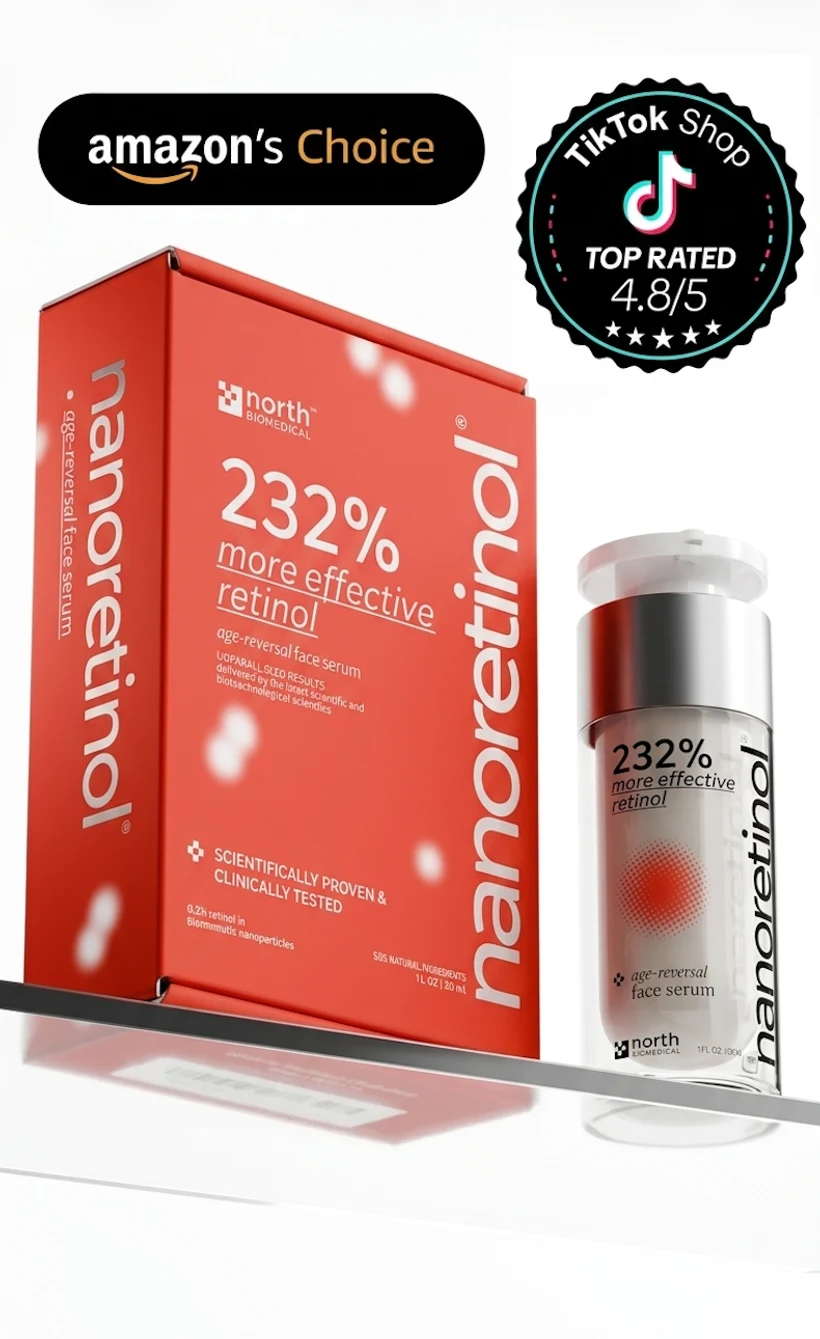
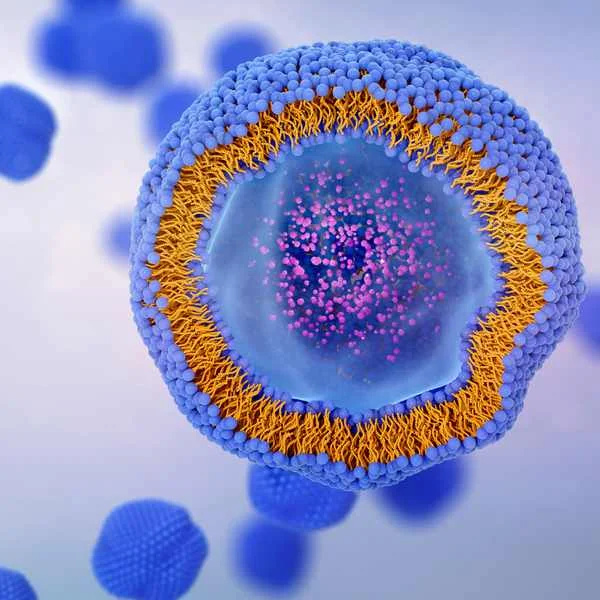
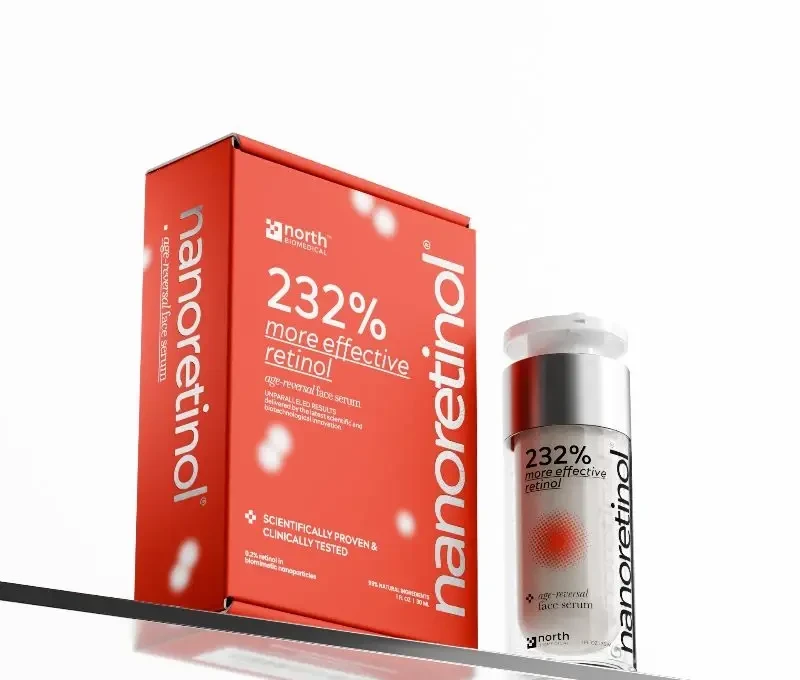
North Biomedical® formulated Nanoretinol® at 0.2% retinol — a concentration that might seem modest on a label obsessed with bigger numbers. But 0.2% was a deliberate engineering decision, not a limitation. The biomimetic lipid nanoparticles protect retinol from degradation (solving the stability problem) and deliver it past the epithelial barrier via biological recognition rather than chemical disruption (solving the penetration problem). The result: more retinol reaches target cells at 0.2% than conventional formulations deliver at far higher concentrations.
The clinical data confirms this. Nanoretinol® achieves +232% more effective collagen recovery and +73% more effective elastin recovery compared to conventional retinol — not because of a higher dose, but because the delivery technology eliminates the waste that plagues traditional formulations.
In 56-day trials, users saw +61% increase in skin firmness and +56% increase in skin elasticity — outcomes that rival what published studies report for 0.5%–1% conventional retinol over 12–24 weeks.
This is the key insight: when delivery efficiency is high, you don’t need aggressive concentrations. You need enough retinol to saturate the conversion pathway in dermal cells — and a nanoparticle delivery system achieves that at concentrations that would be subtherapeutic in conventional formulations.
What Actually Determines Your Results
When choosing a retinol product, rank these factors in order of importance:
1. Consistency of use. A product you can tolerate nightly will always beat one that’s too strong to use regularly. Cumulative exposure matters more than peak dose.
2. Delivery technology. How much retinol survives formulation, storage, and the skin barrier to reach dermal fibroblasts? This is the biggest variable between products at the same labeled concentration.
3. Formulation stability. Is the retinol protected from light and oxygen? Airless pumps, opaque packaging, and encapsulation technologies preserve potency. Jars with open lids do not.
4. Concentration. Yes, it matters — but it’s fourth on the list, not first. Within the 0.2%–0.5% range, the differences are far less significant than the three factors above.
The retinol concentration race is a marketing story. The science points to a more nuanced truth: it’s not about how much retinol you put on your skin. It’s about how much reaches the cells that need it.
Retinol Percentage: Quick Questions
Is 0.5% retinol twice as effective as 0.25%?
No. Retinol does not have a simple linear dose-response relationship, and percentages say nothing about stability or delivery. A direct comparison of 0.3% and 0.5% found benefits with both, alongside more frequent and intense adverse effects at 0.5% [2].
Should a beginner start with 1% retinol?
Usually not. Starting lower and increasing only after the skin adapts makes consistent use more achievable. Persistent burning, marked redness, swelling, or cracking are reasons to stop and seek professional advice.
Is retinol percentage the same as tretinoin strength?
No. Retinol must be converted in the skin before it becomes retinoic acid; tretinoin is retinoic acid. A 0.5% retinol product is not equivalent to 0.05% tretinoin [4]. Before choosing a strength at all, when to start using retinol covers whether it is the right moment to begin.
References
-
Samuel M, Brooke RC, Hollis S, Griffiths CEM. “Interventions for photodamaged skin.” Cochrane Database of Systematic Reviews. 2005;(1):CD001782. doi:10.1002/14651858.CD001782.pub2
-
Zasada M, Budzisz E. “A Clinical Anti-Ageing Comparative Study of 0.3 and 0.5% Retinol Serums: A Clinically Controlled Trial.” Skin Pharmacology and Physiology. 2020;33(2):102-116. doi:10.1159/000508168
-
Gold MH, Kircik LH, Bucay VW, Kiripolsky MG, Biron JA. “Treatment of facial photodamage using a novel retinol formulation.” Journal of Drugs in Dermatology. 2013;12(5):533-540. PMID: 23652947
-
Mukherjee S, Date A, Patravale V, Korting HC, Roeder A, Weindl G. “Retinoids in the treatment of skin aging: an overview of clinical efficacy and safety.” Clinical Interventions in Aging. 2006;1(4):327-348. doi:10.2147/ciia.2006.1.4.327
-
Milosheska D, Roškar R. “Use of Retinoids in Topical Antiaging Treatments: A Focused Review of Clinical Evidence for Conventional and Nanoformulations.” Advances in Therapy. 2022;39(12):5351-5375. doi:10.1007/s12325-022-02319-7