Retinol for Menopausal Skin: How to Fight Hormonal Aging
Why menopause accelerates skin aging — and how retinol can counteract it
The Skin Change Nobody Warns You About
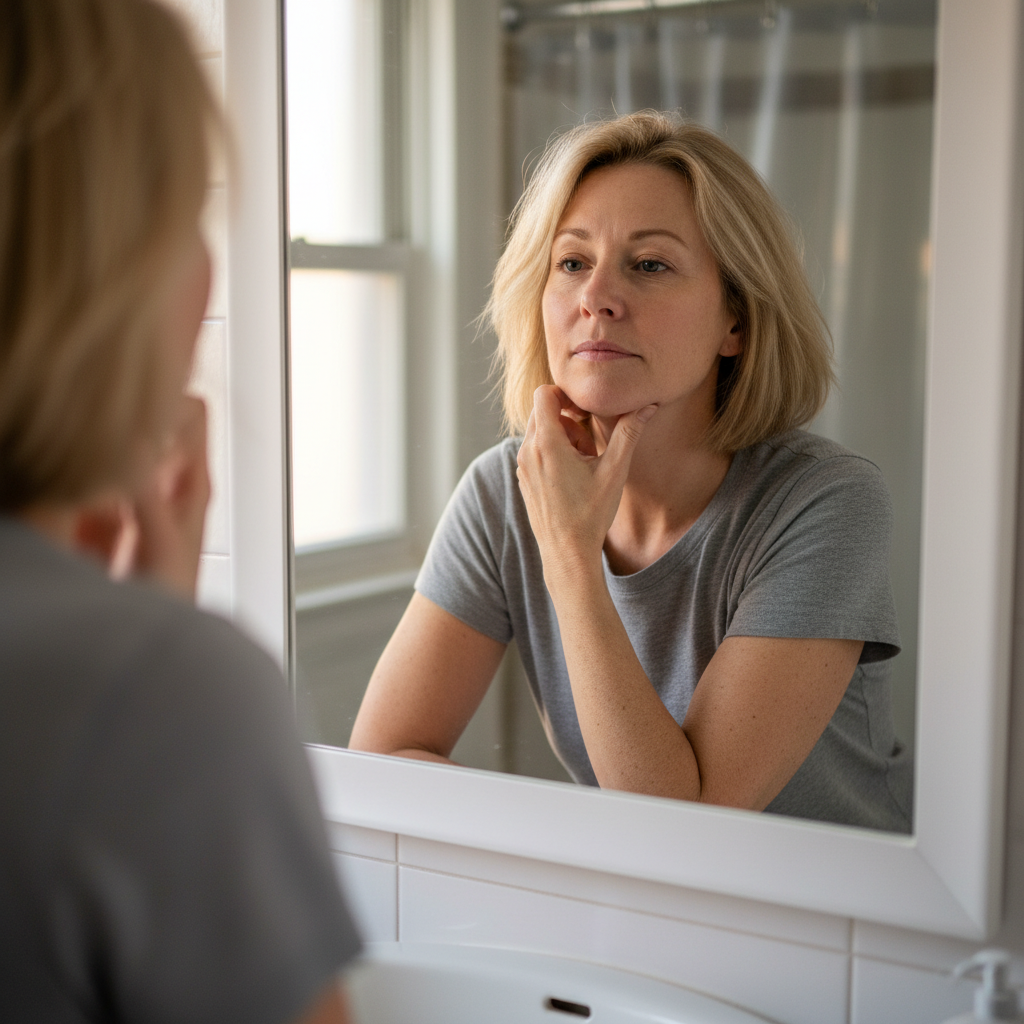
Most women are prepared for hot flashes, mood shifts, and sleep disruption. Very few are told that menopause will fundamentally alter the structure of their skin — and do it fast.
Within the first five years after menopause, skin loses approximately 30% of its collagen [1]. That’s not a gradual decline. That’s a structural collapse happening in real time, driven by one primary event: the sharp drop in estrogen production.
Understanding this mechanism isn’t just academic. It changes how you approach skincare — and it makes the case for retinol stronger than at almost any other life stage.
What Estrogen Actually Does for Skin
Estrogen isn’t just a reproductive hormone. It’s one of the most important signaling molecules for skin health, and its receptors are found throughout the dermis and epidermis.
When estrogen levels are normal, it drives several critical processes: stimulating fibroblasts to produce collagen and elastin, maintaining skin thickness, supporting hydration through glycosaminoglycan production, promoting wound healing, and maintaining the skin’s microvascular network [2].
When estrogen drops — as it does during perimenopause and menopause — every one of these processes slows or degrades. The result is a cascade of visible changes: thinner skin, increased dryness, loss of firmness, deeper wrinkles, and reduced elasticity [3]. These changes aren’t cosmetic inconveniences. They reflect genuine structural deterioration of the dermal extracellular matrix.
The collagen loss is particularly significant. Collagen makes up roughly 75-80% of skin’s dry weight, and it’s the primary structural protein responsible for firmness and resilience. Losing 30% of it in five years is equivalent to roughly two decades of normal chronological aging compressed into a fraction of the time [1].
Why Retinol Matters More After Menopause
Retinol — vitamin A — is the most extensively studied topical ingredient for collagen restoration. Its mechanism of action directly addresses the specific pathology of menopausal skin aging.
Here’s what happens when retinol reaches dermal fibroblasts: it’s converted through a two-step enzymatic process into retinoic acid, which binds to nuclear retinoic acid receptors (RARs). These receptors function as transcription factors, directly upregulating genes involved in collagen synthesis — particularly procollagen type I and type III [4].
But retinol doesn’t just build collagen. It simultaneously suppresses the enzymes that destroy it.
Within the first five years after menopause, skin loses approximately 30% of its collagen.
Matrix metalloproteinases (MMPs) — particularly MMP-1, MMP-3, and MMP-9 — are collagen-degrading enzymes that increase with both age and estrogen deficiency [5]. They’re a major reason menopausal skin loses collagen so rapidly. Retinoic acid directly inhibits MMP expression, functioning as both accelerator for collagen production and brake for collagen breakdown [4].
This dual mechanism is why retinol stands apart from other actives. Most ingredients do one or the other. Retinol does both — and that’s precisely what menopausal skin needs.
The Evidence for Retinol on Aged Skin
A landmark clinical trial by Kafi et al. (2007) studied topical retinol application on naturally aged skin — the type of aging most analogous to menopausal skin changes. After 24 weeks of treatment, retinol-treated skin showed significant increases in glycosaminoglycan expression and procollagen type I, along with clinical improvements in fine wrinkles [6].
Critically, this study examined aged skin, not photoaged skin. Most retinol research focuses on sun damage, but the Kafi study confirmed that retinol stimulates collagen even in skin aged primarily through intrinsic, time-dependent mechanisms — the same pathway accelerated by menopause. Varani et al. demonstrated that vitamin A application to naturally aged skin antagonized elevated MMP levels and stimulated collagen accumulation — directly counteracting the two hallmarks of aged skin at the molecular level [7].
A study specifically examining postmenopausal women found that topical retinol combined with vitamin C produced measurable histological improvements in both epidermal and dermal compartments, including increased epidermal thickness and improved collagen fiber organization [8].
The Irritation Problem — and Why It’s Worse at Menopause
Here’s the catch. Menopausal skin is more sensitive, drier, and has a compromised barrier function compared to younger skin. And traditional retinol formulations are notorious for causing irritation — redness, peeling, stinging, and dryness.
This creates a frustrating paradox: the skin that needs retinol most is often the skin least able to tolerate it.
The irritation isn’t caused by retinol itself. It’s caused by how conventional formulations deliver retinol. Traditional retinol products rely on chemical penetration enhancers — solvents and surfactants that force retinol through the skin barrier by disrupting the lipid matrix. This disruption damages the epithelial barrier, causing the inflammatory side effects that many users associate with retinol.
For younger, resilient skin, this damage heals quickly. For menopausal skin already dealing with impaired barrier function and reduced healing capacity, it can mean weeks of irritation, or abandoning retinol entirely — precisely when they shouldn’t.
Rethinking Delivery for Sensitive Skin
The solution isn’t weaker retinol. It’s smarter delivery.
The water-based, 99% natural ingredient formula also addresses the dryness that characterizes estrogen-deficient skin.
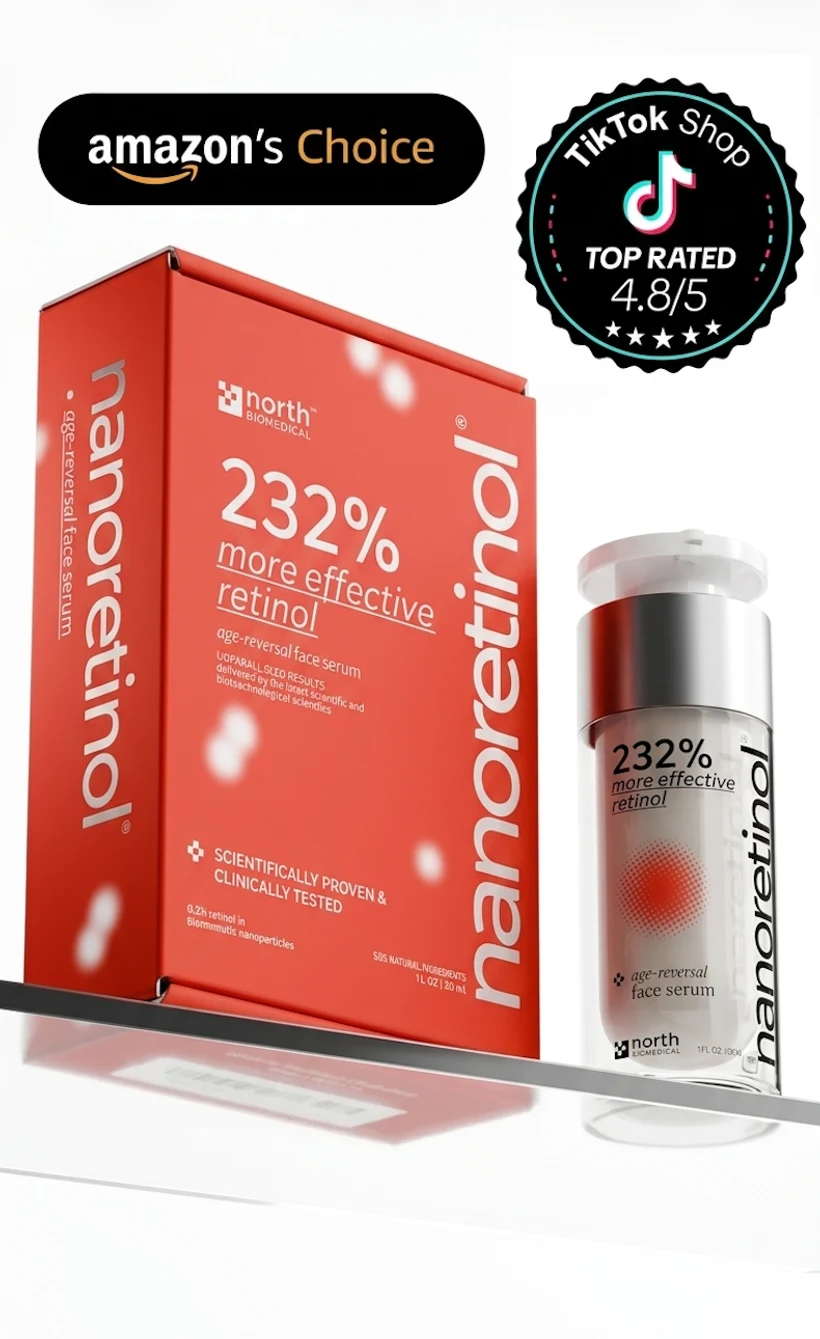
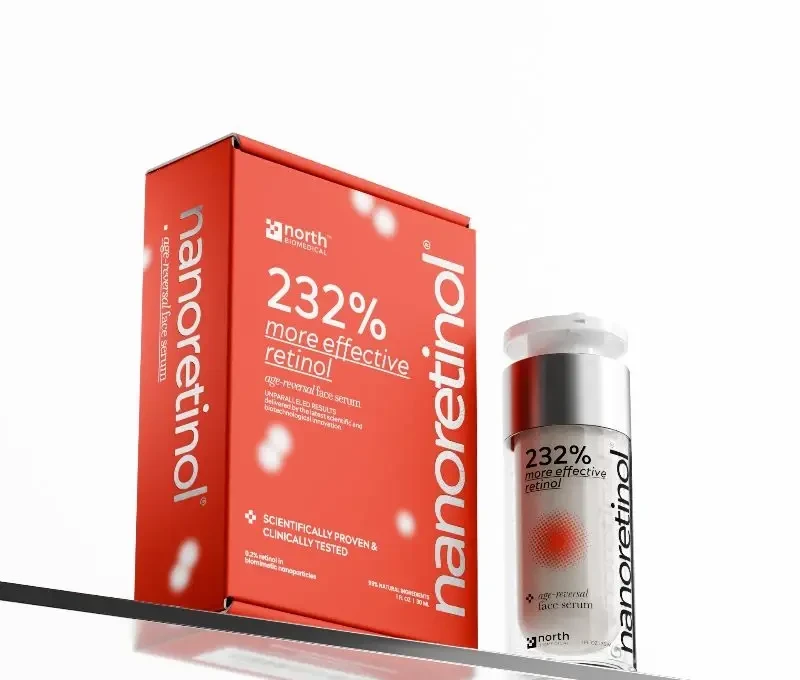
Nanoretinol® was engineered with exactly this problem in mind. Instead of forcing retinol through the barrier, biomimetic lipid nanoparticles mimic the skin’s own cellular structures. The body recognizes them as “self” and allows passage through the epithelial barrier without disruption.
The result is dramatic: 232% more effective collagen recovery compared to conventional retinol, with significantly reduced cytotoxicity. The nanoparticles deliver retinol directly to dermal fibroblasts — the cells that actually produce collagen — without the barrier damage that causes irritation.
For menopausal skin specifically, this means access to retinol’s full collagen-stimulating and MMP-inhibiting potential without the irritation that makes conventional formulations intolerable. The water-based, 99% natural ingredient formula also addresses the dryness that characterizes estrogen-deficient skin.
Building a Menopausal Skincare Routine with Retinol
If you’re approaching or past menopause, here’s how to incorporate retinol effectively:
Start low, go slow. Even with gentle formulations, begin with twice-weekly application and increase gradually over 8-12 weeks. Menopausal skin takes longer to acclimate, and patience here prevents setbacks.
Prioritize barrier support. Use a ceramide-rich moisturizer after retinol. Menopausal skin produces fewer natural lipids, so replenishing them externally is essential — not optional.
Never skip sunscreen. Retinol increases photosensitivity, and menopausal skin is already more vulnerable to UV damage. SPF 30+ daily is non-negotiable. Consider complementary actives. Niacinamide strengthens barrier function. Vitamin C provides antioxidant support and acts as a collagen synthesis cofactor. Both complement retinol without interference.
Be consistent. Collagen restoration is measured in months, not days. The 30% collagen loss didn’t happen overnight, and rebuilding it requires sustained use — typically 12+ weeks for visible results.
The Bigger Picture
Menopause changes skin at a structural level. Estrogen loss accelerates collagen degradation, thins the dermis, impairs barrier function, and reduces the skin’s ability to repair itself. These aren’t superficial concerns — they reflect real biological changes that affect skin health, wound healing, and protective function.
Retinol is the most evidence-backed topical intervention for reversing these specific changes. It stimulates the collagen production that estrogen loss suppresses, inhibits the MMPs that estrogen loss unleashes, and promotes the cellular renewal that slows with age.
The key is choosing a formulation that delivers retinol effectively without compounding the sensitivity that menopausal skin already faces. When delivery technology matches the biology, retinol becomes not just tolerable for menopausal skin — but transformative.
References
-
Calleja-Agius J, Muscat-Baron Y, Brincat MP. “Skin ageing.” Menopause International. 2007;13(2):60-64. doi:10.1258/175404507780796325
-
Lephart ED, Naftolin F. “Menopause and the Skin: Old Favorites and New Innovations in Cosmeceuticals for Estrogen-Deficient Skin.” Dermatologic Therapy (Heidelberg). 2021;11(1):53-69. doi:10.1007/s13555-020-00468-7
-
Brincat M, Versi E, Moniz CF, et al. “Skin collagen changes in postmenopausal women receiving different regimens of estrogen therapy.” Obstetrics and Gynecology. 1987;70(1):123-127. PMID: 3601260
-
Mukherjee S, Date A, Patravale V, et al. “Retinoids in the treatment of skin aging: an overview of clinical efficacy and safety.” Clinical Interventions in Aging. 2006;1(4):327-348. doi:10.2147/ciia.2006.1.4.327
-
Fisher GJ, Kang S, Varani J, et al. “Mechanisms of photoaging and chronological skin aging.” Archives of Dermatology. 2002;138(11):1462-1470. doi:10.1001/archderm.138.11.1462
-
Kafi R, Kwak HS, Schumacher WE, et al. “Improvement of naturally aged skin with vitamin A (retinol).” Archives of Dermatology. 2007;143(5):606-612. doi:10.1001/archderm.143.5.606
-
Varani J, Warner RL, Gharaee-Kermani M, et al. “Vitamin A antagonizes decreased cell growth and elevated collagen-degrading matrix metalloproteinases and stimulates collagen accumulation in naturally aged human skin.” Journal of Investigative Dermatology. 2000;114(3):480-486. doi:10.1046/j.1523-1747.2000.00902.x
-
Seité S, Bredoux C, Compan D, et al. “Histological evaluation of a topically applied retinol-vitamin C combination.” Skin Pharmacology and Physiology. 2005;18(2):81-87. doi:10.1159/000083708