Saggy Eyelid Treatment Without Surgery: What Actually Tightens Loose Lid Skin
Why your eyelids droop with age and the evidence-based topical and in-clinic options that actually work
The thinnest skin on your body is on your upper eyelid. By the time you notice it sagging, the structural changes have been accumulating for two or three decades. Most women don’t see the loose, hooded look until their late forties or early fifties — but the elastin fragmentation that makes it possible has been quietly building since their twenties.
Saggy eyelid skin is one of the most common reasons women over forty consult a dermatologist or cosmetic surgeon. The good news: surgery isn’t the only option. The bad news: most over-the-counter “eye-lift” creams are little more than expensive moisturizers. Below is what the dermatology research actually says about why eyelids sag, what genuinely works without a scalpel, and how to set realistic expectations. For the makeup side of a lid that has already dropped, see our guide to hooded eyes makeup.
Why Eyelid Skin Sags Faster Than the Rest of Your Face
Eyelid skin is structurally unusual. It’s roughly 0.5 millimeters thick — about a quarter the thickness of cheek skin — with very little subcutaneous fat to cushion it. The dermis below is sparse, and the elastin and collagen fibers that hold skin taut are arranged in a more complex three-dimensional mesh than on the rest of the face [1].
Three things go wrong as you age:
Elastin fragmentation. A 2021 3D structural analysis of eyelid skin showed that aged eyelid elastin fibers become “curved, shortened, and thickened” compared with young eyelids — losing the springy mechanical recoil that lets young skin snap back when you blink [1]. By the time you’ve blinked roughly 200 million times (mid-forties), the cumulative microstrain has reorganized that mesh into something more like crumpled tissue paper than a trampoline.
Collagen loss. Collagen I, the dominant structural protein, fragments and decreases by roughly 1% per year from age 20 onward, accelerating during perimenopause [2]. Without the collagen scaffold, the skin loses thickness and resilience.
Hyaluronic acid depletion. The dermal cushion that gives skin its plump, hydrated look thins steadily after 40, and the upper eyelid is among the first areas to show it.
The result is a slow descent: skin that used to retract cleanly above the lid crease now folds, droops, and sometimes covers the lash line entirely.
In the landmark 1993 New England Journal of Medicine trial, tretinoin produced an 80% increase in collagen I formation in photodamaged skin compared with a 14% decrease in vehicle controls.
When You Need Surgery — And When You Don’t
Two things to distinguish before chasing creams:
- Dermatochalasis is loose excess eyelid skin. It’s primarily a skin-quality issue, and it’s where topical and energy-based treatments help.
- Ptosis is when the levator muscle that lifts the eyelid weakens or detaches, dropping the lid edge over the pupil. No cream fixes this. If your eyelid actually obstructs your vision, you need a board-certified oculoplastic surgeon.
For mild to moderate dermatochalasis — the loose-but-not-vision-blocking kind — non-surgical options have real evidence behind them.
The Topical Ingredients With Actual Evidence
Retinoids: the most studied, most effective topical
Retinoids — the vitamin A family — remain the gold-standard topical for any kind of skin laxity. In the landmark 1993 New England Journal of Medicine trial, tretinoin produced an 80% increase in collagen I formation in photodamaged skin compared with a 14% decrease in vehicle controls [3]. A 2006 review of clinical retinoid trials confirmed durable improvements in fine lines, skin firmness, and photoaging after 12–24 weeks of consistent use [4].
For eyelid skin, the catch is tolerability. The thin lid surface flushes, peels, and stings far more easily than cheek or forehead skin, and most over-the-counter retinols use alcohol- and petroleum-based delivery systems that further compromise the eyelid barrier [4]. This is the single biggest reason women try retinol for hooded eyes once and never again.
Peptides
A 2024 review in the International Journal of Women’s Dermatology on popular eye cream ingredients found that peptides — particularly Matrixyl 3000 and copper peptides (GHK-Cu) — show measurable improvements in periorbital firmness and fine lines in controlled trials, with much better tolerability than retinoids on lid skin [5]. Peptides won’t match retinol’s collagen yield, but they pair well with it.
Caffeine and antioxidants
Topical caffeine reduces fluid pooling and offers modest tightening through vasoconstriction. It won’t restore lost collagen but can make the area look temporarily firmer. Vitamin C serums, used on the upper face but kept clear of the lash line, support the collagen synthesis pathway retinoids drive.
Radiofrequency microneedling delivers controlled heat to the dermis, triggering a remodeling response that thickens the collagen layer over 3–6 months.
For more on managing the thinnest skin on your face, our guide to crepey eyelids covers the wider biology of fine eyelid texture.
In-Clinic Options That Don’t Involve a Scalpel
If topicals plateau, three energy-based treatments have the strongest dermatology data for non-surgical lid tightening:
- Radiofrequency microneedling delivers controlled heat to the dermis, triggering a remodeling response that thickens the collagen layer over 3–6 months.
- Plasma fibroblast (sometimes marketed as “soft surgery”) uses an arc to vaporize tiny dots of surface skin, contracting the area as it heals.
- Ultrasound-based skin tightening focuses energy at deeper tissue planes; results are subtle but accumulate with multiple sessions.
These work best on early-to-moderate laxity. For severe hooding that obstructs vision, a blepharoplasty — outpatient surgery to remove excess skin — is faster and more durable. See also our overview of hooded eyes for the related concern of lid fold obstruction.
What Actually Doesn’t Work
A few popular interventions deserve realistic expectations:
- Eye exercises and “face yoga” strengthen orbicularis muscle tone, which can help posture but won’t change the dermal structure that drives the saggy appearance.
- Most peptide eye creams without a delivery vehicle. Peptides are large molecules; without encapsulation, the percentage that reaches the dermis is small.
- Cooling rollers and jade gua sha. Pleasant, minor temporary tightening, no long-term remodeling.
- At-home microcurrent. Promising on cheeks; data on the orbital area is mixed.
A Realistic Routine for Loose Lid Skin
A pragmatic, evidence-based regimen for moderate eyelid laxity:
- Daily SPF 30+ on the lids and brow bone. UV is the single biggest accelerant of dermal aging in the periorbital area.
- A nightly retinoid in a delivery system that doesn’t compromise the barrier. This is where most over-the-counter retinols fail on lid skin.
- A peptide-based eye serum or moisturizer layered on top to support hydration and complement the retinoid pathway. Our guide to retinol around eyes walks through application.
- A vitamin C serum in the morning on the upper face, kept clear of the lash line.
- Realistic time horizon. Visible change starts at 8–12 weeks; meaningful firmness gains take 6 months of consistency.
The Delivery Problem — And Why It Matters Here
Almost every active ingredient that “works” for eyelid skin in the laboratory hits the same wall in real life: getting through the epithelial barrier without compromising it. Conventional retinol formulations rely on solvents that thin the lipid layer to push the molecule through. On cheek or forehead skin, the trade-off is usually acceptable. On the eyelid — already lacking lipids and ceramides — that same delivery method causes the redness, peeling, and stinging that drive most women to abandon retinol within weeks.
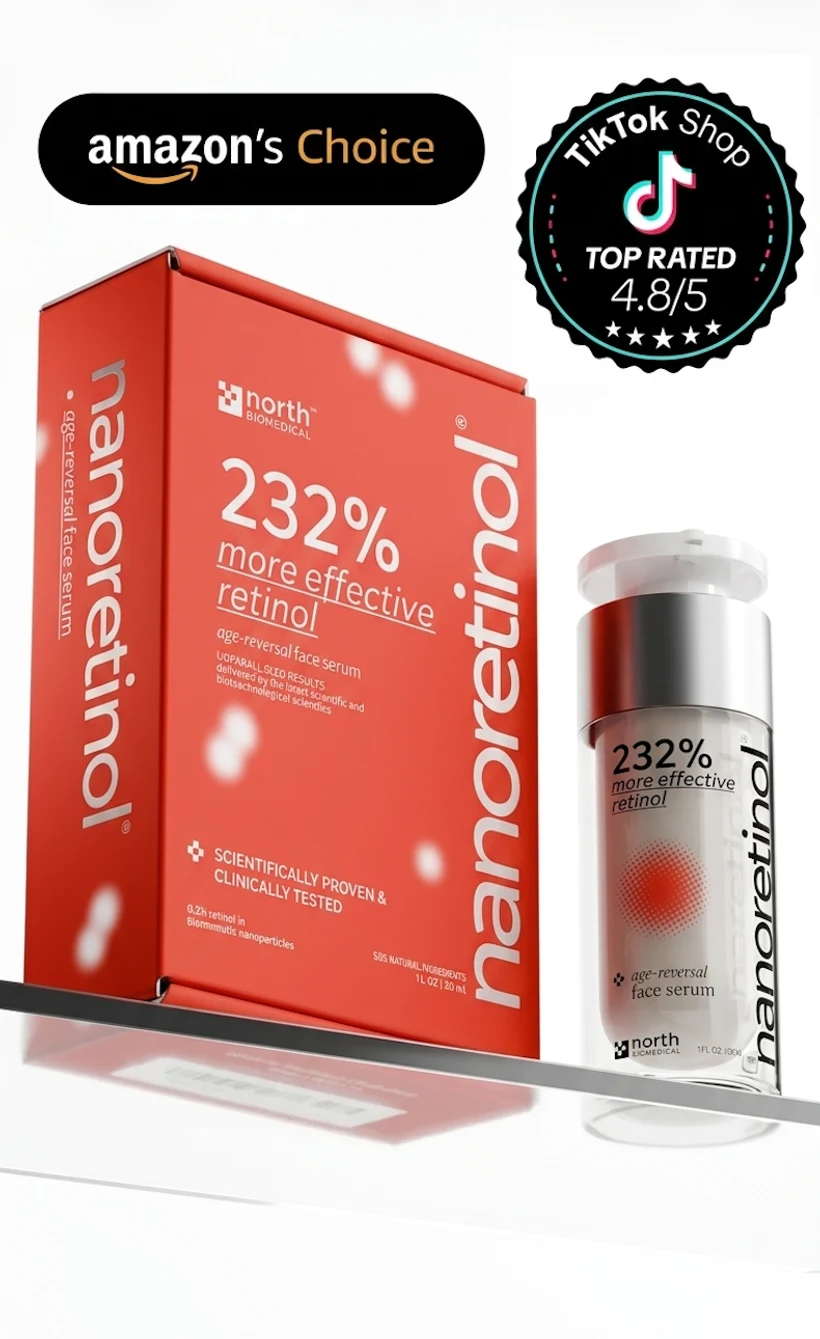
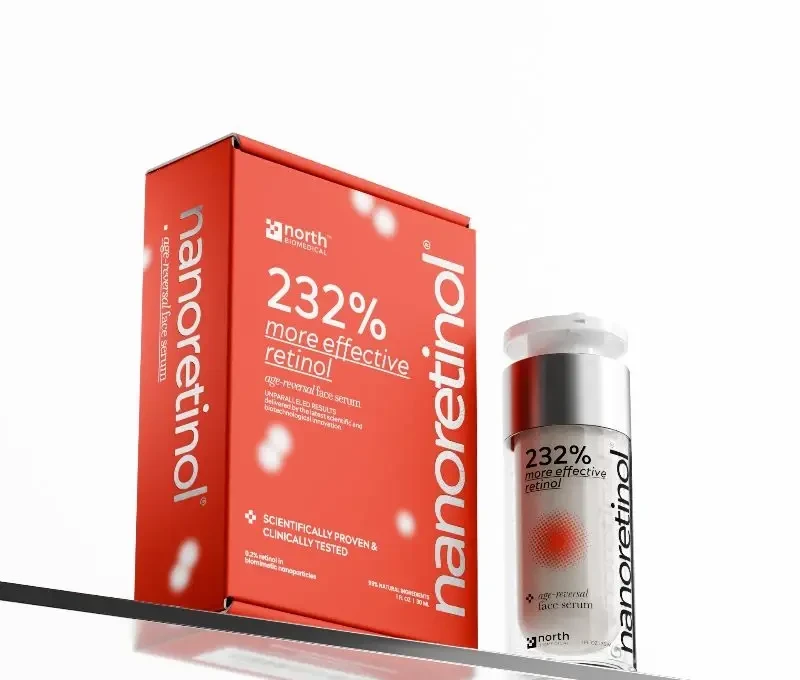
Nanoretinol takes a different approach. The retinol is encapsulated in biomimetic lipid nanoparticles that the skin recognizes as “self,” carrying the active through the epithelial barrier without dissolving it. In the Nanoretinol clinical study, that delivery system produced 232% more effective collagen recovery and 73% more effective elastin recovery than conventional retinol — the exact two structural deficits driving lid laxity [6]. Clinical results showed a 61% increase in firmness and a 56% increase in elasticity over 56 days of use, with significantly milder side effects than conventional retinol [6]. For an area as fragile as the upper eyelid, that combination — retinol-grade efficacy without barrier disruption — is what turns a topical from theoretical into actually-tolerable.
Loose eyelid skin won’t resolve in a week, and no cream is going to undo blepharoplasty-level laxity. But for the moderate hooding that bothers most women in their 40s and 50s, the right combination of daily UV protection, a tolerable retinoid, and supportive peptides is the closest thing to a real non-surgical lift the dermatology literature has produced.
References
- Tohgasaki T, Kondo S, Nishizawa S, et al. “Evaluation of elastin fibres in young and aged eyelids and abdominal skin using computational 3D structural analysis.” Skin Health and Disease. 2021;1(4):e58. doi:10.1002/ski2.58
- Uitto J. “The role of elastin and collagen in cutaneous aging: intrinsic aging versus photoexposure.” Journal of Drugs in Dermatology. 2008;7(2 Suppl):s12-s16. PubMed: 18404866
- Griffiths CE, Russman AN, Majmudar G, Singer RS, Hamilton TA, Voorhees JJ. “Restoration of Collagen Formation in Photodamaged Human Skin by Tretinoin (Retinoic Acid).” New England Journal of Medicine. 1993;329(8):530-535. doi:10.1056/NEJM199308193290803
- Mukherjee S, Date A, Patravale V, Korting HC, Roeder A, Weindl G. “Retinoids in the treatment of skin aging: an overview of clinical efficacy and safety.” Clinical Interventions in Aging. 2006;1(4):327-348. doi:10.2147/ciia.2006.1.4.327
- Hamie H, Yassine R, Shoukfeh R, Turk D, Huq F, Moossavi M. “A review of the efficacy of popular eye cream ingredients.” International Journal of Women’s Dermatology. 2024;10(2):e156. doi:10.1097/JW9.0000000000000156
- North Biomedical LLC. “Nanoretinol vs. Conventional Retinol: Efficacy in Collagen and Elastin Recovery.” Clinical Study Summary, 2024. Nanoretinol Study Summary