
Hooded Eyes: Why Eyelids Sag With Age and How to Firm Them
The structural changes behind drooping eyelids and what science says you can do about it
What Makes Eyelids Start to Droop
The skin on your eyelids is the thinnest anywhere on your body — just 0.5 millimeters thick, compared to 1 millimeter or more on the rest of your face [1]. That extreme thinness is what allows your eyelids to move fluidly thousands of times per day. It is also what makes them the first area to show visible aging.
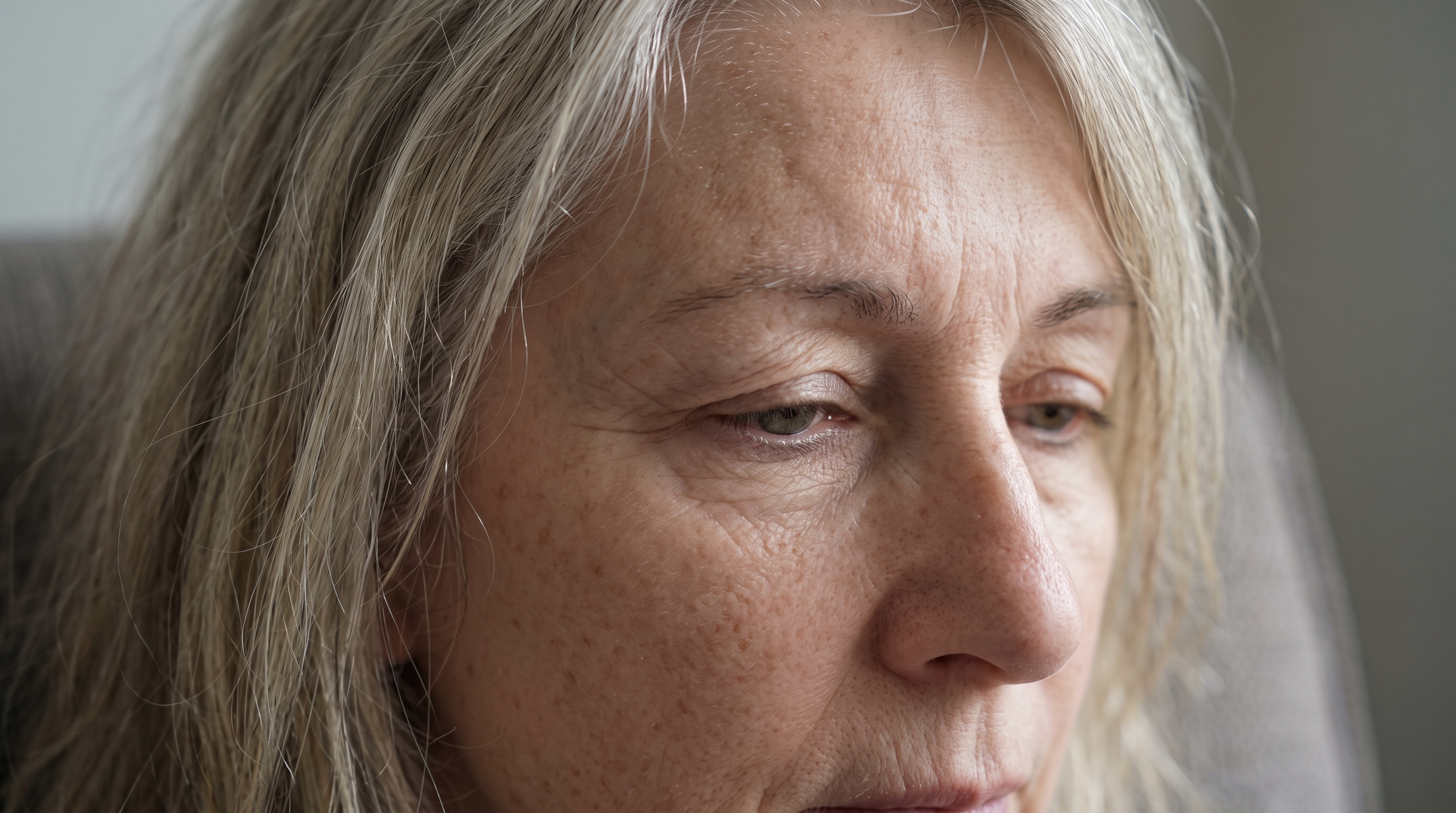
Hooded eyes develop when excess skin on the upper eyelid folds down over the natural crease, partially or completely obscuring the eyelid platform. The medical term for this is dermatochalasis, and it affects nearly everyone to some degree by their fifties. Working with a lid that has already folded is a separate skill from firming it, and our guide to hooded eyes makeup covers where shadow and liner actually go. For some, it is purely cosmetic — making eyes look smaller, tired, or asymmetrical. For others, severe drooping can actually interfere with peripheral vision. If your concern is that eyeshadow now disappears into the hood, our guide to eye makeup for mature women covers placement on a lid that has moved.
The mechanism is straightforward: the three-layer system that supports your eyelids — skin, muscle, and fat pads — all weaken with age. But understanding the specific breakdowns helps you target the right interventions.
The Anatomy of Eyelid Aging
Collagen and Elastin Depletion
Your eyelid skin relies on collagen for structural firmness and elastin for snap-back resilience. Both proteins begin declining in your mid-twenties at a rate of approximately 1% per year [2]. By age 50, you have lost roughly 25% of the collagen density that kept your eyelids taut at 25. Because eyelid skin starts so thin, even modest collagen loss translates into noticeable laxity faster than anywhere else on your face.
UV exposure accelerates this process dramatically. Periorbital skin receives significant cumulative sun exposure (squinting, driving, outdoor activity), yet many people skip sunscreen application on the delicate eyelid area due to stinging concerns.
Muscle Weakening
The orbicularis oculi muscle encircles each eye and controls blinking and squinting. Over decades of constant use — roughly 15,000 blinks per day — this muscle gradually loses tone [3]. The levator palpebrae superioris, which lifts the upper eyelid, can also stretch and weaken. When these muscles lose integrity, the overlying skin has less structural support to hold its position against gravity.
Fat Pad Migration
Orbital fat pads cushion and support the eye within its bony socket. With aging, the orbital septum (a thin membrane holding fat in place) weakens, allowing fat to shift forward or downward [1]. In upper eyelids, this creates a heavy, puffy appearance that combines with skin laxity to produce the classic hooded look. In lower eyelids, the same fat migration creates under-eye bags.
Bone Resorption
Perhaps the least discussed factor: the bony orbital rim actually recedes with age. Research using CT imaging has documented measurable bone loss in the orbital region after age 40, which effectively enlarges the eye socket and reduces the structural foundation supporting soft tissue [4]. When the frame shrinks, everything attached to it droops.
Hooded Eyes Versus Ptosis: Know the Difference
Hooded eyes and ptosis are often confused but involve completely different structures:
By age 50, you have lost roughly 25% of the collagen density that kept your eyelids taut at 25.
Hooded eyes (dermatochalasis) result from excess skin hanging over the eyelid crease. The eyelid muscle itself works normally — it is purely a skin redundancy issue.
Ptosis involves weakness or detachment of the levator muscle or its tendon, causing the eyelid margin itself to droop lower over the pupil. Ptosis can obstruct vision even without excess skin.
Why this matters: topical treatments that improve skin firmness can help mild dermatochalasis. True ptosis requires surgical correction of the muscle or tendon.
Non-Surgical Approaches That Work
Retinol for Periorbital Skin
Retinol is the most evidence-backed topical ingredient for firming thin, lax skin. It works by stimulating fibroblasts to produce new collagen and by accelerating cell turnover, which thickens the epidermis [5]. For periorbital skin specifically, retinol improves texture, reduces fine lines, and restores some of the structural density lost to aging.
The critical caveat: eyelid skin requires gentler formulations than the rest of your face. Standard facial retinol concentrations (0.5% to 1%) are too irritating for this area. Dedicated eye products typically use 0.1% to 0.3% retinol, often with additional buffering ingredients like peptides or hyaluronic acid to minimize dryness. Which of those products is worth the money, and what a cream can honestly change about a hood, is set out in our guide to the best eye cream for hooded eyes.
Peptides for Structural Support
Peptides — short chains of amino acids — signal skin cells to ramp up collagen and elastin production. Palmitoyl pentapeptide-4 (Matrixyl) has clinical evidence showing improved skin firmness and reduced wrinkle depth in the periorbital area after 12 weeks of use [6]. Unlike retinol, peptides cause essentially zero irritation, making them suitable for the most sensitive eyelid skin.
Combining peptides with retinol provides a dual stimulation pathway: retinol activates gene expression for collagen synthesis while peptides provide the amino acid building blocks needed to complete that synthesis.
Hyaluronic Acid for Immediate Plumping
Hyaluronic acid holds up to 1,000 times its weight in water. Applied topically, it draws moisture into the thin eyelid skin, creating an immediate plumping effect that can temporarily improve the appearance of mild hooding. Low-molecular-weight hyaluronic acid penetrates deeper and provides longer-lasting hydration than standard formulations.
While the effect is cosmetic rather than structural, consistent hydration prevents the accelerated collagen breakdown that occurs in chronically dehydrated skin.
Dedicated eye products typically use 0.1% to 0.3% retinol, often with additional buffering ingredients like peptides or hyaluronic acid to minimize dryness.
Professional Treatments
For moderate hooding, several non-surgical professional options exist:
Radiofrequency (RF) treatments. Devices like Thermage deliver controlled heat to the dermal layer, triggering collagen contraction and new collagen synthesis. Studies document measurable skin tightening in the periorbital area, though results are subtler than surgery.
Ultrasound-based lifting. Ultherapy uses focused ultrasound energy to tighten tissue at deeper layers than RF can reach, including the muscle fascia beneath the skin.
LED red light therapy. Red light at 633nm stimulates mitochondrial function in fibroblasts, promoting collagen production without heat damage. Multiple sessions are typically needed, but the cumulative firming effect is supported by clinical evidence [7].
When Surgery Becomes the Best Option
Upper blepharoplasty — surgical removal of excess eyelid skin — remains the gold standard for advanced hooding. It is one of the most commonly performed cosmetic procedures worldwide, with high patient satisfaction rates. Surgery makes sense when:
- Excess skin physically obscures the eyelid crease
- Hooding affects peripheral vision (often covered by insurance in this case)
- Non-surgical approaches have plateaued after 6+ months of consistent use
The procedure removes a precisely measured strip of redundant skin (and sometimes underlying fat), restoring the visible eyelid platform. Recovery typically takes 7 to 14 days, with final results visible at 3 to 6 months once all swelling resolves.
Prevention: Protecting What You Have
Because eyelid skin is so thin and vulnerable, prevention delivers outsized returns:
Daily SPF around the eyes. Use a mineral sunscreen (zinc oxide-based) or a dedicated eye SPF that does not sting. UV damage is the single largest accelerator of periorbital collagen loss.
Consistent retinol use. Starting a low-concentration retinol in your thirties builds collagen reserves before significant depletion occurs. Think of it as maintenance rather than repair — maintaining density is far easier than rebuilding it.
Sunglasses. Physical UV protection reduces both direct radiation damage and the repetitive squinting that accelerates orbicularis oculi muscle fatigue. Makeup can also work with a hooded lid rather than against it, which is why our guide to the best eyeliner for older women recommends tightlining.
Sleep position. Side and stomach sleeping compress facial skin for hours nightly. Over decades, this contributes measurably to asymmetric aging, particularly around the eyes.
Why Delivery Matters More Around the Eyes
The periorbital area presents a unique delivery challenge. Eyelid skin is thin, highly vascular, and prone to irritation — meaning conventional retinol formulations that rely on penetration enhancers often cause redness and dryness before delivering meaningful collagen stimulation.
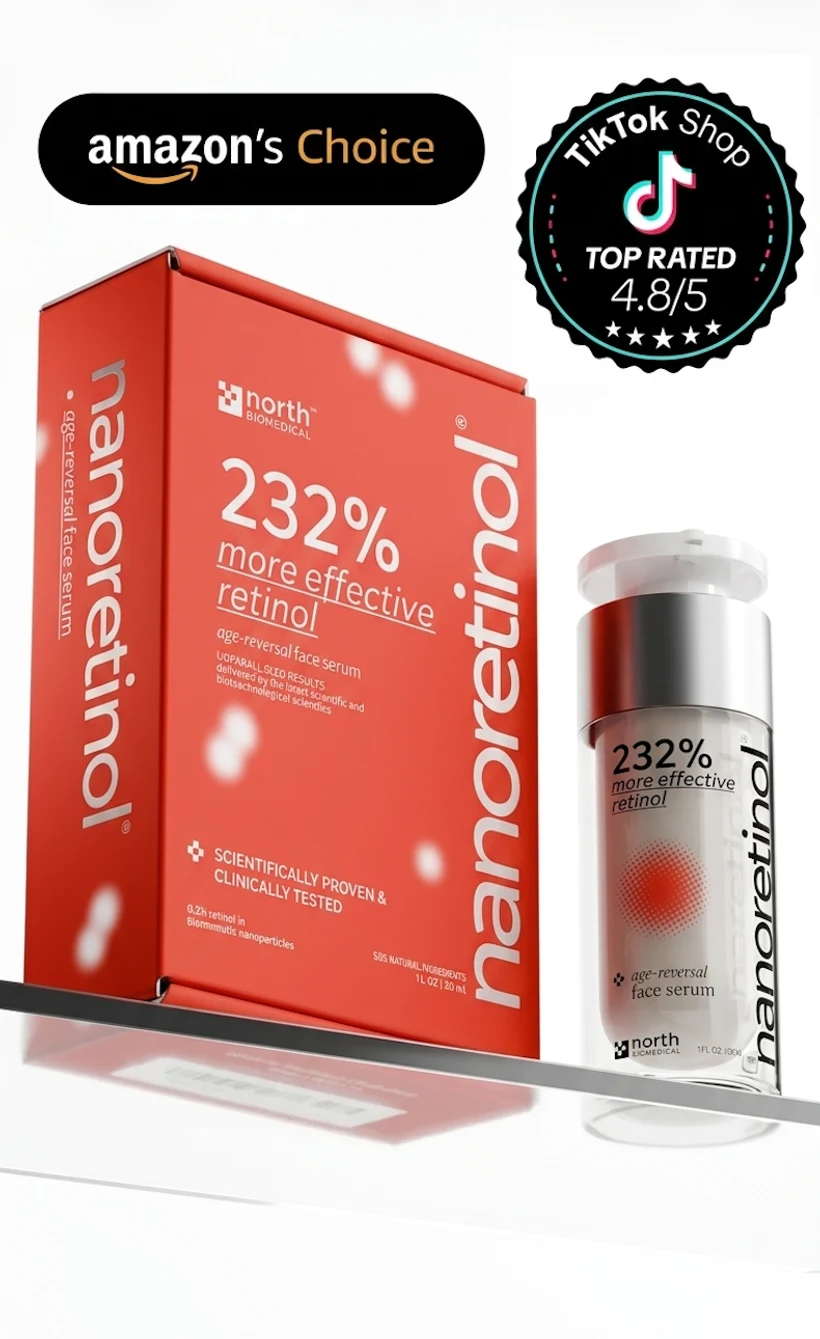
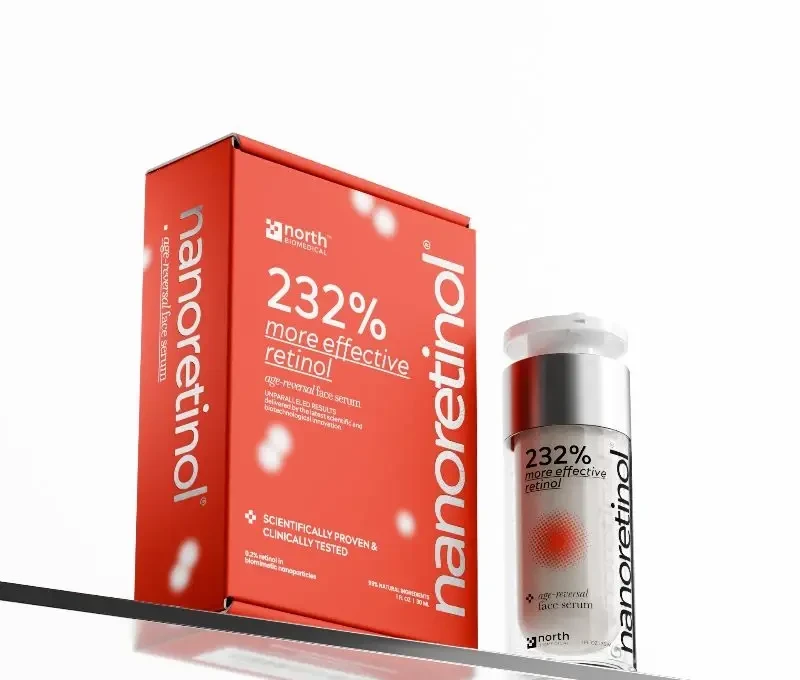
Nanoretinol® by North Biomedical® solves this through biomimetic lipid nanoparticle encapsulation. Because the nanoparticles mimic the skin’s own membrane components, they pass through the delicate eyelid barrier without triggering the inflammatory response that conventional retinol vehicles provoke. Clinical testing showed +232% greater collagen recovery and +73% greater elastin recovery versus standard retinol — the exact structural proteins that sagging eyelids have lost. For periorbital application, this technology means genuine firming benefits without the irritation cycle that makes most people abandon retinol use around their eyes.
Realistic Expectations
Topical care and non-surgical treatments can meaningfully improve mild to moderate eyelid laxity — firmer skin, smoother texture, and a more rested appearance. They cannot replicate the physical removal of excess tissue that blepharoplasty provides.
The best outcomes come from combining approaches: consistent topical retinol and peptides for structural support, sun protection to prevent further degradation, and professional treatments as needed for additional tightening. Start with the least invasive options and escalate only if results plateau after 6 months of dedicated use.
References
- Bhatt A, Goldberg RA. “Periorbital changes associated with aging.” Facial Plastic Surgery Clinics of North America. 2022;30(3):275-283. doi:10.1016/j.fsc.2022.03.001
- Varani J, Dame MK, Rittie L, et al. “Decreased collagen production in chronologically aged skin: roles of age-dependent alteration in fibroblast function and defective mechanical stimulation.” American Journal of Pathology. 2006;168(6):1861-1868. doi:10.2353/ajpath.2006.051302
- Hollander MHJ, Contini M, Pott JW, Vissink A. “Functional outcomes of upper eyelid blepharoplasty: A systematic review.” J Plast Reconstr Aesthet Surg. 2019;72(2):210-239. PMID: 30528286
- Kahn DM, Shaw RB. “Aging of the bony orbit: a three-dimensional computed tomographic study.” Aesthetic Surgery Journal. 2008;28(3):258-264. doi:10.1016/j.asj.2008.02.007
- Mukherjee S, Date A, Patravale V, et al. “Retinoids in the treatment of skin aging: an overview of clinical efficacy and safety.” Clinical Interventions in Aging. 2006;1(4):327-348. doi:10.2147/ciia.2006.1.4.327
- Robinson LR, Fitzgerald NC, Punchihewa DG, Matts PJ. “Topical palmitoyl pentapeptide provides improvement in photoaged human skin.” International Journal of Cosmetic Science. 2005;27(3):155-160. doi:10.1111/j.1467-2494.2005.00261.x
- Wunsch A, Matuschka K. “A controlled trial to determine the efficacy of red and near-infrared light treatment in patient satisfaction, reduction of fine lines, wrinkles, skin roughness, and intradermal collagen density increase.” Photomedicine and Laser Surgery. 2014;32(2):93-100. doi:10.1089/pho.2013.3616