Skin Boosters: What They Are, Whether They Work, and the Cheaper Nightly Alternative
How injectable hydration treatments improve skin quality, what the clinical evidence shows, and why the needle isn't the only way to get glow and firmness.
When “More Product” Isn’t the Point
For years, the injectable conversation was all about volume — plumping a cheek, sharpening a jaw, filling a fold. Skin boosters flipped that logic. They are not about adding shape at all. They are about improving the quality of the skin itself: hydration, smoothness, elasticity, and that hard-to-fake inner glow that healthy skin has and tired skin doesn’t.
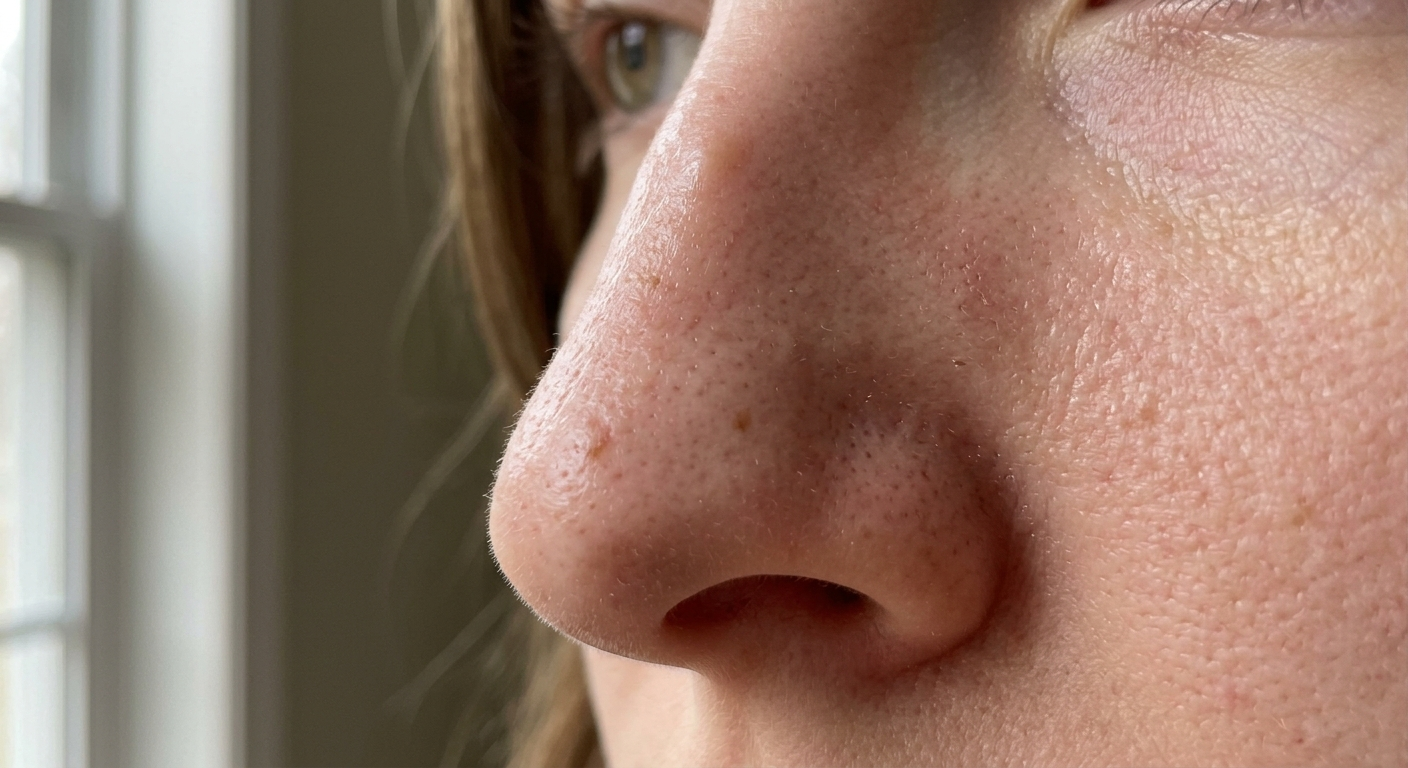
That is a genuinely different goal, and it explains why skin boosters have become one of the fastest-growing treatments for women in their forties and beyond. If your skin looks dull, feels less springy than it used to, and reads “flat” in photos despite a good routine, boosters promise to refresh the canvas rather than rearrange the furniture. The question is whether they deliver — and whether a series of needles is the only way to get there.
A skin booster is an injectable, but not a filler in the traditional sense. Most are made of soft, minimally cross-linked or stabilized hyaluronic acid — the same water-binding molecule your skin makes naturally — delivered in tiny microdroplets across an area rather than sculpted into one spot. Instead of creating structure, they disperse through the skin to hydrate it from within and, over time, coax your own cells into building more support.
How a Skin Booster Works From the Inside
The immediate effect is straightforward hydration. Hyaluronic acid can hold a remarkable amount of water, so injecting it into the dermis draws moisture into the tissue and improves that plumped, dewy look almost mechanically. That is why skin can appear more refreshed within a couple of weeks — the water is simply there now, where before it wasn’t.
The more interesting effect is slower. When stabilized hyaluronic acid sits in the dermis, the gentle mechanical stretch and the presence of the gel appear to nudge fibroblasts — your collagen-making cells — into greater activity. In effect, the booster does not just hydrate; it mildly stimulates the skin to improve its own architecture over the following months. This is the difference between a treatment that masks dryness and one that measurably changes how the skin behaves.
If your skin looks dull, feels less springy than it used to, and reads “flat” in photos despite a good routine, boosters promise to refresh the canvas rather than rearrange the furniture.
That distinction matters most for people whose main complaint is dehydrated skin that no cream seems to fix, or a loss of bounce that reads as early aging rather than wrinkles. Boosters target texture and resilience, not lines you make when you smile.
What the Evidence Actually Shows
Skin boosters are better studied than their glow-focused marketing suggests. In a prospective study of 81 volunteers who received three intradermal treatments, biometric measurements showed significant improvements in skin firmness, elasticity, hydration, smoothness, and wrinkle depth, with participants reporting high satisfaction [1]. This was not a subjective survey alone — instruments measured the changes.
A separate clinical evaluation of a stabilized high-molecular-weight hyaluronic acid found that 90% of participants met the improvement criteria one month after a single treatment, with objective elasticity gains measured by a specialized skin-testing device (a Cutometer) by four months [2]. And an older randomized controlled trial comparing intradermal hyaluronic acid against a saline control found that the hyaluronic acid meaningfully improved skin stiffness and increased dermal thickness — a change the placebo could not produce [3].
Across the research, three themes repeat. Skin boosters reliably improve hydration and measured elasticity; the results build gradually over a series of sessions; and the effect is temporary, because the injected hyaluronic acid is eventually broken down and metabolized by the body. Branded protocols such as Profhilo, along with polynucleotide boosters like Rejuran, are variations on this same core idea, each with its own molecule and stimulation profile.
The Honest Downsides
Skin boosters work, but they are not a set-and-forget solution, and the fine print matters. The results are temporary — most protocols require an initial series of two to three sessions, followed by maintenance every four to six months to hold the effect. That is a recurring cost, both in money and in needle appointments.
A booster improves your skin’s water content and stimulates it briefly; it does not permanently change the trajectory of aging.
There is also the reality of the treatment itself: multiple micro-injections across the face, usually with some redness, small bumps, and occasional bruising for a day or two afterward. None of it is severe, but none of it is nothing, either. And because the improvement is metabolized away, the moment you stop maintaining it, your skin drifts back toward its untreated baseline. A booster improves your skin’s water content and stimulates it briefly; it does not permanently change the trajectory of aging.
That last point is the one worth sitting with, because the daily driver of dull, less elastic skin is a process no quarterly appointment can keep up with.
What’s Actually Aging the Skin Underneath
The loss of glow and bounce that sends people toward boosters has a root cause: a dermis that is slowly running low on collagen and losing the ability to hold water. Collagen synthesis declines with age while collagen-degrading enzymes rise. Researchers examining naturally aged skin documented exactly this — reduced collagen production and elevated breakdown — and found that topical vitamin A partially reversed it, boosting fibroblast activity and stimulating new collagen [4]. A booster tops up the water and gives fibroblasts an occasional prompt. It does not address the daily erosion of the collagen scaffold that makes skin look deflated in the first place.
This is why the smartest approach treats boosters as one part of a system, not the whole strategy — and why a daily habit that works on the collagen problem every night can do what an intermittent injection cannot.
The Nightly Alternative — or Complement
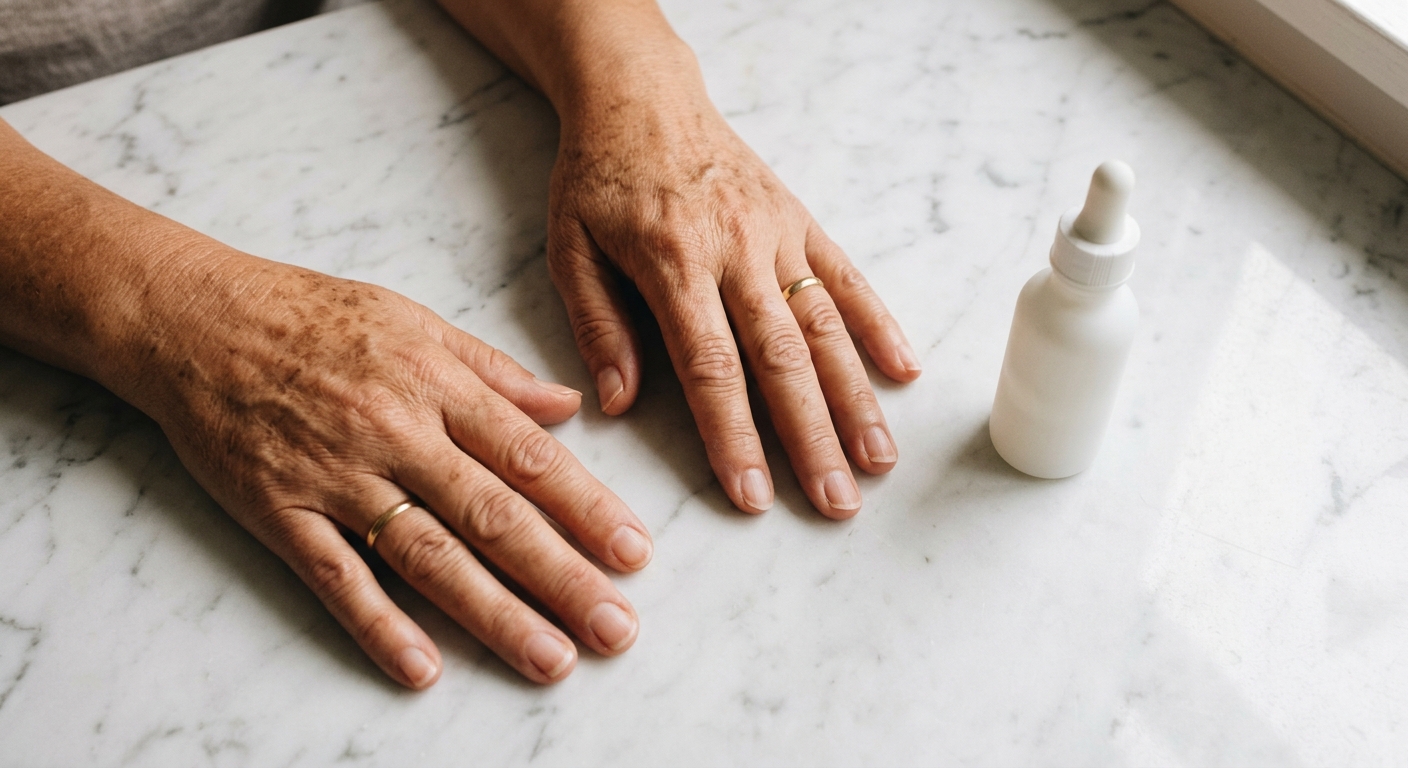
The best-studied at-home tool for improving skin quality is a retinoid, the only topical category with decades of evidence for stimulating collagen, refining texture, and improving firmness. Where a skin booster is an occasional, in-office hit of hydration and stimulation, a nightly retinoid is continuous, compounding maintenance you control yourself — and at a fraction of the cost.
The historical problem with retinol was tolerability and delivery: conventional versions are unstable, poorly absorbed, and irritating enough that many people quit before they see results. Nanoretinol was built to fix that. A stabilized 0.2% dose is encapsulated in biomimetic lipid nanoparticles that the skin recognizes as “self” and admits without damaging the barrier — no harsh solvents required. In North Biomedical’s laboratory testing, this delivery approach achieved 232% greater collagen recovery than conventional retinol while remaining significantly gentler on skin cells.
For some readers, a well-formulated nightly retinoid will be all they need to restore firmness and glow — no needles, no maintenance appointments. For those who love the deep hydration of boosters, the two pair naturally: the injection refreshes water content periodically, while the retinoid quietly rebuilds the collagen underneath every night. Either way, the daily layer is what keeps the skin elasticity gains from slipping away between treatments.
The Bottom-Line Choice
Skin boosters are a legitimate, evidence-backed way to improve hydration, elasticity, and glow — real skin-quality gains, measured by real instruments. Just price in the truth: they are temporary, they recur, and they don’t stop the underlying collagen decline. Whether you use them or skip them, the treatment that actually changes your skin’s daily trajectory is the one you apply yourself, every night, long after the glow of the last appointment has faded.
References
- Pino A, Torrecilla J, Alonso JM, Tovito L, Pérez R. “Clinical and Biometric Assessment of a Hyaluronic Acid-Based Skin Booster for Face, Neck and Décolleté Rejuvenation: A Prospective Study.” Journal of Cosmetic Dermatology. 2025;24(11):e70547. PubMed: 41243364
- Hadjab B, Gavard Molliard S, Bon Bétemps J, Cerrano M, de Boccard F, Finke A. “Efficacy and Safety of a Stabilized Composition of 26 mg/mL of High Molecular Weight Hyaluronic Acid for Aesthetic Applications.” Journal of Clinical Medicine. 2025;14(17):6015. PubMed: 40943775
- Baspeyras M, Rouvrais C, Liégard L, et al. “Clinical and Biometrological Efficacy of a Hyaluronic Acid-Based Mesotherapy Product: A Randomised Controlled Study.” Archives of Dermatological Research. 2013;305(8):673–682. PubMed: 23715889
- Varani J, Warner RL, Gharaee-Kermani M, et al. “Vitamin A Antagonizes Decreased Cell Growth and Elevated Collagen-Degrading Matrix Metalloproteinases and Stimulates Collagen Accumulation in Naturally Aged Human Skin.” Journal of Investigative Dermatology. 2000;114(3):480–486. PubMed: 10692106