Why Your Skin Loses Firmness — and What Actually Brings It Back
The science of collagen degradation, elastin breakdown, and the proven strategies that restore structural integrity
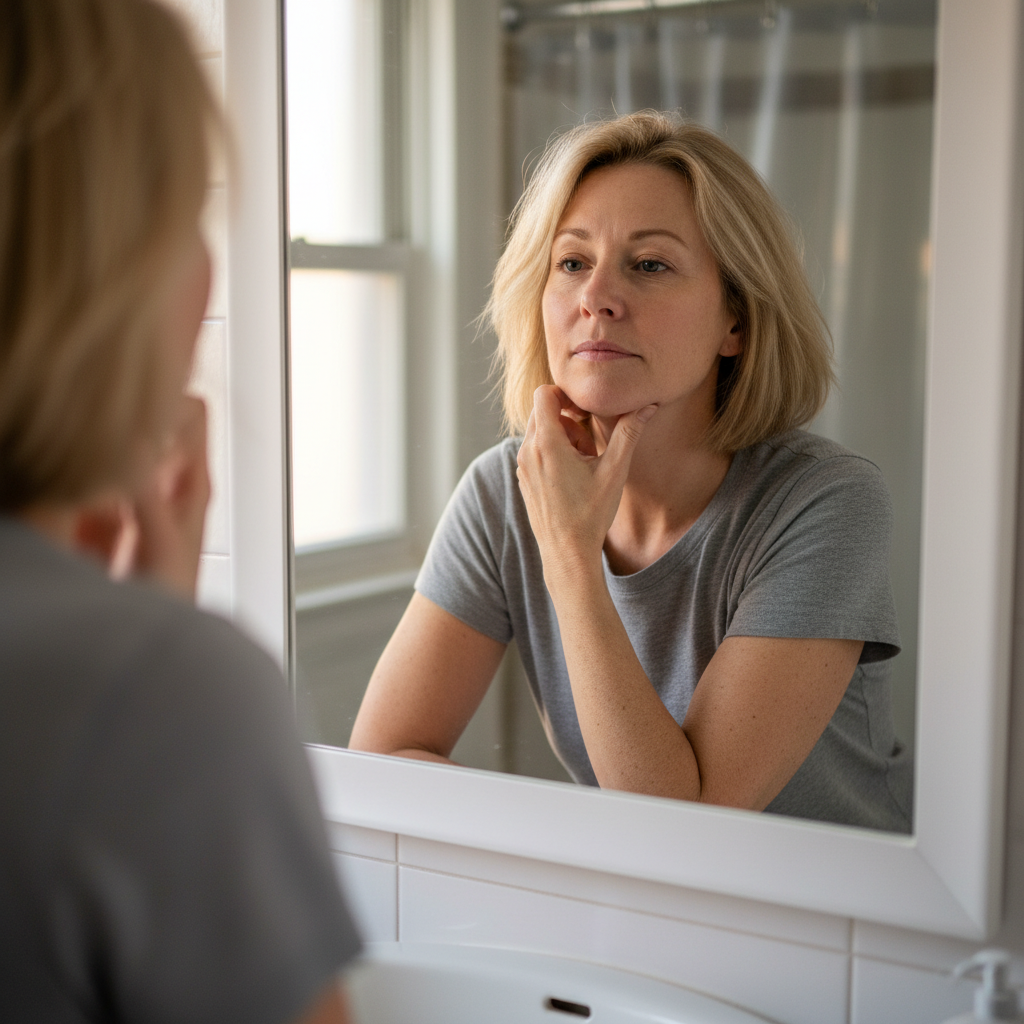
You probably didn’t notice the first signs. Nobody does. Skin firmness doesn’t vanish in a dramatic reveal — it recedes quietly, like a tide pulling back so slowly you only realize the shore has changed when you look at a photograph from five years ago.
That jawline used to be sharper. Your cheeks sat higher. The skin on your neck moved differently. What happened isn’t mysterious, but it is complex — a convergence of biological processes that begins far earlier than most people realize and accelerates with each passing decade.
The Architecture of Firm Skin
To understand firmness loss, you first need to understand what makes skin firm in the first place. Think of your dermis — the thick middle layer of skin — as a living mattress. Collagen fibers form the coils, providing structural rigidity. Elastin fibers act as springs, allowing the skin to snap back after being stretched. And the extracellular matrix — a gel-like substance rich in hyaluronic acid — fills the space between, keeping everything hydrated and plump.
This architecture isn’t static. Your body constantly breaks down and rebuilds these structural proteins through a process called remodeling. In young skin, synthesis outpaces degradation. The mattress stays firm.
But after your mid-twenties, the balance tips. Collagen production declines by approximately 1% per year [1]. That sounds trivial — until you compound it over two decades and realize that by age 50, you’ve lost roughly a quarter of your dermal collagen.
Why Collagen Declines: More Than Just Time
The common explanation — “you just produce less collagen as you age” — is accurate but incomplete. Research from the University of Michigan revealed that aged fibroblasts (the cells responsible for collagen production) don’t simply slow down. They physically shrink and lose their attachment to the surrounding collagen matrix [2]. This is critical because fibroblasts need mechanical tension — the physical pull of being anchored to collagen fibers — to receive the signals that tell them to produce more collagen.
It’s a vicious cycle: less collagen means less tension on fibroblasts, which means even less collagen production. The mattress coils thin out, and the cells that could replace them lose the structural cues that would prompt them to act.
Compounding this, aging skin produces more matrix metalloproteinases (MMPs) — enzymes that actively break down collagen and elastin [3]. Young skin keeps these enzymes in check. Aged skin lets them run unchecked, accelerating the structural decay.
The elastin fibers in your skin today are largely the same ones that were assembled during childhood and adolescence.
The Elastin Problem
While collagen gets most of the attention, elastin loss may be even more consequential for firmness. Unlike collagen, which your body can synthesize throughout life (albeit at declining rates), elastin production essentially stops after puberty [4]. The elastin fibers in your skin today are largely the same ones that were assembled during childhood and adolescence.
These fibers degrade over time — from UV exposure, oxidative stress, and simple mechanical wear — but they are never meaningfully replaced. This is why sun-damaged skin develops solar elastosis: the elastic fibers fragment and clump into non-functional masses that contribute nothing to bounce-back.
The practical implication is stark: while you can stimulate new collagen at any age, restoring elastin requires protecting what you have and supporting whatever limited renewal your body can manage.
The Hormonal Accelerator
For women, menopause introduces a dramatic acceleration. Estrogen directly stimulates collagen and hyaluronic acid synthesis [5]. When estrogen levels plummet during menopause, skin can lose up to 30% of its collagen in the first five years — a loss equivalent to what naturally occurs over the preceding two decades.
This explains why many women notice a sudden change in their 50s that seems disproportionate to the gradual aging they experienced in their 30s and 40s. The decline wasn’t linear — it was building quietly, then a hormonal trigger pulled the floor out.
What Actually Rebuilds Firmness
Not everything marketed for “skin tightening” works. But several interventions have genuine clinical evidence behind them.
Retinoids: The Most Proven Approach
Retinoids remain the most clinically validated topical ingredient for reversing multiple aspects of skin aging, including firmness loss. They work through several mechanisms simultaneously: stimulating collagen I and III synthesis, increasing epidermal thickness, inhibiting the MMPs that degrade structural proteins, and improving blood flow to the dermis [3][6].
Nanoretinol® by North Biomedical® uses biomimetic lipid nanoparticles to transport retinol through the epithelial barrier without damaging it, achieving 232% greater collagen recovery than conventional retinol in clinical testing.
Clinical studies consistently show that retinol and its derivatives increase dermal collagen density and improve skin firmness scores after 8-12 weeks of use. A comprehensive 2019 review confirmed that retinoids “protect collagen against degradation and inhibit metalloproteinases activity” — effectively slowing the enzymatic breakdown while boosting new production [3].
The challenge with conventional retinol has always been delivery. Traditional formulations rely on disrupting the skin barrier to push retinol through — which causes the redness, peeling, and irritation that drives many users to quit before results appear. This is where delivery technology matters enormously. Nanoretinol® by North Biomedical® uses biomimetic lipid nanoparticles to transport retinol through the epithelial barrier without damaging it, achieving 232% greater collagen recovery than conventional retinol in clinical testing. Clinical participants also experienced a 61% increase in skin firmness within 56 days.
Peptides: Targeted Signaling
Peptides like Matrixyl (palmitoyl pentapeptide-4) and copper peptides (GHK-Cu) work differently from retinoids. Rather than broadly upregulating skin renewal, they send specific molecular signals to fibroblasts, mimicking the fragments of collagen breakdown that tell cells “rebuild here.”
Multiple studies demonstrate that peptides increase collagen and elastin synthesis [5]. The advantage is tolerability — peptides rarely cause irritation, making them excellent companions to retinoids in a combined approach.
Vitamin C: The Collagen Cofactor
Ascorbic acid is required for collagen synthesis — literally. Without vitamin C, the enzymatic hydroxylation of proline and lysine (essential steps in collagen fiber assembly) cannot occur. This is why scurvy causes connective tissue breakdown.
Topical vitamin C at concentrations of 10-20% has been shown to increase collagen production and provide photoprotection, helping preserve the collagen and elastin you already have [5].
Sunscreen: The Non-Negotiable
UV radiation is the single largest accelerator of firmness loss. It both degrades existing collagen and elastin through direct photodamage and triggers MMP production that continues the destruction long after sun exposure ends [6].
No active ingredient — no matter how effective — can outpace the damage caused by unprotected UV exposure. Daily broad-spectrum sunscreen isn’t a luxury step. It’s the foundation that makes every other intervention possible.
Building a Firmness-Focused Routine
The most effective approach combines multiple mechanisms:
- Retinoid (evening) — stimulates collagen, inhibits MMPs, and thickens the dermis
- Peptide serum — provides targeted building signals to fibroblasts
- Vitamin C (morning) — supports collagen synthesis and protects against UV-induced degradation
- Sunscreen (daily) — prevents the structural damage that undoes everything else
- Moisturizer with hyaluronic acid — maintains hydration in the extracellular matrix, supporting the environment where collagen and elastin function
Consistency matters more than intensity. The biological remodeling cycle of skin takes 4-6 weeks, and meaningful firmness improvements typically require 8-12 weeks of daily use.
The Honest Timeline
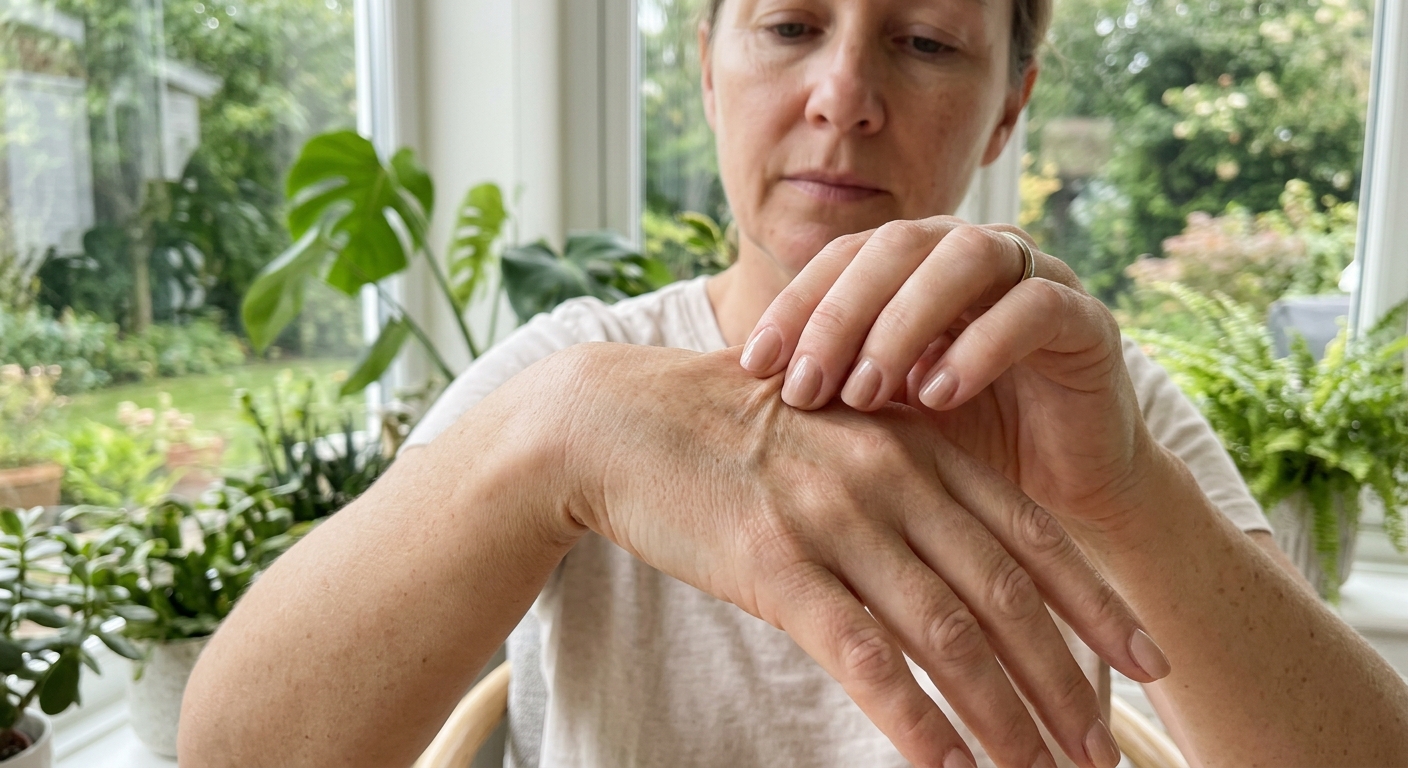
Skin firmness loss accumulates over decades. Reversing it takes months, not days. Be skeptical of any product promising overnight tightening — what you’re seeing is temporary surface film effects, not structural change.
Real firmness improvement requires rebuilding collagen density and protecting elastin integrity. That’s a biological process with a biological timeline. But the science is clear: with the right actives, applied consistently, your skin’s structural support system can be meaningfully strengthened — at any age.
References
- Varani J, Dame MK, Rittie L, et al. “Decreased Collagen Production in Chronologically Aged Skin: Roles of Age-Dependent Alteration in Fibroblast Function and Defective Mechanical Stimulation.” American Journal of Pathology. 2006;168(6):1861-1868. doi:10.2353/ajpath.2006.051302
- Varani J, Dame MK, Rittie L, et al. “Decreased Collagen Production in Chronologically Aged Skin.” American Journal of Pathology. 2006;168(6):1861-1868. PMID: 16723701
- Zasada M, Budzisz E. “Retinoids: active molecules influencing skin structure formation in cosmetic and dermatological treatments.” Postepy Dermatologii i Alergologii. 2019;36(4):392-397. doi:10.5114/ada.2019.87443
- Ryu YS, Kang KA, Piao MJ, et al. “Human Skin Aging and the Anti-Aging Properties of Retinol.” Biomolecules. 2023;13(11):1614. doi:10.3390/biom13111614
- Cao C, Xiao Z, Wu Y, Ge C. “Fighting against Skin Aging: The Way from Bench to Bedside.” Cell Transplantation. 2018;27(5):729-738. doi:10.1177/0963689717725755
- Mukherjee S, Date A, Patravale V, et al. “Retinoids in the treatment of skin aging: an overview of clinical efficacy and safety.” Clinical Interventions in Aging. 2006;1(4):327-348. doi:10.2147/ciia.2006.1.4.327