Copper Peptides for Skin: Do GHK-Cu Serums Actually Work?
GHK-Cu is one of the most researched peptides in dermatology — here's the science of what it actually does, its limitations, and where retinol fits in
Copper peptides for skin—especially the copper-binding tripeptide GHK-Cu—have credible laboratory and wound-repair evidence behind them. The careful answer is that they may support collagen, elastin, repair signaling, and inflammation control, but topical anti-aging trials are much thinner than the marketing often implies [1][2]. If you are shopping rather than researching, our guide to the best copper peptide serum sets out the label criteria that actually matter.
Do Copper Peptides Work? The Short Answer
GHK-Cu is biologically active, not just a fashionable label. Research supports several plausible skin benefits, but confidence differs by outcome:
| Question | What the evidence supports |
|---|---|
| Can GHK-Cu influence repair pathways? | Yes. Cell, gene-expression, and wound-healing research supports this strongly [1][2][4]. |
| Does it stimulate collagen and elastin? | Mechanistic and smaller clinical studies suggest it can [1][5]. |
| Is every copper peptide serum proven to reduce wrinkles? | No. Penetration, stability, dose, and a limited cosmetic-trial base make product-level claims uncertain. |
| Is it a replacement for retinol? | No. The pathways and depth of clinical validation are different; the ingredients are better treated as complementary [6]. |
What Is GHK-Cu?
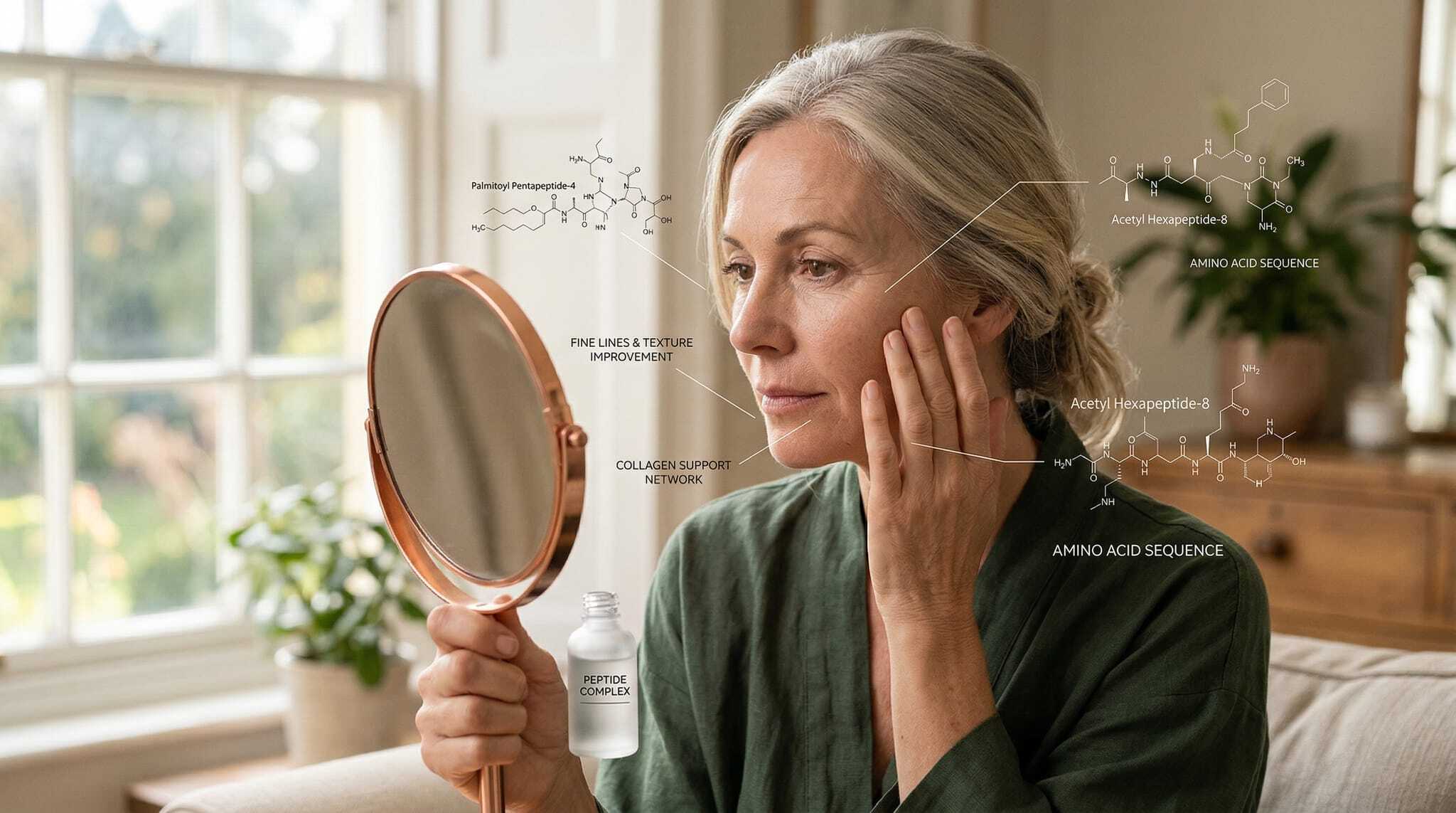
In the early 1970s, biochemist Loren Pickart discovered something unusual in human blood plasma. A small tripeptide — just three amino acids (glycine-histidine-lysine) bound to a copper ion — appeared to make old liver tissue behave like young tissue. He named it GHK-Cu, and decades of research have since revealed that this tiny molecule plays an outsized role in the body’s repair and regeneration systems [1].
For skin specifically, GHK-Cu has become one of the most studied peptides in cosmetic dermatology. It stimulates collagen and elastin synthesis, promotes wound healing, reduces inflammation, and — perhaps most remarkably — appears to reset the expression of hundreds of genes associated with aging back toward younger patterns [2].
That last claim sounds extraordinary. But it’s backed by gene expression studies showing that GHK-Cu modulates over 4,000 human genes, with a significant portion involved in tissue remodeling, antioxidant defense, and stem cell function [3]. It’s not just a signal to build more collagen — it’s a broad-spectrum signal to shift the skin’s entire biological program toward repair.
How GHK-Cu Works in the Skin
Copper peptides influence skin through multiple overlapping mechanisms:
Collagen and elastin synthesis. GHK-Cu stimulates fibroblasts to produce types I and III collagen, as well as elastin. It does this partly by upregulating the genes responsible for extracellular matrix proteins and partly by increasing the production of glycosaminoglycans (GAGs) — the ground substance that supports the collagen network [1].
Wound healing acceleration. GHK-Cu attracts immune cells to sites of damage, stimulates new blood vessel formation (angiogenesis), and promotes the synthesis of decorin — a proteoglycan involved in orderly collagen fiber assembly. Clinical studies on wound healing have consistently shown accelerated repair in the presence of copper peptides [4].
The peptide suppresses pro-inflammatory cytokines including TNF-α, IL-6, and TGF-β, which are key drivers of chronic low-grade inflammation (inflammaging) in older skin.
Anti-inflammatory action. The peptide suppresses pro-inflammatory cytokines including TNF-α, IL-6, and TGF-β, which are key drivers of chronic low-grade inflammation (inflammaging) in older skin. By calming this inflammatory background, GHK-Cu creates a more favorable environment for constructive remodeling rather than destructive degradation [2].
Antioxidant defense. GHK-Cu upregulates the expression of superoxide dismutase (SOD) and other endogenous antioxidant enzymes, helping skin combat the free radical damage that accelerates aging.
Gene expression reset. Broad Connectivity Map analysis has shown that GHK-Cu can suppress genes associated with metastasis, tissue destruction, and inflammation while activating genes associated with stem cell maintenance and DNA repair [3]. In practical terms, this means aged fibroblasts exposed to GHK-Cu begin behaving more like younger fibroblasts — producing more matrix proteins and degrading fewer.
What GHK-Cu Can’t Do
For all its impressive biology, copper peptides have real limitations that rarely get discussed in skincare marketing:
Penetration is a challenge. GHK-Cu is a charged, hydrophilic molecule. It doesn’t easily cross the lipid-rich stratum corneum that forms the skin’s outer barrier. Many topical copper peptide products may deliver less active ingredient to the dermis than their concentrations suggest [5].
Clinical evidence is thinner than you’d expect. Despite extensive in vitro (cell culture) and gene expression data, there are relatively few large-scale, randomized controlled trials on topical GHK-Cu for anti-aging in human skin. Much of the most cited evidence comes from wound healing contexts and cell culture studies rather than cosmetic outcomes measured in living skin over months.
Stability issues. Copper ions can catalyze oxidation reactions, which means formulation matters enormously. Poorly formulated copper peptide products can actually generate free radicals rather than quench them — the opposite of the intended effect.
It’s not retinol’s replacement. GHK-Cu and retinol work through fundamentally different pathways. Copper peptides signal broadly through growth factor-like mechanisms. Retinol works through the retinoid receptor pathway (RAR/RXR), directly upregulating specific procollagen genes and inhibiting matrix metalloproteinases (MMPs) that break down existing collagen [6]. These pathways are complementary, not interchangeable.
Poorly formulated copper peptide products can actually generate free radicals rather than quench them — the opposite of the intended effect.
Copper Peptides vs. Retinol: The Real Comparison
This is where the conversation usually goes sideways. Skincare marketing often positions copper peptides as a “gentler alternative to retinol” — as if the choice is one or the other. The reality is more nuanced:
| Factor | Copper Peptides (GHK-Cu) | Retinol |
|---|---|---|
| Collagen stimulation | Yes (via growth factor pathways) | Yes (via retinoid receptor pathway) |
| Elastin stimulation | Yes | Limited direct evidence |
| MMP inhibition | Indirect (via anti-inflammatory action) | Direct and well-documented |
| Clinical trial depth | Moderate (mostly wound healing) | Extensive (decades of RCTs) |
| Penetration challenge | Significant (charged molecule) | Moderate (lipophilic, but barrier damage from enhancers) |
| Tolerability | Generally well-tolerated | Can cause irritation with conventional formulations |
| Gene expression effects | Broad (4,000+ genes) | Targeted (retinoid-responsive elements) |
The critical difference is clinical validation depth. Retinol has over 50 years of research and dozens of randomized controlled trials demonstrating measurable improvements in wrinkle depth, skin thickness, collagen density, and hyperpigmentation. GHK-Cu has compelling mechanistic data but fewer large-scale cosmetic outcome trials.
The Smart Approach: Stack, Don’t Switch
Rather than choosing between copper peptides and retinol, the evidence supports using both — each addresses aging through a different biological mechanism, and there’s no known antagonism between the two pathways.
Copper peptides contribute growth factor signaling, wound healing support, broad gene expression modulation, and anti-inflammatory action.
Retinol contributes direct procollagen gene activation, targeted MMP suppression, accelerated cellular turnover, and the deepest clinical evidence base in skincare.
The practical challenge has always been that conventional retinol formulations can irritate the skin, potentially undermining the repair environment that copper peptides are trying to create. This is where delivery technology becomes decisive.
Nanoretinol® eliminates this conflict. By delivering retinol through biomimetic lipid nanoparticles that the skin recognizes as its own cell membranes, it reaches the dermis without disrupting the skin barrier or triggering the inflammation that conventional penetration enhancers cause. In clinical testing, this approach produced 232% greater collagen recovery compared to conventional retinol, with significantly reduced cytotoxicity [7].
Combined with a well-formulated copper peptide serum, this creates a dual-pathway strategy: GHK-Cu provides the broad regenerative signal from the growth factor side, while Nanoretinol® provides the targeted collagen-building signal from the retinoid side — without either undermining the other.
A practical routine:
Morning: → Cleanser → Copper peptide serum (GHK-Cu) → Vitamin C + antioxidant → Moisturizer + SPF
Evening: → Cleanser → Nanoretinol® (retinoid pathway activation) → Moisturizer with ceramides
Separating copper peptides (AM) from retinol (PM) avoids any theoretical interaction between copper ions and retinol stability, while ensuring both pathways are activated daily.
GHK-Cu and Copper Peptides: Quick Questions
What does GHK-Cu do for skin?
GHK-Cu acts as a repair signal. Laboratory and wound-healing research links it with extracellular-matrix production, inflammatory regulation, antioxidant defense, and tissue remodeling [1][2][4]. Whether a cosmetic serum reproduces all of those effects depends on formulation and delivery.
Are copper peptides better than retinol?
Not on the current clinical evidence. Retinol has the deeper human anti-aging trial base. Copper peptides offer different repair signals and usually better tolerability, so the more useful comparison is complementary roles rather than a winner [6].
Can copper peptides and retinol be used in the same routine?
They can be part of the same routine because they act through different pathways. Using copper peptides in the morning and retinol at night is a simple way to reduce formulation-interaction questions and make irritation easier to troubleshoot.
References
- Pickart L, Vasquez-Soltero JM, Margolina A. “Regenerative and Protective Actions of the GHK-Cu Peptide in the Light of the New Gene Data.” International Journal of Molecular Sciences. 2012;13(11):15351-15366. PMC6073405
- Pickart L, Vasquez-Soltero JM, Margolina A. “GHK Peptide as a Natural Modulator of Multiple Cellular Pathways in Skin Regeneration.” BioMed Research International. 2015;2015:648108. doi:10.1155/2015/648108
- Pickart L, Vasquez-Soltero JM, Margolina A. “The Human Tripeptide GHK-Cu in Prevention of Oxidative Stress and Degenerative Conditions of Aging: Implications for Cognitive Health.” Oxidative Medicine and Cellular Longevity. 2012;2012:324832. doi:10.1155/2012/324832
- Hussain M, et al. “Exploring the Role of Tripeptides in Wound Healing and Skin Regeneration: A Comprehensive Review.” Pharmaceutics. 2025;17(4):482. PMC12595317
- Badenhorst T, Svirskis D, Merrilees M, et al. “Effects of GHK-Cu on MMP and TIMP Expression, Collagen and Elastin Production, and Facial Wrinkle Parameters.” Journal of Aging Science. 2016;4(1):166. doi:10.4172/2329-8847.1000166
- Mukherjee S, Date A, Patravale V, et al. “Retinoids in the Treatment of Skin Aging: An Overview of Clinical Efficacy and Safety.” Clinical Interventions in Aging. 2006;1(4):327-348. PMID: 18046911
- North Biomedical LLC. “Nanoretinol® vs. Conventional Retinol: Efficacy in Collagen and Elastin Recovery.” Clinical Study Summary, 2024. Study PDF