
Sunken Eyes: Why They Happen and What Actually Helps
The anatomy behind hollow under-eyes, what science says about volume loss, and realistic strategies that restore a rested look
You slept eight hours, drank water all day, and still the mirror shows someone who looks exhausted. The shadows sitting in the hollows beneath your eyes don’t respond to concealer the way they used to. That’s because what you’re seeing isn’t a surface problem — it’s a structural one.
Sunken eyes, or periorbital hollowing, happen when the tissues that once filled the space between your lower eyelid and cheekbone lose volume. The result is a visible depression — sometimes subtle, sometimes dramatic — that creates shadows, darkens the under-eye area, and adds years to the face. Understanding why this happens is the first step toward doing something about it.
What Creates the Hollow
The area under your eye is one of the thinnest, most delicate zones on your entire body. The skin here is roughly 0.5 mm thick — about half the thickness of skin on the rest of your face [1]. Beneath it sits a complex architecture of fat, muscle, ligaments, and bone that changes significantly with age.
Three main structural shifts drive sunken eyes:
Fat pad shrinkage and descent. The face contains discrete compartments of fat — not one continuous layer, but separate pockets held in place by ligaments and connective tissue. The infraorbital fat pad, which sits just below the eye, begins to thin and migrate downward starting in the thirties. As this padding deflates, the transition from lower eyelid to cheek becomes less smooth and more angular, revealing the orbital rim underneath [2].
Bone resorption. This is the part most people don’t expect. The bones of the face actually shrink with age. A 2008 CT study published in Aesthetic Surgery Journal demonstrated that the orbital aperture — the bony opening of the eye socket — expands as we age, particularly in the inferomedial region [3]. A larger eye socket with less soft tissue filling it creates the visual effect of eyes that have receded into the skull.
Skin thinning and collagen loss. The periorbital skin loses collagen at a rate of roughly 1% per year after age 25, and it’s already starting from a thinner baseline than anywhere else on the face [1]. As collagen degrades, the skin becomes more translucent, making underlying blood vessels more visible — which is why sunken eyes are so often accompanied by dark circles.
Why Some People Are More Affected Than Others
Genetics plays a significant role. If your parents had deep-set eyes or prominent tear troughs, you’re more likely to develop noticeable hollowing earlier. The depth and shape of your orbital bones, the amount of periorbital fat you were born with, and your skin’s baseline thickness are all inherited traits [4].
But lifestyle and environmental factors accelerate the process considerably:
Weight loss. The face loses fat alongside the body. Rapid or significant weight loss — including that seen with GLP-1 receptor agonists like semaglutide — can strip volume from the periorbital area faster than the skin can contract, leaving pronounced hollows [2].
Smoking. Cigarette smoke accelerates collagen breakdown throughout the skin, but the already-thin periorbital skin is especially vulnerable. Smokers develop periorbital hollowing and wrinkling significantly earlier than nonsmokers [4].
The periorbital skin loses collagen at a rate of roughly 1% per year after age 25, and it’s already starting from a thinner baseline than anywhere else on the face.
Sun exposure. UV radiation degrades both collagen and elastin in the dermis. The periorbital area receives disproportionate sun exposure because the brow bone creates a reflection zone, yet many people skip sunscreen around the eyes.
Chronic dehydration and poor sleep. While these won’t cause permanent structural hollowing, they exacerbate the appearance by reducing skin turgor and increasing vasodilation — making existing hollows look deeper and darker.
The Tear Trough: Where Hollowing Is Most Visible
The tear trough is the crescent-shaped groove that runs from the inner corner of the eye diagonally toward the cheekbone. It’s created by the attachment of the orbicularis retaining ligament to the orbital rim — essentially a tethering point where the skin is anchored to bone [5].
In youth, surrounding fat volume masks this attachment point. As periorbital and cheek fat diminishes, the ligament’s attachment becomes visible as a defined groove. This is why the tear trough is often the first sign of periorbital aging that people notice — it creates the “tired” look that no amount of sleep can resolve.
A 2016 review in the Indian Journal of Plastic Surgery categorized infraorbital dark circles into four primary types: vascular (showing bluish-purple), pigmentary (brown discoloration), structural (shadow from volume loss), and mixed. The structural type — caused by hollowing — is the most common in aging patients and the least responsive to topical brightening products, because the problem isn’t in the skin at all [4].
What Actually Works: Evidence-Based Approaches
Topical Treatments: Realistic Expectations
No cream or serum can replace lost fat or rebuild bone. That needs to be stated clearly. However, topical treatments can meaningfully improve the skin quality overlying the hollow area, which reduces the severity of the visual effect.
Retinoids remain the most evidence-supported topical for periorbital rejuvenation. A review in the Journal of Drugs in Dermatology confirmed that retinoids increase epidermal thickness, stimulate collagen production, and improve skin texture in the periorbital zone [5]. Tretinoin applied twice daily for 60 days produced a 37% increase in grenz-zone collagen and a 30% increase in epidermal thickness — meaningful structural improvements in what is essentially the scaffolding of the skin.
The key limitation: retinoids improve the quality of the skin envelope but cannot restore the volume beneath it. They’re most effective for mild hollowing where skin thinning and texture degradation are primary contributors.
Vitamin C provides complementary benefits through collagen co-factor activity and photoprotection. Applied topically, L-ascorbic acid promotes collagen synthesis and reduces the oxidative stress that accelerates periorbital aging [5].
Peptides and growth factors show promise for periorbital skin strengthening, though the evidence base is thinner than for retinoids. Palmitoyl pentapeptide-4 (Matrixyl) has demonstrated collagen-stimulating effects in vitro, and some clinical data suggest improvement in periorbital wrinkle depth [5].
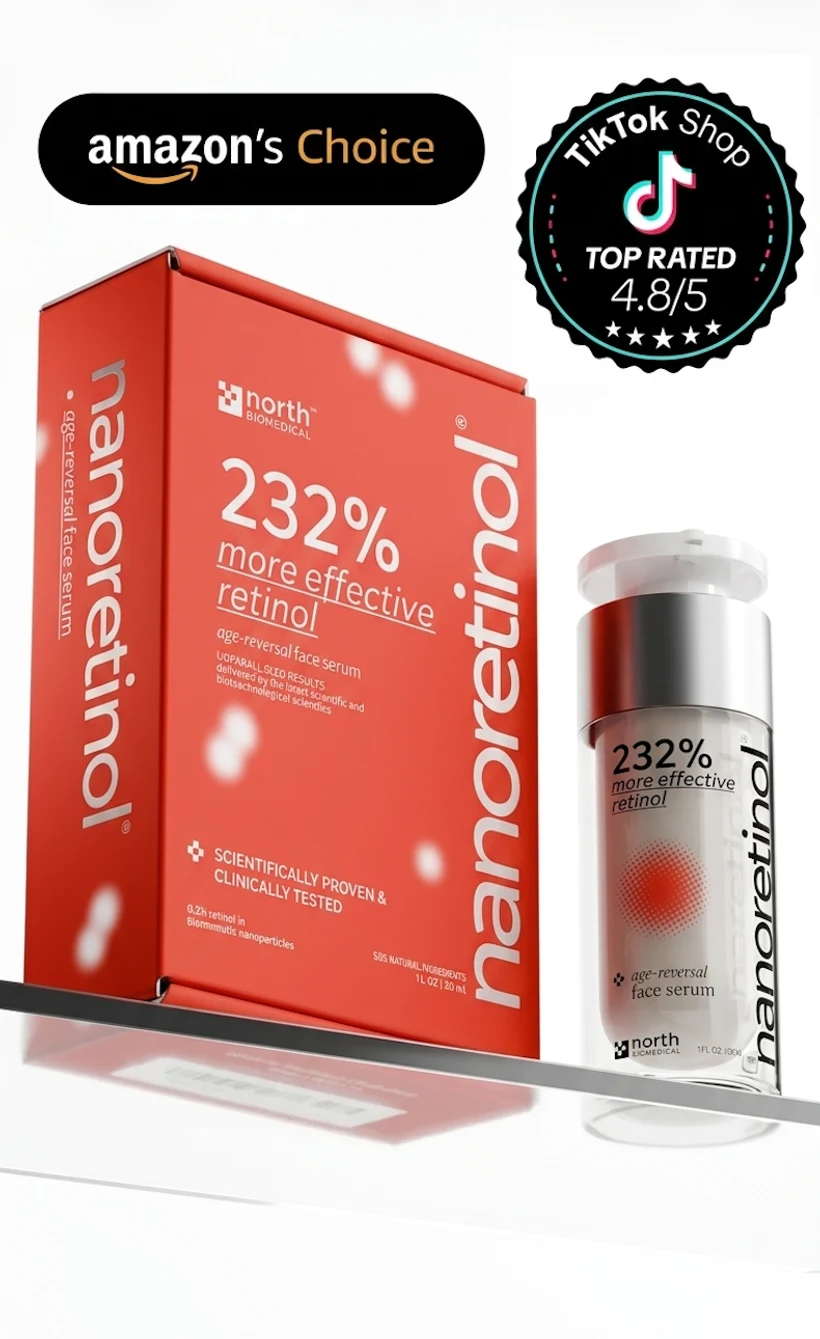
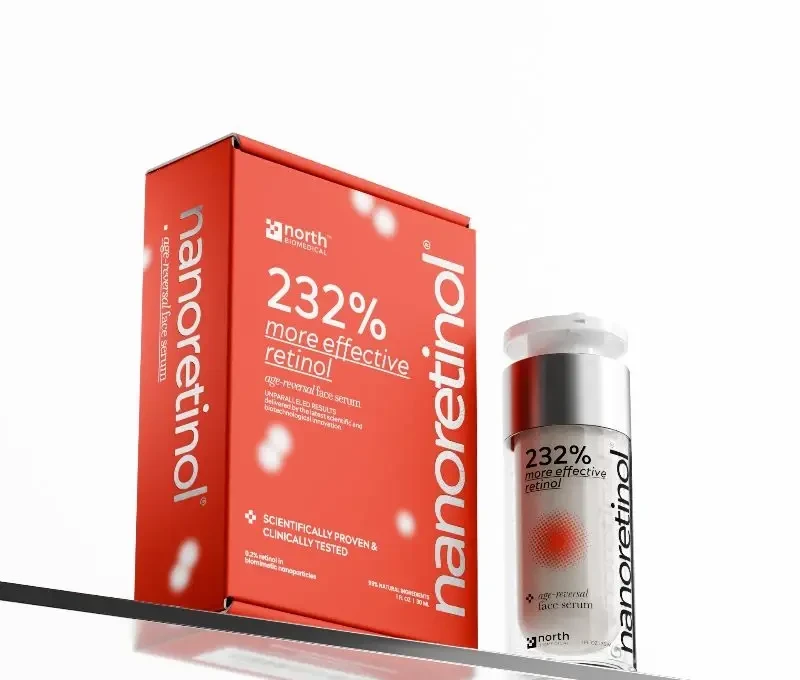
Clinical data show it is +232% more effective in collagen recovery compared to conventional retinol, making it particularly valuable for the delicate, thin-skinned periorbital area where gentleness is as important as efficacy.
For the retinoid component specifically, delivery matters as much as the active ingredient. Traditional retinol formulations can irritate the thin periorbital skin, causing redness, peeling, and paradoxically more visible hollowing during the adjustment period. Nanoretinol® addresses this by encapsulating retinol within biomimetic lipid nanoparticles that the skin recognizes as self — delivering retinol to target cells without the barrier disruption that causes irritation. Clinical data show it is +232% more effective in collagen recovery compared to conventional retinol, making it particularly valuable for the delicate, thin-skinned periorbital area where gentleness is as important as efficacy.
Professional Treatments
For moderate to severe hollowing, professional interventions address the underlying volume deficit:
Hyaluronic acid fillers are the most widely used treatment for tear trough hollowing. Carefully placed HA gel replaces lost volume, softens the lid-cheek junction, and reduces shadow casting. Results are immediate and typically last 12–18 months [4]. The periorbital area requires an experienced injector — complications like the Tyndall effect (a bluish hue from superficially placed filler) are specific to this zone.
Platelet-rich fibrin (PRF) injections use your own blood-derived growth factors to stimulate collagen production and improve skin quality in the under-eye area. Results develop gradually over weeks and are more subtle than fillers, but avoid the risks of product-based volumization.
Radiofrequency and ultrasound devices (like Thermage and Ultherapy) tighten existing collagen and stimulate neocollagenesis in the periorbital zone. A comprehensive review confirmed that RF energy can achieve mild to moderate skin tightening without the risks of light-based devices [4]. These work best for patients with mild hollowing combined with skin laxity.
Laser resurfacing — particularly fractional CO2 or erbium — improves skin thickness, texture, and pigmentation around the eyes. These treatments address the skin component of sunken eyes effectively but, like topicals, cannot replace volume.
Building a Realistic Strategy
The most effective approach typically combines interventions across multiple layers:
-
Protect the skin you have. Daily broad-spectrum SPF around the eyes, physical sunscreens preferred (zinc oxide, titanium dioxide) to minimize irritation.
-
Strengthen the skin envelope. A well-formulated retinoid — gentle enough for periorbital use — applied consistently for months, not weeks. Pair with vitamin C in the morning for collagen synthesis support and antioxidant protection.
-
Support from within. Adequate hydration, consistent sleep, and a diet rich in omega-3 fatty acids and antioxidants won’t reverse structural hollowing, but they reduce the lifestyle factors that make it look worse.
-
Address volume when ready. If topical optimization isn’t enough, a consultation with an experienced injector about HA fillers or PRF can address the structural deficit directly.
The progression from mild to severe periorbital hollowing is gradual, which means early intervention — particularly in skin quality maintenance — offers the best return. By the time hollowing is pronounced, topicals alone are unlikely to produce satisfying results. But starting a retinoid and sun protection regimen in your thirties can meaningfully delay how quickly the area deteriorates.
References
-
Ha RY, Nojima K, Adams WP, Brown SA. “Analysis of Facial Skin Thickness: Defining the Relative Thickness Index.” Plastic and Reconstructive Surgery. 2005;115(6):1769-1773. doi:10.1097/01.PRS.0000161682.63535.9B
-
Gierloff M, Stöhring C, Buber T, et al. “Aging Changes of the Midfacial Fat Compartments: A Computed Tomographic Study.” Plastic and Reconstructive Surgery. 2012;129(1):263-273. doi:10.1097/PRS.0b013e3182362b96
-
Kahn DM, Shaw RB. “Aging of the Bony Orbit: A Three-Dimensional Computed Tomographic Study.” Aesthetic Surgery Journal. 2008;28(3):258-264. doi:10.1016/j.asj.2008.02.007
-
Vrcek I, Ozgur O, Nakra T. “Infraorbital Dark Circles: A Review of the Pathogenesis, Evaluation and Treatment.” Journal of Cutaneous and Aesthetic Surgery. 2016;9(2):65-72. doi:10.4103/0974-2077.184046
-
Pilkington SJ, Belden S, Miller RA. “The Tricky Tear Trough: A Review of Topical Cosmeceuticals for Periorbital Skin Rejuvenation.” Journal of Clinical and Aesthetic Dermatology. 2015;8(9):39-47. PMID: 26430490
-
Friedmann DP, Goldman MP. “Decoding Periorbital Aging: A Multilayered Analysis of Anatomical Changes.” Aesthetic Plastic Surgery. 2025;49:1234-1242. PMID: 39921712