Omega-3 for Skin: How Fish Oil Fights Aging, Dryness, and UV Damage From the Inside Out
The science of EPA and DHA — how these fatty acids reduce inflammation, protect against UV damage, and strengthen the skin barrier from within
Most conversations about anti-aging skincare focus on what you put on your skin. Serums, creams, sunscreens — the topical arsenal. But your skin is an organ, and like every organ, its health depends on what you feed it from the inside. Omega-3 fatty acids are one of the few nutritional interventions with rigorous clinical evidence for measurable skin benefits.
The data for omega-3s and skin health spans decades of peer-reviewed research, including randomized controlled trials demonstrating UV photoprotection, reduced inflammation, and improved barrier function. If you are investing in topical anti-aging care but ignoring omega-3 intake, you are building a house and neglecting the foundation.
EPA and DHA: Two Molecules, Different Jobs
Omega-3 fatty acids are a family, but two members do the heavy lifting for skin: eicosapentaenoic acid (EPA) and docosahexaenoic acid (DHA). Both are long-chain polyunsaturated fatty acids found primarily in fatty fish and marine sources. Your body can technically convert the plant-based omega-3 (alpha-linolenic acid, or ALA, from flaxseed and walnuts) into EPA and DHA, but the conversion rate is notoriously inefficient — typically below 5% for EPA and less than 1% for DHA.
This distinction matters. When research shows skin benefits from omega-3s, it is studying EPA and DHA specifically, not ALA.
EPA is the primary anti-inflammatory player. It competes with arachidonic acid (an omega-6 fatty acid) for the same enzymes — cyclooxygenase and lipoxygenase — that produce inflammatory eicosanoids. When EPA wins that competition, the resulting signaling molecules are less inflammatory [6]. Think of it as changing the chemical vocabulary your immune system uses: the same conversation happens, but the tone shifts from aggressive to measured.
DHA is a structural component of cell membranes, including those of skin cells. It influences membrane fluidity, receptor function, and cellular signaling. In the skin, adequate DHA helps maintain the flexibility and integrity of cell membranes throughout the epidermis and dermis [2].
The Anti-Inflammatory Effect: Why It Matters for Aging
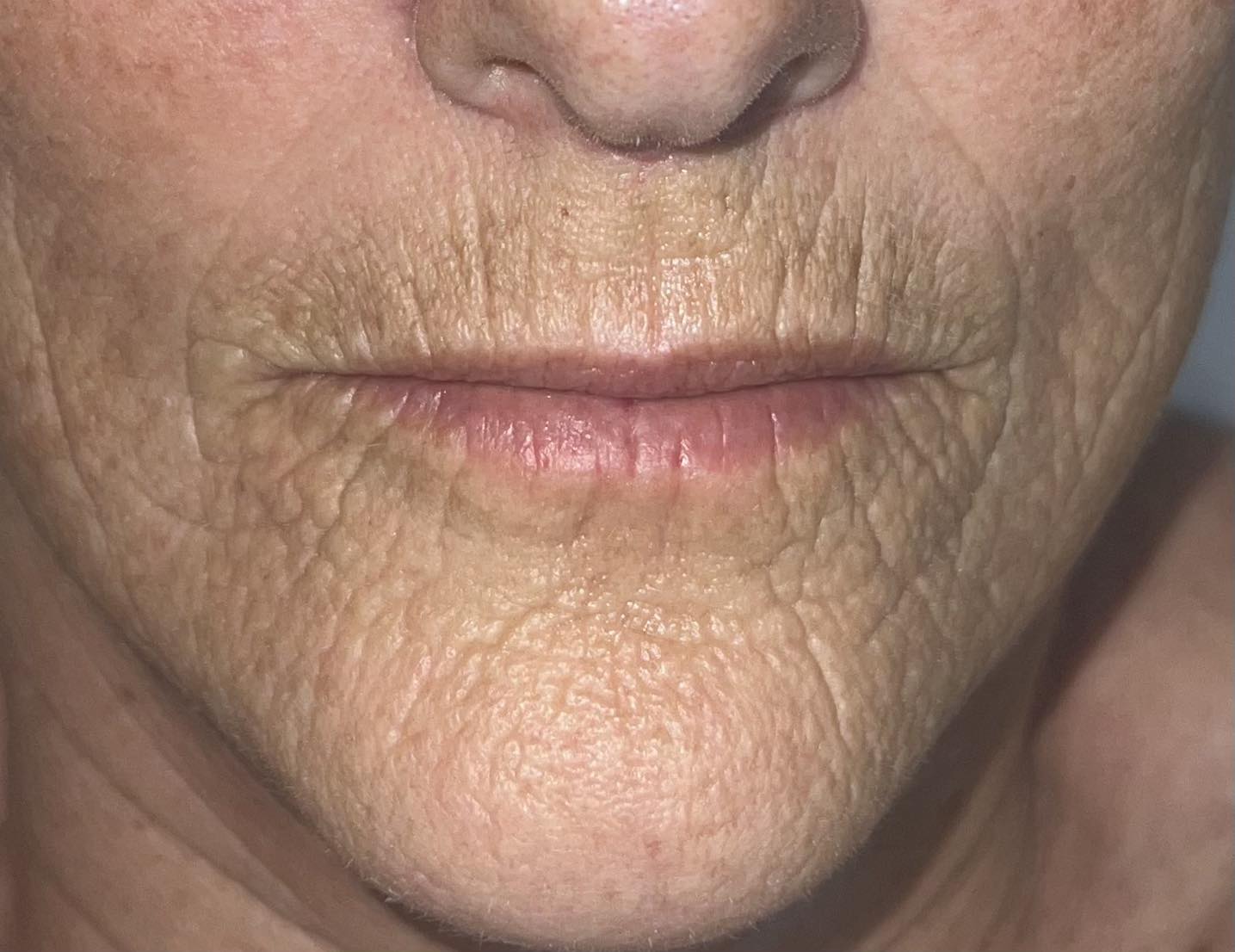
Chronic low-grade inflammation — what researchers call “inflammaging” — is now recognized as a central driver of skin aging. It is not the acute, visible inflammation of a sunburn or a breakout. It is a persistent, subclinical elevation of inflammatory mediators that gradually degrades collagen, disrupts the extracellular matrix, and impairs the skin’s repair mechanisms.
Balić et al. found that omega-3 supplementation consistently reduced markers of skin inflammation [6]. The modern Western diet is heavily skewed toward omega-6 fatty acids (vegetable oils, processed foods, grain-fed animal products), creating an inflammatory ratio that works against skin health.
Increasing omega-3 intake rebalances this ratio, reducing the chronic inflammatory burden on the skin. This does not replace topical antioxidant care — it complements it. Thomsen et al. reviewed dermatological applications and found evidence for benefits across multiple conditions, from photoaging to inflammatory dermatoses [1].
Most conversations about anti-aging skincare focus on what you put on your skin.
UV Photoprotection: The Most Surprising Benefit
This is where the evidence becomes particularly compelling. Omega-3 fatty acids do not replace sunscreen — nothing does — but multiple clinical studies show they provide a measurable layer of internal UV protection.
Pilkington et al. published a landmark study in Experimental Dermatology reviewing the photoprotective properties of omega-3 polyunsaturated fatty acids [3]. The mechanisms are multifaceted: EPA reduces UV-induced inflammatory responses, inhibits the production of matrix metalloproteinases (MMPs) that break down collagen after sun exposure, and decreases the immunosuppression that UV radiation causes in the skin.
In a rigorous randomized controlled trial, Pilkington and colleagues gave participants oral omega-3 supplements and then exposed their skin to simulated solar radiation [4]. The supplemented group showed significantly less suppression of cutaneous immune responses compared to placebo. This is not a trivial finding. UV-induced immunosuppression is one of the pathways through which sun exposure increases skin cancer risk and accelerates photoaging.
Rhodes et al. took this further, specifically studying EPA supplementation and its effect on UVR-related cancer risk markers in humans [5]. Participants who took EPA supplements showed reduced UV-induced DNA damage (measured by p53 expression, a marker of genotoxic stress) and decreased sunburn cell formation compared to controls. The effect was dose-dependent and statistically significant.
To be clear: omega-3 supplementation does not allow you to skip sunscreen or extend your time in the sun. What it does is provide a systemic buffer that reduces the biological damage from UV exposure that your sunscreen does not completely block — because no sunscreen blocks 100% of UV radiation.
Barrier Function and Dry Skin
The skin barrier — that outermost layer of dead cells cemented together by lipids — is the wall between your body and the environment. When it functions well, it keeps moisture in and irritants out. When it is compromised, you get dryness, sensitivity, and accelerated aging.
Omega-3 fatty acids are incorporated into the lipid matrix of cell membranes throughout the epidermis. Huang et al. reviewed the cosmetic and therapeutic applications of fish oil fatty acids and found that omega-3 supplementation improved skin hydration, reduced roughness, and enhanced barrier integrity [2]. The mechanism is straightforward: healthier cell membranes produce a more functional barrier.
For people with chronically dry skin — a condition that worsens with age as sebum production declines — omega-3 supplementation addresses the problem from the inside. Topical moisturizers and ceramides reinforce the barrier externally; omega-3s build better cell membranes internally. The two approaches are complementary.
To be clear: omega-3 supplementation does not allow you to skip sunscreen or extend your time in the sun.
Food Sources vs. Supplements
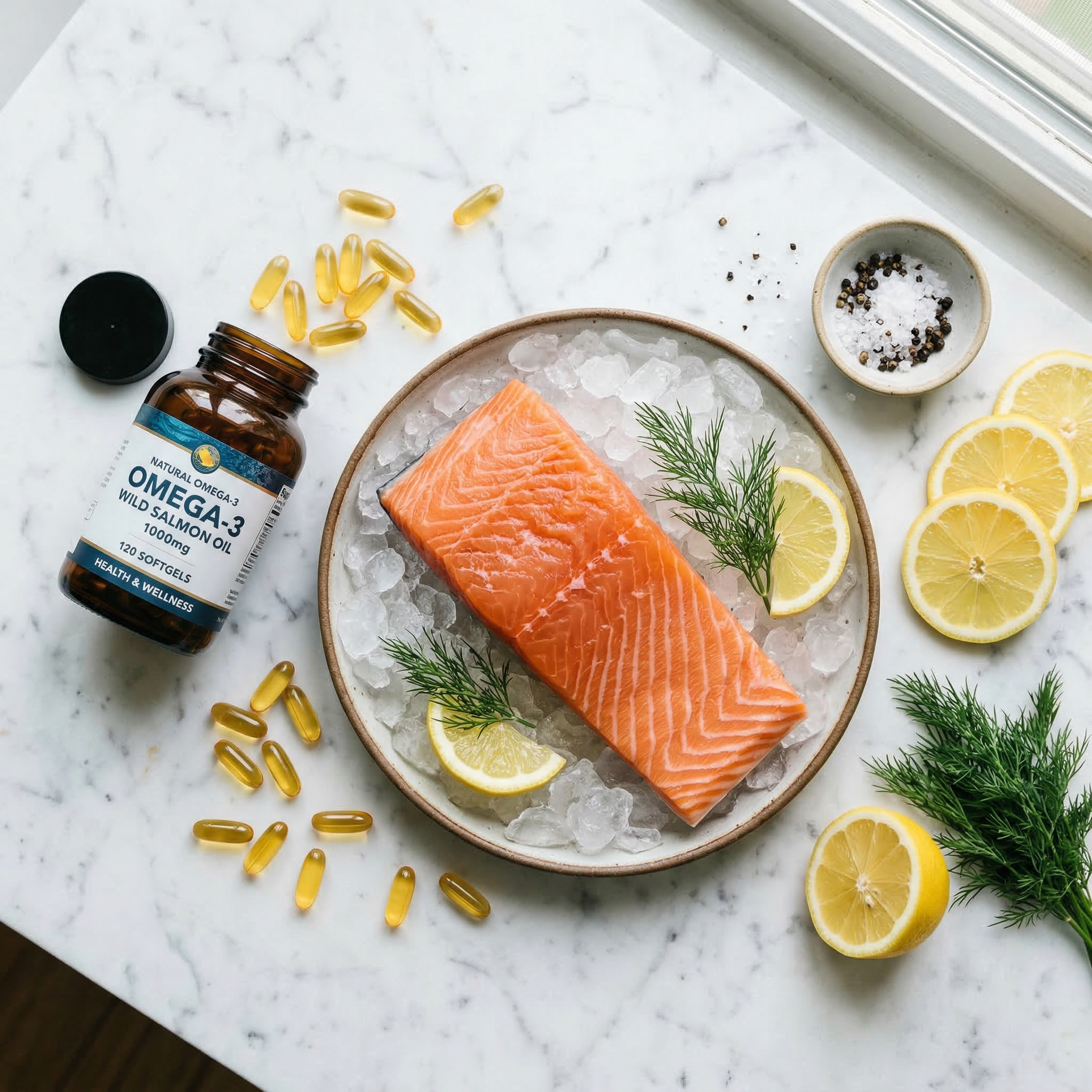
The richest dietary sources of EPA and DHA are fatty cold-water fish: salmon, mackerel, sardines, herring, and anchovies. Two to three servings per week of fatty fish provides roughly 1-2 grams of combined EPA and DHA — a range consistent with amounts used in clinical studies showing skin benefits.
For those who do not eat fish regularly, fish oil supplements are the practical alternative. Look for actual EPA and DHA content per serving — a 1,000 mg fish oil capsule may contain only 300 mg of combined EPA/DHA. Aim for at least 500 mg daily for general skin health; studies showing photoprotection used 1-2 grams daily.
Algae-based supplements provide DHA and EPA from a non-fish source with comparable bioavailability — suitable for vegetarians. Store any omega-3 supplement in a cool, dark place; they oxidize readily, and choose brands with third-party purity testing.
The Inside-Out Strategy: Combining Omega-3s With Topical Retinol
This is where nutritional and topical approaches converge. Retinol stimulates collagen production and accelerates cell turnover at the application site. Omega-3s reduce the systemic inflammation that degrades collagen throughout the body, protect against UV damage that retinol cannot address, and improve the barrier function that determines how well topical ingredients are retained.
Consider it a two-front approach: retinol works on the skin’s surface and dermis to rebuild structure; omega-3s work from the bloodstream to reduce the inflammatory and oxidative forces that break that structure down. Neither replaces the other. Together, they address skin aging from both directions.
For those using retinol formulations — including advanced delivery systems like Nanoretinol® from North Biomedical® — adequate omega-3 intake supports the healthy cell membrane turnover that retinol accelerates. New cells produced through retinol-stimulated turnover need quality building materials, and EPA and DHA are among the most important structural lipids for skin elasticity and resilience.
Making It Practical
Omega-3 supplementation is one of the simplest evidence-based interventions you can add to an anti-aging strategy. There is no complex protocol, no titration period, no risk of irritation. Eat fatty fish twice a week or take a quality fish oil supplement daily.
The benefits accumulate over months as EPA and DHA are incorporated into cell membranes and inflammatory ratios shift. Think of it as adjusting the thermostat on inflammation: the room does not cool down instantly, but over time the environment becomes fundamentally more hospitable.
Pair it with topical collagen-building strategies, daily sunscreen, and a diet that does not undermine your efforts with excessive omega-6 intake. The best skincare routine is not just what you apply — it is also what you consume. For the skin, omega-3 fatty acids are among the most well-supported nutritional investments you can make.
References
-
Thomsen BJ, Chow EY, Sapijaszko MJ. “The potential uses of omega-3 fatty acids in dermatology: a review.” Journal of Cutaneous Medicine and Surgery. 2020;24(5):481-494. doi:10.1177/1203475420929925
-
Huang TH, Wang PW, Yang SC, Chou WL, Fang JY. “Cosmetic and therapeutic applications of fish oil’s fatty acids on the skin.” Marine Drugs. 2018;16(8):256. doi:10.3390/md16080256
-
Pilkington SM, Watson RE, Sheratt MJ, Rhodes LE. “Omega-3 polyunsaturated fatty acids: photoprotective macronutrients.” Experimental Dermatology. 2011;20(7):537-543. doi:10.1111/j.1600-0625.2011.01294.x
-
Pilkington SM, Massey KA, Bennett SP, et al. “Randomized controlled trial of oral omega-3 PUFA in solar-simulated radiation-induced suppression of human cutaneous immune responses.” American Journal of Clinical Nutrition. 2013;97(3):646-652. doi:10.3945/ajcn.112.049494
-
Rhodes LE, Shahbakhti H, Azurdia RM, et al. “Effect of eicosapentaenoic acid, an omega-3 polyunsaturated fatty acid, on UVR-related cancer risk in humans.” Carcinogenesis. 2003;24(5):919-925. doi:10.1093/carcin/bgg038
-
Balić A, Vlašić D, Žužul K, et al. “Omega-3 versus omega-6 polyunsaturated fatty acids in the prevention and treatment of inflammatory skin diseases.” International Journal of Molecular Sciences. 2020;21(3):741. doi:10.3390/ijms21030741