Best Body Lotion for Aging Skin: What Actually Firms Crepey Arms, Legs, and Décolletage
The ingredients with real clinical evidence for body skin over 40 — and why most drugstore lotions fail.
The Body Skin Problem Most Lotions Ignore
Open the body-care aisle and you will see a hundred bottles promising “firmer, younger-looking skin.” Almost none deliver, because almost none contain the active ingredients that actually rebuild aging skin. They are essentially scented water with a token shea-butter blurb.
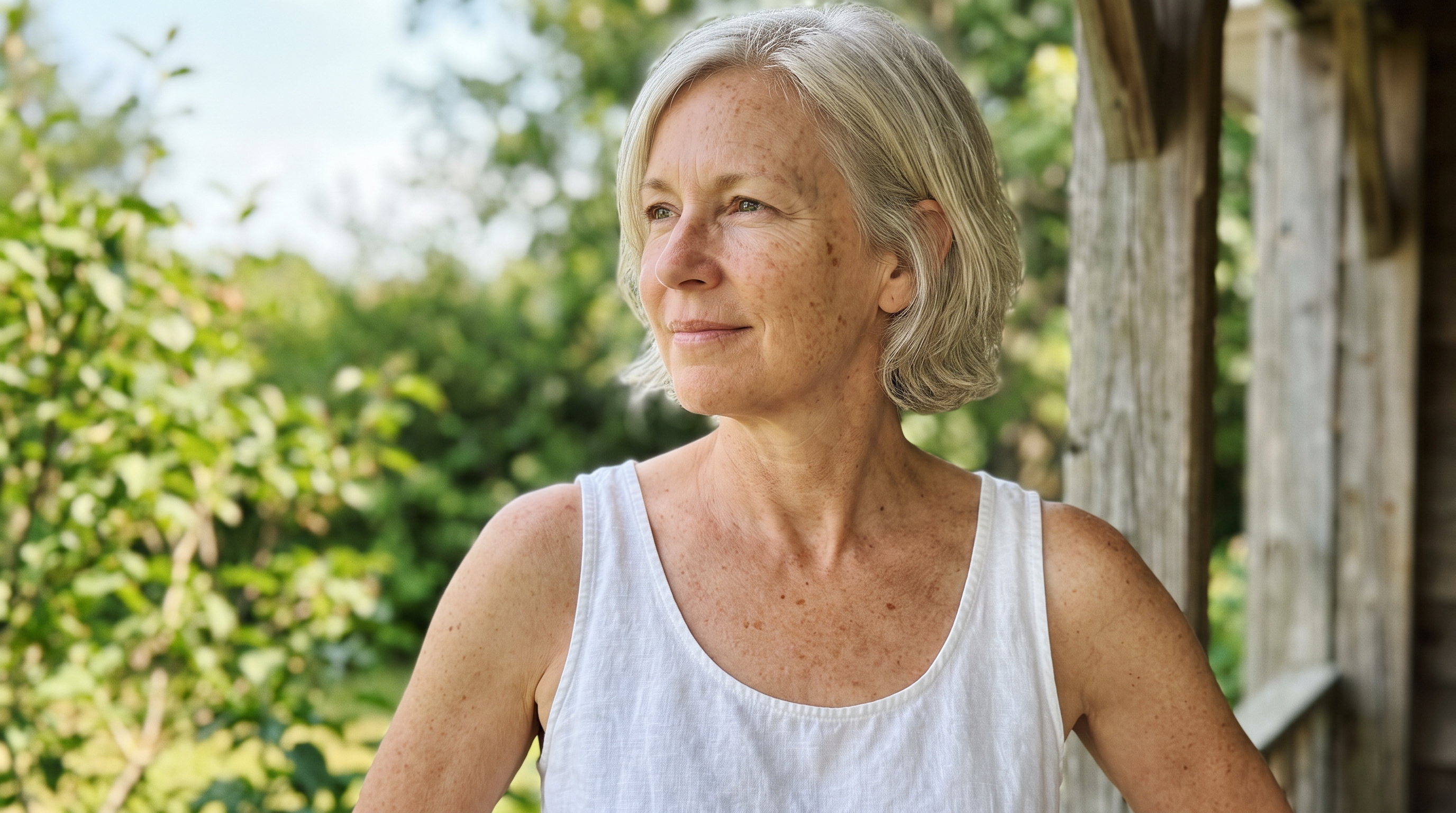
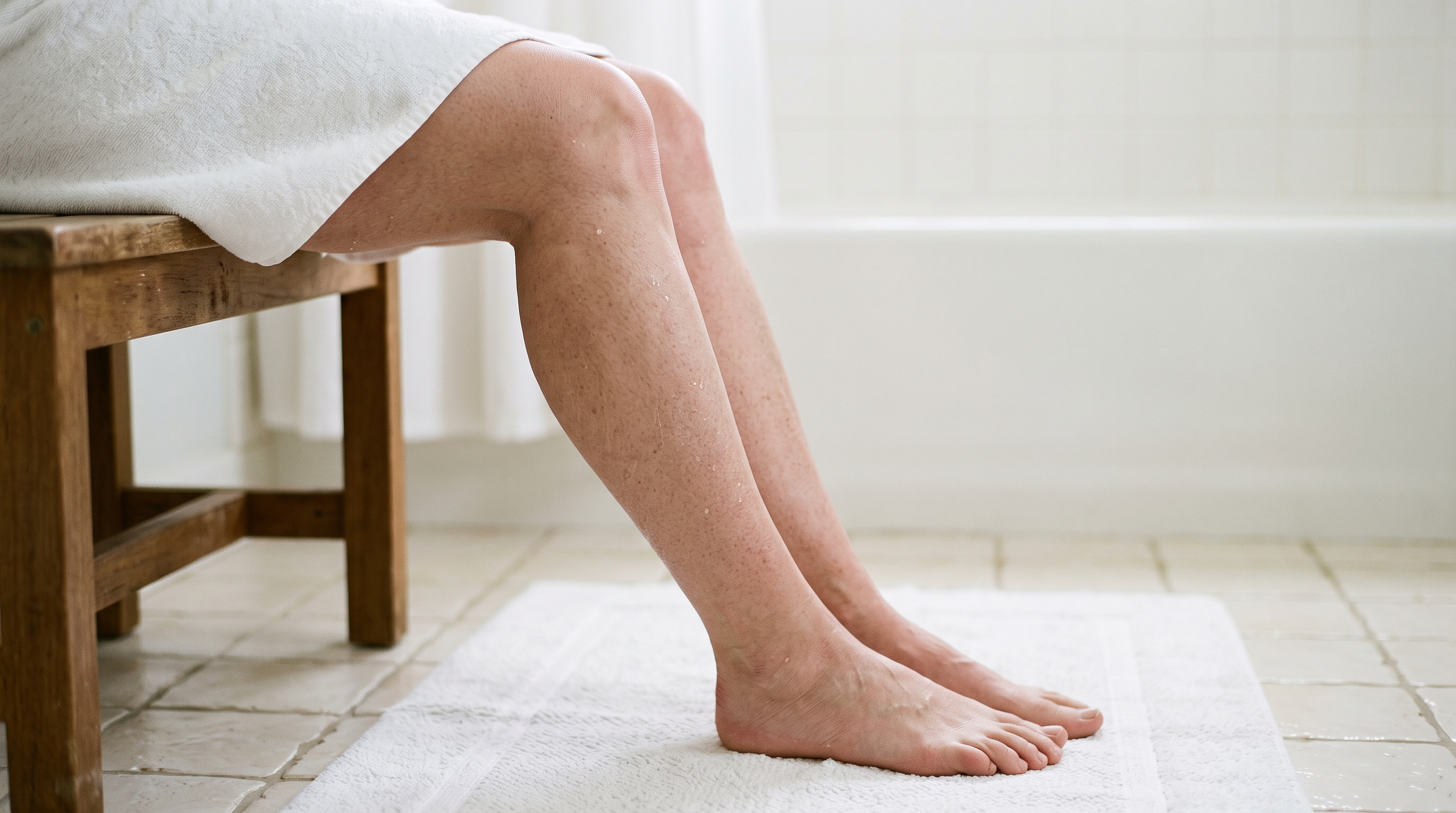
This matters because the body ages on its own timeline. Facial skin gets retinol, vitamin C, peptides, and sunscreen. The arms, legs, chest, and hands often get whatever you grab in the shower. By 45, the cumulative gap is visible: a face that looks well-maintained sitting on top of a neck and chest that look a decade older. The wider concern — what dermatologists call “crepey skin” — affects an enormous share of women over 40 because the dermis loses roughly 1% of its collagen each year after age 25 [1]. What you wash with sets the baseline for all of it, which our guide to the best body wash for dry skin covers in detail. Surface condition also decides how evenly color takes if you use a self tanner on those areas.
The fix is not a different lotion. The fix is a lotion that contains ingredients the dermis can actually use.
What the Body Dermis Is Losing After 40
Three changes drive the appearance of older body skin:
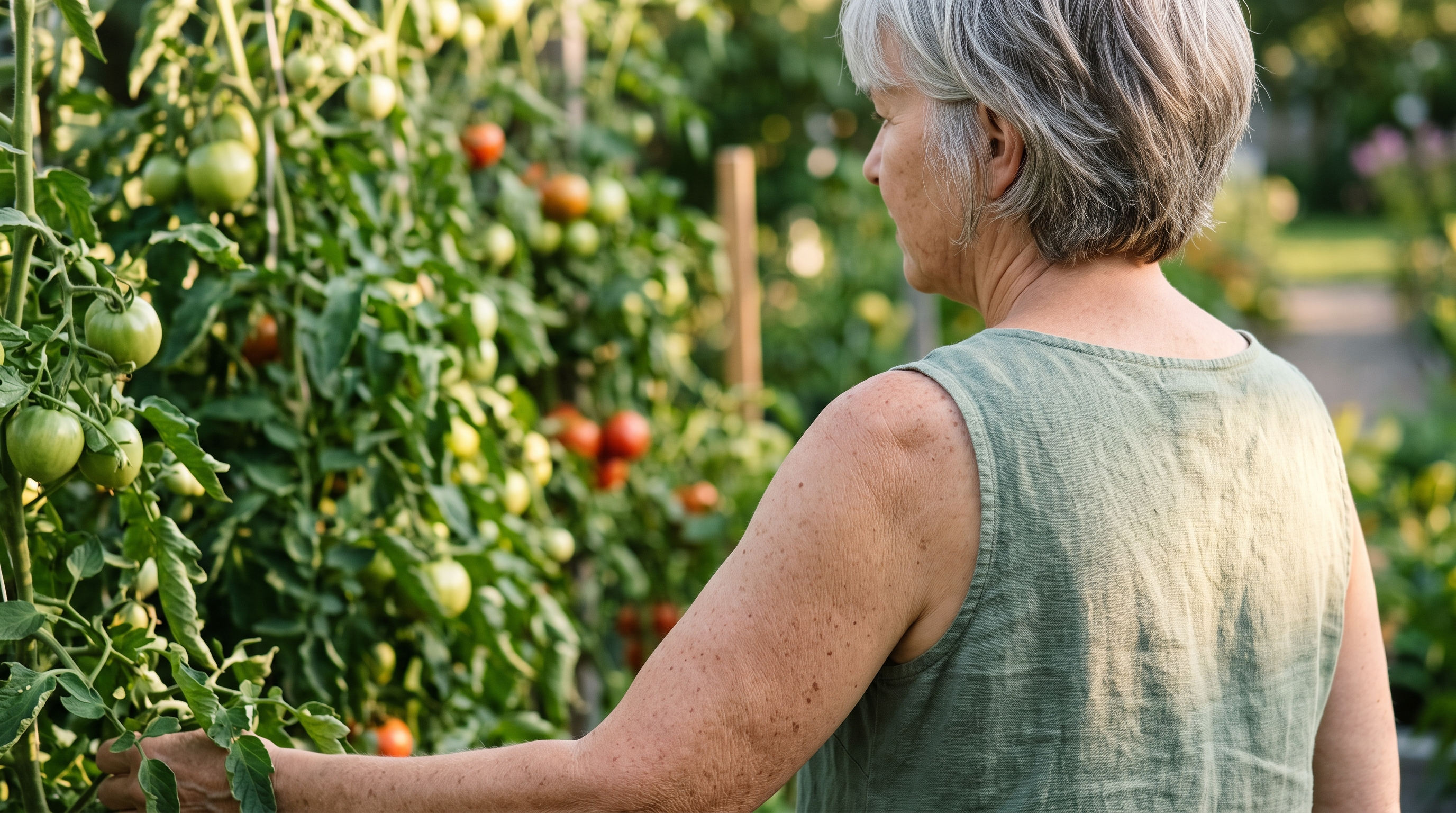
Collagen and elastin fragmentation. UV exposure activates matrix metalloproteinases (MMP-1, MMP-3, MMP-9) that cleave collagen fibrils. Elevated MMP-1 activity is the single biggest driver of collagen loss in chronically sun-exposed skin [1]. The arms, hands, and chest carry far more UV mileage than the face, which gets coverage from hats, glasses, and reflexive squinting.
Stratum corneum lipid depletion. Ceramides, cholesterol, and free fatty acids — the mortar between corneocyte “bricks” — decline with age. Lower lipid content means higher transepidermal water loss and that tissue-paper feel.
Reduced glycosaminoglycan content. Hyaluronic acid in the dermis falls sharply with age. Less GAG means less water held in the dermal matrix, which translates to thin, papery skin.
The wider concern — what dermatologists call “crepey skin” — affects an enormous share of women over 40 because the dermis loses roughly 1% of its collagen each year after age 25.
A body lotion that does not address these three losses cannot meaningfully change how aging body skin looks. Petrolatum and shea butter sit on the surface and reduce evaporation; they do nothing to the dermis underneath. The same applies to cocoa butter, whose best-known claim failed a placebo-controlled trial. For how the thickest end of that category behaves, see body butter for dry skin.
The Five Ingredients With Real Clinical Evidence
1. Retinol (the body’s most underrated active)
A landmark study applied 0.4% retinol lotion three times weekly to the arms of subjects with a mean age of 87. After 24 weeks, retinol-treated skin showed significant reduction in fine wrinkling and significant increases in glycosaminoglycan expression and type I procollagen [2]. The takeaway: even at advanced age, body skin still responds to retinol — provided the formulation reaches the dermis. For choosing between the retinol lotions themselves, see our guide to the best retinol body lotion.
A separate four-week study under occlusion saw COL1 mRNA expression rise 230% and proCOL1 protein rise 180% in photoaged forearm skin [3]. These are not cosmetic surface changes — they are structural rebuilding.
The catch: conventional retinol is harsh, especially on body skin where people apply liberally. Redness, peeling, and barrier disruption are why most retinol body lotions get abandoned by week three. The same tolerance ceiling decides who finishes a course of the best stretch mark cream formulas built around retinoids.
2. Hyaluronic acid (molecular weight matters)
Most “hyaluronic acid” body lotions use a single high-molecular-weight version that sits on the surface. A 2024 randomized trial in elderly subjects with xerosis cutis directly compared molecular weights and found that low-molecular-weight hyaluronic acid produced significantly higher skin capacitance values than high-molecular-weight HA after four weeks [4]. The body’s xerotic, thinning skin needs HA that can actually pass the stratum corneum, not a 1,500 kDa molecule resting on top.
3. Ceramides (the barrier the body forgot)
A qualitative review of 12 randomized controlled trials concluded that ceramide-containing topical preparations meaningfully reduce transepidermal water loss and increase stratum corneum hydration in xerosis and barrier-compromised skin [5]. Body skin that feels rough, crepey, or “old” almost always has a barrier deficit on top of its structural one. Ceramides plug that hole.
Independent testing demonstrated 232% greater collagen recovery and 73% greater elastin recovery versus conventional retinol formulations.
4. Niacinamide (the multitasker)
In keratinocyte studies, niacinamide increased ceramide biosynthesis 4.1- to 5.5-fold by upregulating serine palmitoyltransferase — the rate-limiting enzyme in sphingolipid synthesis [6]. Translation: niacinamide does not just sit there moisturizing. It tells your skin cells to make more of their own ceramides. In clinical use, 2% niacinamide reduces TEWL by roughly 24% and increases SCH by about 35% [6], which is why a niacinamide body lotion in the 2-5% range is worth seeking out.
5. Glycerin (the unglamorous workhorse)
Glycerin is in nearly every body lotion, but most consumers underestimate it. In a controlled in-vivo study, glycerol-treated sites recovered barrier function (measured by TEWL) significantly faster than control sites after tape-stripping and detergent-induced damage [7]. Beneficial effects persisted even after treatment cessation, suggesting active stimulation of endogenous repair — not just surface humectancy.
What to Avoid
- “Anti-aging” lotions whose only active is shea butter or jojoba oil. These are emollients; they do not restructure the dermis.
- “Collagen body lotion.” Topical collagen molecules are far too large to penetrate. The protein does nothing.
- High-fragrance “luxury” lotions. Synthetic fragrance is a leading cause of contact dermatitis on already-fragile aging body skin.
- Heavy mineral oil formulas with no actives. Occlusion alone slows water loss but does not address the underlying structural decline. The same trade-off decides which body oil for dry skin is worth the money.
If a body lotion does not list at least one of retinol, niacinamide, low-molecular-weight hyaluronic acid, or ceramides on the front of the bottle, it is a moisturizer — not an anti-aging body treatment. Sun-exposed arms, chest and legs can also take a morning vitamin C body lotion for antioxidant support, but treat it as an addition to one of those four actives rather than a replacement for them. Where it fits alongside cleansing, exfoliation and a retinoid is covered in our body skin care routine. If you exfoliate first, our guide to the best body scrub explains which grit is worth using and which quietly damages the barrier.
The Application Reality Check
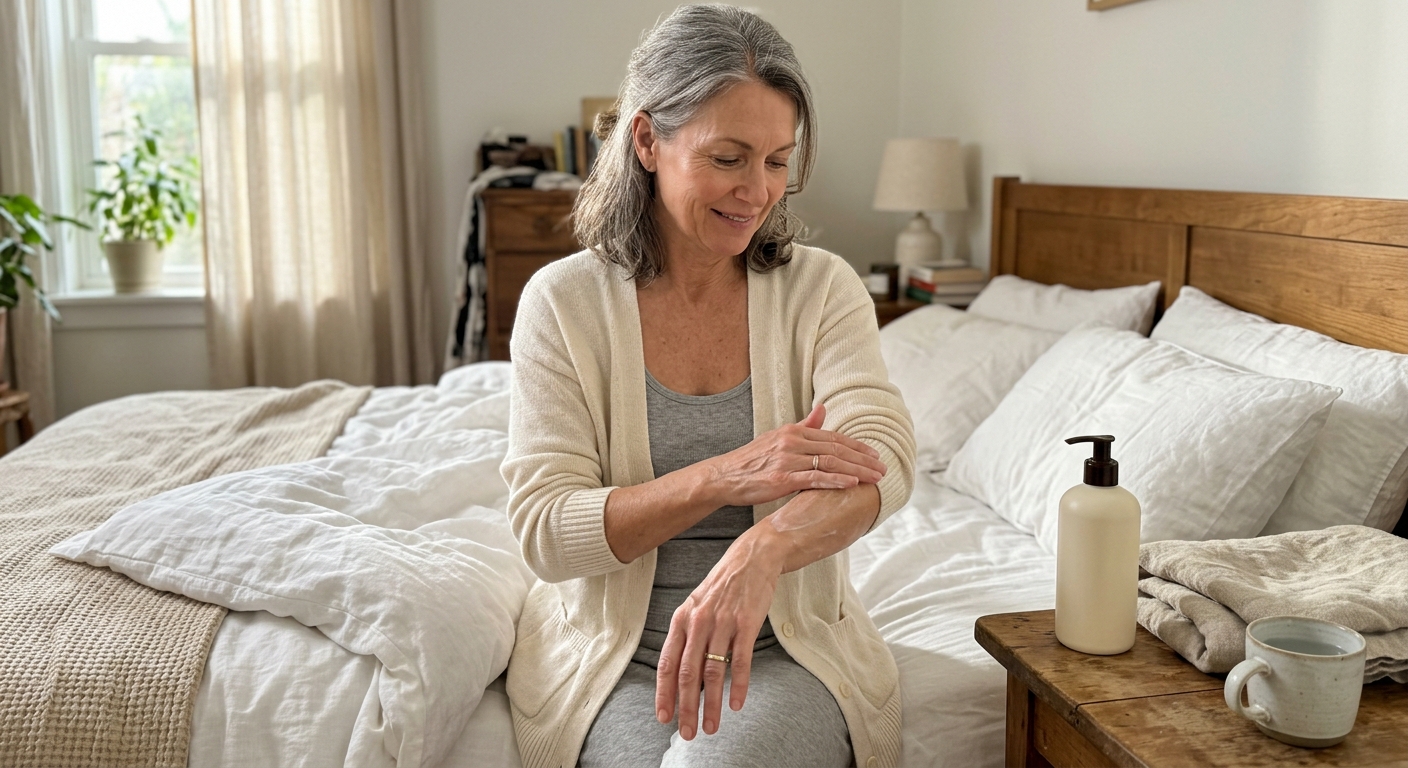
Body lotion only works if you use it consistently and apply enough of it. A pea-sized blob will not move the needle on a forearm, let alone a leg. Twice-daily use after showers — when the skin is still slightly damp — improves absorption. Pay particular attention to the chest and décolletage, crepey skin on the arms, and the back of the hands, which see far more sun damage than people realize.
The Better Path: Use a Real Active on the Face, Then a Compatible Body Strategy
Most women over 40 use a high-quality serum on their face but switch to whatever is on sale for the body. The result is the visual mismatch between a maintained face and aged body skin. A coherent strategy uses an evidence-based active on the face — and a body lotion built around the five ingredients above.
This is where delivery matters. Conventional retinol body lotions cause irritation precisely because they need to damage the lipid barrier to deliver any active. Nanoretinol uses biomimetic lipid nanoparticles that are recognized by skin cells as “self,” allowing retinol to pass through the epithelial barrier without disrupting it [8]. Independent testing demonstrated 232% greater collagen recovery and 73% greater elastin recovery versus conventional retinol formulations. For users who tried retinol body lotions and gave up after experiencing redness, peeling, and barrier disruption, the difference in tolerability is what makes consistent long-term use possible — and consistency is what changes aging body skin.
For body application, many women apply Nanoretinol to the chest, décolletage, and tops of the hands at night, treating those areas as extensions of the facial routine. These are the regions where age shows first and where structural rebuilding has the most cosmetic impact.
Putting It Together
The best body lotion for aging skin is not a single product — it is a category defined by what is actually in the bottle. Look for: encapsulated or nano-delivered retinol; low-molecular-weight hyaluronic acid; ceramides; niacinamide; glycerin. Avoid: fragrance bombs, mineral-oil-only formulas, topical collagen, and anything whose strongest ingredient claim is “vitamin E.”
Aging body skin responds to actives. It just needs them in a form it can use. Feet are the exception that proves the rule, where the barrier is thick enough to demand a dedicated keratolytic, as covered in the guide to foot creams for dry, cracked feet.
References
- Quan T, Fisher GJ. Role of age-associated alterations of the dermal extracellular matrix microenvironment in human skin aging: a mini-review. Gerontology. 2015;61(5):427-434. doi:10.1159/000371708
- Kafi R, Kwak HS, Schumacher WE, et al. Improvement of naturally aged skin with vitamin A (retinol). Archives of Dermatology. 2007;143(5):606-612. doi:10.1001/archderm.143.5.606
- Shao Y, He T, Fisher GJ, Voorhees JJ, Quan T. Topical Retinol Restores Type I Collagen Production in Photoaged Forearm Skin within Four Weeks. Cosmetics. 2016;3(4):35. doi:10.3390/cosmetics3040035
- Muhammad P, Novianto E, Setyorini M, et al. Effectiveness of topical hyaluronic acid of different molecular weights in xerosis cutis treatment in elderly: a double-blind, randomized controlled trial. Archives of Dermatological Research. 2024;316(6):329. doi:10.1007/s00403-024-03003-2
- Kono T, Miyachi Y, Kawashima M. Clinical significance of the water retention and barrier function-improving capabilities of ceramide-containing formulations: A qualitative review. The Journal of Dermatology. 2021;48(12):1807-1816. doi:10.1111/1346-8138.16175
- Tanno O, Ota Y, Kitamura N, Katsube T, Inoue S. Nicotinamide increases biosynthesis of ceramides as well as other stratum corneum lipids to improve the epidermal permeability barrier. British Journal of Dermatology. 2000;143(3):524-531. doi:10.1111/j.1365-2133.2000.03705.x
- Fluhr JW, Gloor M, Lehmann L, Lazzerini S, Distante F, Berardesca E. Glycerol accelerates recovery of barrier function in vivo. Acta Dermato-Venereologica. 1999;79(6):418-421. doi:10.1080/000155599750009825
- North Biomedical LLC. “Nanoretinol vs. Conventional Retinol: Efficacy in Collagen and Elastin Recovery.” Clinical Study Summary, 2024. northbiomedical.com/documents/Nanoretinol-Study_Summary.pdf