Clogged Pores: Why They Happen and How to Actually Keep Them Clear
The science of pore congestion — what clogs pores, why it worsens with age, and the ingredients that genuinely keep them clear.
Walk down any skincare aisle and you’ll find dozens of products promising to “unclog” your pores. Yet most people never learn what a clogged pore actually is — which is why so many of those products disappoint. A pore isn’t a passive hole that collects grime from the outside world. It’s the visible opening of a living, working structure, and when it clogs, the blockage is built almost entirely from the inside.
Understanding that distinction is the difference between chasing symptoms and fixing the cause.
What a Clogged Pore Actually Is
What we casually call a “pore” is the opening of a pilosebaceous unit — a tiny channel containing a fine hair and a sebaceous (oil) gland. The gland continuously produces sebum, a waxy oil that travels up the channel and spreads across your skin to keep it supple and water-resistant. Meanwhile, the cells lining that channel are constantly renewing, shedding old cells the way the surface of your skin does.
A clogged pore — what dermatologists call a comedone — forms when that orderly flow breaks down. Dead cells and sebum bind together into a soft plug that lodges in the follicle [1]. If the plug stays sealed below the surface, it’s a closed comedone, or whitehead. If the opening stays wide and the trapped material oxidizes and darkens on contact with air, it becomes an open comedone — a blackhead. Either way, the raw material is the same, and none of it started as external “dirt.” It is also why an absorbent clay mask can only take what has already reached the surface. It is equally why screening products against a chart of pore-clogging ingredients works so poorly, a problem we unpack in our guide to what a non-comedogenic moisturizer actually guarantees.
Why Pores Clog: A Two-Part Traffic Jam
Congestion is really two problems happening at once.
Slower cell turnover degrades the “clean drainage” half of the equation, which is why congestion, enlarged-looking pores, and dull texture so often arrive together in your 40s and 50s.
The first is sticky cell turnover. The follicle lining sheds corneocytes — flattened, dead skin cells — that are supposed to release cleanly and wash away. In congested skin, those cells stay glued together instead, a process called retention hyperkeratosis. They pile up and narrow the channel, and once the passage is tight, everything behind it backs up [1].
The second is sebum. More oil in a narrower channel means the plug forms faster and sits more stubbornly. But volume isn’t the whole story — the composition of your sebum matters just as much. Researchers have found that sebum rich in linoleic acid, an essential fatty acid, keeps the follicle lining healthy, while sebum low in linoleic acid appears to nudge those lining cells toward exactly the kind of hyperkeratosis that begins a clog [2]. Linoleic acid also helps hold the skin’s outer barrier together, which is why its depletion tends to show up as congestion and rough texture at the same time [3].
Put those together and you get a traffic jam: too many sticky cells, not enough clean drainage, and oil that thickens the block.
Why It Gets Worse After 40
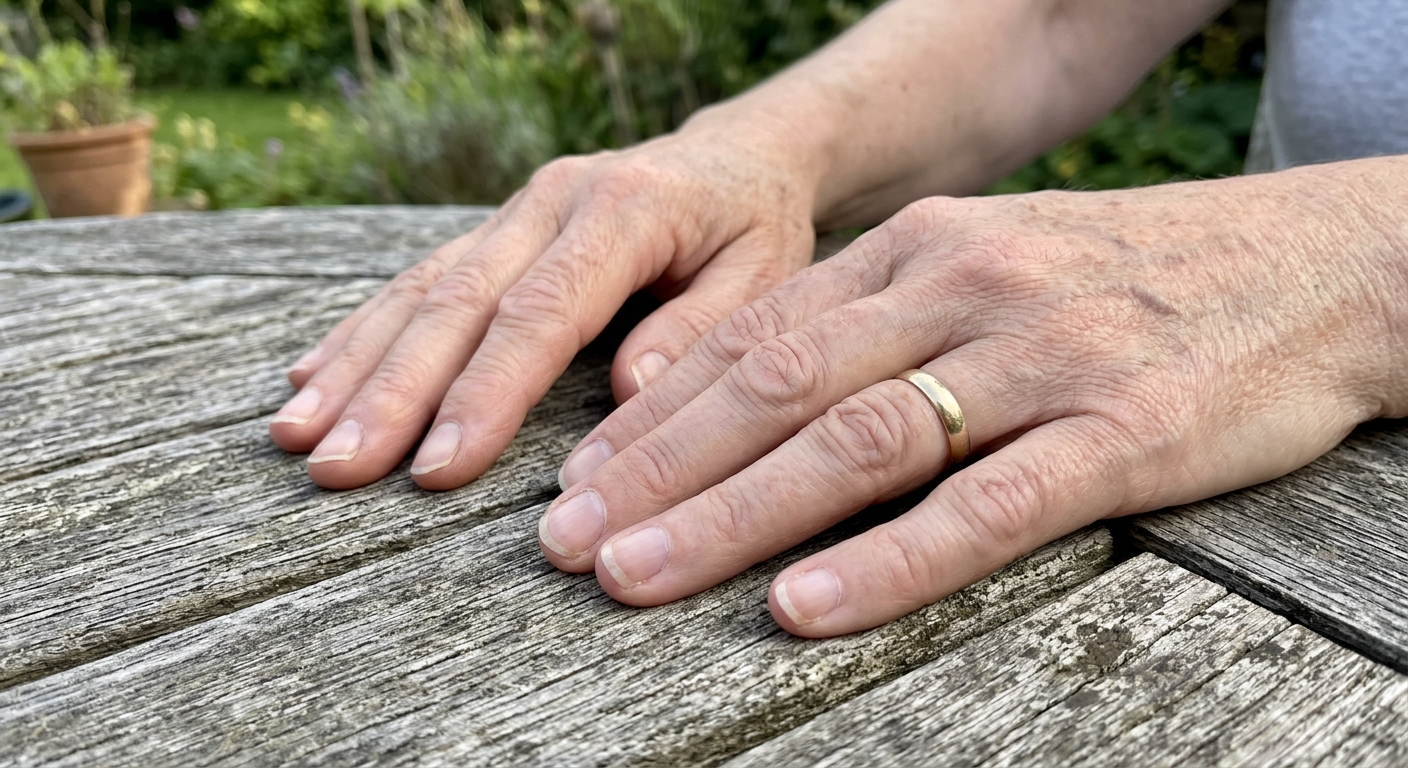
Here’s a common surprise. You spent your teens fighting shine, and now, decades later, your pores look more congested than ever even as the rest of your face feels drier. The reason is that cell turnover slows with age. Skin that once renewed itself briskly now sheds sluggishly, so dead cells linger longer at each follicle opening. Slower cell turnover degrades the “clean drainage” half of the equation, which is why congestion, enlarged-looking pores, and dull texture so often arrive together in your 40s and 50s.
What Actually Keeps Pores Clear
Because the clog is built from inside, the fix has to work inside the follicle — not just scrub the surface.
You spent your teens fighting shine, and now, decades later, your pores look more congested than ever even as the rest of your face feels drier.
Exfoliating acids address the sticky-cell half of the problem. Salicylic acid is especially useful because it’s oil-soluble, so it can travel into the sebum-filled pore and loosen the cellular glue where the plug actually forms. It’s the classic evidence-based choice for congestion-prone skin — see our guide to salicylic acid for how to use it without overdrying, or our guide to choosing a salicylic acid toner if you want a leave-on step that keeps working between washes.
Niacinamide plays a supporting role, helping the skin behave more calmly in oil-rich conditions and reinforcing the barrier so you can exfoliate without wrecking it.
It’s just as useful to know what doesn’t work. Physical scrubs and stiff brushes feel productive, but they only abrade the surface while the plug sits deeper in the channel — and the micro-irritation they cause can drive more oil and more clumping. Pore strips pull out the visible tops of a few clogs but do nothing to change how fast the next ones form, so the congestion returns within days. And “deep-cleaning” your skin until it feels tight simply strips the barrier, which, as with a flaky nose, tends to make the follicle behave worse, not better. Clearing pores is a game of consistency with the right ingredients, not force. Steaming before extractions is the one heat-based step with a genuine mechanism behind it, and our guide to facial steamers explains exactly where that mechanism stops.
Retinoids are the upstream fix — the ingredient that targets the root cause rather than the finished plug. Topical retinoids normalize follicular keratinization: they signal the lining cells to mature and shed on schedule instead of clumping, and they accelerate the turnover that age has slowed [4]. In practical terms, that means fewer microscopic clogs forming in the first place. The evidence isn’t only mechanistic; in a recent clinical study, short-term topical retinol use measurably improved pore-related parameters on the face [5]. Choosing between the categories on the shelf is its own decision, and our guide to the best products for large pores works through which one matches which cause. This is also why retinoids anchor nearly every serious plan to shrink the look of pores — smaller, clearer pores follow from clearer follicles.
The Catch With Conventional Retinol
Here’s the friction. Retinol is the most proven ingredient for pore congestion, yet conventional retinol formulations are notoriously harsh — the same potency that unclogs can leave skin red, flaking, and inflamed. Traditional formulas often penetrate by disrupting the skin barrier itself, which is a self-defeating way to treat skin that’s already struggling with texture [3]. Many people quit long before they ever see results.
A Gentler Way to Deliver the Fix
That delivery problem is exactly what Nanoretinol was engineered to solve. Instead of forcing retinol through the skin with barrier-stripping chemicals, it encapsulates retinol inside biomimetic lipid nanoparticles — particles the skin recognizes as “self” and admits without damage. That efficiency is why its fully stabilized 0.2% concentration can outperform harsher, higher-percentage products: what actually reaches the follicle matters more than the number printed on the bottle. Because Nanoretinol is water-based, made from 99% natural ingredients, and measurably gentler on skin cells than conventional retinol, it delivers the turnover-normalizing benefit that clears pores without the irritation that makes most people give up.
Clogged pores aren’t a hygiene failure or a sign you did something wrong. They’re a predictable result of biology — sticky cells, thicker oil, and slowing renewal. Address those three patiently, without stripping your skin in the process, and clearer pores follow.
References
- Toyoda M, Morohashi M. “Pathogenesis of acne.” Medical Electron Microscopy. 2001;34(1):29-40. doi:10.1007/s007950100002
- Downing DT, Stewart ME, Wertz PW, Strauss JS. “Essential fatty acids and acne.” Journal of the American Academy of Dermatology. 1986;14(2):221-225. doi:10.1016/S0190-9622(86)70025-X
- Wang X, Jia Y, He H. “The Role of Linoleic Acid in Skin and Hair Health: A Review.” International Journal of Molecular Sciences. 2024;26(1):246. doi:10.3390/ijms26010246
- Motamedi M, Chehade A, Sanghera R, Grewal P. “A Clinician’s Guide to Topical Retinoids.” Journal of Cutaneous Medicine and Surgery. 2021;26(1):71-78. doi:10.1177/12034754211035091
- Do HR, Kim S, Keum HL, et al. “Short-Term Topical Retinol Use Is Associated With Improved Pore-Related Parameters and Shifts in the Facial Skin Microbiome.” Journal of Cosmetic Dermatology. 2026;25(6). doi:10.1111/jocd.70939