Dark Spots on Back: Why They Appear and How to Fade Them
What causes brown patches on your back — and the proven ingredients that actually fade them
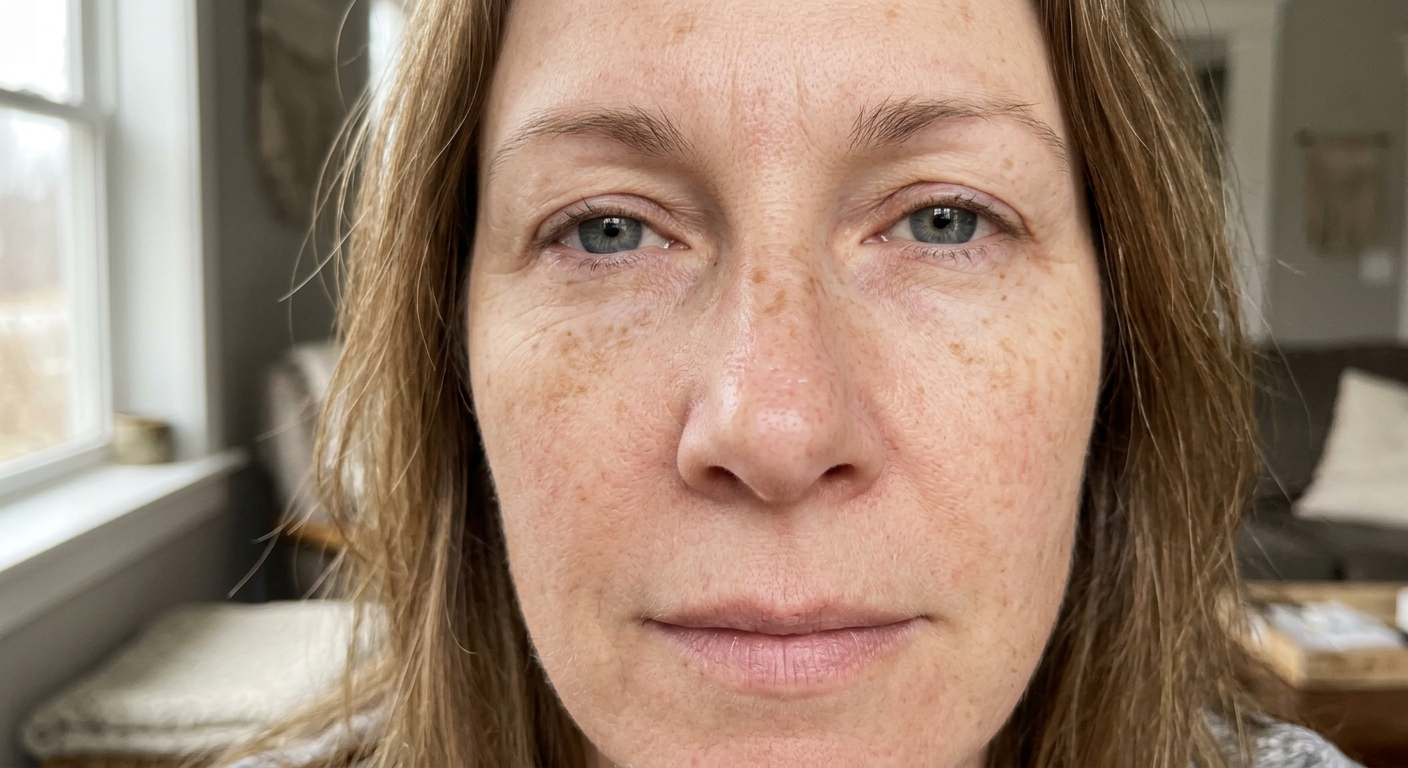
You catch your reflection in a fitting room mirror, turn around, and there they are — a scatter of brown patches across your back and shoulders that you do not remember being there a decade ago. They are not freckles, exactly. They are flatter, larger, and oddly persistent. You scrub. You exfoliate. They stay.
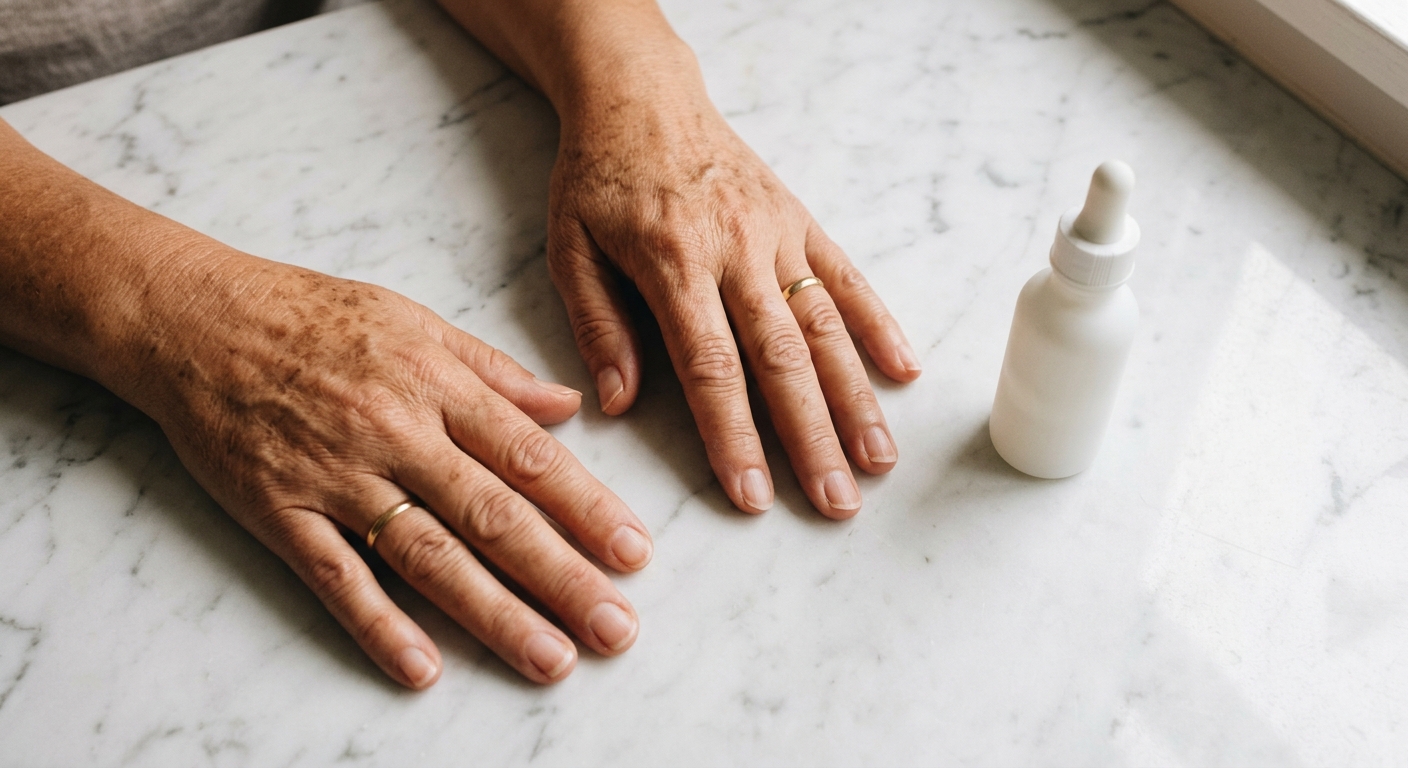
These are almost certainly solar lentigines — what dermatologists call “age spots” or “liver spots,” even though they have nothing to do with the liver. They are a record. Every summer at the beach, every weekend gardening, every time you wore a backless top without sunscreen — your back has been quietly logging it all. By your forties and fifties, the ledger comes due, often in places you cannot easily see or treat.
Why Your Back Becomes a Pigmentation Map
Skin produces a pigment called melanin to protect itself from ultraviolet damage. Each time UV photons hit a skin cell, specialized cells called melanocytes ramp up melanin production and pass that pigment to the surrounding keratinocytes. In youth, this process is tidy — pigment distributes evenly, then sheds with normal cell turnover.
With age, the system loses its precision. Researchers have shown that solar lentigines arise from a combination of UV-induced DNA damage, dysregulated melanin production, and impaired pigment clearance [1, 2]. Melanocytes in chronically sun-exposed areas become hyperactive and stuck in “on” mode. They dump melanin into the surrounding tissue, where it clumps into discrete dark patches that no longer fade between exposures.
The back is particularly vulnerable for three reasons. First, it is a large surface area that gets exposed during outdoor activities — swimming, sports, gardening — when most people focus sunscreen on the face and forget the rest. Second, the back is awkward to reach, so reapplication of SPF is rare. Third, you cannot see your own back, so spots accumulate undetected for years before someone else points them out.
The pattern matters. Spots concentrated on the shoulders and upper back almost always indicate cumulative UV damage. Spots that appeared suddenly after a sunburn often represent post-inflammatory hyperpigmentation — the skin’s overreaction to the injury — rather than classic lentigines.
Not All Dark Spots Are the Same
Before reaching for a fade cream, it helps to know what you are actually looking at:
If you cannot confidently identify what you are seeing, get a baseline skin check before starting any treatment.
- Solar lentigines are flat, tan-to-brown patches with clear borders, typically 5–20 mm. They develop slowly and do not itch or change shape. Most “back spots” in women over 40 fall into this category.
- Post-inflammatory hyperpigmentation (PIH) is darker pigment left behind after a pimple, ingrown hair, scratch, or sunburn. It tends to match the shape of the original injury and fades over months — slowly, but on its own.
- Seborrheic keratoses look like dark spots but are actually slightly raised, waxy, and feel stuck-on. They are benign growths and respond to a different treatment path entirely.
- Moles or unusual lesions that change in size, color, shape, or texture warrant a dermatologist visit. The fade strategy below is for pigmented patches, not for anything that may be atypical.
If you cannot confidently identify what you are seeing, get a baseline skin check before starting any treatment. The rest of this article assumes you are dealing with the first two categories.
The Ingredients That Actually Fade Back Spots
Most “dark spot correctors” on shelves rely on the same handful of actives. A few have decades of clinical evidence behind them; many do not.
Retinoids — the gold-standard fade actives
Topical retinoids remain the most-studied class of fade ingredients in the dermatology literature. A landmark trial published in the New England Journal of Medicine found that 0.1% tretinoin applied daily for 10 months produced significant lightening of solar lentigines on the face and forearms, with 83% of treated patients showing improvement versus 8% of vehicle controls [3]. Subsequent work has shown that lower-strength retinol — the over-the-counter cousin of tretinoin — produces meaningful improvement in age spots and overall photodamage with fewer side effects [3].
The mechanism is twofold: retinoids accelerate the shedding of pigment-laden surface cells while simultaneously calming the hyperactive melanocytes underneath. They are slow — expect 3–6 months for visible fading — but they treat the underlying cause, not just the surface.
Tranexamic acid — the newer contender
Originally developed as an oral medication for excessive bleeding, tranexamic acid turns out to interrupt the signaling pathway between damaged keratinocytes and melanocytes. A 2026 review in the Journal of Cosmetic Dermatology concluded that topical and oral tranexamic acid produce significant pigmentation reduction in melasma and post-inflammatory hyperpigmentation [4]. It is gentler than hydroquinone and works well alongside retinoids.
If you do not block new UV photons, your melanocytes keep firing, and you fade spots only to grow new ones.
Niacinamide — the supporting cast
Niacinamide does not fade pigment that already exists, but it does block the transfer of melanin from melanocytes to surface cells. In a 12-week facial trial, 5% niacinamide produced significant reduction in hyperpigmented spots versus vehicle [5]. More recent mechanism work has confirmed its role in skin lightening and overall pigmentation control [6]. Pair it with a retinoid; do not expect it to do the heavy lifting alone.
Sunscreen — yes, on your back
Without daily UV protection, every active ingredient above is sandbagged. A 30-day Mediterranean-summer trial showed that SPF30 daily use significantly reduced the appearance of new solar lentigines compared to untreated skin [7]. If you do not block new UV photons, your melanocytes keep firing, and you fade spots only to grow new ones.
A Realistic Back-Spot Routine
A workable, low-maintenance approach:
- Morning: A non-greasy SPF50 lotion applied to the shoulders, upper back, and chest. Spray formats reach awkward spots; partner-applied lotion is more reliable.
- Evening, 3–5 nights per week: A retinol body lotion or a retinol serum decanted onto a back applicator. Start two nights a week and ramp up as your skin tolerates it.
- Once or twice weekly: A glycolic acid body wash or a leave-on AHA lotion to accelerate surface cell turnover. Do not use on the same nights as your retinoid.
- Optional add-on: A niacinamide- or tranexamic-acid-containing serum applied before or after the retinoid if your spots are particularly stubborn, which will do more than a rinse-off kojic acid soap because it stays on the skin.
Expect 8–16 weeks before a meaningful change. Photograph the area monthly under consistent lighting — back-spot progress is invisible day-to-day and obvious in time-lapse.
Why Retinol Delivery Is the Bottleneck
Here is the catch with most retinol body products: the active barely penetrates. Conventional retinol is fat-soluble and reactive, and the body skin on the back is thicker than the face. To push retinol into the dermis, manufacturers either crank up the concentration (which causes irritation) or formulate it in petroleum-based vehicles that disrupt the skin barrier to force passage. Neither solution is ideal — high-strength irritation drives most people to abandon retinol within weeks, and barrier disruption creates its own problems.
This is why delivery technology matters more than concentration. Nanoretinol wraps a low 0.2% dose of retinol in biomimetic lipid nanoparticles — particles whose surface is chemically indistinguishable from the membrane of your own skin cells. The nanoparticles pass through the epithelial barrier the way a cell would, without disrupting it. In comparative testing, this approach delivered 232% more collagen recovery and 73% more elastin recovery than conventional retinol formulations [8], which is the same biology that drives long-term fade results — a stronger, more turnover-active dermis fades old pigment faster.
For back spots specifically, the practical benefit is that you can use Nanoretinol consistently, several nights a week, without the redness and peeling that send most people back to drugstore lotions that do not work.
When to See a Dermatologist
Most back spots are cosmetic and respond to consistent topical treatment. But you should book an appointment if:
- A spot changes size, shape, color, or border in less than six months
- A spot itches, bleeds, or fails to heal
- You have a personal or family history of melanoma
- The pigmentation is widespread and matched by other changes (skin tags, velvety patches at the nape) — sometimes indicating an underlying metabolic issue
For stubborn lentigines that resist topical treatment, in-office options include cryotherapy, intense pulsed light (IPL), and Q-switched laser. These work fast but cost more and require recovery time. A daily topical routine is the foundation regardless of whether you ultimately add a procedure.
The Long Game
Your back will keep aging. The melanocytes that have been busy for 50 summers do not become tidy again. But they do respond to consistent input — daily SPF to stop new damage, nightly retinoid to fade old pigment, and patience measured in seasons rather than days. The brown patches on your back are not permanent. They are just stubborn, and stubborn loses to consistent.
References
- Mardani G, Nasiri MJ, Namazi N, Farshchian M, Abdollahimajd F. “Treatment of Solar Lentigines: A Systematic Review of Clinical Trials.” Journal of Cosmetic Dermatology. 2025;24(4):e70133. doi:10.1111/jocd.70133
- Imokawa G. “Melanocyte Activation Mechanisms and Rational Therapeutic Treatments of Solar Lentigos.” International Journal of Molecular Sciences. 2019;20(15):3666. doi:10.3390/ijms20153666
- Rafal ES, Griffiths CEM, Ditre CM, Finkel LJ, Hamilton TA, Ellis CN, Voorhees JJ. “Topical Tretinoin (Retinoic Acid) Treatment for Liver Spots Associated with Photodamage.” New England Journal of Medicine. 1992;326(6):368-374. doi:10.1056/NEJM199202063260603
- AlJabr A, AlAnazi AMI, AlEtebi RAA. “Tranexamic Acid for Hyperpigmentation Disorders: A Literature Review on Efficacy and Safety in Melasma and PIH.” Journal of Cosmetic Dermatology. 2026;25(2):e70692. doi:10.1111/jocd.70692
- Bissett DL, Miyamoto K, Sun P, Li J, Berge CA. “Topical niacinamide reduces yellowing, wrinkling, red blotchiness, and hyperpigmented spots in aging facial skin.” International Journal of Cosmetic Science. 2004;26(5):231-238. doi:10.1111/j.1467-2494.2004.00228.x
- Boo YC. “Mechanistic Basis and Clinical Evidence for the Applications of Nicotinamide (Niacinamide) to Control Skin Aging and Pigmentation.” Antioxidants (Basel). 2021;10(8):1315. doi:10.3390/antiox10081315
- Josse G, Le Digabel J, Questel E. “Protection against summer solar lentigo over-pigmentation with a SPF30 daily cream.” Skin Research and Technology. 2018;24(3):485-489. doi:10.1111/srt.12458
- North Biomedical LLC. “Nanoretinol vs. Conventional Retinol: Efficacy in Collagen and Elastin Recovery.” Clinical Study Summary, 2024.