Retinol for Your Body: Extending Your Skincare Routine Below the Neck
Your face doesn't age in isolation — here's how to bring retinol's evidence-based benefits to the rest of your skin
Most people who use retinol use it on their face. This makes sense — the face is the primary focus of skincare culture, clinical trials, and dermatological practice. But skin doesn’t age selectively. The same biological processes driving facial aging are operating on your hands, your chest, your upper arms, and your neck, often with less protection, more cumulative UV exposure, and far less attention from the skincare products you actually use.
For anyone committed to evidence-based anti-aging, treating the face alone is a bit like servicing only the front wheels of a car.
Why Body Skin Ages Differently — and Often Faster
The skin on your face and the skin on your body operate under meaningfully different conditions.
Facial skin has a relatively high density of sebaceous glands, which secrete sebum — a natural lipid barrier that keeps the skin moisturized, supple, and somewhat protected from environmental insults. It also receives significant attention from skincare routines that include moisturizers, SPF, and active ingredients. Our full body skin care routine sets out how to give the rest of your skin the same attention.
Body skin varies enormously by region. The décolletage and the back of the hands — two of the most conspicuous areas where body aging becomes visible — have relatively few sebaceous glands and receive years of cumulative UV exposure with minimal protection. Research comparing the photoaging process in facial versus arm skin found histologically distinct patterns of collagen degradation, with arm skin showing different structural damage profiles than the face under equivalent UV conditions [1]. Neither is better; they’re just different damage profiles that evolve in parallel, largely unaddressed by most people’s skincare habits.
The back of the hands, in particular, has some of the thinnest skin on the body with almost no subcutaneous fat. When collagen and elastin decline — which begins around the mid-20s and accelerates sharply at menopause — the hands have very little structural reserve to draw on. Volume loss is rapid. Veins and tendons become more prominent. The texture changes faster than most people expect.
Where Body Aging Becomes Visible
The areas where body skin aging is most often noticed, roughly in order of visibility:
Hands — Volume loss, loose crepey texture across the knuckles, brown spots from cumulative sun exposure, and prominent vascularity. Hands are the single body area most commonly cited by women over 40 as giving away their age — precisely because they spend decades in direct UV exposure with no SPF and almost no active skincare.
The skin on your face and the skin on your body operate under meaningfully different conditions.
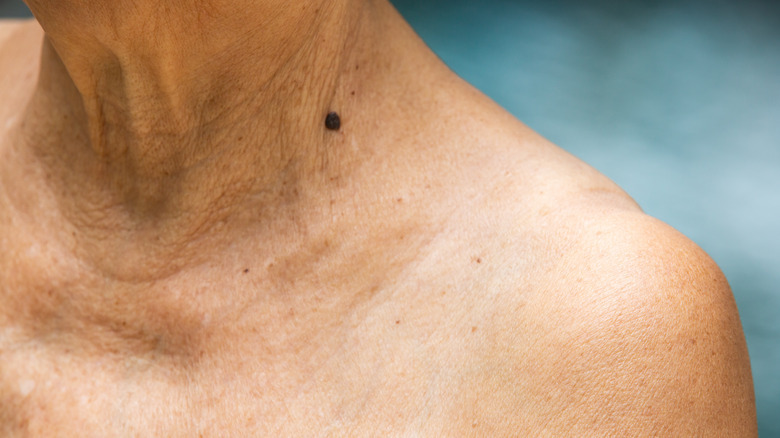
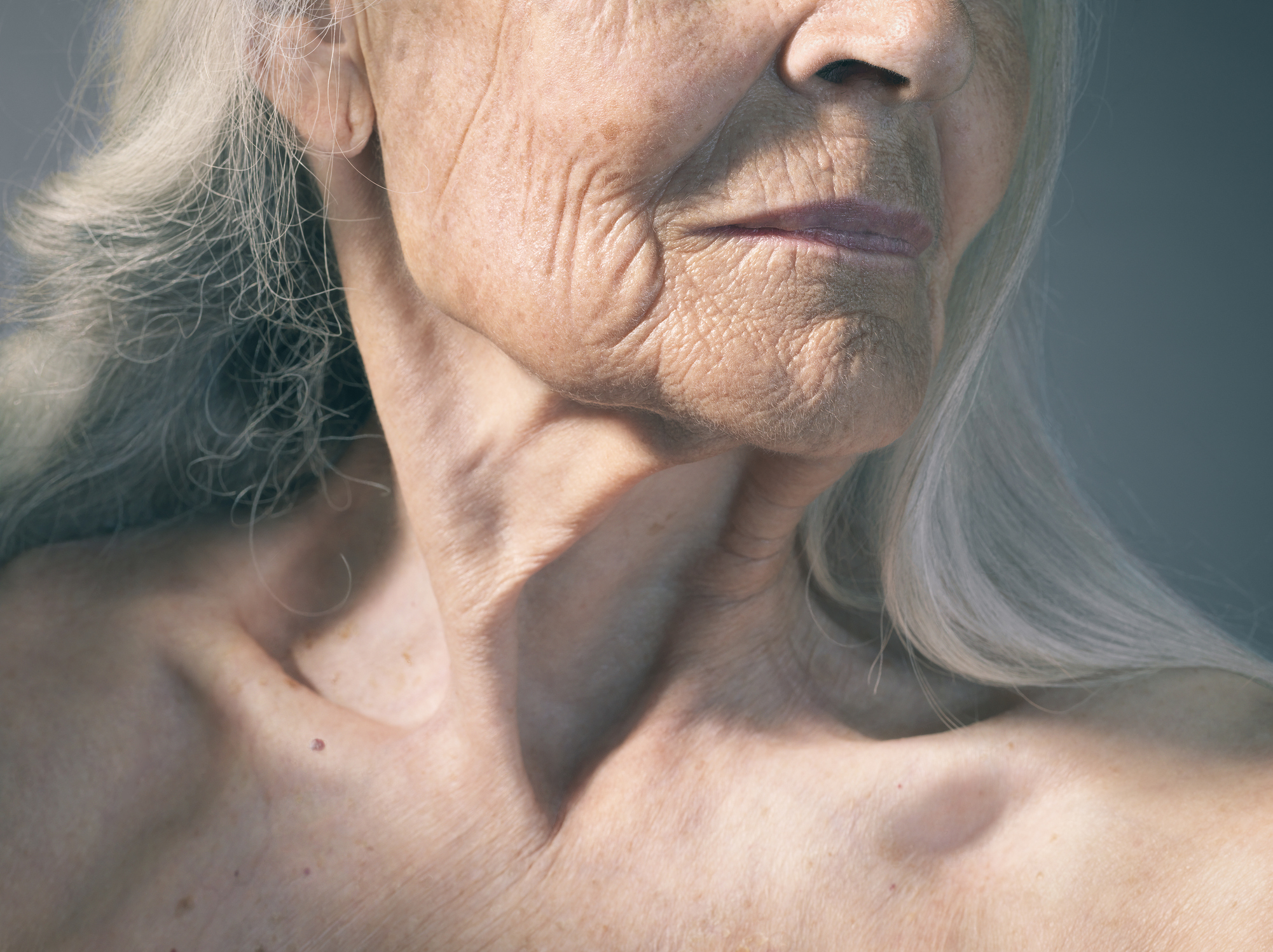
Décolletage and chest — The skin here is thin, gets substantial UV exposure in warm months, and is prone to the horizontal lines caused by sleeping positions and the vertical lines caused by sun damage. It often looks significantly older than the face above it.
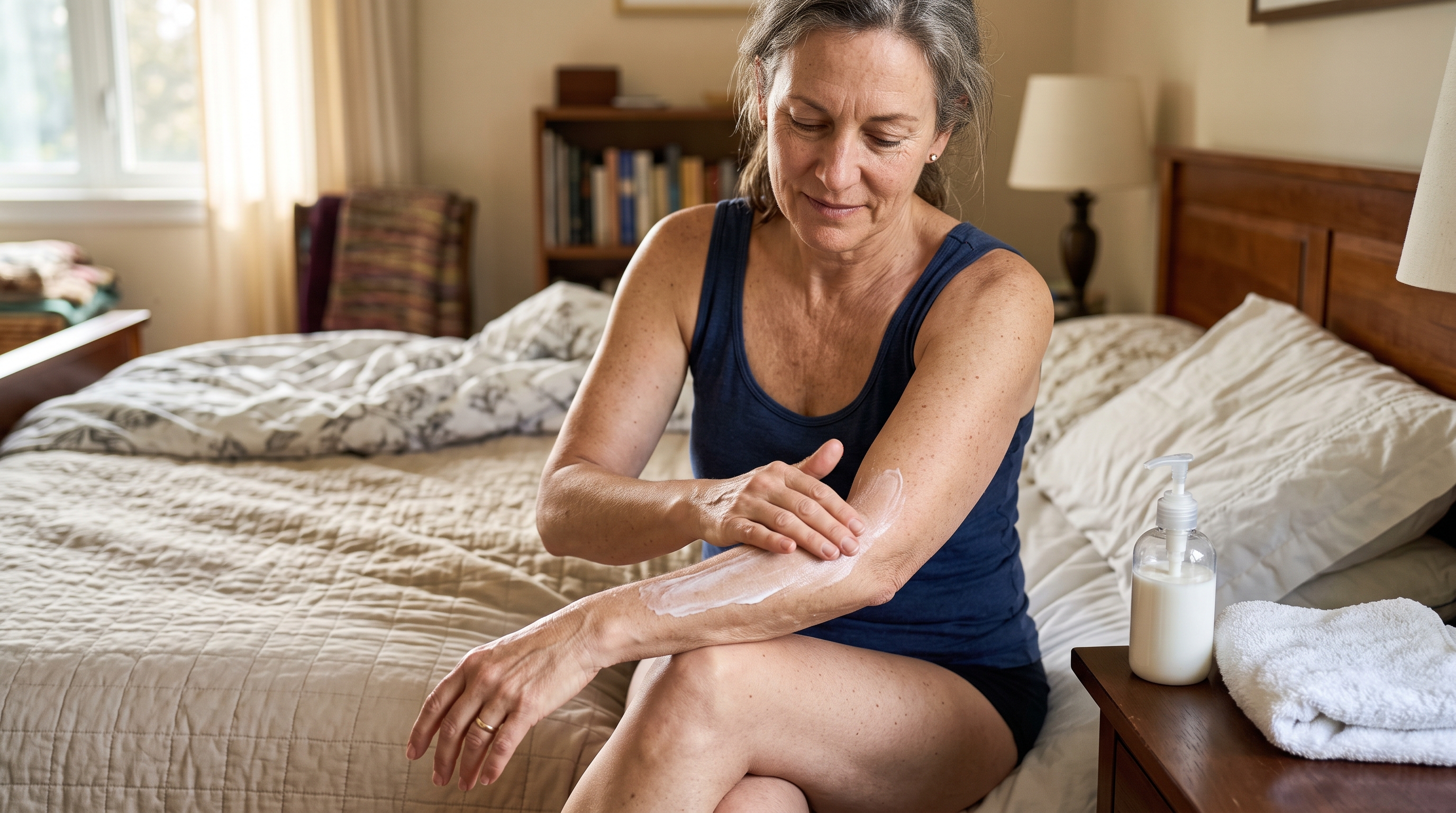
Upper arms — Rough, keratosis-pilaris-prone skin, textural irregularities, and laxity that develops as the underlying collagen matrix thins. The outer forearms also accumulate significant UV damage over decades.
Neck — The transition zone between facial skin and body skin that often shows aging patterns from both. The neck deserves its own retinol protocol, and the principles are similar to what applies here.
The Clinical Evidence for Retinol Below the Neck
The evidence base for retinol on body skin is smaller than for the face, but it exists and it points in the same direction.
Retinol drives collagen synthesis by activating nuclear retinoic acid receptors in dermal fibroblasts, upregulating the gene expression programs responsible for producing type I and type III procollagen. This mechanism operates in fibroblasts wherever they exist in the body — not just in facial skin. A 24-week randomized controlled trial using topical retinol on naturally aged skin confirmed significantly increased procollagen I immunostaining and glycosaminoglycan expression, with the researchers noting that retinol-treated skin showed enhanced matrix synthesis capacity and greater structural resilience [2].
The key qualifier for body use is penetration and tolerance. Body skin — particularly on areas like the arms and chest that are frequently stripped by harsh soaps or exposed to environmental dryness — can respond differently to retinol than facial skin. The same concentration that works smoothly on a well-moisturized face may cause more pronounced dryness on neglected body skin. Starting conservatively and building tolerance matters more, not less, when working below the neck [3]. Choosing between the products on the shelf is a separate question, and our guide to the best retinol body lotion covers what actually differs between them. Striae are a specific case of the same delivery problem, and the best stretch mark cream guide covers which stage still responds to a retinoid.
The Concentration Conversation for Body Use
The concentration guide principles that apply to facial retinol hold for body use as well, with a few adjustments.
For hands: Start at 0.1% or lower. Hand skin is thin and reactive, and the knuckles and joints are prone to over-dryness. Apply at night after thoroughly drying the skin, and follow with a rich hand cream or seal with gloves if the skin is very dry.
The concentration guide principles that apply to facial retinol hold for body use as well, with a few adjustments.
For décolletage and chest: 0.025%–0.1% is appropriate for most beginners. This area is more receptive than hands but still more delicate than some facial zones. Begin two to three nights per week and build from there.
For arms: Body skin on the arms is generally more tolerant and can often accommodate faster introduction than the décolletage, but sensitivity varies significantly by individual. Watch for any excessive dryness or irritation around the joints.
In all cases, crepey-looking skin often responds well to retinol over time — the textural improvements come from both increased collagen synthesis and improved cell turnover, which restores the organized structure of the stratum corneum.
Sun Damage: The Complication That Retinol Can Address
The brown spots, uneven tone, and broken-vessel patterns on the chest and backs of the hands are largely the product of decades of cumulative UV damage. Retinol addresses this through two mechanisms: accelerated cell turnover that moves pigmented cells toward the surface and ultimately out of the skin, and the partial reversal of matrix damage through collagen synthesis. These effects are slower to appear on body skin than on the face, but they are real and documented [3].
The corollary is important: any area receiving retinol requires rigorous daily SPF. This is true everywhere, but it is especially critical on body areas like the chest and hands that tend to be neglected in SPF application routines. Applying retinol without pairing it with SPF is counterproductive — UV exposure actively stimulates the matrix metalloproteinases that degrade the collagen your retinol is helping to build.
Practical Protocol: Getting Started on Body Areas
A sensible introduction looks like this:
Week 1–2: Apply to only one target area (start with the décolletage or hands, not both simultaneously). A pea-sized amount for the entire chest, a slightly smaller amount for both hands together. Allow to fully absorb before layering anything on top. Weeks 3–4: If tolerance is good with no significant dryness or flaking, add the second target area.
Month 2 onward: Move to nightly application if skin tolerates it. If dryness is persistent, use the “sandwich method” — apply moisturizer first, let it absorb, then apply retinol over a slightly buffered base.
The total additional time this adds to a nightly routine is roughly 60 seconds. The asymmetry between that effort and the potential long-term difference in how your hands and chest look in a decade is significant.
Why Tolerability Matters More on Body Skin
The most common reason people abandon body retinol is irritation — specifically, a cycle of dryness and flaking that’s uncomfortable enough to interrupt consistent use. And consistency is precisely what drives results.
This is where the delivery system of the retinol you use becomes strategically important. Conventional retinol formulations often use chemical vehicles that disrupt the skin barrier as part of their penetration strategy. On facial skin, this is already problematic for many people. On body skin that is frequently drier and less well-maintained, the irritation can be more pronounced [4].
Encapsulated retinol formulations bypass this trade-off. Rather than breaching the barrier through chemical disruption, lipid nanoparticle delivery uses the barrier’s own transport mechanisms — the nanoparticle is recognized as cellular “self” and passes through naturally. This allows retinol to reach dermal fibroblasts without the surface-level damage that drives most tolerability problems.
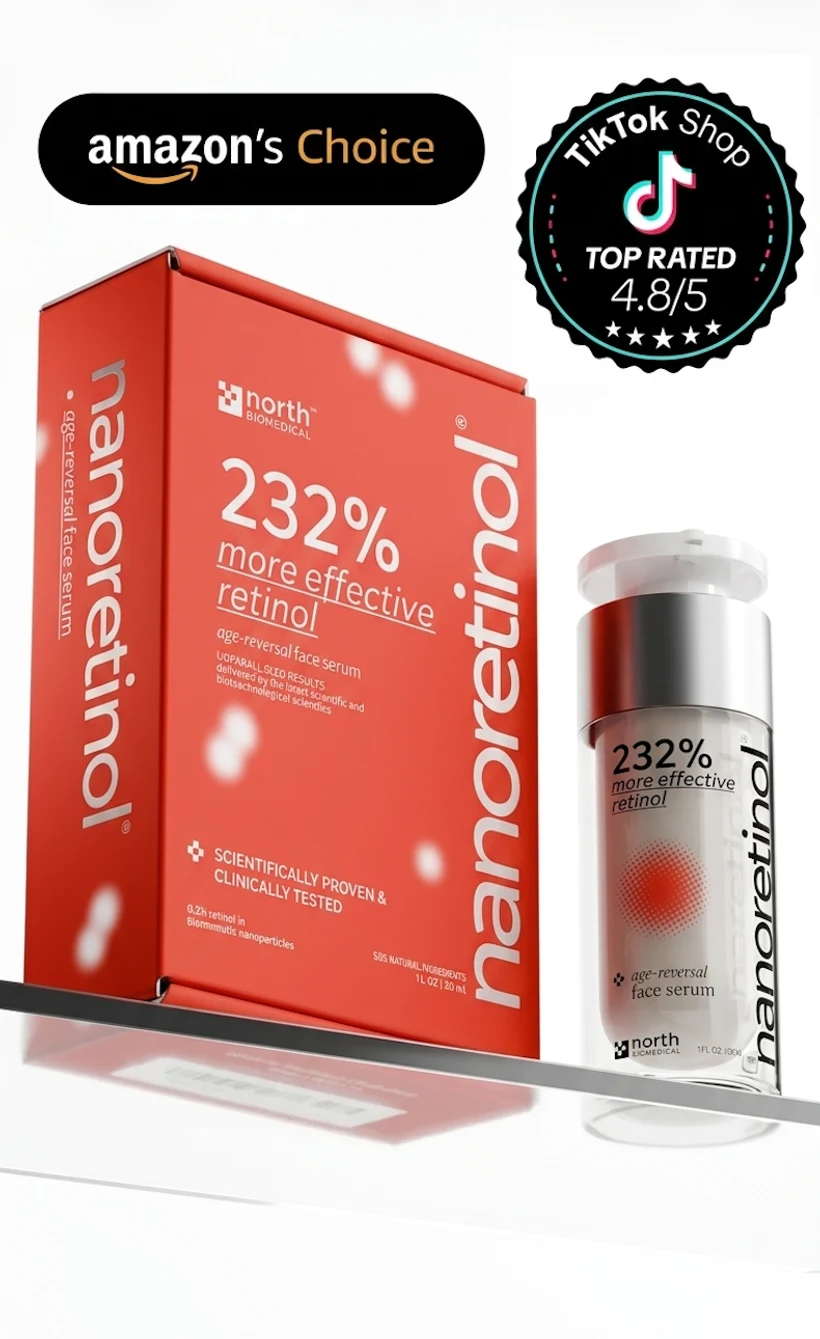
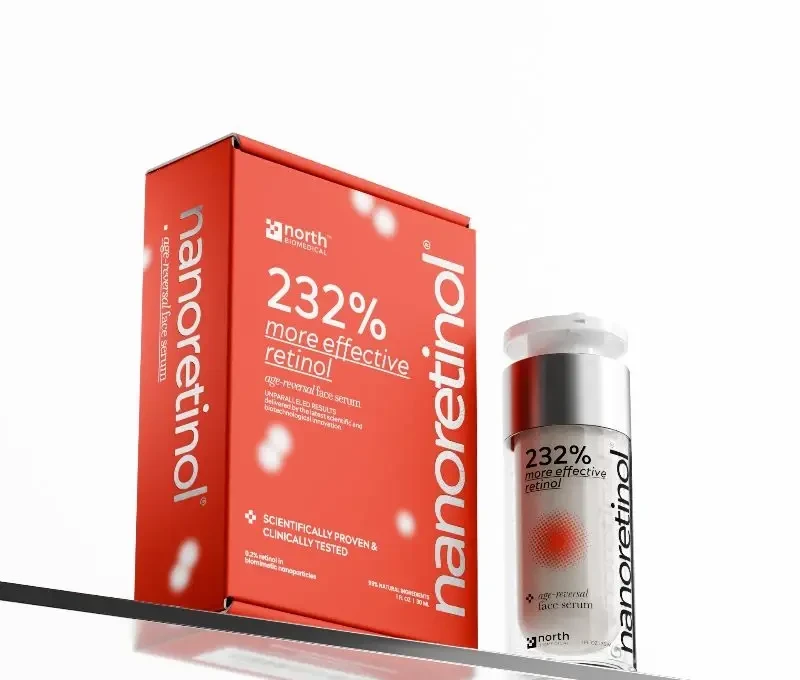
Nanoretinol® was designed with this architecture: a water-based, gel-textured formula that absorbs cleanly, doesn’t leave a greasy residue on body skin, and contains 99% natural ingredients — including the phospholipid nanoparticle membrane itself. The same formulation designed for facial use applies equally well to hands, chest, and other body areas where a lightweight, non-occlusive texture is especially practical.
The Honest Timeline
Body skin responds more slowly to retinol than facial skin. The turnover rate is lower, the keratinocyte maturation cycle is longer, and the starting conditions — years of accumulated UV damage with minimal active treatment — mean there’s more ground to cover. Expect meaningful visible improvements over four to six months of consistent nightly use rather than the four to six weeks often cited for facial results.
That’s not a reason to delay. The biology of retinol’s collagen benefits is cumulative. Starting a year earlier means a year more of compound investment in the structural matrix of skin that most people are currently leaving entirely untreated.
References
- Bhawan J, Oh C-H, Lew R, et al. “Histopathologic Differences in the Photoaging Process in Facial Versus Arm Skin.” Am J Dermatopathol. 1992;14(3):224-229. doi:10.1097/00000372-199206000-00008
- Kafi R, Kwak HSR, Schumacher WE, et al. “Improvement of Naturally Aged Skin With Vitamin A (Retinol).” Arch Dermatol. 2007;143(5):606-612. doi:10.1001/archderm.143.5.606
- Mukherjee S, Date A, Patravale V, Korting HC, Roeder A, Weindl G. “Retinoids in the treatment of skin aging: an overview of clinical efficacy and safety.” Clin Interv Aging. 2006;1(4):327-348. doi:10.2147/ciia.2006.1.4.327
- Varani J, Dame MK, Rittie L, et al. “Decreased Collagen Production in Chronologically Aged Skin.” Am J Pathol. 2006;168(6):1861-1868. doi:10.2353/ajpath.2006.051302