Liver Spots: What They Really Are and How to Fade Them
The flat brown marks on your hands and face have nothing to do with your liver — and a lot to do with the sun.
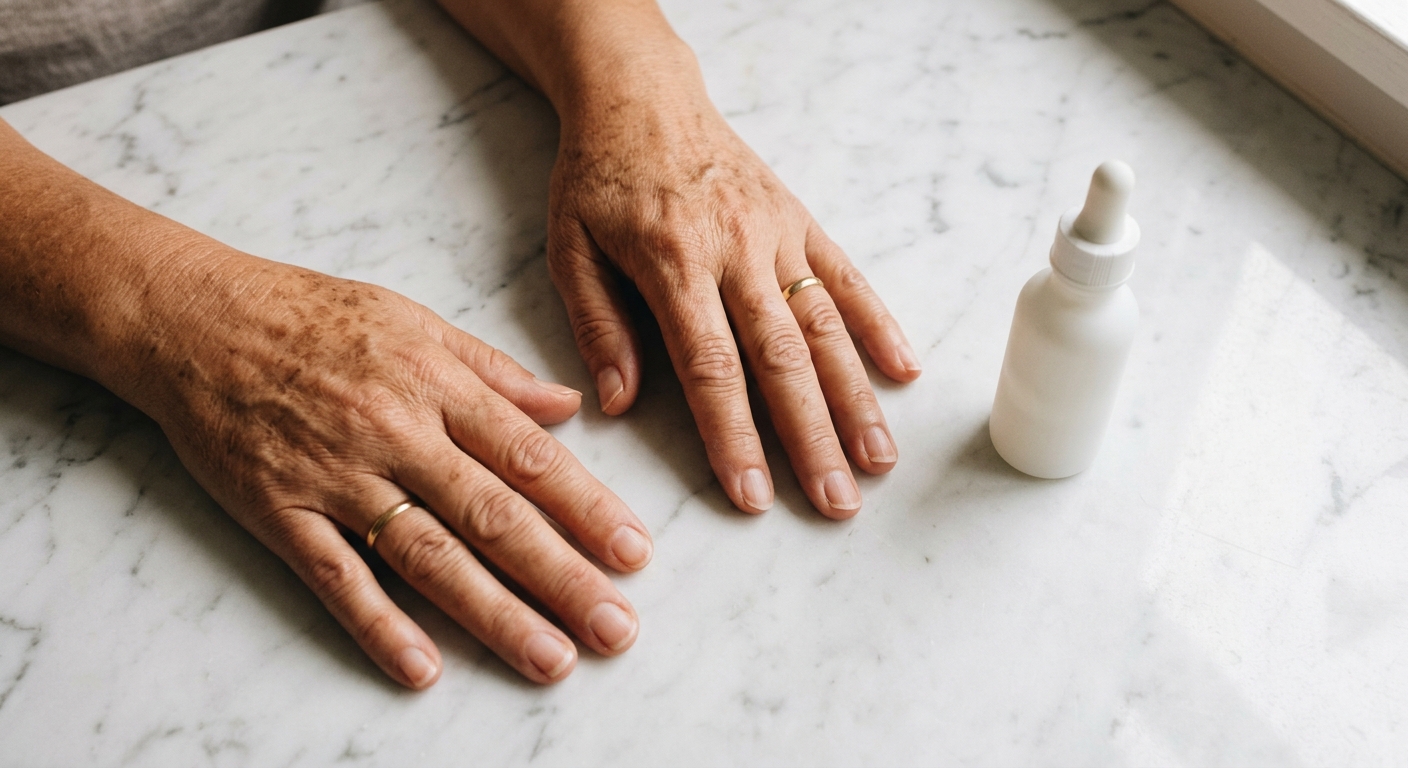
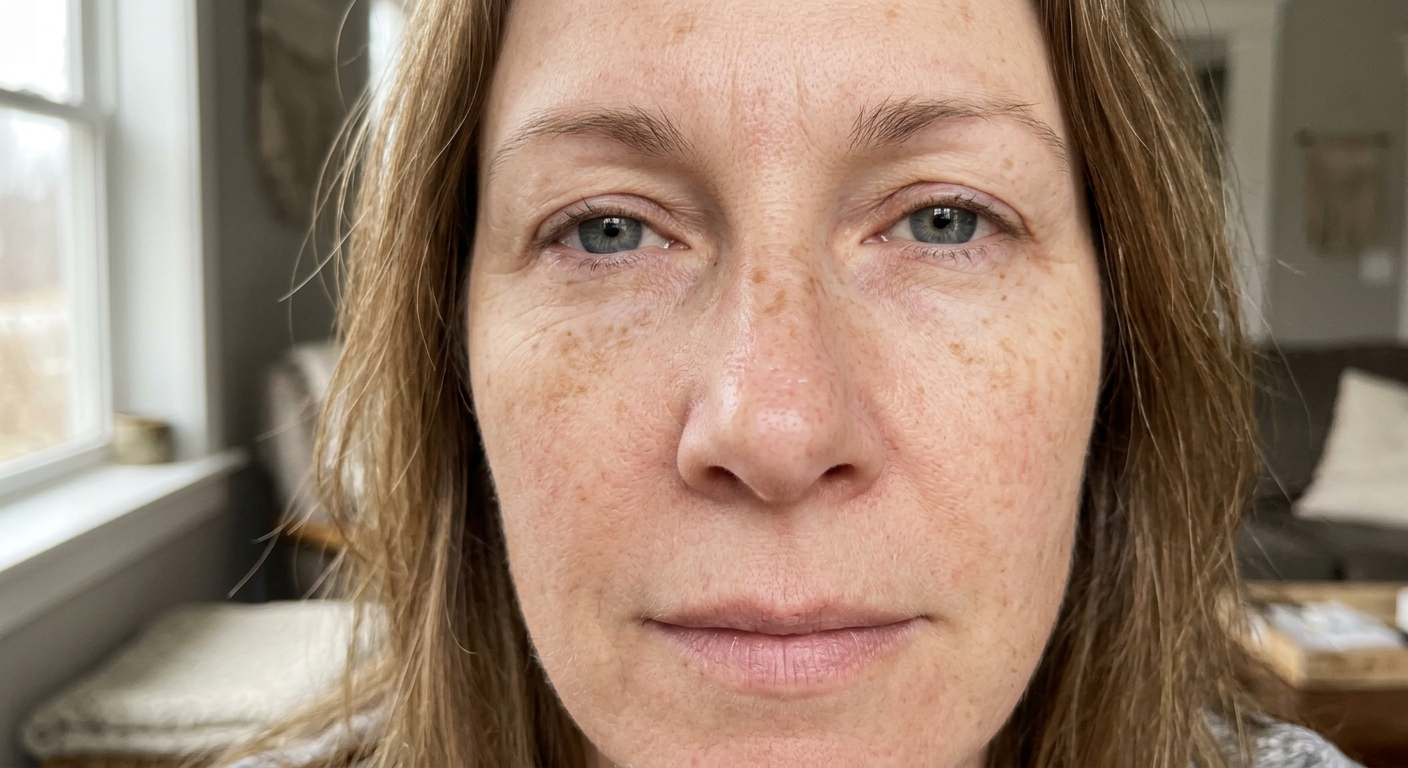
You notice them first on the backs of your hands, usually somewhere around the fifth decade of life: flat, tan-to-brown patches the size of a lentil or a small coin. Then a few appear on your cheekbones, your forehead, the tops of your shoulders. Our grandparents called them liver spots, and the name has stuck for generations — which is unfortunate, because it points to exactly the wrong organ.
Liver spots have nothing to do with your liver. The medical term is solar lentigines, and that word tells the real story: solar, as in the sun. These marks are not a sign of internal disease, aging blood, or “toxins.” They are a photographic record of ultraviolet light, developed slowly over decades and printed onto the parts of your skin that face the sky most often.
Understanding what they actually are is the first step to fading them — and to knowing which ones simply need a good serum and which ones deserve a dermatologist’s eye.
What a Liver Spot Actually Is
Your skin color comes from melanin, a pigment manufactured by specialized cells called melanocytes and then passed to surrounding skin cells like ink handed off to blotting paper. In healthy young skin, this process is even and orderly. Decades of sun exposure disrupt that order.
When researchers examined facial liver spots under the microscope and measured them against neighboring sun-exposed skin, the difference was striking. The spots showed roughly a 2.1-fold increase in the number of melanocytes and a 2.2-fold increase in epidermal melanin — more pigment factories, all running overtime, packed into a small patch [1]. A liver spot, in other words, is not dirty skin or a stain that can be scrubbed away. It is a localized cluster of overactive pigment cells that have been permanently switched to a higher setting.
Your skin color comes from melanin, a pigment manufactured by specialized cells called melanocytes and then passed to surrounding skin cells like ink handed off to blotting paper.
Recent research suggests the melanocytes may not even be the ringleaders. The surrounding keratinocytes — the ordinary structural cells of the epidermis — appear to send faulty growth signals after chronic UV exposure, effectively ordering nearby pigment cells to overproduce [2]. That is why liver spots cluster on the hands, face, forearms, and chest: the geography of the spots is simply the geography of a lifetime of sunlight.
Why They Appear With Age
Nobody is born with liver spots. They are cumulative. Every hour of unprotected sun deposits a little more UV damage into the skin, and for the first few decades your repair systems keep pace. Somewhere in your forties or fifties, the ledger tips: the damage outruns the repair, and discrete spots begin to surface where the exposure was heaviest.
This is why the backs of the hands and the face are ground zero. They are almost never covered, they rarely get sunscreen, and they accumulate more lifetime UV than skin that spends its days under clothing. The spots are less about how old you are and more about how much sun that particular patch of skin has seen.
When to Have One Checked
The overwhelming majority of liver spots are completely benign, and treating them is a cosmetic choice, not a medical necessity. But because they share territory with more serious pigmented lesions, it is worth knowing the difference.
A classic liver spot is flat, evenly colored, has a fairly regular border, and — crucially — stays the same year after year. Warning signs that warrant a professional look include a spot that becomes asymmetric, develops an irregular or notched border, contains several colors, grows past about six millimeters, or changes in any way over weeks to months.
In head-to-head laboratory testing, this delivery system proved 232% more effective at supporting collagen recovery and 73% more effective for elastin than conventional retinol, while being significantly gentler on skin cells.
If a mark is raised, crusty, itchy, or bleeding, that is a conversation for a dermatologist rather than a serum. When in doubt, get it checked — reassurance is cheap, and skin cancer caught early is highly treatable.
What Actually Fades Them
Because liver spots are a pigment problem, the goal of any treatment is to slow melanin overproduction and speed the shedding of already-pigmented cells. Several approaches have real evidence behind them.
Topical retinoids are the best-studied at-home option. In a landmark ten-month, double-blind trial, daily topical tretinoin lightened liver spots significantly, with the number of discrete lesions falling by around 71% compared with baseline [3]. Retinoids work by accelerating skin-cell turnover and normalizing the disordered pigment transfer that creates the spots in the first place. A later systematic review of tretinoin for photoaging confirmed consistent improvement in mottled hyperpigmentation and lentigines, with benefits appearing within a month and holding up over two years of use [4]. Combining a retinoid with a pigment-blocker such as mequinol produces even better results than either alone [5]. You can read more about how this ingredient class works in our guide to retinol for dark spots.
In-office procedures tend to be faster. A systematic review of solar-lentigine treatments found that light- and laser-based devices — picosecond lasers, intense pulsed light, and Q-switched lasers — delivered the highest clearance rates, often well above 70% [6]. These shatter or heat the excess pigment so the body can clear it. IPL photofacials and chemical peels are common clinic options, and pigment-blocking topicals like hydroquinone round out the toolkit. The trade-off is cost, downtime, and — especially in deeper skin tones — a risk of post-inflammatory pigmentation if the settings are too aggressive.
And prevention beats everything. Daily broad-spectrum sunscreen on the face, hands, and chest is the single most effective way to keep new liver spots from forming, because it addresses the root cause rather than the symptom.
A Gentler Way to Deliver the Proven Ingredient
Here is the practical problem with retinoids: they work, but conventional retinol is notoriously harsh on the delicate, sun-thinned skin where liver spots live, and much of what you apply never penetrates deeply enough to do its job. The active ingredient is right; the delivery is usually wrong.
This is the gap Nanoretinol was built to close. It encapsulates retinol inside biomimetic lipid nanoparticles that the skin recognizes as “self” and allows through the barrier — no need to disrupt or inflame the skin to force the active in. In head-to-head laboratory testing, this delivery system proved 232% more effective at supporting collagen recovery and 73% more effective for elastin than conventional retinol, while being significantly gentler on skin cells. At a fully stabilized 0.2% concentration in a light, water-based, 99%-natural formula, it lets you use the most evidence-backed anti-pigment ingredient nightly on thin-skinned areas like the hands and face — exactly where liver spots tend to gather — without the peeling and redness that make people quit retinoids before they see results.
The Long Game
Liver spots are the skin keeping honest accounts of your relationship with the sun. They are almost always harmless, they respond to consistent care, and they are far easier to prevent than to erase. Protect the exposed skin, treat the existing spots patiently with a proven pigment-normalizing ingredient, and keep an eye on anything that changes. Fading a lifetime of sun takes months, not days — but the science says it fades.
References
- Andersen WK, Labadie RR, Bhawan J. “Histopathology of solar lentigines of the face: a quantitative study.” Journal of the American Academy of Dermatology. 1997;36(3 Pt 1):444-447. PMID: 9091478
- Barysch MJ, Braun RP, Kolm I, et al. “Keratinocytic Malfunction as a Trigger for the Development of Solar Lentigines.” Dermatopathology (Basel). 2019;6(1):1-11. PMID: 30800656
- Rafal ES, Griffiths CE, Ditre CM, et al. “Topical Tretinoin (Retinoic Acid) Treatment for Liver Spots Associated with Photodamage.” New England Journal of Medicine. 1992;326(6):368-374. PMID: 1729619
- Sitohang IBS, Makes WI, Sandora N, Suryanegara J. “Topical tretinoin for treating photoaging: A systematic review of randomized controlled trials.” International Journal of Women’s Dermatology. 2022;8(1):e003. PMID: 35620028
- Fleischer AB Jr, Schwartzel EH, Colby SI, Altman DJ. “The combination of 2% 4-hydroxyanisole (Mequinol) and 0.01% tretinoin is effective in improving the appearance of solar lentigines and related hyperpigmented lesions in two double-blind multicenter clinical studies.” Journal of the American Academy of Dermatology. 2000;42(3):459-467. PMID: 10688717
- Mardani G, Nasiri MJ, Namazi N, Farshchian M, Abdollahimajd F. “Treatment of Solar Lentigines: A Systematic Review of Clinical Trials.” Journal of Cosmetic Dermatology. 2025;24(4):e70133. PMID: 40145274