IPL Photofacial: What It Treats, How It Works, and Its Real Limits
A clear-eyed look at intense pulsed light for sun spots, redness, and pigmentation — and the one thing it can't do on its own.
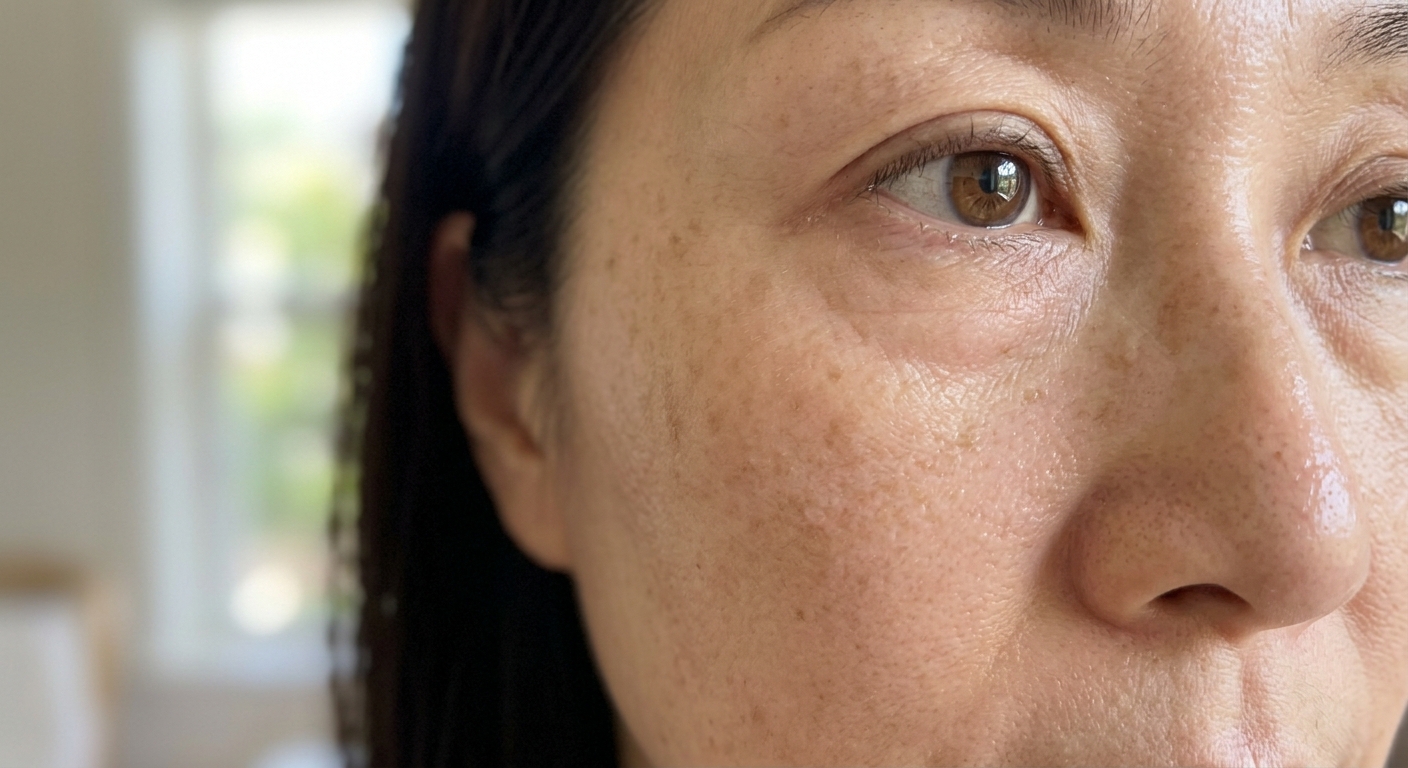
If your skin has started to read as “older” before you feel old, the culprit is usually not wrinkles. It’s color. Brown sun spots, a flush of redness across the cheeks and nose, a scattering of tiny broken capillaries — these uneven tones are what the eye registers first. An IPL photofacial is one of the most popular in-office treatments for exactly this problem, and for the right concern it works remarkably well. But it is widely misunderstood, oversold as an anti-aging cure-all, and missing the one ingredient that determines whether your results last.
Here is what an IPL photofacial genuinely does, what it can’t do, and how to make sure the money you spend in a treatment chair doesn’t quietly fade back to baseline.
What an IPL Photofacial Actually Is
IPL stands for intense pulsed light. Unlike a laser, which fires a single wavelength, an IPL device emits a broad spectrum of light that the practitioner filters to target specific colors in your skin — the brown of melanin and the red of hemoglobin in blood vessels. That pigment absorbs the light, heats up, and is either broken apart (in the case of a sun spot) or coagulated and reabsorbed (in the case of a visible vessel). A newer, branded evolution in this family is BBL broadband light, which adds tighter filters and stronger cooling.
Because it scatters energy across the surface rather than ablating it, IPL is considered a non-ablative, low-downtime treatment. You are not removing a layer of skin the way a resurfacing laser or a deep peel does. You are selectively heating the unwanted color and leaving the surrounding tissue largely intact. In a controlled study of photoaged facial skin, IPL shifted patients toward less-severe grades across all three markers of photoaging at once — surface roughness, mottled pigmentation, and redness — with minimal side effects [1].
What IPL Treats Well
Sun spots and mottled pigmentation
This is IPL’s strongest suit. Those flat brown patches — solar lentigines, in clinical language — are clusters of melanin laid down over decades of UV exposure. IPL targets them directly. In a trial using a filtered IPL on facial and hand sun spots, monthly sessions were both well tolerated and effective at clearing the pigment [2]. After treatment, spots typically darken into a “coffee-ground” speckle for several days, then flake away as the skin renews.
Facial redness and broken capillaries
The same technology that grabs brown pigment also grabs red. For diffuse facial flushing and the fine, thread-like telangiectasia common in rosacea-prone skin, IPL can be genuinely transformative. A two-year randomized controlled trial found that IPL not only improved visible telangiectasia but meaningfully reduced how often the redness came back [3]. If your primary complaint is a ruddy, uneven flush, IPL addresses it in a way no cream can match.
If your skin has started to read as “older” before you feel old, the culprit is usually not wrinkles.
For pigment and redness specifically, IPL is one of the best tools available — and far more effective than trying to scrub sun spots away from the surface.
What IPL Does Not Do
Here is where the marketing gets ahead of the biology. An IPL photofacial does not, in any meaningful way, rebuild the deep structural collagen that gives skin its firmness and bounce. It is a color-correction tool, not a foundation-repair tool.
The visible aging that IPL can’t touch — slackness, crepiness, the loss of “snap” — comes from the dermis, the living layer beneath the surface. From your mid-twenties on, ultraviolet light drives the skin to produce matrix-degrading enzymes that chew through existing collagen while simultaneously suppressing the synthesis of new collagen [4]. That is the engine of photoaging, and an IPL pulse aimed at surface pigment does not switch it off. A photofacial can make tired skin look brighter and more even — but brighter is not the same as firmer.
How Many Sessions, and What to Expect
A typical IPL course is three to five sessions spaced about a month apart, with periodic maintenance afterward. Downtime is modest: redness and a warm, sunburn-like sensation for a day, then the darkened spots sloughing over the following week. Sun avoidance before and after is non-negotiable — treating recently tanned skin raises the risk of burns and post-inflammatory pigment changes, which is why reputable clinics turn away clients with a fresh tan.
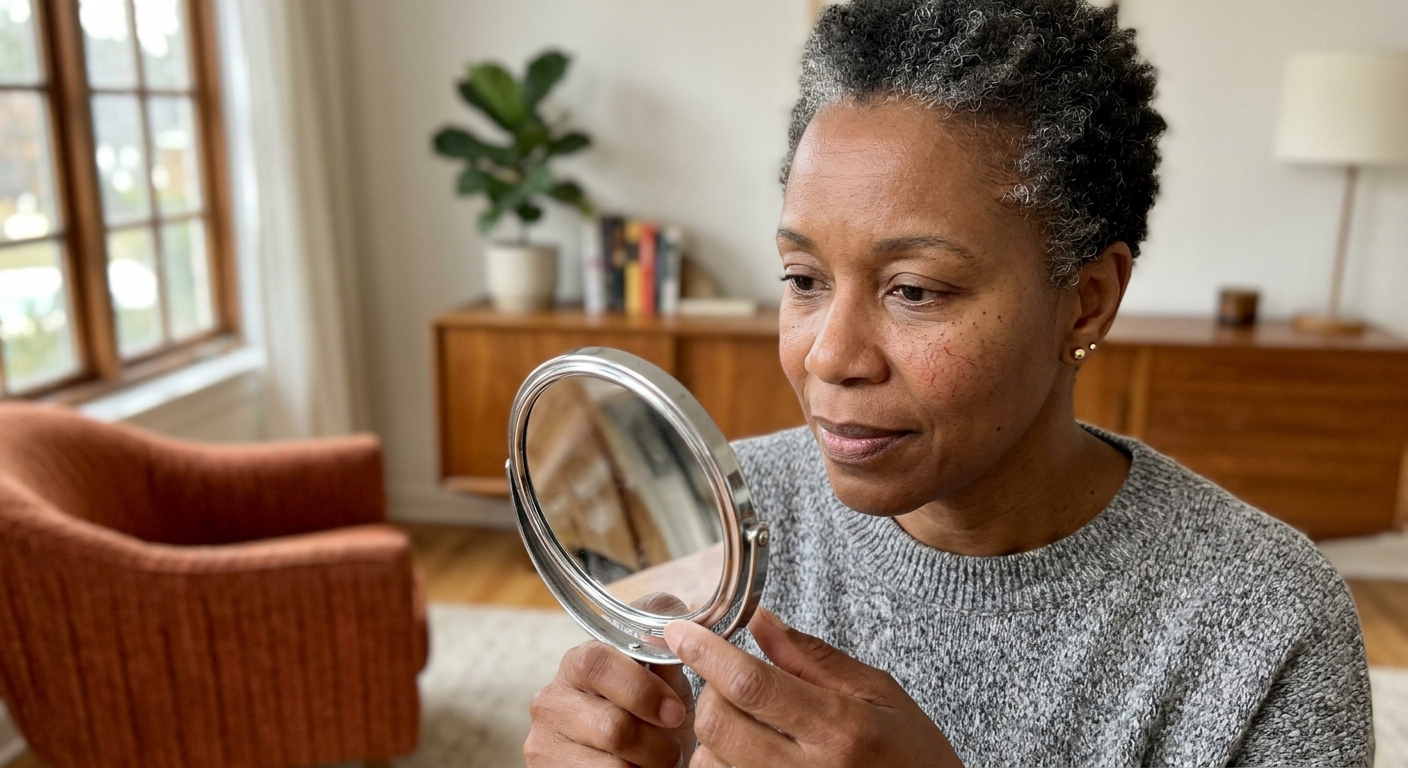
It is worth being honest about candidacy, too. IPL works best on lighter skin tones where the contrast between pigment and background skin is high. On deeper skin tones, the same melanin-seeking energy carries a higher risk of unwanted pigment changes, and other modalities are often safer.
The sun spots you just treated were the visible record of cumulative UV damage — and unless something changes at the cellular level, your skin will keep producing new ones.
The Maintenance Problem Nobody Mentions
Walk out of an IPL session with clearer, more even skin and it’s easy to believe the job is done. It isn’t. The sun spots you just treated were the visible record of cumulative UV damage — and unless something changes at the cellular level, your skin will keep producing new ones. Every unprotected afternoon writes a little more pigment back into the skin. This is why people cycle through photofacial after photofacial, chasing the same spots year after year.
A photofacial erases the evidence of sun damage; it doesn’t change the skin’s tendency to keep producing it.
Breaking that cycle requires a daily intervention that works on the underlying skin, not just the surface color. And the most studied molecule for that job is retinol.
Building Skin That Needs Less Correction
This is where in-office and at-home care stop competing and start complementing each other. Topical retinoids are the gold standard for reversing the deeper signs of photoaging that IPL leaves behind. The landmark double-blind trial that put retinoids on the map showed measurable improvement in photoaged skin versus placebo [5], and a modern systematic review of randomized trials confirmed consistent gains in wrinkling, mottled pigmentation, and texture — with benefits that build over months and hold for as long as treatment continues [6].
Retinol does what light cannot: it speaks to the dermis directly, prompting it to slow collagen breakdown and lay down new fibers, while normalizing the pigment-producing cells that throw off sun spots in the first place. Pair a course of IPL with consistent nightly retinol and you treat both halves of the problem — the color you can see today, and the machinery that would otherwise recreate it. (If you’re new to it, our guides on retinol for sun damage and retinol for dark spots are a good place to start.)
The catch has always been tolerance. Conventional retinol is harsh: it struggles to cross the skin barrier, and the formulations that force it through often do so by disrupting that barrier — the cause of the burning, redness, and peeling that send so many people back to the shelf. That irritation is especially counterproductive after IPL, when your skin barrier is already sensitized.
This is the gap Nanoretinol was built to close. Rather than damaging the skin barrier to push retinol through, it encapsulates a stabilized 0.2% retinol inside biomimetic lipid nanoparticles — particles the skin recognizes as “self” and waves through the barrier intact. The delivery does the work the concentration normally would: in head-to-head testing, Nanoretinol proved 232% more effective than conventional retinol at collagen recovery and 73% more effective at elastin recovery, while clinical use showed a 61% increase in skin firmness and a 56% increase in elasticity over 56 days. Because it works with the barrier instead of against it, it’s markedly gentler on skin cells — which makes it a far more sensible companion to a treatment like IPL than a traditional, barrier-stripping retinol.
The Honest Takeaway
An IPL photofacial is an excellent tool for what it actually does: fading sun spots and quieting facial redness. Go in with clear expectations — it’s a color corrector, not a collagen builder — and it earns its place. But if you want the results to last and the spots to stop coming back, the work continues at home. The procedure handles the damage you can see; a well-delivered retinol changes the skin that keeps creating it.
References
- Kligman DE, Zhen Y. “Intense pulsed light treatment of photoaged facial skin.” Dermatologic Surgery. 2004;30(8):1085-1090. PMID: 15274697
- Friedmann DP, Peterson JD. “Efficacy and safety of intense pulsed light with a KTP filter for the treatment of solar lentigines.” Lasers in Surgery and Medicine. 2019;51(6):500-508. PMID: 30681160
- Luo Y, Luan XL, Zhang JH, Wu LX, Zhou N. “Improved telangiectasia and reduced recurrence rate of rosacea after treatment with 540 nm-wavelength intense pulsed light: A prospective randomized controlled trial with a 2-year follow-up.” Experimental and Therapeutic Medicine. 2020;19(6):3543-3550. PMID: 32346416
- Fisher GJ, Kang S, Varani J, Bata-Csorgo Z, Wan Y, Datta S, Voorhees JJ. “Mechanisms of photoaging and chronological skin aging.” Archives of Dermatology. 2002;138(11):1462-1470. PMID: 12437452
- Weiss JS, Ellis CN, Headington JT, Tincoff T, Hamilton TA, Voorhees JJ. “Topical tretinoin improves photoaged skin. A double-blind vehicle-controlled study.” JAMA. 1988;259(4):527-532. PMID: 3336176
- Sitohang IBS, Makes WI, Sandora N, Suryanegara J. “Topical tretinoin for treating photoaging: A systematic review of randomized controlled trials.” International Journal of Women’s Dermatology. 2022;8(1):e003. PMID: 35620028