
Facial Lymphatic Drainage: What It Really Does for Puffy, Aging Skin
The science behind the de-puffing ritual — and where its powers stop
You wake up, catch your reflection, and your face looks fuller than it did last night — a little swollen along the jaw, puffier under the eyes, softer around the cheeks. By mid-morning it settles. That daily shape-shifting is your lymphatic system at work, and it’s the reason facial lymphatic drainage has become one of the most searched skincare rituals of the decade. The promise is seductive: sweep the fluid out, and a sharper, sculpted, less puffy face appears.
The good news is that the ritual is grounded in real physiology. The important news is that de-puffing and anti-aging are two entirely different projects, and confusing them is where a lot of money and hope gets wasted.
Your Face Has a Drainage Network
Beneath your skin runs a web of tiny lymphatic vessels — a low-pressure plumbing system that collects excess fluid, proteins, and waste from your tissues and routes it back toward lymph nodes for filtering. Detailed anatomical mapping of the head and neck shows that the skin of your forehead, eyelids, and cheeks drains through superficial collecting vessels toward the nodes in front of your ears, under your jaw, and along your neck [1].
Two things about this network matter for skincare. First, unlike your circulatory system, the lymphatic system has no central pump — it relies on movement, muscle contraction, and gentle external pressure to keep fluid moving. Second, its pathways vary considerably from one person to the next [1]. When fluid pools — after a salty dinner, a poor night’s sleep, or a long flight — your face looks puffy. Manual massage that follows those drainage routes can nudge the backed-up fluid along, which is exactly why a lymphatic massage can make your face look tighter within minutes.
What the Massage Genuinely Delivers
Here is where honesty helps. If you are picturing lymphatic drainage as a lasting cure for a fuller face, the best clinical evidence asks you to temper that. A meta-analysis of ten randomized controlled trials found that manual lymphatic drainage did not produce meaningful, durable reductions in tissue volume beyond what compression and movement already achieve [2]. In other words, the fluid you move tends to come back.
If you are picturing lymphatic drainage as a lasting cure for a fuller face, the best clinical evidence asks you to temper that.
What massage does reliably do is boost circulation. In a controlled study, just five minutes of facial roller massage increased facial skin blood flow by up to roughly a quarter, and the effect lasted at least ten minutes afterward; five weeks of daily use even improved how readily the skin’s vessels dilated [3]. More blood flow means a temporary flush of color and that unmistakable post-massage glow.
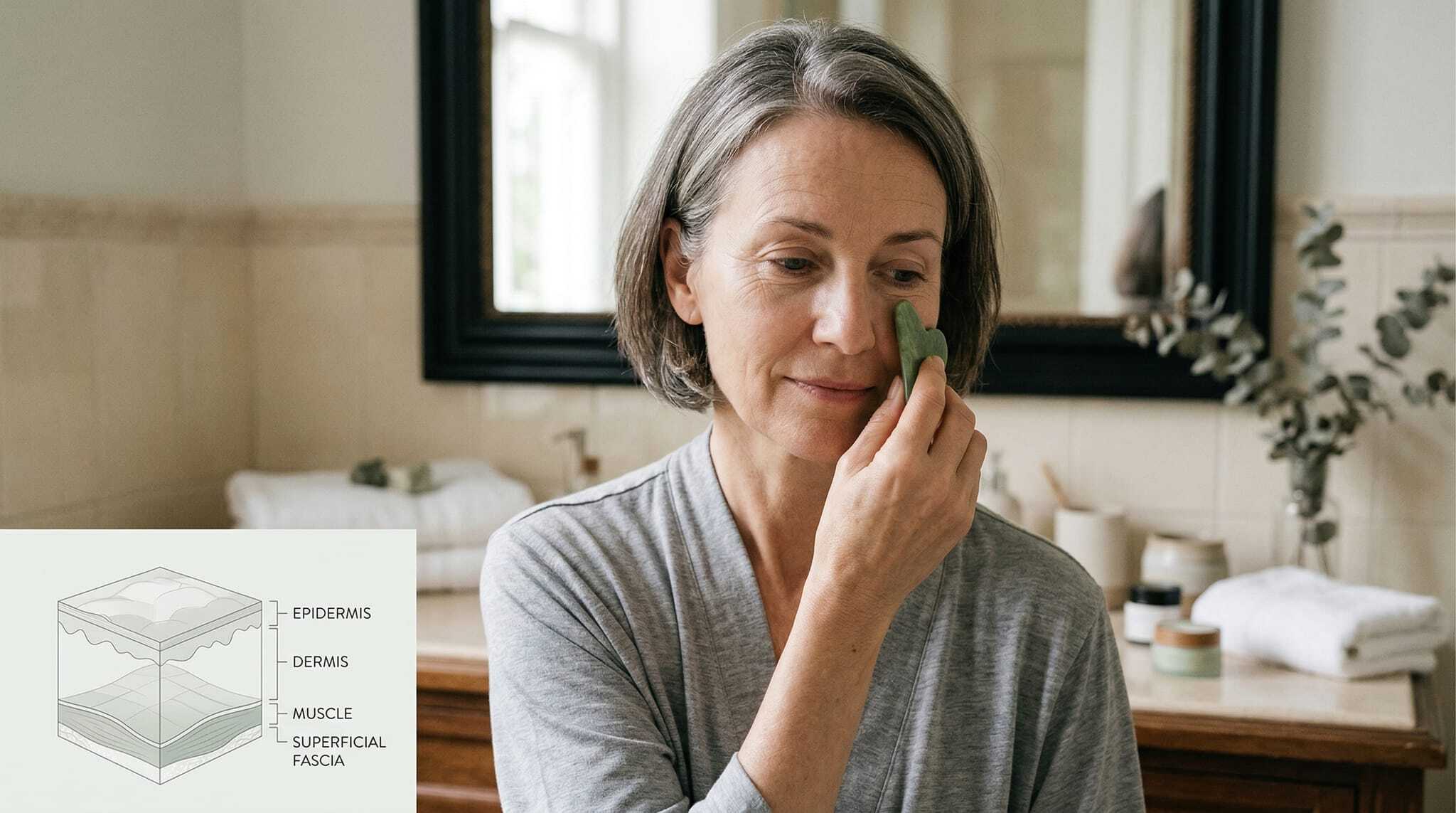
There is a deeper effect, too. Skin is a mechanically responsive organ, and physical manipulation appears to talk directly to the cells in the dermis. When researchers applied a skin-massaging device, they measured increased expression of structural proteins — including procollagen, fibrillin, and tropoelastin — and found that pairing massage with an anti-aging cream improved wrinkles and texture more than the cream used alone [4].
That last finding is the one worth underlining: massage is a multiplier, not a medicine. It moves fluid, it moves blood, and it helps your actual treatments work a little harder. What it does not do is manufacture the thing your aging skin is actually short on.
Puffiness Is Not the Same as Aging
This is the distinction the marketing blurs. A puffy face is a fluid problem — transient, reversible, and responsive to drainage. An aging face is a structural problem, and structure lives far below the reach of any massage stroke.
Skin collagen is estimated to fall by roughly 1% per year across adult life.
As skin gets older, the fibroblasts — the cells responsible for producing collagen — slow down and function less efficiently. Laboratory analysis of skin from older donors showed substantially reduced production of type I collagen, the protein that keeps skin firm and resilient, driven by this age-related decline in fibroblast activity [5]. Skin collagen is estimated to fall by roughly 1% per year across adult life. No amount of lymphatic sweeping rebuilds a single fiber of it. You can drain the fluid off a deflating structure, but you cannot massage the scaffolding back into place.
That is why people who rely on drainage alone eventually feel stuck: the morning puffiness improves, but the fine lines, the slackening along the jaw, and the loss of bounce keep advancing. They are treating the weather when the problem is the climate. (If firmness is your real concern, our guide on how to improve skin elasticity tackles the structural side directly.)
What Actually Rebuilds the Scaffolding
To change skin’s structure, you need something that reaches the dermis and reactivates collagen production. The most rigorously proven tool for this is the retinoid family. In a landmark controlled trial, photodamaged skin contained 56% less type I collagen than protected skin — and 10 to 12 months of topical tretinoin drove an 80% increase in collagen formation, while untreated skin continued to lose it [6]. That is the difference between a cosmetic and a corrective: one reshapes the surface for an hour, the other rebuilds the foundation over months.
The catch with conventional retinol has always been delivery and tolerance. The skin barrier is designed to keep things out, so a large share of what you apply never reaches the cells that matter, and the fraction that does can trigger the redness and peeling that make people quit.
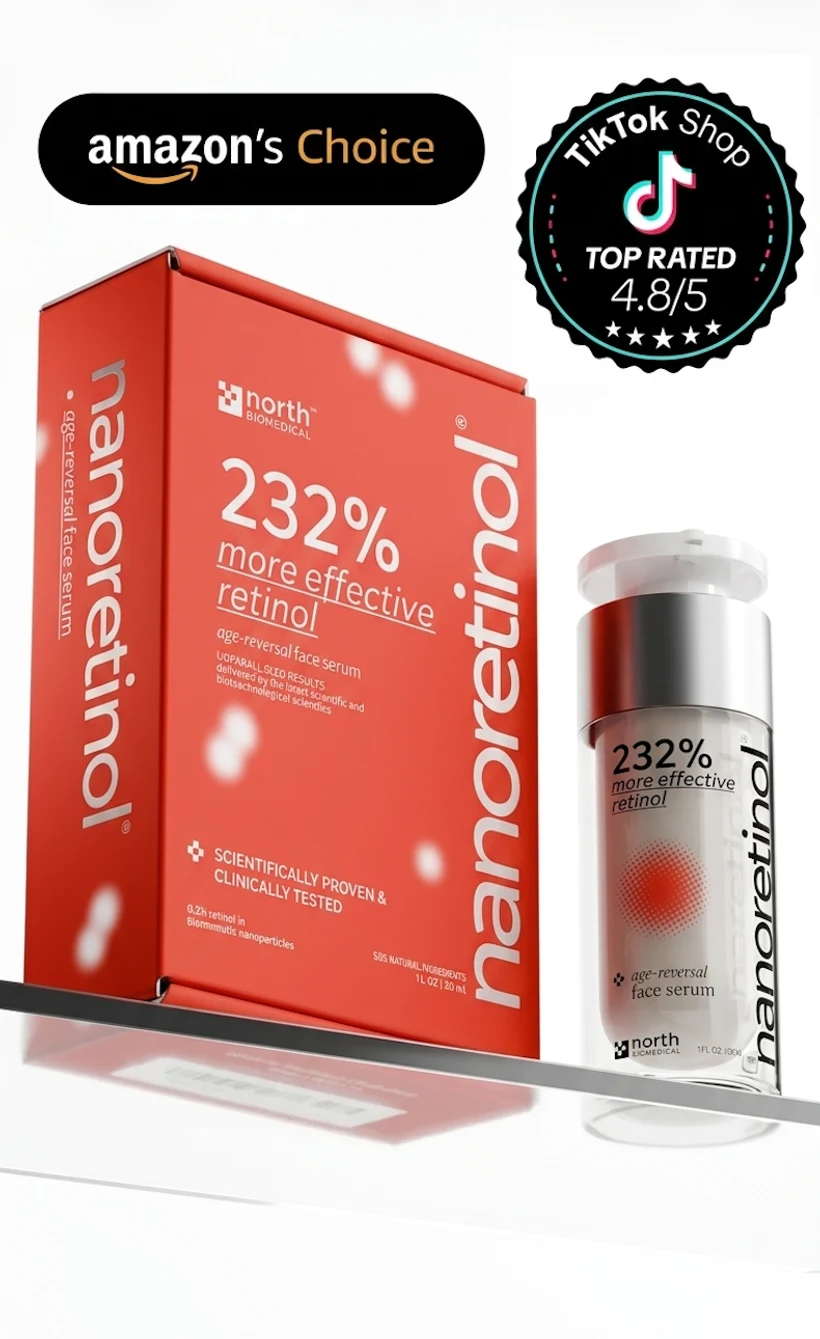
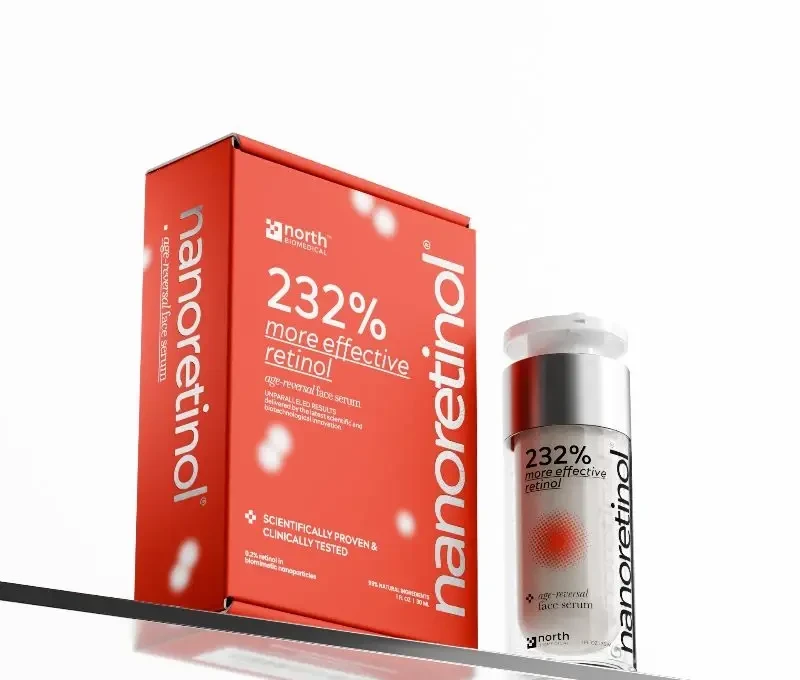
This is the problem Nanoretinol was engineered to solve. By encapsulating retinol inside biomimetic lipid nanoparticles that the skin recognizes as “self,” it passes through the barrier without the chemical disruption conventional formulas rely on — no burning, no barrier damage, just efficient delivery to the dermis. In North Biomedical’s clinical testing, this approach proved 232% more effective at collagen recovery and 73% more effective at elastin recovery than conventional retinol, with users seeing a 61% increase in firmness and a 56% increase in elasticity over 56 days. It is water-based, 99% natural, and gentle enough for daily use — the structural counterpart to everything a massage can only do temporarily.
The Smart Way to Use Drainage
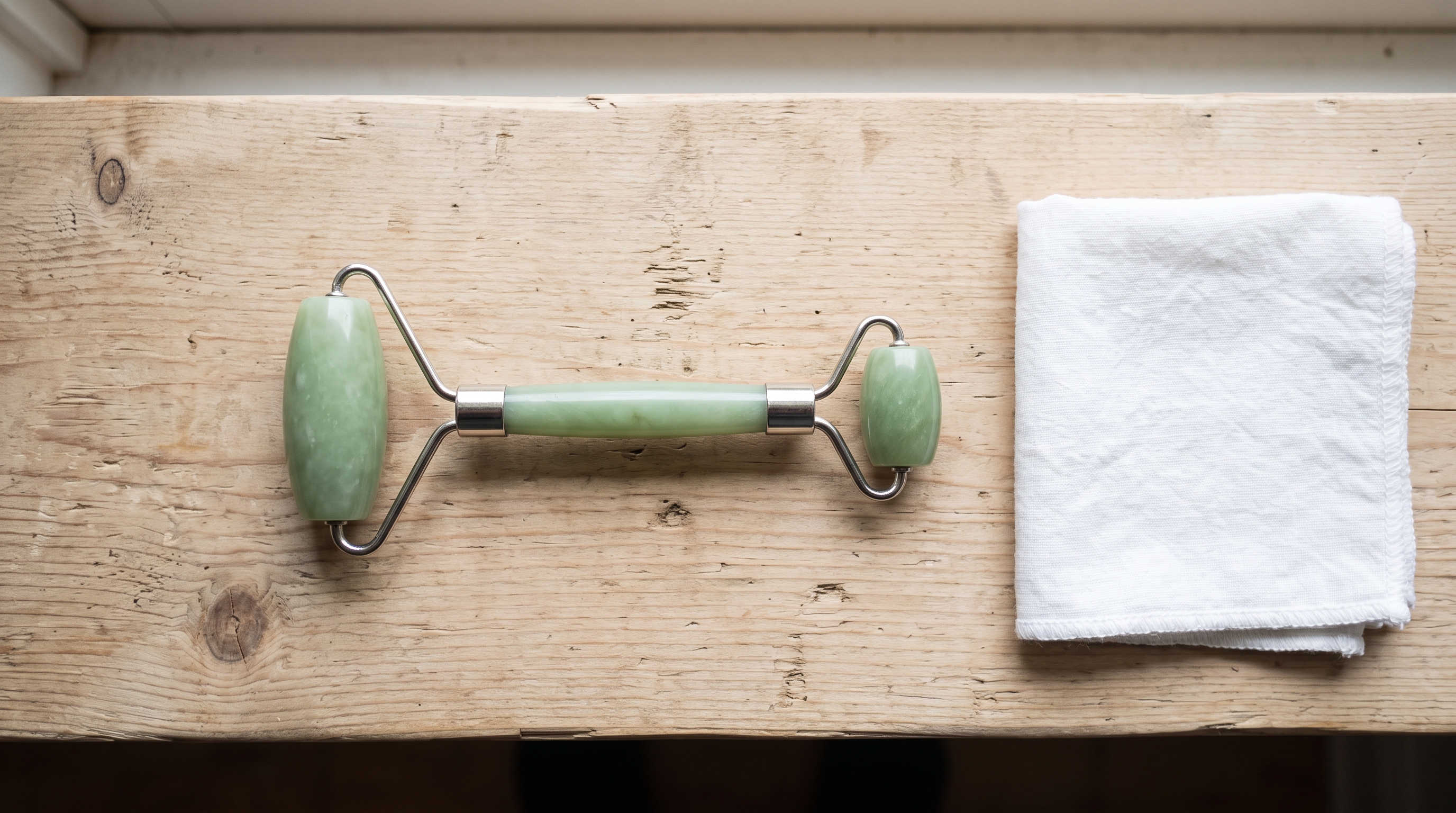
None of this means you should abandon your gua sha or your morning jade roller. Lymphatic massage is a genuinely useful ritual — it de-puffs, it brightens, it relaxes tense muscles, and it makes your actives absorb and perform better [4]. Used honestly, it is the perfect finishing move.
Just give it the right job. Let drainage handle the fluid and the glow — pairing beautifully with your gua sha practice or a quick de-puffing routine before an event, and helping with morning puffiness around the eyes. Then let a proven active like Nanoretinol handle the aging you can’t sculpt away. Treat the two as partners rather than substitutes, and you get the best of both: a face that looks less puffy today and is genuinely firmer a year from now.
References
- Pan WR, Suami H, Taylor GI. “Lymphatic Drainage of the Superficial Tissues of the Head and Neck: Anatomical Study and Clinical Implications.” Plastic and Reconstructive Surgery. 2008;121(5):1614-1624. doi:10.1097/PRS.0b013e31816aa072
- Huang TW, Tseng SH, Lin CC, et al. “Effects of Manual Lymphatic Drainage on Breast Cancer-Related Lymphedema: A Systematic Review and Meta-Analysis of Randomized Controlled Trials.” World Journal of Surgical Oncology. 2013;11:15. doi:10.1186/1477-7819-11-15
- Miyaji A, Sugimori K, Hayashi N. “Short- and Long-Term Effects of Using a Facial Massage Roller on Facial Skin Blood Flow and Vascular Reactivity.” Complementary Therapies in Medicine. 2018;41:271-276. doi:10.1016/j.ctim.2018.09.009
- Caberlotto E, Ruiz L, Miller Z, Poletti M, Tadlock L. “Effects of a Skin-Massaging Device on the Ex-Vivo Expression of Human Dermis Proteins and In-Vivo Facial Wrinkles.” PLOS ONE. 2017;12(3):e0172624. doi:10.1371/journal.pone.0172624
- Varani J, Dame MK, Rittié L, et al. “Decreased Collagen Production in Chronologically Aged Skin: Roles of Age-Dependent Alteration in Fibroblast Function and Defective Mechanical Stimulation.” The American Journal of Pathology. 2006;168(6):1861-1868. doi:10.2353/ajpath.2006.051302
- Griffiths CEM, Russman AN, Majmudar G, Singer RS, Hamilton TA, Voorhees JJ. “Restoration of Collagen Formation in Photodamaged Human Skin by Tretinoin (Retinoic Acid).” New England Journal of Medicine. 1993;329(8):530-535. doi:10.1056/NEJM199308193290803