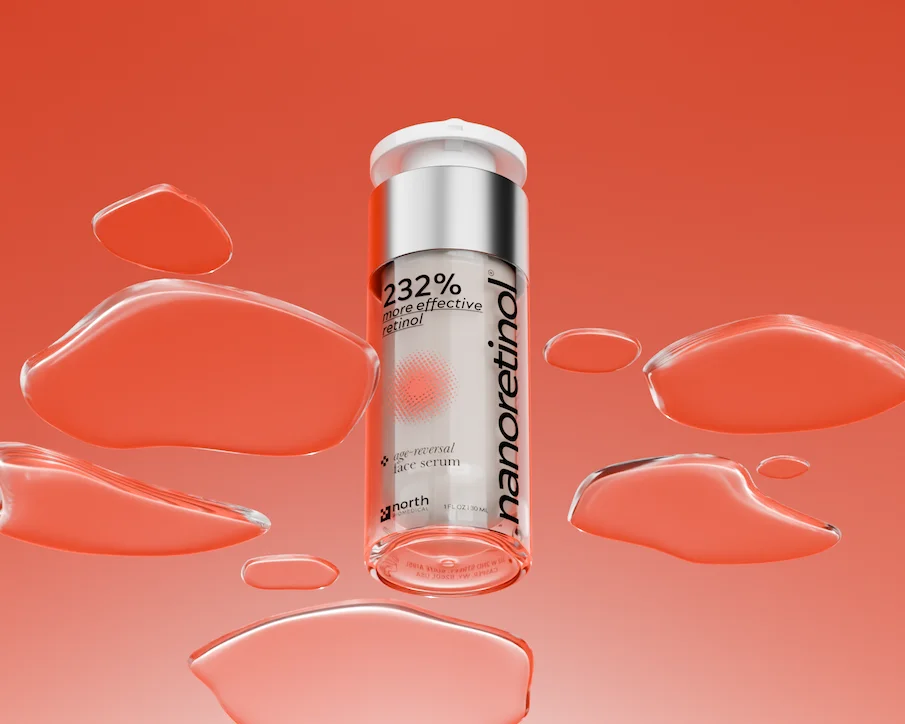
Nanoretinol® Formulation Update: What Changed, Why, and What It Means for Your Skin
A deeper look at the science behind our December 2025 upgrade
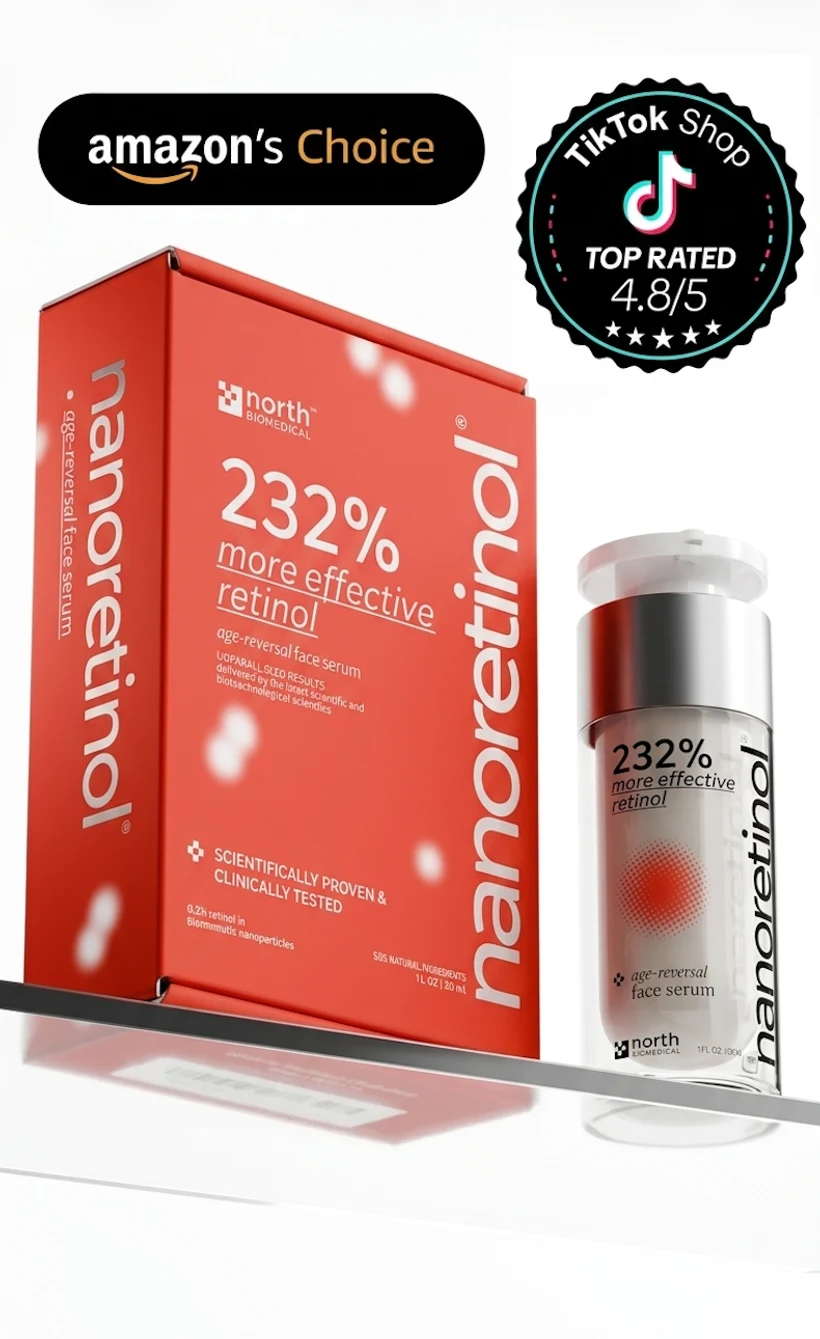
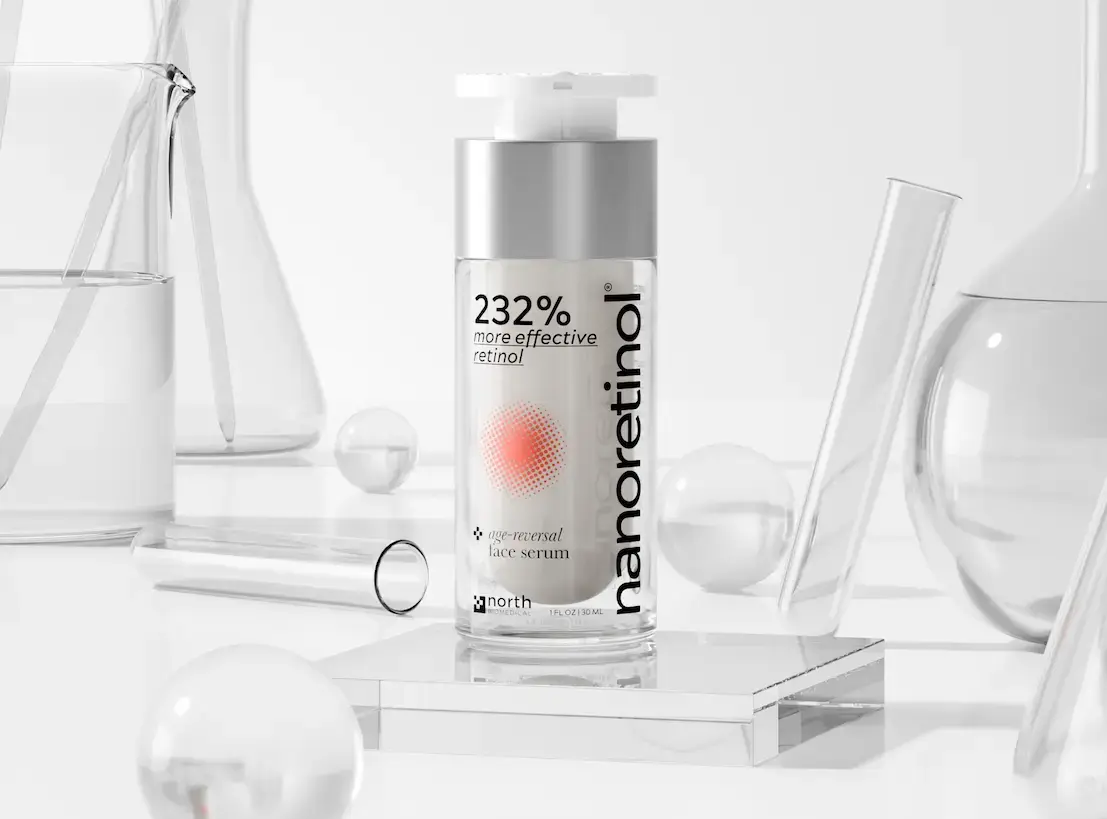
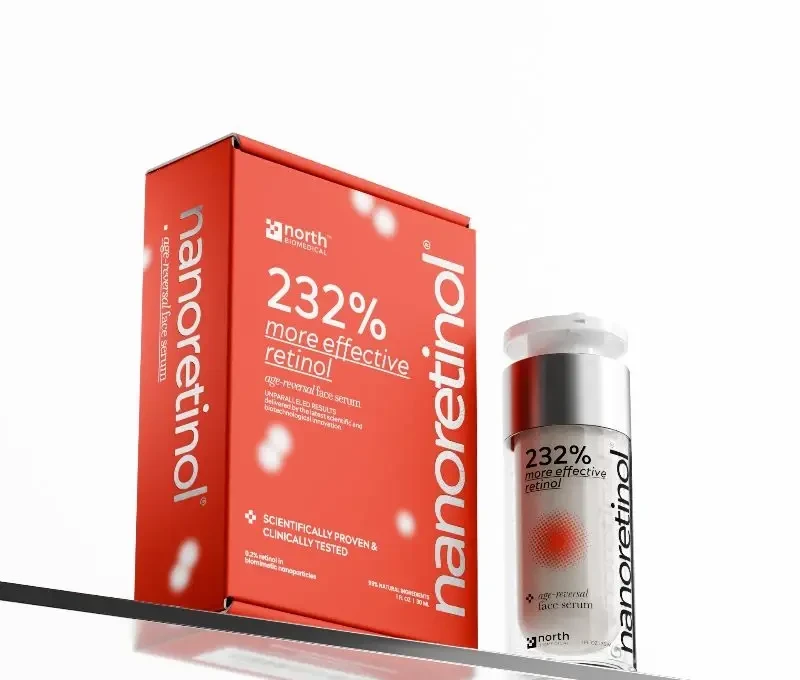
If your latest bottle of Nanoretinol® has a light golden tint instead of the clear serum you’re used to, you’re holding the most potent version we’ve ever produced.
In December 2025, we introduced a targeted formulation update — refining the base for improved nourishment and adding sodium ascorbyl phosphate (a stable form of Vitamin C) to the serum base. The result is a serum that’s more stable, more efficacious, and delivers an additional layer of antioxidant protection that the original formula didn’t offer.
Here’s the science behind the change, why we made it, and what it means for your skin.
What Changed in the New Formula
The core technology hasn’t changed. Nanoretinol® still delivers 0.2% retinol encapsulated in biomimetic lipid nanoparticles — the same delivery system that produced +232% greater collagen recovery and +73% greater elastin recovery compared to conventional retinol. The nanoparticles still pass through the epithelial barrier as a biological Trojan horse, recognized as “self” by skin cells.
What changed is the addition of sodium ascorbyl phosphate (SAP) — a stabilized derivative of Vitamin C — to the serum base, along with a refined, more nourishing overall formulation.
Updated ingredients list: Aqua, Propanediol, Aloe Barbadensis Leaf Juice, Retinol Lipid Nanoparticles [Aqua, Pentylene Glycol, Phosphatidylcholine, Polyglyceryl-10 Laurate, Glycerin, Retinol, Sodium Ascorbyl Phosphate, Cetyl Alcohol, Tocopheryl Acetate], Xanthan Gum, Sodium Polyacrylate, Phenoxyethanol, Ethylhexylglycerin.
The brackets denote the proprietary nanoparticle suspension — the premix manufactured before it’s blended into the final serum base. Sodium ascorbyl phosphate is part of that suspension, but it isn’t encapsulated inside the nanoparticle core alongside the retinol. It sits in the aqueous phase surrounding the nanoparticles, where it serves as an antioxidant shield. That physical separation between the retinol (inside the nanoparticle) and the Vitamin C (outside it) is exactly why this combination works when conventional wisdom says it shouldn’t.
Why Sodium Ascorbyl Phosphate (Not L-Ascorbic Acid)
Not all Vitamin C is created equal. L-ascorbic acid — the form most people think of — is notoriously unstable. It degrades rapidly in aqueous solutions when exposed to light, oxygen, or even minor pH fluctuations [1]. This instability is precisely why most dermatologists advise against mixing Vitamin C and retinol in the same product: L-ascorbic acid requires a low pH (below 3.5) to penetrate skin effectively, while retinol performs best at a higher pH. The combination can degrade both molecules and increase irritation.
Sodium ascorbyl phosphate solves this problem. SAP is a phosphorylated ester of ascorbic acid with significantly greater chemical stability across a range of pH levels and temperatures [1][2]. Unlike L-ascorbic acid, SAP remains stable in aqueous formulations for extended periods — Geesin et al. (1993) demonstrated that ascorbyl-2-phosphate solutions maintained their biological activity even after nine days in solution at neutral pH, conditions under which pure ascorbic acid had already degraded substantially [2].
Once applied to the skin, SAP is enzymatically converted to free ascorbic acid by phosphatases naturally present in the epidermis — delivering the antioxidant benefit where it’s needed, when it’s needed [1].
Here’s the science behind the change, why we made it, and what it means for your skin.
The Dual Role: Antioxidant Shield + Skin Benefit
The decision to add SAP wasn’t just about giving customers a “bonus” ingredient. It serves a precise function in the overall formulation.
Protecting the Formulation from Oxidation
The lipid nanoparticles in Nanoretinol® are built from phosphatidylcholine — the same phospholipid that forms the membranes of human cells. Like all lipid structures, these membranes are vulnerable to oxidative degradation: exposure to oxygen and temperature fluctuations can trigger lipid peroxidation, gradually compromising the integrity of the nanoparticle shell and the retinol payload it protects.
Vitamin C derivatives, including sodium ascorbyl phosphate, are potent scavengers of reactive oxygen species [3]. Present in the serum base, SAP acts as an antioxidant shield for the entire formulation — scavenging free radicals in the surrounding environment before they can attack the nanoparticle membranes. Research by Foco et al. (2005) demonstrated that incorporating SAP alongside lipid-based carrier systems enhanced the stability of the formulation, with storage temperature being the dominant factor in degradation [3]. Our internal testing confirmed that adding SAP to the base significantly extends shelf life and thermal stability compared to the original formulation. In short: the Vitamin C protects the environment around the nanoparticles, the nanoparticle shell protects the retinol, and the retinol reaches your skin intact. It’s a layered defense system.
Antioxidant Benefits for Skin
Beyond its role as a formulation stabilizer, sodium ascorbyl phosphate delivers genuine skincare benefits once it reaches the skin.
Vitamin C is a critical cofactor in collagen synthesis — specifically, it’s required for the hydroxylation of proline and lysine residues in procollagen, a step without which collagen cannot form its characteristic triple-helix structure [4]. This means Vitamin C and retinol don’t just coexist — they’re synergistic. Retinol upregulates collagen gene expression; Vitamin C ensures the resulting collagen molecules are properly assembled.
Additionally, Vitamin C provides photoprotective effects by neutralizing reactive oxygen species generated by UV exposure [4]. This doesn’t replace sunscreen — nothing does — but it adds a molecular layer of defense against the oxidative stress that accelerates skin aging.
Addressing the Elephant in the Room: Can You Really Mix Retinol and Vitamin C?
The short answer: it depends entirely on which Vitamin C and how the retinol is delivered.
The conventional advice against combining retinol and Vitamin C is based on valid chemistry — but it applies to a specific scenario: free L-ascorbic acid (low pH, unstable) applied directly alongside free retinol (higher pH, oxidation-sensitive) in the same open formulation. Under those conditions, the pH mismatch can degrade both molecules and the combination can overwhelm the skin’s tolerance threshold [1].
Nanoretinol®‘s updated formulation sidesteps every one of these problems:
In short: the Vitamin C protects the environment around the nanoparticles, the nanoparticle shell protects the retinol, and the retinol reaches your skin intact.
-
The Vitamin C is SAP, not L-ascorbic acid. SAP is stable at the formulation’s native pH and doesn’t require an acidic environment to function [1][2].
-
The retinol is encapsulated, not free. The nanoparticle shell physically separates the retinol from the external environment, preventing direct chemical interaction between the two actives during storage or application.
-
The SAP and retinol are physically separated. The retinol sits inside the nanoparticle; the SAP sits in the serum base outside. They never directly interact in the bottle — the nanoparticle membrane acts as a physical barrier between the two actives.
-
The dose is precisely calibrated. This isn’t a high-concentration Vitamin C serum. The SAP is present at a level optimized for antioxidant protection and gentle skin support — not at concentrations that would risk irritation.
Our clinical testing on the updated formulation confirms what the chemistry predicts: no increase in irritation or side effects compared to the original formula. What the data does show is improved efficacy metrics and meaningfully extended shelf life.
What You’ll Notice
For most users, the transition is seamless. Here’s what to expect: The golden tint. The light yellow hue comes from the sodium ascorbyl phosphate. It’s a natural characteristic of the compound — not an additive or colorant. If your bottle has this tint, you have the updated formula.
Same texture and feel. The refined base maintains Nanoretinol®‘s signature water-based, gel-like formulation: complete absorption, smooth matte finish, no greasy residue. The 99% natural ingredient profile is maintained.
Same application protocol. Apply daily at night. Use sunscreen within 24 hours after application. The usage instructions haven’t changed.
No new adjustment period. If you’ve been using Nanoretinol® and your skin is already adapted, the updated formula won’t trigger a new purge or adjustment phase. The retinol concentration (0.2%) and delivery mechanism are unchanged.
Why Continuous Improvement Matters
Formulation science doesn’t stand still. The original Nanoretinol® was already a significant leap beyond conventional retinol — encapsulated delivery that bypasses the skin barrier without damaging it, with dramatically better efficacy and tolerability data.
The December 2025 update reflects the kind of iterative improvement that separates companies doing real science from companies doing marketing. We didn’t change the formula because something was wrong. We changed it because our research team found a way to make it measurably better: more stable nanoparticles, longer shelf life, and an additional antioxidant mechanism that complements retinol’s core activity.
That’s what happens when a product is built on a platform — the biomimetic nanoparticle delivery system — rather than a fixed recipe. The platform can be refined, layer by layer, without losing the foundation that makes it work.
The golden tint is the visible marker of that refinement. It means you’re holding the freshest, most potent version of Nanoretinol® we’ve ever produced.
References
-
Spiclin P, Gasperlin M, Kmetec V. “Sodium ascorbyl phosphate in topical microemulsions.” International Journal of Pharmaceutics. 2003;256(1-2):65-73. doi:10.1016/s0378-5173(03)00063-2
-
Geesin JC, Gordon JS, Berg RA. “Regulation of collagen synthesis in human dermal fibroblasts by the sodium and magnesium salts of ascorbyl-2-phosphate.” Skin Pharmacology. 1993;6(1):65-71. doi:10.1159/000211089
-
Foco A, Gasperlin M, Kristl J. “Investigation of liposomes as carriers of sodium ascorbyl phosphate for cutaneous photoprotection.” International Journal of Pharmaceutics. 2005;291(1-2):21-29. doi:10.1016/j.ijpharm.2004.07.039
-
Catani MV, Savini I, Rossi A, Melino G, Avigliano L. “Biological role of vitamin C in keratinocytes.” Nutrition Reviews. 2005;63(3):81-90. doi:10.1111/j.1753-4887.2005.tb00125.x