
Oily Skin After 40: Why It Happens and the Routine That Actually Balances It
Oily skin doesn't always fade with age, and stripping it makes it worse. Here's what drives oil production and how to manage it without wrecking your barrier.
Oily Skin Doesn’t Always Retire When You Do
There is a widespread assumption that skin dries out with age, and for many people it does. But plenty of women reach their forties and fifties and find their T-zone is as shiny by midday as it was at twenty-five, sometimes shinier. If that is you, you are not imagining it, and you are not doing something wrong.
Oil production is controlled by the sebaceous glands, and those glands are governed largely by androgens, a group of hormones present in everyone. As estrogen declines through perimenopause and menopause, the relative influence of androgens on the skin can actually increase, keeping the sebaceous glands active even as other signs of aging appear. Sebaceous glands also tend to enlarge with age, so the oil that is produced comes from bigger glands feeding wider pores [1]. The result is a frustrating combination many women describe as “oily but aging”: visible pores and midday shine alongside the first fine lines.
What Oily Skin Actually Is, and What It Isn’t
Sebum is not the enemy. It is a protective film that helps hold moisture in the skin and keeps the barrier supple. The goal of managing oily skin is never to eliminate oil; it is to moderate excess and keep pores clear, while leaving the barrier intact. Confirming you are still an oily type matters after forty, which is covered in how to know what skin type you have.
This distinction matters because the most common mistake people make is treating oil as dirt to be scrubbed away. Harsh foaming cleansers, alcohol-heavy toners, and frequent scrubbing strip the surface lipids. The skin reads that stripping as damage and, in many cases, responds by producing more oil to compensate. You end up drier and tighter on the surface, oilier underneath, and with a compromised barrier that is more prone to irritation and breakouts than when you started. The same over-correction happens with masks, which is why a clay mask should be chosen by its mineral rather than by how tight it makes your face feel.
If that is you, you are not imagining it, and you are not doing something wrong.
The Ingredients With Real Evidence
A well-built oily-skin routine relies on a small number of ingredients that are actually supported by clinical data, not on aggressive stripping. The full step-by-step version, morning and evening, is set out in our oily skin routine guide.
Niacinamide. This form of vitamin B3 is one of the few topical ingredients shown in a controlled study to reduce the rate at which skin produces oil, with a measurable drop in sebum excretion over several weeks of use [2]. It also strengthens the barrier, which makes it ideal for skin that has been over-treated. Our guide to niacinamide’s benefits goes deeper on how it works.
A topical retinoid. Retinoids do double duty for aging, oily skin. They are reviewed as an effective option for seborrhea, or excess oiliness, and they normalize the shedding of follicular cells that would otherwise clog enlarged pores [3]. For women over forty, this is the rare ingredient that addresses oil, clogged pores, and fine lines at the same time, which is why it belongs at the center of the routine.
Gentle exfoliation and a light moisturizer. A beta-hydroxy acid such as salicylic acid keeps pores clear without the abrasion of a scrub, and a lightweight, non-comedogenic moisturizer such as a gel moisturizer reassures the skin that it does not need to overproduce oil. Skipping moisturizer entirely is one of the fastest ways to make oily skin worse. Choosing one that suits an oily T-zone and drier cheeks at once is covered in our guide to the best moisturizer for combination skin. For a fuller framework, see our mature skin care routine guide.
Blotting paper and a matte sunscreen manage shine through the day far more sustainably than another round of stripping.
The Mistakes That Keep Skin Oily
Most stubborn oily skin is being made worse by the routine meant to fix it. The usual culprits are washing more than twice a day, using cleansers that leave the skin feeling tight and squeaky, layering on alcohol-based astringents, and avoiding moisturizer and sunscreen out of fear of added shine. Each of these compromises the barrier and invites a rebound in oil. Choosing the right texture matters as much as fixing the routine, which our guide to the best moisturizer for oily skin works through ingredient by ingredient. Blotting paper and a matte sunscreen manage shine through the day far more sustainably than another round of stripping. Choosing the cleanser itself comes down to two details on the label, covered in the guide to the best face wash for oily skin.
What About Clay Masks, Diet, and Pore Size?
A few extras are worth a realistic word. A weekly clay or kaolin mask can absorb surface oil and is a reasonable occasional treat, but it works for hours, not weeks, and overuse dries the surface enough to trigger the same rebound as harsh cleansing. On diet, the evidence is modest: high-glycemic foods and, for some people, dairy may nudge oil and breakouts, while staying hydrated supports the barrier, but no food turns oily skin into dry skin. And it helps to set expectations on pores. Oily skin tends to come with more visible pores, because larger glands sit beneath wider openings, and while the right ingredients can refine their appearance, they cannot permanently shrink a pore. Managing oil and keeping pores clear is what makes them look smaller, which is the goal worth aiming for. Our guide to minimizing the appearance of pores covers what genuinely moves the needle.
Where Retinol Fits, Without the Greasy Trade-Off
The obstacle for oily and combination skin has always been that conventional retinol products are often formulated in heavy, oil-based vehicles that feel slick and occlusive, exactly the texture this skin type is trying to avoid. So the most useful anti-aging ingredient gets skipped by the people who would benefit from its pore-refining, oil-normalizing effects.
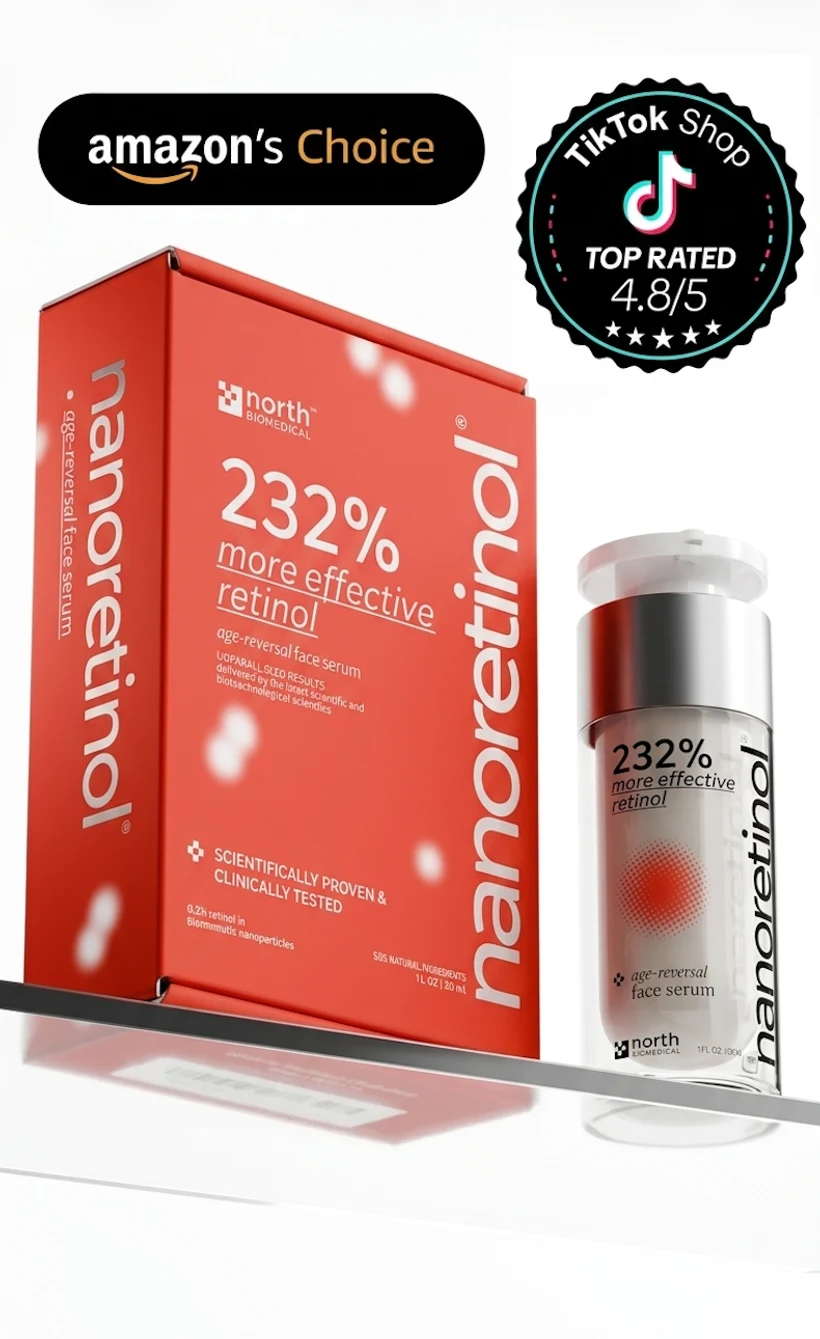
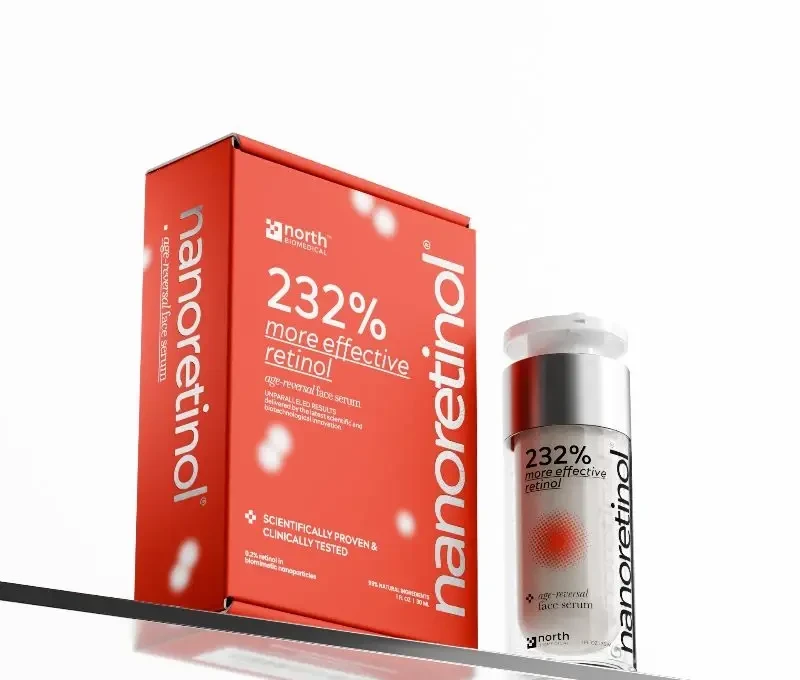
Nanoretinol was designed around this problem. It is a water-based, gel-like formulation that absorbs completely to a smooth matte finish, with no greasy residue, and it is built from 99% natural ingredients, the only water-based retinol on the market to make that claim. Rather than relying on heavy solvents to drive the active in, it encapsulates retinol in biomimetic lipid nanoparticles that pass through the skin barrier without disrupting it. That means it suits oily, combination, and sensitive skin, and North Biomedical’s clinical testing found it both significantly gentler than conventional retinol and more efficient at delivering the active where it works. For oily skin over forty, it is a way to get the benefits of a retinoid in a texture that finally cooperates.
Building a Routine That Lasts
Keep it simple and consistent: a gentle, non-stripping cleanser morning and night (a cleansing balm in the evening if you wear sunscreen or makeup), niacinamide to moderate oil and support the barrier, a well-tolerated retinoid in the evening, a light moisturizer, and a matte mineral sunscreen every morning. Choosing that last step is its own puzzle, and the best sunscreen for oily skin guide explains why the vehicle matters more than the SPF number. Resist the urge to escalate to harsher products when shine appears; with oily skin, restraint almost always outperforms aggression. Give the routine six to eight weeks, and balanced, comfortable skin, rather than a stripped-then-greasy cycle, becomes the new normal.
References
- Zouboulis CC. “Acne and sebaceous gland function.” Clinics in Dermatology. 2004;22(5):360-366. doi:10.1016/j.clindermatol.2004.03.004
- Draelos ZD, Matsubara A, Smiles K. “The effect of 2% niacinamide on facial sebum production.” Journal of Cosmetic and Laser Therapy. 2006;8(2):96-101. doi:10.1080/14764170600717704
- Endly DC, Miller RA. “Oily Skin: A Review of Treatment Options.” The Journal of Clinical and Aesthetic Dermatology. 2017;10(8):49-55. PMID: 28979664
- Leyden J, Stein-Gold L, Weiss J. “Why Topical Retinoids Are Mainstay of Therapy for Acne.” Dermatology and Therapy. 2017;7(3):293-304. doi:10.1007/s13555-017-0185-2