Slugging for Aging Skin: Does the Viral Skincare Trend Actually Work?
The science behind sealing your nighttime routine with an occlusive — and how to do it safely after 40
What Slugging Actually Is — And Why Dermatologists Are on Board
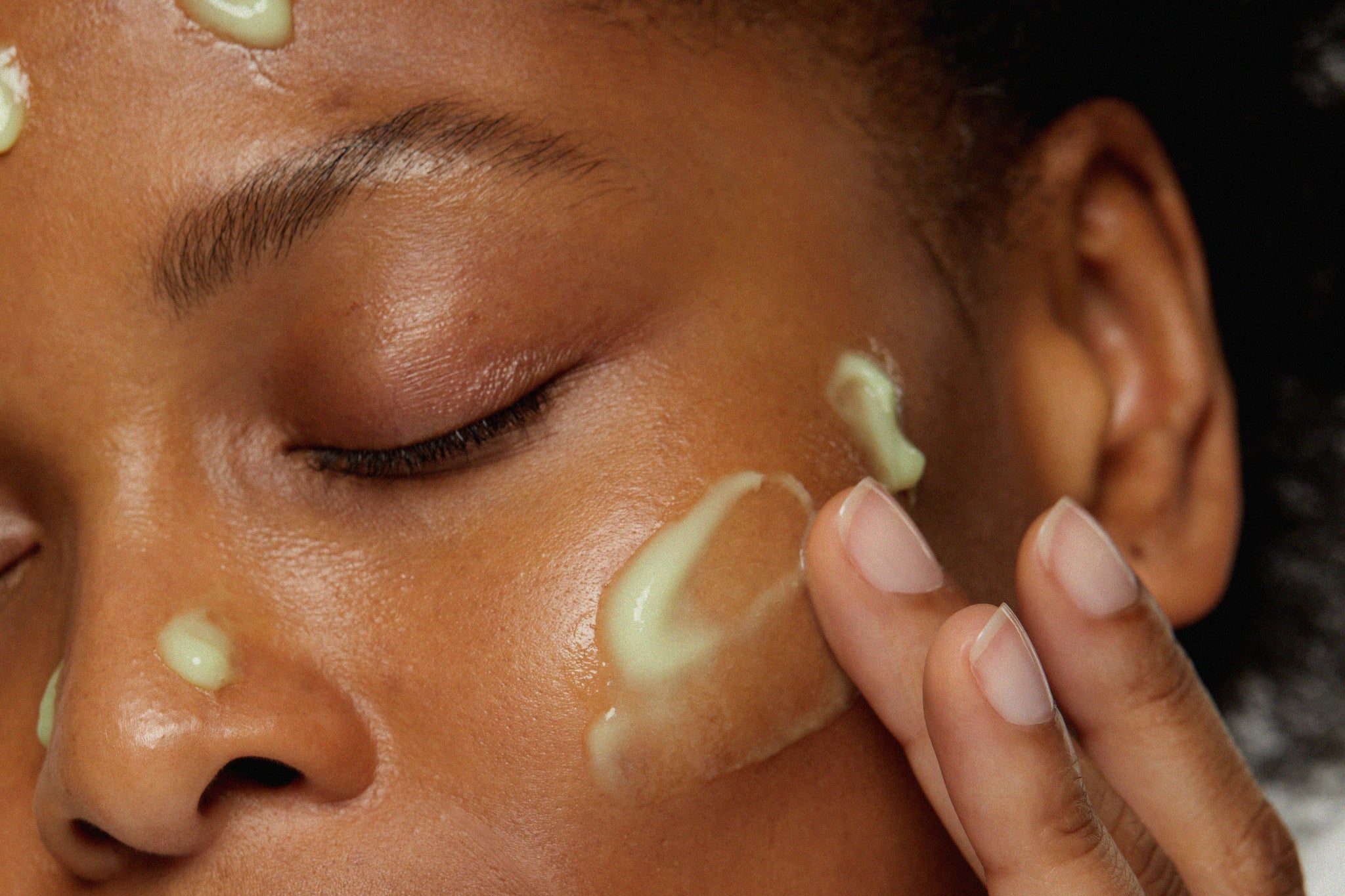
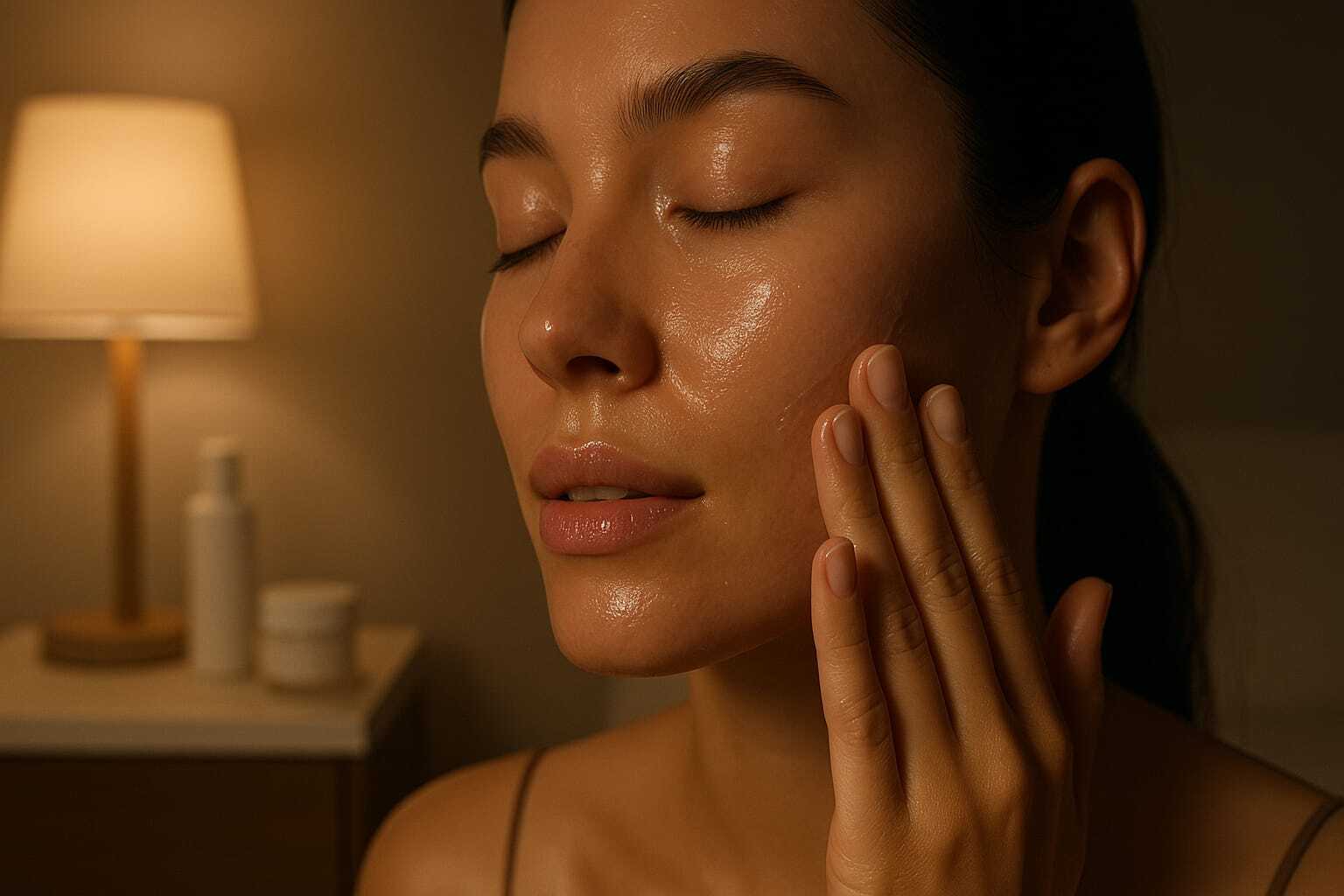
Slugging went viral on TikTok, but the technique itself is as old as petroleum jelly. The concept is simple: after completing your nighttime skincare routine, you apply a thin layer of an occlusive product — typically Vaseline, CeraVe Healing Ointment, or Aquaphor — over your entire face. You wake up with skin that looks plumper, dewier, and noticeably more hydrated.
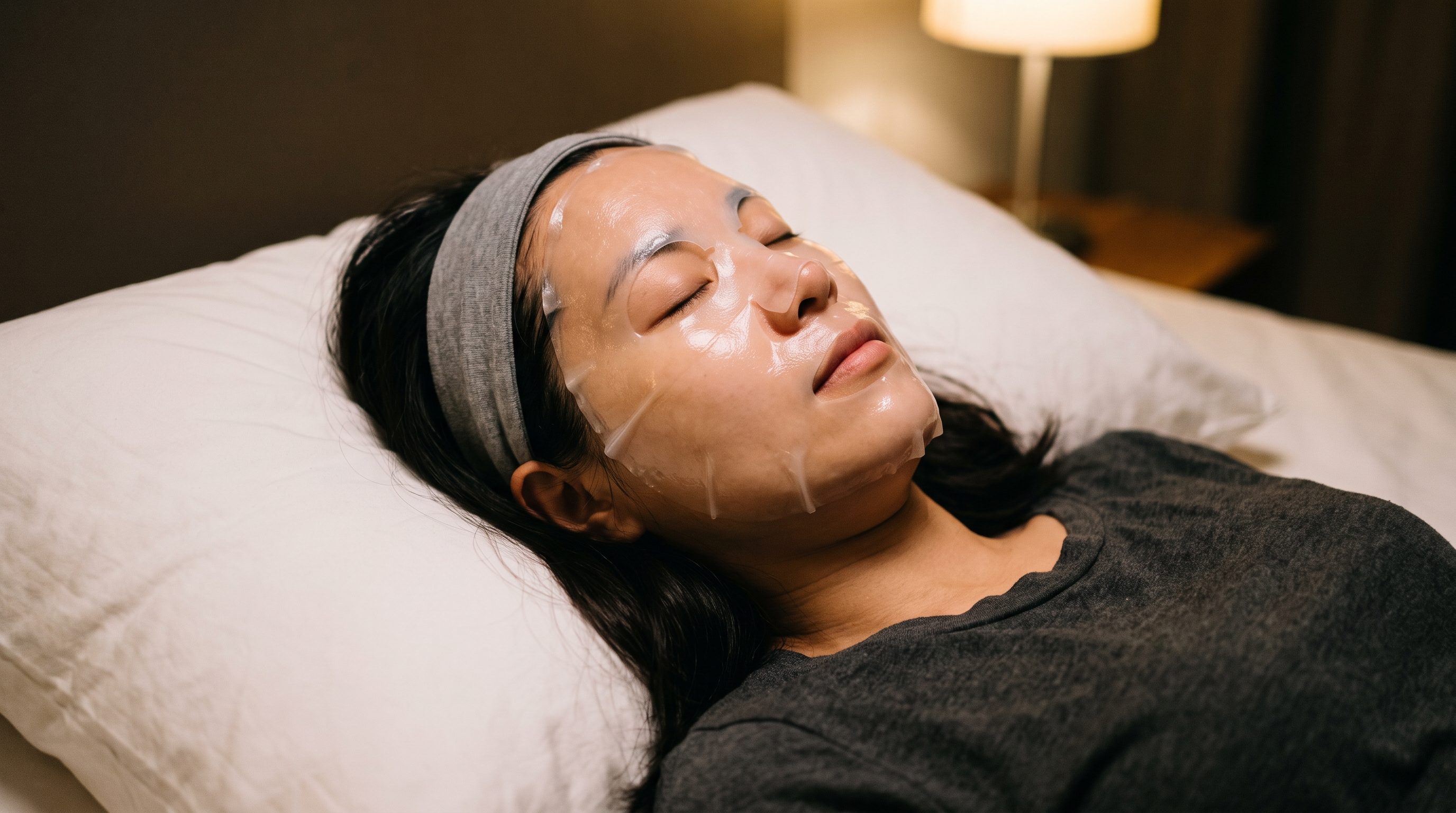
The name comes from the slug-like sheen it leaves on your face overnight. The science comes from decades of dermatological research on occlusion, barrier repair, and transepidermal water loss. The same evidence sits behind the overnight face mask category.
Unlike many social media skincare trends, slugging has genuine clinical support. Dermatologists have been recommending petroleum jelly as an occlusive for patients with compromised skin barriers, eczema, and post-procedure recovery for years [1]. What TikTok did was rebrand a medical technique as a beauty hack — and in this case, the rebrand is actually backed by evidence.
The Science of Occlusion: Why a Layer of Petroleum Jelly Works
Your skin loses water constantly through a process called transepidermal water loss (TEWL). Under normal conditions, this is regulated by the stratum corneum — the outermost layer of dead skin cells held together by a lipid matrix of ceramides, cholesterol, and fatty acids. When that matrix is intact, water stays in. When it is compromised — by age, harsh cleansers, dry air, or irritating actives — water escapes faster than the skin can replenish it.
Petrolatum is the single most effective occlusive ingredient ever studied. A comprehensive review in the Journal of the American Academy of Dermatology documented that petrolatum can reduce TEWL by 50% to 99%, depending on the formulation and application thickness [1]. No other over-the-counter moisturizing ingredient comes close.
It works by forming a hydrophobic film over the skin surface. This film does not add water — it prevents the water already in your skin from evaporating. Think of it as putting a lid on a pot of simmering water. The water level does not rise, but it stops dropping.
Why Slugging Matters More After 40
In your twenties, your skin barrier is resilient. Ceramide production is high, natural moisturizing factors are abundant, and TEWL stays within a narrow range even when you abuse your skin with questionable products.
After 40, the picture changes. Ceramide synthesis slows. Sebum production drops — particularly during perimenopause and menopause, when declining estrogen levels reduce oil gland activity by as much as 30%. The stratum corneum becomes thinner and less organized, and TEWL increases [2].
This is why mature skin often feels tight, looks dull, and develops fine lines that seem to appear overnight. Those lines are not always wrinkles in the structural sense — many are dehydration lines, caused by insufficient water content in the epidermis. A well-hydrated epidermis is plump, pliable, and reflects light evenly. A dehydrated one is flat, stiff, and reveals every crease.
Sebum production drops — particularly during perimenopause and menopause, when declining estrogen levels reduce oil gland activity by as much as 30%.
Slugging addresses this directly. By sealing in moisture overnight — when the skin’s repair processes are most active — you create an environment where the epidermis can rehydrate fully and the barrier can repair itself without competing against evaporative loss [3].
How Slugging Enhances Your Active Ingredients
Here is where slugging becomes genuinely interesting for anyone using anti-aging actives: occlusion does not just lock in water. It increases the penetration and efficacy of the products you apply underneath.
Research on occlusive dressings has shown that covering the skin after applying a topical treatment significantly enhances absorption. The mechanism is straightforward — by preventing evaporation, occlusion maintains a higher concentration gradient across the stratum corneum, which drives more of the active ingredient deeper into the skin [4].
For ingredients like hyaluronic acid, this means the humectant has more time to draw and hold water before the environment wicks it away. For niacinamide, it means extended contact time with the cells that benefit from its barrier-strengthening properties.
For retinol, the relationship is more nuanced — and more important to understand.
Slugging and Retinol: The Combination That Requires Care
Retinol is the most evidence-backed anti-aging ingredient available over the counter. It accelerates cell turnover, stimulates collagen synthesis, and remodels photoaged skin at the molecular level. But it can also irritate — particularly in the first weeks of use, and particularly in mature skin where the barrier is already compromised.
The instinct to slug over retinol makes sense on paper: seal in the active, boost its absorption, maximize results. But in practice, occluding retinol can amplify irritation as much as it amplifies efficacy. If your skin is not fully adapted to retinol, slugging on top can push too much of the active into the skin too quickly, triggering redness, peeling, and sensitivity.
The safer approach is sequential tolerance: introduce retinol first, build to consistent nightly use over 4–6 weeks, and only then experiment with slugging on alternate nights. Once your skin tolerates retinol without irritation, the combination of a well-formulated retinol underneath a thin occlusive layer can be remarkably effective.
There is also a smarter path. Delivery technology has advanced to the point where some retinol formulations no longer rely on barrier disruption to work. Nanoretinol® by North Biomedical® uses biomimetic lipid nanoparticles that pass through the epithelial barrier without damaging it — the nanoparticles are structurally identical to skin cell membranes, so the body recognizes them as “self.” In clinical testing, this delivered +232% more collagen recovery than conventional retinol with significantly reduced irritation. For women who want the benefits of retinol under an occlusive without the harsh adaptation period, this kind of delivery-optimized formulation changes the calculus entirely.
Once your skin tolerates retinol without irritation, the combination of a well-formulated retinol underneath a thin occlusive layer can be remarkably effective.
How to Slug Correctly: A Step-by-Step Guide
Step 1: Cleanse thoroughly. Slugging traps everything underneath it, so you want a clean canvas. A gentle, non-stripping cleanser is ideal — avoid anything that leaves your skin feeling tight.
Step 2: Apply your actives. Hyaluronic acid, niacinamide, peptides — whatever your routine includes. Let each layer absorb for 30–60 seconds before the next.
Step 3: Moisturize. Apply your regular moisturizer. This is the hydration layer that the occlusive will lock in.
Step 4: Apply a thin layer of occlusive. Take a pea-sized amount of Vaseline, CeraVe Healing Ointment, or Aquaphor and warm it between your fingertips. Press and pat it across your face — do not rub. The goal is a thin, even film, not a thick mask.
Step 5: Sleep on a pillowcase you do not love. Petroleum jelly transfers. A dedicated “slug night” pillowcase (silk or satin slides more easily) keeps the mess manageable.
In the morning: Wash with a gentle cleanser. The occlusive lifts off easily with warm water and a mild surfactant.
Who Should Skip Slugging
Slugging is not for everyone. If you have oily, acne-prone skin, the heavy occlusive layer can trap sebum and bacteria, potentially worsening breakouts. Petrolatum itself is noncomedogenic — a fact well-established in clinical literature [1] — but the occlusive environment it creates can still be problematic for skin that already overproduces oil.
If you have active acne, rosacea flares, or fungal conditions, slugging can exacerbate the issue by creating a warm, moist environment that certain microorganisms thrive in.
The ideal slugging candidate is someone with dry, mature, or dehydrated skin — particularly women over 40 dealing with menopause-related dryness, barrier compromise from retinol use, or environmental dehydration from heating and air conditioning.
A Simpler Alternative: Targeted Occlusion
If full-face slugging feels excessive, targeted occlusion is a practical compromise. Apply your occlusive only to the areas that need it most: under the eyes, around the mouth, along the jawline, and across the cheeks. These are the zones where TEWL tends to be highest and where dehydration lines are most visible in mature skin.
This approach gives you the barrier-repair benefits of slugging without the texture concerns, pillow mess, or risk of trapping too much product in areas that do not need it.
The Verdict
Slugging is one of the rare TikTok skincare trends with real dermatological backing. It will not restructure your collagen or reverse sun damage — for that, you need actives like retinol and vitamin C. What it will do is create the optimal hydration environment for those actives to work, protect a compromised barrier while it heals, and give dehydrated mature skin the overnight moisture boost that no humectant alone can deliver.
References
-
Kamrani P, Hedrick J, Marks JG. “Petroleum jelly: A comprehensive review of its history, uses, and safety.” J Am Acad Dermatol. 2024;90(4):731-738. doi:10.1016/j.jaad.2023.06.010
-
Rajkumar J, Chandan N, Lio P. “The Skin Barrier and Moisturization: Function, Disruption, and Mechanisms of Repair.” Skin Pharmacol Physiol. 2023;36(4):174-185. doi:10.1159/000534136
-
Czarnowicki T, Malajian D, Khattri S, et al. “Petrolatum: Barrier repair and antimicrobial responses underlying this ‘inert’ moisturizer.” J Allergy Clin Immunol. 2016;137(4):1091-1102. doi:10.1016/j.jaci.2015.08.013
-
Lodén M. “Role of topical emollients and moisturizers in the treatment of dry skin barrier disorders.” Am J Clin Dermatol. 2003;4(11):771-788. doi:10.2165/00128071-200304110-00005
-
Draelos ZD. “New treatments for restoring impaired epidermal barrier permeability: skin barrier repair creams.” Clin Dermatol. 2012;30(3):345-348. doi:10.1016/j.clindermatol.2011.08.018