The Menopause Skin Guide: How to Rebuild Collagen and Restore Your Glow After 40
What estrogen loss does to your skin — and the science-backed ingredients that can fight back
What Menopause Actually Does to Your Skin
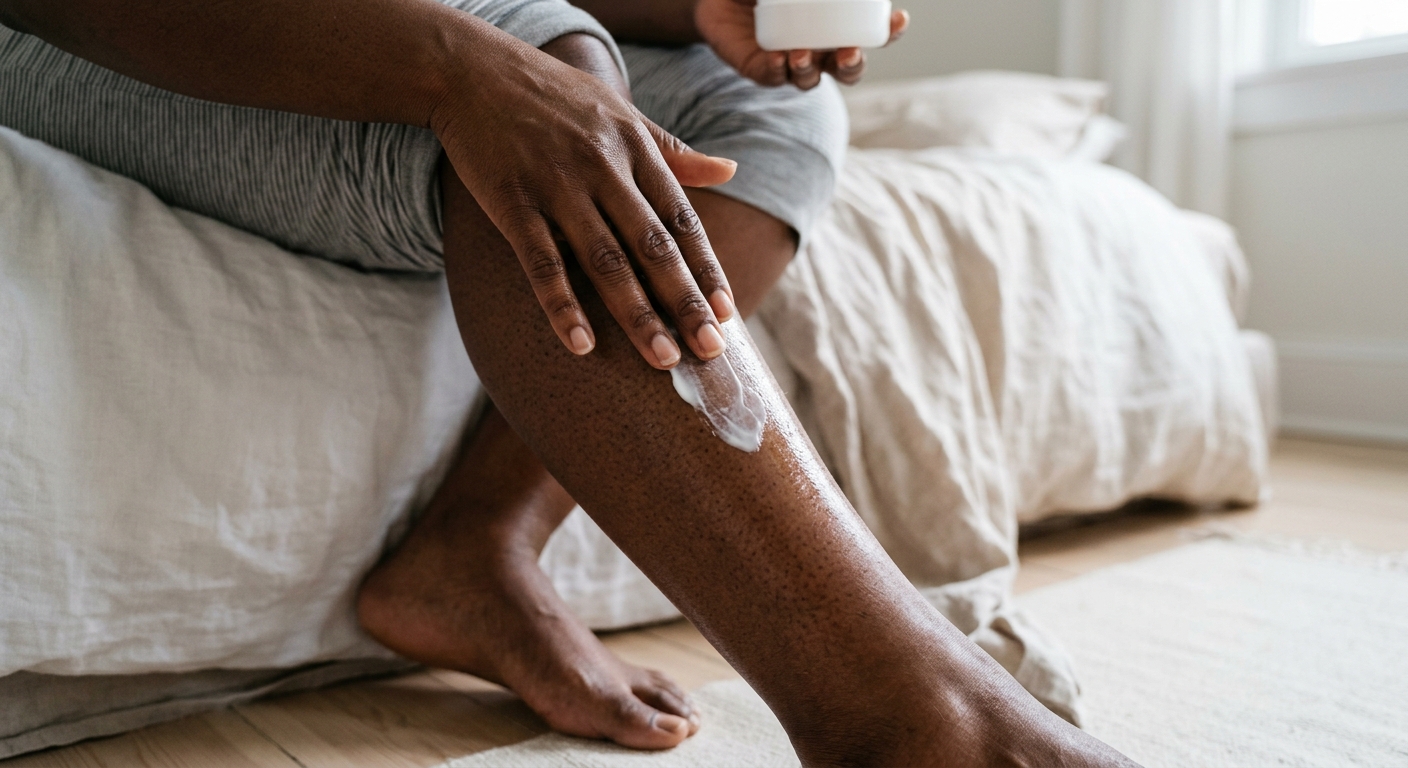
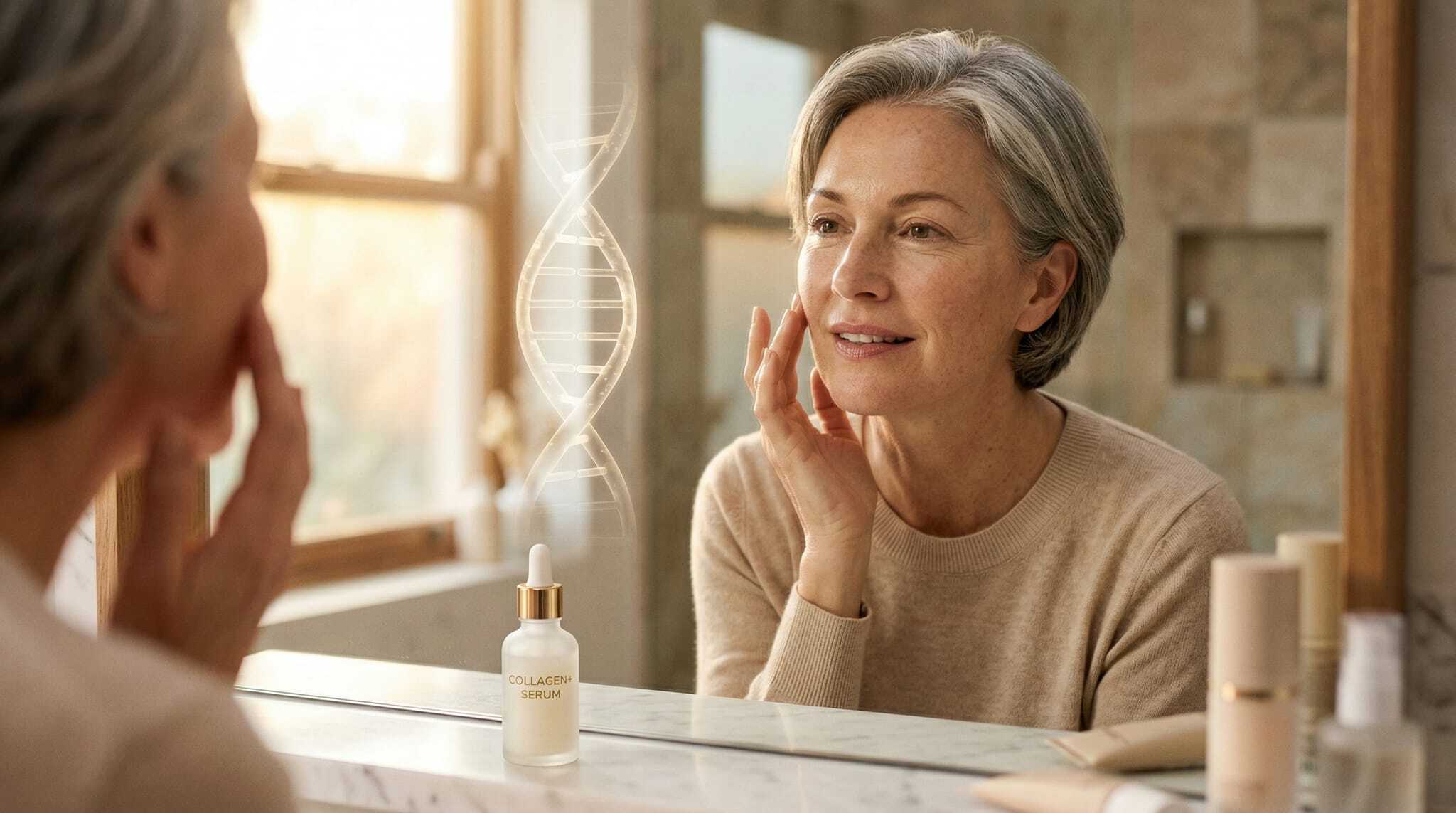
If you’ve noticed your skin changing in your 40s or 50s — thinner, drier, less resilient — you’re not imagining things. Menopause triggers a cascade of structural changes in the skin that goes far beyond the occasional hot flash.
The culprit is estrogen. Or more precisely, the sudden loss of it.
Estrogen receptors sit on virtually every cell type in the skin: keratinocytes, fibroblasts, melanocytes, even the cells lining blood vessels [1]. When estrogen production drops during perimenopause and menopause, each of these cell types loses a critical signaling molecule — and the effects show up on the surface within months.
The most dramatic impact is on collagen. In a landmark study published in the British Medical Journal, researchers found that postmenopausal women who had not received hormone therapy had 48% less skin collagen than women on estrogen replacement — even when matched for age [2]. A subsequent review confirmed that nearly a third of dermal collagen is lost in the first five postmenopausal years, with a continued decline of roughly 2.1% per year for the following fifteen years [3].
That is not a slow fade. That is a structural collapse.
The Three Pillars of Menopausal Skin Change
Understanding what menopause does to skin requires looking at three interconnected systems — all of which depend on estrogen.
Your skin doesn’t just look older — it has fewer resources to regenerate.
Collagen and Structural Integrity
Type I and Type III collagen form the scaffolding of the dermis. Estrogen directly stimulates fibroblasts — the cells that produce collagen — through both classical nuclear receptor pathways and rapid non-genomic signaling [1]. When estrogen levels fall, fibroblast activity drops and collagen degradation accelerates. The result is thinner, more fragile skin that wrinkles and sags more readily.
From age 25 onward, the net loss runs at roughly 1% per year. Menopause simply accelerates what was already happening — turning a gradual slope into a cliff.
Hydration and Barrier Function
Estrogen regulates the production of glycosaminoglycans — large molecules like hyaluronic acid that hold water in the dermal matrix. When estrogen drops, so does hyaluronic acid content, leading to drier skin, reduced turgor, and a compromised moisture barrier [4]. If your skin suddenly feels tighter, rougher, or more reactive to products you’ve used for years, this is likely why.
Elastin and Vascular Changes
Elastic fibers degrade alongside collagen, reducing the skin’s ability to snap back after movement [3]. Blood flow to the skin also decreases: capillary velocity slows measurably in postmenopausal women, which means fewer nutrients and less oxygen reach the cells responsible for repair [4]. Your skin doesn’t just look older — it has fewer resources to regenerate.
What the Science Says About Fighting Back
The good news: these processes are not irreversible. Research over the last two decades has identified several ingredients that meaningfully counteract menopause-driven skin aging. Not marketing claims — peer-reviewed, placebo-controlled evidence.
In comparative testing, the lipid nanoparticle delivery system demonstrated 232% greater collagen recovery and 73% greater elastin recovery versus conventional retinol at equivalent concentrations.
Retinoids: The Most Proven Anti-Aging Active
Retinoids remain the single most evidence-backed topical ingredient for rebuilding collagen in aging skin. In a pivotal 1993 study published in the New England Journal of Medicine, Griffiths et al. demonstrated that tretinoin produced an 80% increase in Type I collagen formation in photodamaged skin — compared to a 14% decrease with placebo [5].
Retinol, the over-the-counter form, works through the same pathway but requires two enzymatic conversions to reach the active form, retinoic acid. A 1995 clinical trial showed that topical retinol induces the same molecular responses as prescription-strength retinoic acid — epidermal thickening, increased cellular retinoid binding proteins — but without the significant irritation [6]. For menopausal skin that is already more sensitive and reactive, this tolerance advantage matters enormously.
The challenge with conventional retinol formulations is delivery. Most retinol degrades before reaching the dermal fibroblasts where collagen is synthesized. This is why encapsulated delivery systems — particularly lipid nanoparticle technology — have become a focus of modern formulation science. By protecting retinol within biomimetic nanoparticles, significantly more active ingredient reaches the target cells intact.
Nanoretinol® uses exactly this approach. In comparative testing, the lipid nanoparticle delivery system demonstrated 232% greater collagen recovery and 73% greater elastin recovery versus conventional retinol at equivalent concentrations [7]. For skin that has lost structural proteins at an accelerated rate, that delivery efficiency translates to measurable results — +61% skin firmness and +56% elasticity improvement within 56 days of use [7].
Peptides and Growth Factors
Signal peptides like palmitoyl pentapeptide-4 (Matrixyl) stimulate collagen synthesis through a different mechanism than retinoids — they mimic fragments of collagen breakdown products, tricking fibroblasts into producing more [8]. For women who want to layer multiple collagen-stimulating strategies, combining retinol with peptides is both safe and synergistic.
Ceramides and Barrier Repair
Since menopause compromises the skin’s moisture barrier, ceramide-based products are not optional — they’re foundational. Topical ceramides replenish the intercellular lipids that hold the stratum corneum together, reducing transepidermal water loss and restoring the skin’s ability to retain moisture. Our guide to the best moisturizer for dry menopausal skin covers which formulations actually deliver them in physiological ratio.
Sunscreen: The Non-Negotiable
Photoaging compounds hormonal aging. A woman going through menopause without daily broad-spectrum SPF is experiencing two accelerated aging processes simultaneously. UV radiation activates matrix metalloproteinases — the same collagen-degrading enzymes that estrogen loss unleashes — creating a multiplicative effect [9].
Building a Menopause Skincare Routine That Works
The science points to a clear hierarchy:
- Broad-spectrum SPF 30+ — every morning, regardless of weather
- Retinol at night — start low (0.2–0.3%), increase as tolerated. Nanoparticle-encapsulated formulations reduce irritation while improving delivery
- Ceramide-rich moisturizer — morning and evening to reinforce barrier function
- Hyaluronic acid serum — applied to damp skin to draw moisture into the epidermis
- Peptide serum — optional but valuable as a collagen-stimulating complement to retinol
The most common mistake women make during menopause is treating skincare changes as cosmetic inconveniences rather than structural problems with known biological solutions. Your skin didn’t just “get older.” It lost a hormone that was keeping an entire organ system functional. Replacing what you can — through evidence-based topical science — is the most rational response.
References
- Thornton MJ. “Estrogens and aging skin.” Dermato-Endocrinology. 2013;5(2):264-270. doi:10.4161/derm.23872
- Brincat M, Moniz CF, Studd JW, et al. “Sex hormones and skin collagen content in postmenopausal women.” British Medical Journal. 1983;287(6402):1337-1338. doi:10.1136/bmj.287.6402.1337
- Raine-Fenning NJ, Brincat MP, Muscat-Baron Y. “Skin aging and menopause: implications for treatment.” American Journal of Clinical Dermatology. 2003;4(6):371-378. PMID: 12762829
- Shah MG, Maibach HI. “Estrogen and skin. An overview.” American Journal of Clinical Dermatology. 2001;2(3):143-150. PMID: 11705091
- Griffiths CEM, Russman AN, Majmudar G, et al. “Restoration of collagen formation in photodamaged human skin by tretinoin (retinoic acid).” New England Journal of Medicine. 1993;329(8):530-535. doi:10.1056/NEJM199308193290803
- Kang S, Duell EA, Fisher GJ, et al. “Application of retinol to human skin in vivo induces epidermal hyperplasia and cellular retinoid binding proteins characteristic of retinoic acid but without measurable retinoic acid levels or irritation.” Journal of Investigative Dermatology. 1995;105(4):549-556. doi:10.1111/1523-1747.ep12323445
- North Biomedical LLC. “Nanoretinol® vs. Conventional Retinol: Efficacy in Collagen and Elastin Recovery.” Clinical Study Summary, 2024. View Study
- Mukherjee S, Date A, Patravale V, et al. “Retinoids in the treatment of skin aging: an overview of clinical efficacy and safety.” Clinical Interventions in Aging. 2006;1(4):327-348. doi:10.2147/ciia.2006.1.4.327
- Fisher GJ, Wang ZQ, Datta SC, et al. “Mechanisms of photoaging and chronological skin aging.” Archives of Dermatology. 2002;138(11):1462-1470. doi:10.1001/archderm.138.11.1462