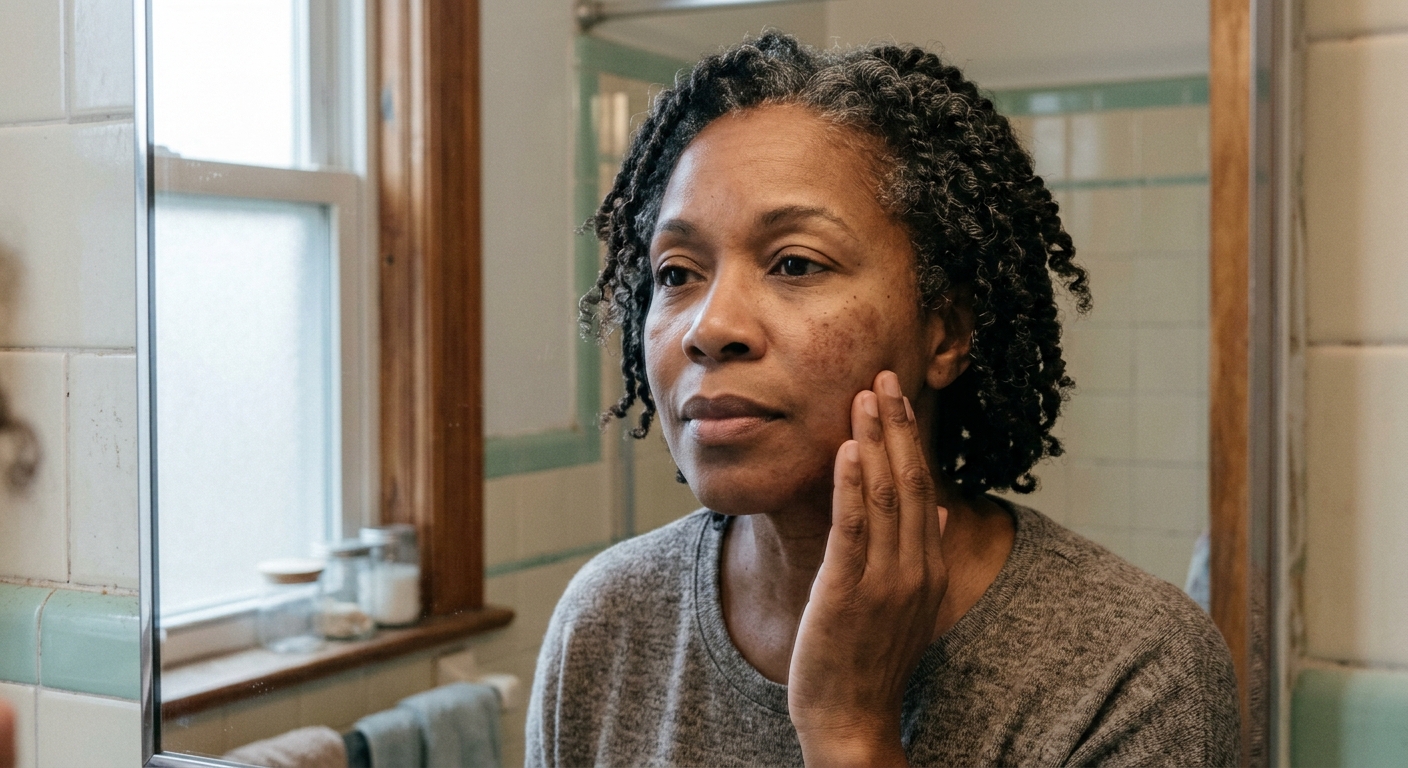
Blotchy Skin: What Causes Uneven Patches and How to Finally Even Things Out
From UV damage to hormones, here's what's really behind those red and brown patches — and what dermatology says works
Why Your Skin Looks Patchy — and What’s Actually Happening
You catch your reflection in harsh bathroom lighting and there it is — patches of red here, brown spots there, an overall unevenness that no amount of foundation seems to fix. Blotchy skin is one of the most common dermatological complaints, and it affects roughly 12,000 people searching for answers every month in the US alone.
The frustrating part? Blotchy skin isn’t a single condition. It’s a visible symptom of several different processes happening simultaneously in your skin — and the fix depends entirely on which one is driving the problem.
The Three Engines Behind Blotchy Skin
Your skin’s color comes from a surprisingly complex interaction between melanocytes (pigment-producing cells), blood vessels, and the structural proteins that form your skin’s architecture. When any of these systems malfunction, you get patches [1].
Melanin Overproduction
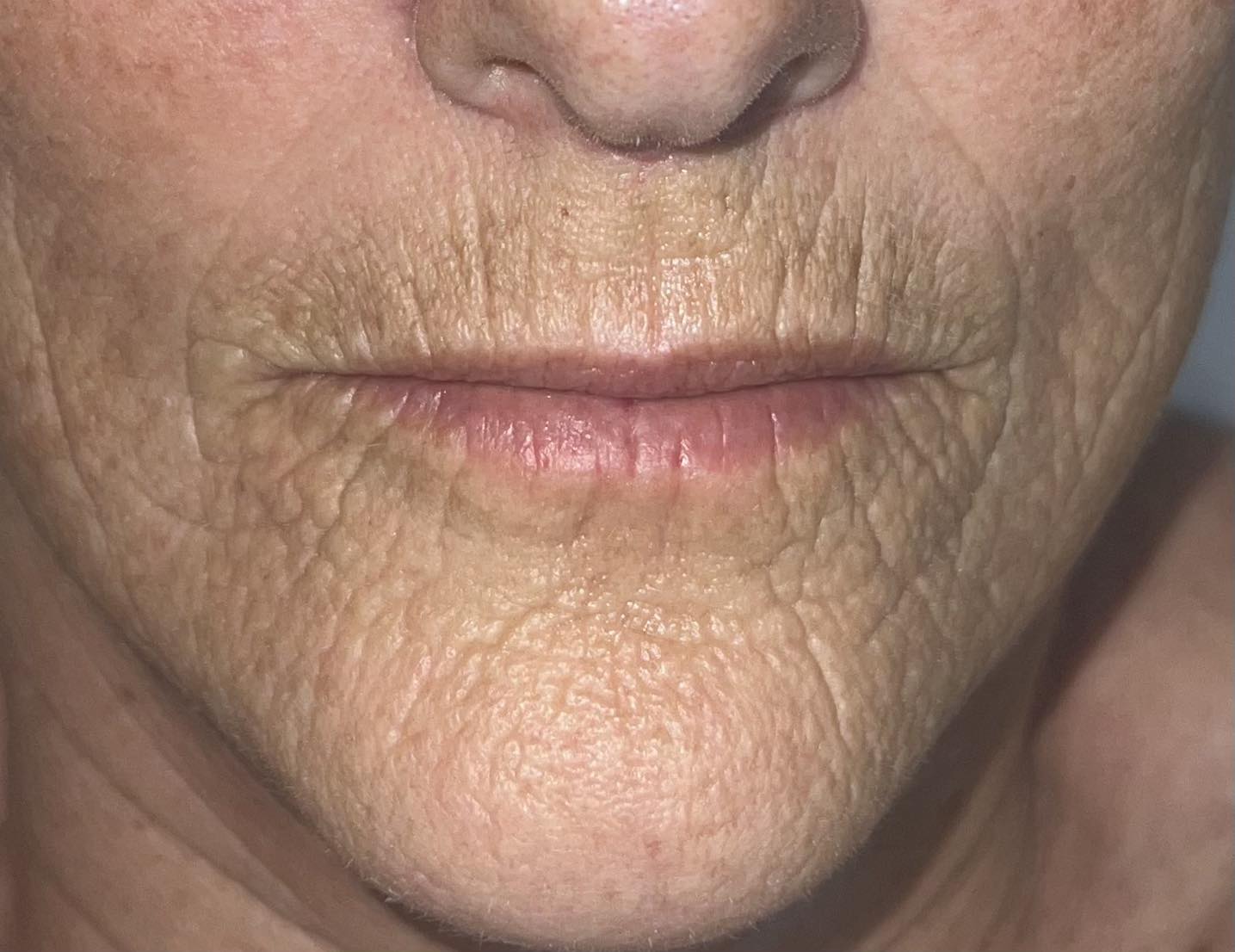
The most common cause of brown blotchy patches is melanin overproduction. Ultraviolet radiation triggers melanocytes to produce excess melanin as a protective response — but the distribution is rarely uniform. Years of cumulative sun exposure create a patchwork of darker areas, particularly on the face, chest, and hands [2].
Hormonal shifts compound this. Estrogen and progesterone both stimulate melanocyte activity, which is why melasma — symmetrical brown patches across the cheeks, forehead, and upper lip — affects up to 50% of women during pregnancy and is common in women taking hormonal contraceptives [3].
Vascular Dysfunction
Red blotchiness tells a different story. The tiny blood vessels in your face are designed to dilate and constrict in response to temperature changes. Over time, chronic dilation from sun damage, alcohol, spicy foods, or inflammatory skin conditions like rosacea causes these capillaries to become permanently visible [4].
Structural Breakdown
Here’s the one most people miss: as collagen and elastin degrade with age, the skin becomes thinner and more translucent. Blood vessels that were once invisible beneath a thick dermal layer suddenly show through, creating a ruddy, uneven appearance that looks like redness but is actually a structural problem [1].
Your skin’s color comes from a surprisingly complex interaction between melanocytes (pigment-producing cells), blood vessels, and the structural proteins that form your skin’s architecture.
What Accelerates Blotchiness After 40
The reason blotchy skin seems to intensify in your 40s and 50s isn’t coincidental. Several biological shifts converge at once:
Cumulative UV damage reaches critical mass. The melanin irregularities from decades of sun exposure become visible as the skin’s repair mechanisms slow down. A single severe sunburn in your twenties can manifest as a brown patch twenty years later [2].
Estrogen decline changes everything. During perimenopause and menopause, fluctuating estrogen levels destabilize melanocyte behavior. Some melanocytes become hyperactive while others slow down, creating a mottled appearance that wasn’t there before [3].
The skin barrier weakens. Ceramide production drops by roughly 40% between your 30s and 60s, leaving the skin more susceptible to environmental irritants that trigger redness and inflammation [5].
Evidence-Based Treatments That Actually Work
Retinoids: The Gold Standard for Pigmentation
Retinoids remain the most clinically validated treatment for both brown and red blotchiness. Topical retinol accelerates epidermal turnover, disperses melanin clusters, and stimulates collagen synthesis — addressing the pigmentation, vascular, and structural components simultaneously [6].
A 2022 systematic review of retinoid clinical trials confirmed that retinol produces statistically significant improvements in mottled pigmentation, fine wrinkles, and overall photodamage within 12 weeks [6]. The key finding: delivery matters more than concentration. A well-formulated 0.2% retinol can outperform a poorly delivered 1% formulation because the vehicle determines how much active ingredient actually reaches target cells.
This is where delivery technology makes the difference. Nanoretinol® uses lipid nanoparticle encapsulation to bypass the skin barrier entirely — the nanoparticles are biomimetically identical to your own cell membranes, so your body recognizes them as “self” and allows passage without the irritation that forces most people to abandon retinol within weeks.
L-ascorbic acid at 10-20% concentration inhibits tyrosinase, the enzyme responsible for melanin production.
Vitamin C for Melanin Inhibition
L-ascorbic acid at 10-20% concentration inhibits tyrosinase, the enzyme responsible for melanin production. Clinical studies show it can reduce hyperpigmentation by 20-30% within 12 weeks when used consistently [7]. It pairs well with retinol — vitamin C in the morning, retinol at night.
Niacinamide for Redness
For the vascular component of blotchiness, niacinamide at 4-5% concentration has been shown to reduce redness and strengthen the skin barrier. It inhibits the transfer of melanosomes from melanocytes to keratinocytes, making it effective against both red and brown patches [8].
Sunscreen: Non-Negotiable
No treatment for blotchy skin works without daily broad-spectrum sunscreen. A landmark 2013 study in the Annals of Internal Medicine followed 903 adults over 4.5 years and found that daily sunscreen use reduced clinical signs of skin aging by 24% — including mottled pigmentation [9].
What Not to Do
Don’t layer too many actives at once. A common mistake is combining retinol, vitamin C, AHAs, and niacinamide simultaneously. This overwhelms the barrier and causes more redness — the exact opposite of what you’re trying to achieve.
Don’t pick at textured patches. Post-inflammatory hyperpigmentation from picking can last months and creates new blotchy areas that are harder to treat than the original concern.
Don’t skip the neck and chest. These areas are thinner-skinned and more prone to mottled pigmentation than the face. Whatever you apply to your face should extend downward.
Building a Blotchy Skin Routine
The most effective approach targets all three engines:
Morning: Vitamin C serum → moisturizer → mineral sunscreen (SPF 30+)
Evening: Gentle cleanser → retinol (start 2-3 nights per week) → barrier-supporting moisturizer with ceramides
Give any routine a minimum of 12 weeks before judging results. Melanin turnover is slow — the pigment you see today was produced weeks ago, so improvements are gradual but cumulative.
When to See a Dermatologist
Most blotchy skin responds well to topical treatments. But see a dermatologist if patches are raised or textured, if blotchiness appeared suddenly without a clear cause, if you notice asymmetrical darkening that doesn’t respond to treatment, or if redness is accompanied by burning or stinging that worsens over time.
These can indicate conditions like rosacea, lupus, or pre-cancerous actinic keratoses that require medical intervention beyond skincare.
References
- Farage MA, Miller KW, Elsner P, Maibach HI. “Intrinsic and extrinsic factors in skin ageing: a review.” International Journal of Cosmetic Science. 2008;30(2):87-95. doi:10.1111/j.1468-2494.2007.00415.x
- Battie C, Jitsukawa S, Bernerd F, Del Bino S, Marionnet C, Verschoore M. “New insights in photoaging, UVA induced damage and skin types.” Experimental Dermatology. 2014;23(Suppl 1):7-12. doi:10.1111/exd.12388
- Ogbechie-Godec OA, Elbuluk N. “Melasma: an Up-to-Date Comprehensive Review.” Dermatology and Therapy. 2017;7(3):305-318. doi:10.1007/s13555-017-0194-1
- Two AM, Wu W, Gallo RL, Hata TR. “Rosacea: Part I. Introduction, categorization, histology, pathogenesis, and risk factors.” Journal of the American Academy of Dermatology. 2015;72(5):749-758. doi:10.1016/j.jaad.2014.08.028
- Imokawa G, Abe A, Jin K, Higaki Y, Kawashima M, Hidano A. “Decreased level of ceramides in stratum corneum of atopic dermatitis: an etiologic factor in atopic dry skin?” Journal of Investigative Dermatology. 1991;96(4):523-526. doi:10.1111/1523-1747.ep12470233
- Milosheska D, Roškar R. “Use of Retinoids in Topical Antiaging Treatments: A Focused Review of Clinical Evidence for Conventional and Nanoformulations.” Advances in Therapy. 2022;39(12):5351-5375. PMID: 36220974
- Pullar JM, Carr AC, Vissers MCM. “The Roles of Vitamin C in Skin Health.” Nutrients. 2017;9(8):866. doi:10.3390/nu9080866
- Hakozaki T, Minwalla L, Zhuang J, et al. “The effect of niacinamide on reducing cutaneous pigmentation and suppression of melanosome transfer.” British Journal of Dermatology. 2002;147(1):20-31. doi:10.1046/j.1365-2133.2002.04834.x
- Hughes MCB, Williams GM, Baker P, Green AC. “Sunscreen and prevention of skin aging: a randomized trial.” Annals of Internal Medicine. 2013;158(11):781-790. doi:10.7326/0003-4819-158-11-201306040-00002