
Closed Comedones: Why They Form and How to Actually Clear Them
The science of those small, flesh-coloured bumps — and the ingredients that genuinely break them down
You run your fingertips across your forehead, jaw, or cheeks and feel them before you see them: a constellation of small, flesh-coloured bumps that no amount of cleansing seems to budge. They are not red, they do not hurt, and they refuse to come to a head. These are closed comedones, and they are one of the most common — and most misunderstood — reasons adult skin looks bumpy and uneven.
The frustration is real because the instinct to fix them is usually wrong. Scrubbing harder, cleansing more often, and squeezing all tend to make closed comedones worse. To clear them for good, it helps to understand what they actually are.
What a Closed Comedone Really Is
A comedone is a hair follicle (a pore) that has become plugged with a mixture of dead skin cells and sebum, the waxy oil your skin produces. When the pore opening stays wide, the plug oxidises and darkens into a blackhead — an open comedone. When a thin layer of skin seals the opening, the plug is trapped beneath the surface, giving you the pale, domed bump of a closed comedone, sometimes called a whitehead [1].
A closed comedone is not dirt trapped under the skin — it is a tiny traffic jam of dead cells and oil that simply has no open exit.
The plug forms because of a process dermatologists call abnormal follicular keratinisation. Normally, the cells lining your pores shed cleanly and wash away. In skin prone to comedones, those cells become “stickier,” clumping together and adhering to the follicle wall instead of releasing [1]. Add the sebum your glands keep producing, and the follicle slowly fills like a clogged drain. This is why closed comedones are considered the earliest lesion of acne — the microcomedone that can later become an inflamed pimple if bacteria and inflammation join the party.
Sebaceous filaments are the small, greyish dots along your nose and chin that are a normal part of pore function, not a clog to be removed.
It is worth separating closed comedones from two look-alikes. Sebaceous filaments are the small, greyish dots along your nose and chin that are a normal part of pore function, not a clog to be removed. And enlarged pores are a structural feature, not a plug. Closed comedones are specifically the raised, seed-like bumps you can feel.
Why They Cluster in Your 40s and Beyond
Comedones are not just a teenage problem. Adult skin develops them for several overlapping reasons: shifting hormones that change how much oil you produce, heavier moisturisers and sunscreens that can sit in the follicle, and — critically — a slowdown in cell turnover. As we age, the skin sheds its surface cells more sluggishly, which means more dead-cell debris is available to form plugs. Perimenopausal and menopausal hormone fluctuations are a particularly common trigger for a fresh wave of comedones in women who had clear skin for decades.
The ingredients people reach for can also backfire. Rich, occlusive creams marketed for mature skin sometimes tip comedone-prone skin into a breakout, which is why a light salicylic acid moisturizer is often a better match for bump-prone skin than a heavy night cream. If your bumps appeared after a product change, that is a clue worth following. Habitually sleeping in makeup produces the same pattern through overnight occlusion. Judging the replacement by its label is less reliable than most people expect, for reasons set out in our guide to the non-comedogenic moisturizer claim.
What Actually Clears Closed Comedones
Because a closed comedone is a plug plus a sealed roof, effective treatment does two things: it dissolves the plug and it slows the cells that keep rebuilding it. Three categories of ingredient have real evidence behind them.
Salicylic Acid
Salicylic acid is a beta-hydroxy acid that is oil-soluble, which means it can travel down into the sebum-filled follicle and loosen the keratin-and-oil plug from the inside. In a randomised trial in people with comedonal acne, salicylic acid–based treatment significantly reduced comedone counts, confirming its role as a first-line option for exactly this lesion [2]. Used as a leave-on toner or serum a few times a week, it is one of the gentlest ways to keep follicles clear. You can read more about how it works in our guide to salicylic acid.
The problem has always been the irritation — you cannot enjoy the long-term benefits of vitamin A if your skin is too raw to keep using it.
Topical Retinoids
If salicylic acid clears the existing plug, retinoids stop the next one from forming. Vitamin A derivatives — retinol, retinaldehyde, adapalene, tretinoin — bind to receptors inside skin cells and normalise the way the follicle lining sheds, directly reversing the abnormal keratinisation that creates comedones in the first place [3].
The single most reliable way to stop new comedones from forming is to change how quickly your skin sheds the cells that clog it.
The clinical record is strong. Retinoids reduce both microcomedones and visible comedones, and head-to-head trials show them to be among the most effective topical agents for comedonal acne [4]. This is why dermatology guidelines place topical retinoids at the centre of nearly every comedonal-acne regimen [5]. The trade-off is tolerance: traditional retinoids are famous for the dryness, flaking, and stinging that come from their effect on the skin barrier — the reason so many people abandon them in the first two weeks. Easing in slowly, as described in our how to use retinol guide, makes a real difference.
Patience and What Not to Do
Both salicylic acid and retinoids can cause an initial uptick in surfacing bumps as plugs work their way out — a process people often mistake for the product “breaking them out.” Knowing the difference between purging and a genuine breakout can keep you from quitting a treatment that is actually working. What does not help: physical scrubs (they irritate without unclogging), at-home extraction (it can rupture the follicle and trigger inflammation or scarring), and piling on more cleanser.
Where Gentle Vitamin A Fits In
Here is the part most people miss. The retinoids that keep follicles clear are the same molecules dermatologists prize for ageing skin, because the renewed cell turnover that prevents plugs also stimulates collagen and smooths fine lines. The problem has always been the irritation — you cannot enjoy the long-term benefits of vitamin A if your skin is too raw to keep using it.
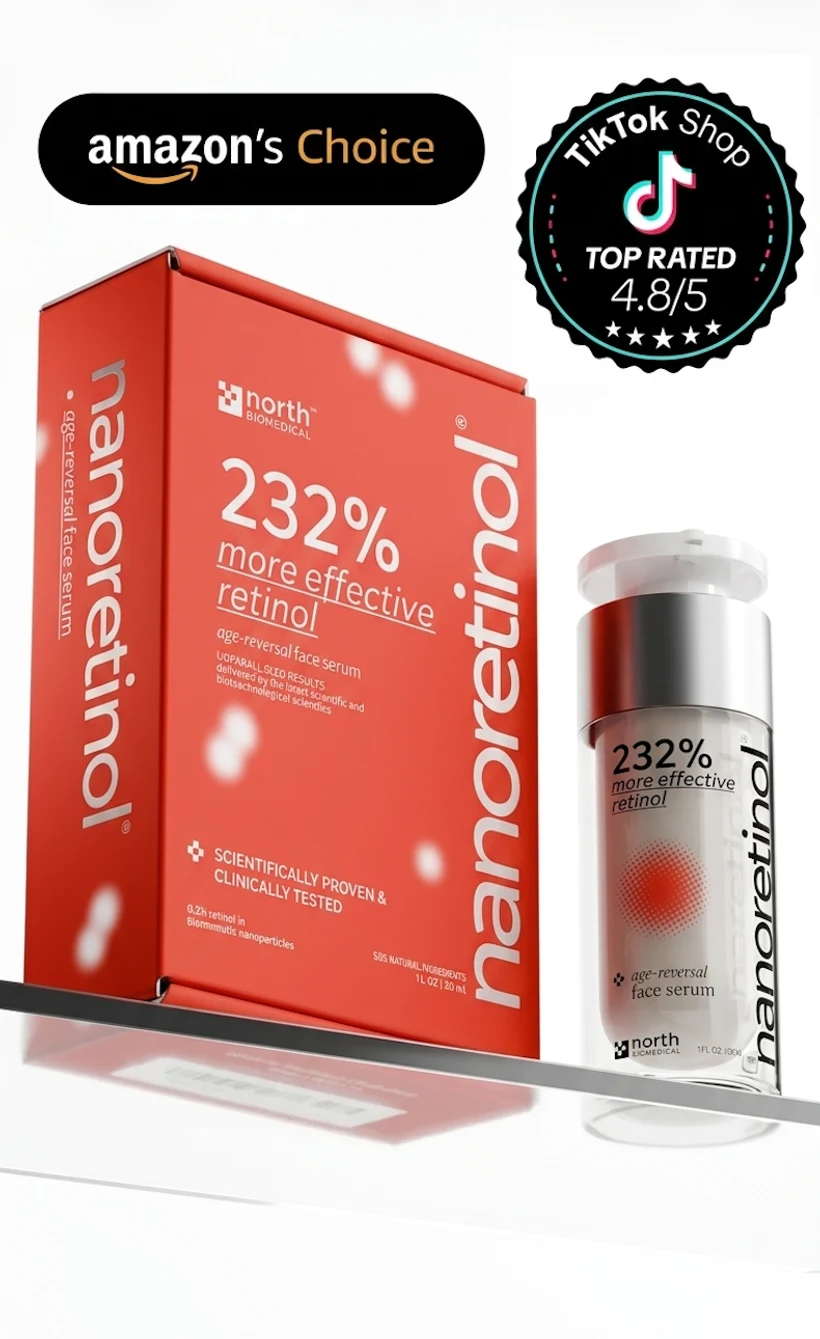
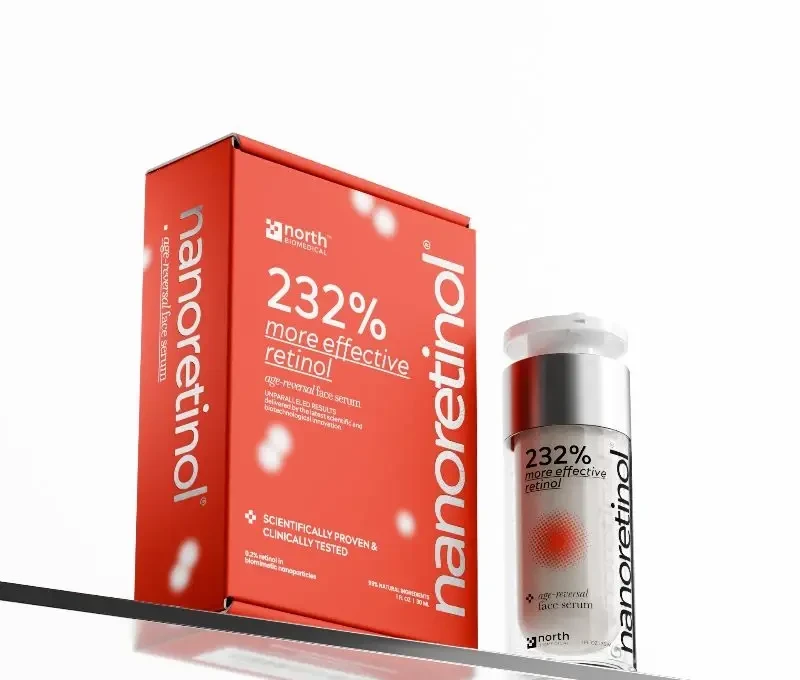
This is the gap Nanoretinol was designed to close. Instead of relying on the harsh penetration mechanism of conventional formulas, Nanoretinol encapsulates retinol inside biomimetic lipid nanoparticles that the skin recognises as “self” and admits without the barrier disruption that drives redness and peeling. Clinical testing showed it to be dramatically gentler on skin cells than conventional retinol, while its water-based, 99%-natural gel suits even sensitive skin. For anyone who wants the smoothing, renewing payoff of vitamin A once their breakouts are under control — without the two-week irritation gauntlet — it is a smarter way to keep that ingredient in your routine. (As with any retinoid, it should not be layered with other retinoid products, and active acne is best managed with a dermatologist’s guidance.)
The Takeaway
Closed comedones are plugs of dead cells and oil sealed beneath the surface, not stubborn dirt. Clearing them means dissolving the plug with an oil-soluble acid like salicylic acid and slowing its return with a retinoid — then giving the process the weeks it genuinely needs. Resist the urge to scrub or squeeze, watch what your moisturiser and sunscreen are doing to your pores, and let the chemistry do the unclogging. Smooth skin is less about effort and more about working with how the follicle actually behaves.
References
- Bikowski JB. “Mechanisms of the comedolytic and anti-inflammatory properties of topical retinoids.” Journal of Drugs in Dermatology. 2005;4(1):41-47. PMID:15696984
- Levesque A, Hamzavi I, Seite S, Rougier A, Bissonnette R. “Randomized trial comparing a chemical peel containing a lipophilic hydroxy acid derivative of salicylic acid with a salicylic acid peel in subjects with comedonal acne.” Journal of Cosmetic Dermatology. 2011;10(3):174-178. doi:10.1111/j.1473-2165.2011.00566.x
- Piérard GE, Piérard-Franchimont C, Paquet P, Quatresooz P. “Spotlight on adapalene.” Expert Opinion on Drug Metabolism & Toxicology. 2009;5(12):1565-1575. doi:10.1517/17425250903386269
- Shalita A, Weiss JS, Chalker DK, et al. “A comparison of the efficacy and safety of adapalene gel 0.1% and tretinoin gel 0.025% in the treatment of acne vulgaris: a multicenter trial.” Journal of the American Academy of Dermatology. 1996;34(3):482-485. doi:10.1016/S0190-9622(96)90443-0
- Zaenglein AL, Pathy AL, Schlosser BJ, et al. “Guidelines of care for the management of acne vulgaris.” Journal of the American Academy of Dermatology. 2016;74(5):945-973.e33. doi:10.1016/j.jaad.2015.12.037