Collagen Boosting Foods: What to Eat to Support Your Skin from the Inside Out
Your kitchen might be doing more for your skin than your bathroom cabinet — here's the science
Your Skin’s Grocery List Is Shorter Than You Think
Every beauty magazine has a listicle of “superfoods for glowing skin.” Most of them are vague, repetitive, and light on evidence. Here’s what the research actually shows: your body needs a handful of specific nutrients to manufacture collagen, and getting them through food is both more effective and more affordable than most supplements [1].
Collagen production isn’t magic. It’s biochemistry. Your body takes amino acids, combines them with vitamin C as a mandatory cofactor, adds trace minerals like zinc and copper, and assembles the triple-helix structure that gives skin its firmness. Remove any of those building blocks, and production stalls — no matter how many serums you apply topically.
The Nutrients That Actually Build Collagen
Amino Acids: The Raw Material
Collagen is made of three amino acids in specific proportions: glycine (33%), proline (13%), and hydroxyproline (9%) [2]. Your body can synthesize glycine and proline on its own, but production often falls short of demand — especially after 40, when collagen synthesis rates have already declined significantly.
Best food sources:
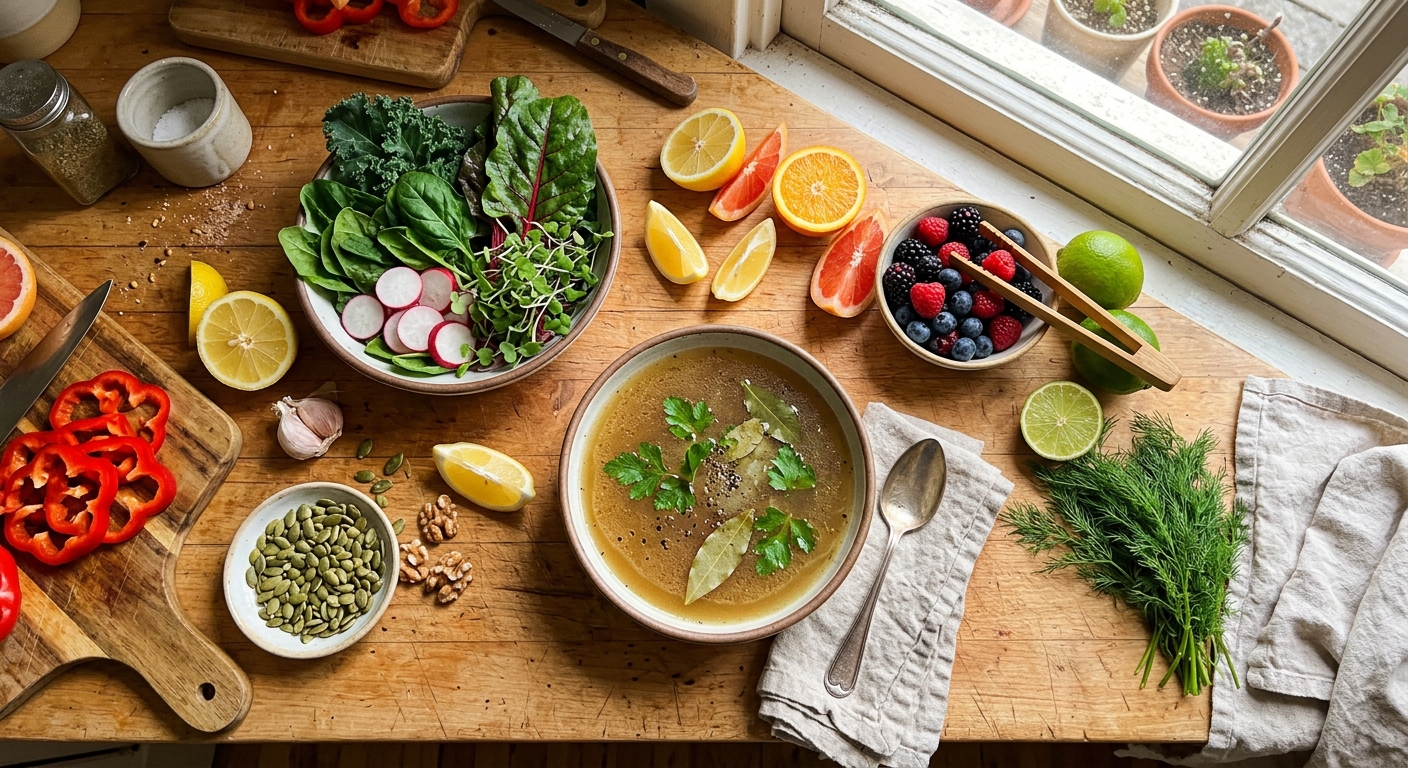
- Bone broth — Contains collagen in its already-assembled form. When you simmer bones for 12-24 hours, the collagen dissolves into gelatin, which your digestive system breaks back down into component amino acids [3]
- Chicken and turkey — Particularly the connective tissue, tendons, and skin. A chicken drumstick provides more collagen precursors than a boneless breast
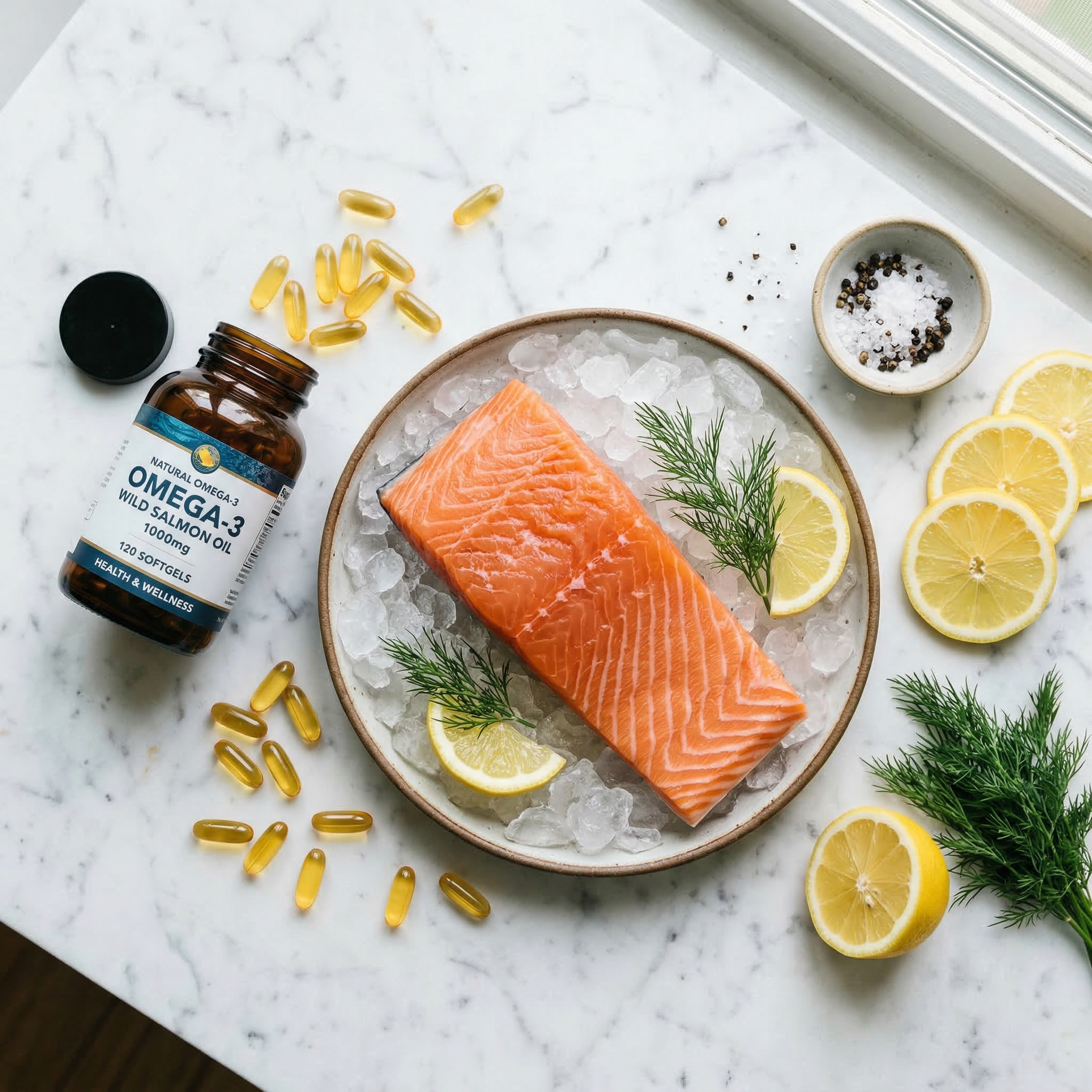
- Fish and shellfish — Fish collagen peptides are smaller and more bioavailable than bovine collagen. Sardines, salmon, and shrimp are excellent sources
- Egg whites — Rich in proline, one of the three critical amino acids
Vitamin C: The Non-Negotiable Cofactor
Without vitamin C, collagen synthesis cannot happen. This isn’t an overstatement — it’s the biochemical reality. Vitamin C is required for the hydroxylation of proline and lysine residues, a step that’s essential for collagen to fold into its stable triple-helix structure [4].
Scurvy — the disease caused by severe vitamin C deficiency — is fundamentally a collagen production failure. Gums bleed, wounds won’t heal, and skin bruises easily because the body literally cannot build connective tissue without ascorbic acid.
You don’t need megadoses. The hydroxylation enzymes are saturated at relatively modest vitamin C levels. But consistent daily intake matters because your body can’t store vitamin C — whatever you don’t use today is excreted.
Best food sources:
- Bell peppers — One red bell pepper contains 169% of your daily vitamin C (more than an orange)
- Citrus fruits — Oranges, grapefruits, lemons, and limes
- Kiwi — Two kiwis deliver more vitamin C than an orange
- Strawberries and guava — High concentration in a delicious package
- Broccoli and Brussels sprouts — The cruciferous family delivers vitamin C plus sulforaphane, which has its own anti-aging properties
Here’s what the research actually shows: your body needs a handful of specific nutrients to manufacture collagen, and getting them through food is both more effective and more affordable than most supplements.
Zinc: The Enzyme Activator
Zinc is a cofactor for collagenase — the enzyme that remodels damaged collagen so new collagen can replace it [5]. Think of zinc as the demolition crew that clears space for new construction. Without adequate zinc, old, damaged collagen accumulates while new collagen synthesis slows.
A study in the Journal of Nutritional Science and Vitaminology found that zinc-deficient subjects showed measurably slower wound healing and reduced collagen deposition — both markers of impaired collagen production [5].
Best food sources:
- Oysters — The single richest dietary source of zinc (74mg per serving)
- Pumpkin seeds — A quarter cup provides about 2.5mg of zinc
- Red meat — Beef and lamb are highly bioavailable zinc sources
- Chickpeas and lentils — Plant-based zinc, though less bioavailable
Copper: The Cross-Linker
Copper activates lysyl oxidase, the enzyme responsible for cross-linking collagen fibers into the dense, resilient network that gives skin its structural integrity [6]. Without proper cross-linking, collagen fibers are weak and disorganized — like threads that haven’t been woven into fabric.
Research has shown that copper peptides can improve skin firmness and reduce fine lines, working through this same cross-linking mechanism whether applied topically or obtained through diet.
Best food sources:
- Dark chocolate (70%+ cacao) — Rich in copper and polyphenol antioxidants
- Cashews and almonds — A handful provides a meaningful copper dose
- Shiitake mushrooms — One of the richest plant sources
- Organ meats — Liver is exceptionally high in copper
Foods That Destroy Collagen
What you avoid matters as much as what you eat.
Sugar and Refined Carbohydrates
When blood glucose spikes, excess sugar molecules bind to collagen fibers through a process called glycation. This creates advanced glycation end products (AGEs) that make collagen stiff, brittle, and resistant to normal turnover [7]. A study in AGE found that higher blood sugar levels correlated directly with perceived older appearance — observers could literally see the glycation damage [7].
Here’s what the research suggests is the most effective approach: feed your skin the building blocks from the inside while simultaneously stimulating collagen production from the outside.
Excessive Alcohol
Alcohol depletes vitamin C reserves, dehydrates skin tissue, and triggers inflammatory pathways that activate collagen-degrading MMPs. Chronic alcohol consumption has been directly linked to premature skin aging in clinical studies.
Heavily Processed Foods
Ultra-processed foods are typically high in sugar, low in the micronutrients collagen synthesis requires, and often contain pro-inflammatory omega-6 fatty acids that tip the balance toward collagen destruction.
What About Collagen Supplements?
A 2023 meta-analysis of 26 randomized controlled trials found that oral collagen peptide supplementation improved skin hydration, elasticity, and wrinkle depth [8]. The evidence is real — but with caveats.
Your digestive system breaks collagen supplements into individual amino acids and small peptides before absorption. You’re not absorbing intact collagen and depositing it directly into your skin. You’re providing raw materials that your body may or may not prioritize for skin collagen synthesis.
For most people, a diet rich in the foods listed above provides the same amino acids at a fraction of the cost. Supplements make the most sense if your diet is protein-poor or you have digestive issues that limit amino acid absorption.
The Diet-Plus-Topical Strategy
Here’s what the research suggests is the most effective approach: feed your skin the building blocks from the inside while simultaneously stimulating collagen production from the outside.
Dietary nutrients provide the amino acids, vitamin C, and trace minerals your skin needs as raw materials. Topical retinoids provide the signal — the biochemical instruction that tells fibroblasts to ramp up production [9].
Nanoretinol® fits precisely into this topical-signal role. Its lipid nanoparticle delivery system ensures that retinol actually reaches the dermal fibroblasts where collagen synthesis happens — rather than sitting on the surface or getting degraded in the epidermis. Clinical data shows +232% more effective collagen recovery versus conventional retinol delivery, which means the “build more” signal gets delivered with dramatically higher efficiency.
A Collagen-Supporting Meal Plan
Breakfast: Greek yogurt with strawberries and pumpkin seeds (amino acids + vitamin C + zinc)
Lunch: Salmon with roasted red peppers and leafy greens (fish collagen + vitamin C + antioxidants)
Dinner: Bone broth-based soup with chicken, shiitake mushrooms, and broccoli (collagen + copper + vitamin C)
Snack: Dark chocolate (70%+) and cashews (copper + zinc)
This isn’t a restrictive diet. It’s a framework that ensures your body has every raw material collagen synthesis demands — delivered through foods you probably already enjoy.
References
- Mukherjee S, Date A, Patravale V, Korting HC, Roeder A, Weindl G. “Retinoids in the treatment of skin aging: an overview of clinical efficacy and safety.” Clinical Interventions in Aging. 2006;1(4):327-348. doi:10.2147/ciia.2006.1.4.327
- Shoulders MD, Raines RT. “Collagen structure and stability.” Annual Review of Biochemistry. 2009;78:929-958. doi:10.1146/annurev.biochem.77.032207.120833
- Alcock RD, Shaw GC, Burke LM. “Bone broth unlikely to provide reliable concentrations of collagen precursors compared with supplemental sources of collagen used in collagen research.” International Journal of Sport Nutrition and Exercise Metabolism. 2019;29(3):265-272. doi:10.1123/ijsnem.2018-0139
- Pullar JM, Carr AC, Vissers MCM. “The Roles of Vitamin C in Skin Health.” Nutrients. 2017;9(8):866. doi:10.3390/nu9080866
- Ogawa Y, Kinoshita M, Shimada S, Kawamura T. “Zinc and skin disorders.” Nutrients. 2018;10(2):199. doi:10.3390/nu10020199
- Pickart L, Vasquez-Soltero JM, Margolina A. “GHK Peptide as a Natural Modulator of Multiple Cellular Pathways in Skin Regeneration.” BioMed Research International. 2015;2015:648108. doi:10.1155/2015/648108
- Noordam R, Gunn DA, Tomlin CC, et al. “High serum glucose levels are associated with a higher perceived age.” AGE. 2013;35(1):189-195. doi:10.1007/s11357-011-9339-9
- de Miranda RB, Weimer P, Rossi RC. “Effects of hydrolyzed collagen supplementation on skin aging: a systematic review and meta-analysis.” International Journal of Dermatology. 2021;60(12):1449-1461. doi:10.1111/ijd.15518
- Shao Y, He T, Fisher GJ, Voorhees JJ, Quan T. “Molecular basis of retinol anti-ageing properties in naturally aged human skin in vivo.” International Journal of Cosmetic Science. 2017;39(1):56-65. doi:10.1111/ics.12348