Colloidal Oatmeal for Skin: The Humble Ingredient With Serious Barrier Science
How finely milled oats calm irritation, ease itch, and rebuild the skin barrier — and why that matters for anyone using anti-aging actives
Few ingredients travel from the kitchen cupboard to the dermatology clinic as convincingly as oats. Ground finely and suspended in water, the same grain in your breakfast bowl becomes colloidal oatmeal — one of a small handful of ingredients recognized as a genuine skin protectant, and a fixture in products aimed at red, reactive, itchy, and aging skin.
It’s easy to dismiss oatmeal as a folk remedy: gentle, sure, but surely too basic to matter next to peptides and retinoids. That instinct is wrong. The science behind colloidal oatmeal is deeper and more specific than almost any other “soothing” ingredient on the shelf, and understanding it explains why so many barrier-repair formulas quietly rely on it.
What Colloidal Oatmeal Actually Is
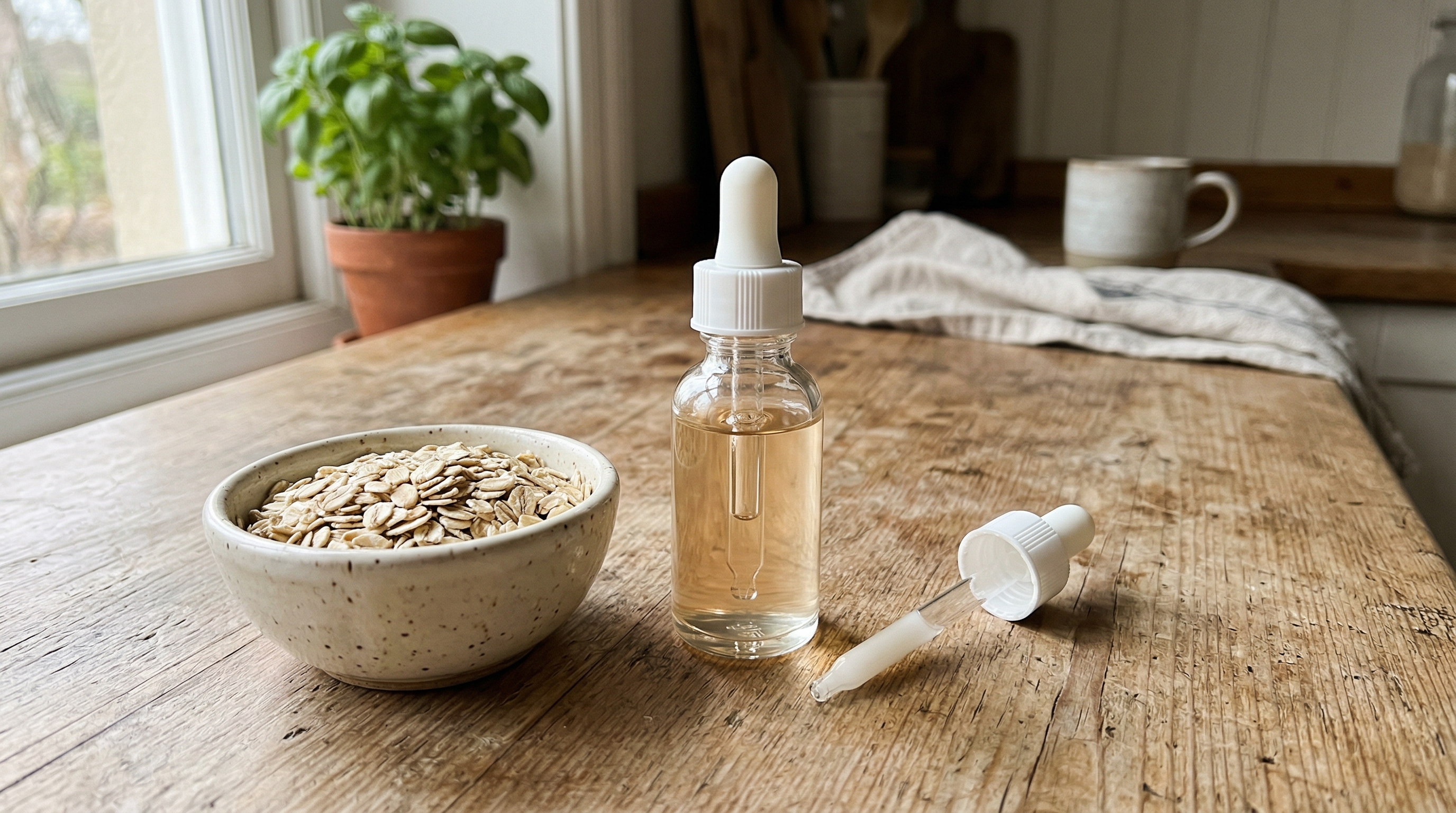
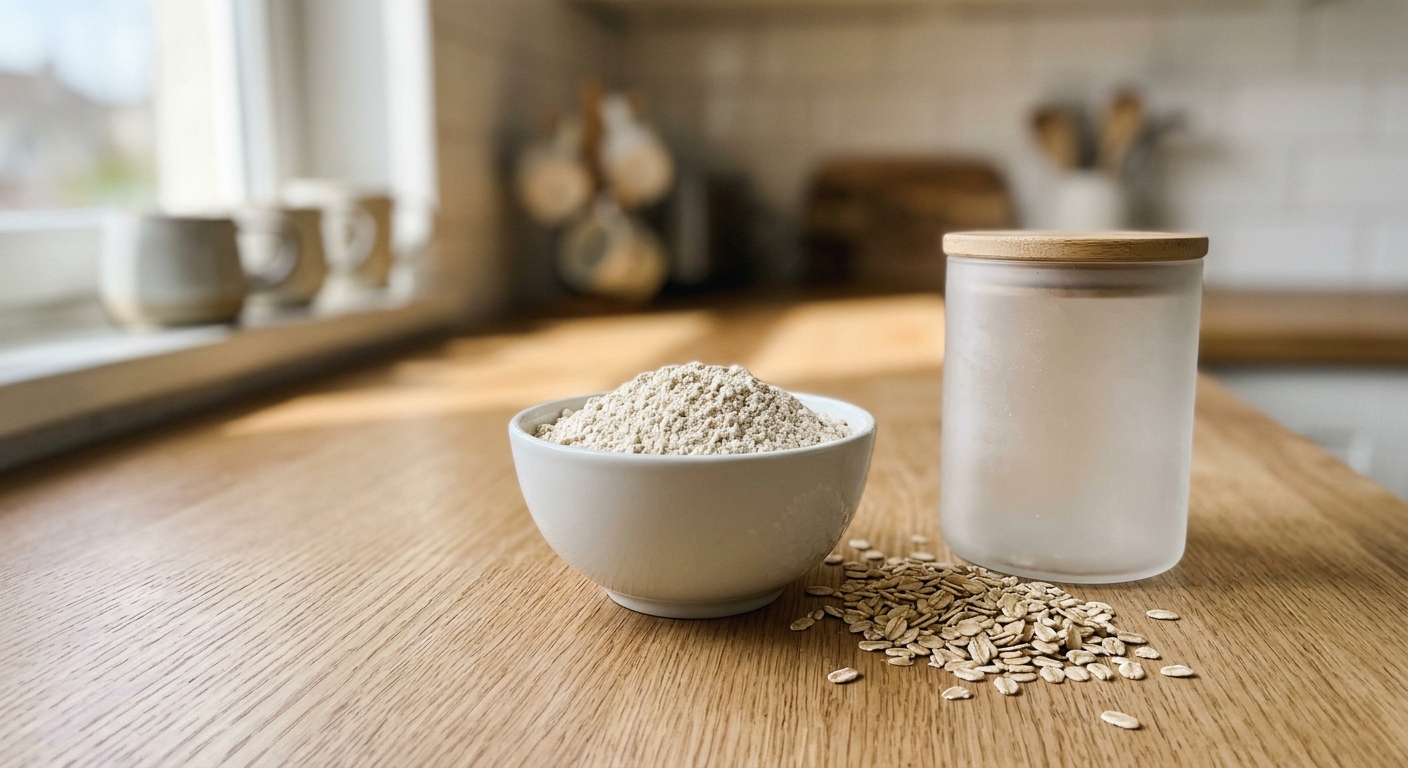
Colloidal oatmeal isn’t cooked porridge smeared on your face. It’s the whole oat kernel milled into an ultrafine powder and processed so it disperses evenly in water — a “colloid,” meaning the particles stay suspended rather than sinking. That whole-grain sourcing matters, because it keeps the oat’s proteins, lipids, fibers, and antioxidant compounds intact instead of stripping them away.
The practice is old. A ready-to-use colloidal oatmeal was first commercialized in the 1940s, and its combination of cleansing, moisturizing, buffering, and anti-inflammatory properties is what earned it lasting clinical use [1].
The Molecules Doing the Work
What makes oats punch above their weight is chemistry, not folklore. Several distinct components each pull their own weight:
Colloidal oatmeal isn’t cooked porridge smeared on your face.
- Avenanthramides — a family of polyphenols found almost uniquely in oats. These are the star anti-inflammatory and antioxidant compounds.
- Beta-glucan — a long-chain sugar that forms a light, water-holding film on the skin and helps it feel supple.
- Starches and proteins — humectants that bind water and reinforce the surface.
- Saponins — mild natural cleansers, which is why oat-based washes clean without stripping.
- Oat lipids — small amounts of skin-friendly fats that support the barrier.
A single ingredient covering antioxidant defense, humectancy, gentle cleansing, and barrier lipids is unusual. Most actives do one job. Oatmeal does several, which is exactly why it shows up in products for the touchiest skin.
How It Calms Angry Skin
The avenanthramides are where the real interest lies. In laboratory work, these oat polyphenols were shown to dial down inflammation at the molecular level — inhibiting NF-κB (a master switch for inflammatory signaling), reducing the release of inflammatory cytokines, and blunting the histamine response that drives itch [3]. That’s not hand-waving; those are the same pathways prescription anti-inflammatories target.
The practical result is relief from the itch-and-flush cycle that plagues reactive skin. When skin is irritated, it itches; scratching damages the barrier; the damaged barrier gets more irritated. Avenanthramides interrupt that loop at the inflammatory source, which is why colloidal oatmeal so reliably takes the “angry” out of angry skin. If your barrier is already compromised, our guide to repairing a damaged skin barrier pairs well with what follows.
It Rebuilds the Barrier — Not Just Soothes
Here’s the part that elevates colloidal oatmeal from a comfort ingredient to a repair one. Soothing is temporary; rebuilding the barrier is structural.
If your goal is anti-aging, colloidal oatmeal isn’t the ingredient that erases wrinkles — it’s the one that makes the wrinkle-fighters usable.
Clinical evaluations of colloidal-oatmeal formulas have documented real improvement in the skin barrier — better hydration, less dryness and cracking, and measurable reductions in the discomfort of xerotic, irritated skin over weeks of use [2]. More recently, researchers zeroed in on dihydroavenanthramide D, a defined oat-derived avenanthramide, and found it strengthens the barrier from the inside: in testing, it boosted the tight-junction proteins that seal skin cells together, thickened the epidermis, and lowered transepidermal water loss — the leaky-barrier measurement that tracks how much moisture escapes [4]. In plain terms, oats don’t just sit on top of the skin feeling nice; their active compounds help the barrier hold itself together.
That barrier focus is why colloidal oatmeal sits comfortably alongside other repair ingredients like ceramides and beta-glucan in a mature-skin routine, where the barrier naturally thins and loses lipids with age.
Where Colloidal Oatmeal Fits in an Anti-Aging Routine
If your goal is anti-aging, colloidal oatmeal isn’t the ingredient that erases wrinkles — it’s the one that makes the wrinkle-fighters usable. The most effective anti-aging actives, retinoids chief among them, can cause dryness and irritation, especially when you start out or on already-sensitive skin. A calm, intact barrier is what lets you stay consistent with those actives long enough to see results.
Used as a gentle cleanser or a soothing moisturizer, colloidal oatmeal buffers the irritation that makes people quit their routine. Think of it as the pit crew rather than the race car: it keeps the skin in condition so the high-performance ingredients can do their job. This is the same logic behind pairing gentle, barrier-repairing steps with stronger actives rather than piling on aggression.
The Retinol Connection
The most common reason people abandon retinol is irritation — the redness, flaking, and stinging of the early weeks. Colloidal oatmeal helps on the recovery side of that equation, but the smarter fix is to not provoke the irritation in the first place.
That’s the design philosophy behind Nanoretinol. Instead of forcing retinol through the skin with harsh solvents that damage the barrier — the very insult oatmeal is then called in to soothe — Nanoretinol encapsulates its retinol in biomimetic lipid nanoparticles that the skin recognizes as “self” and admits without breaking the barrier. The result is a retinol that is significantly gentler on skin cells than conventional retinol, delivered in a light, 99% natural, water-based gel suited even to sensitive skin. Colloidal oatmeal and a barrier-friendly retinol aren’t rivals; they’re the same instinct — respect the barrier — expressed at two different points in the routine. Get both right, and the redness that ends most retinol journeys never has to start.
The Bottom Line on Oats
Colloidal oatmeal earns its reputation the hard way, with mechanism-level evidence for calming inflammation, easing itch, and reinforcing the skin barrier. It won’t rebuild collagen or fade a decade of sun spots — that’s not its job. Its job is to keep your skin comfortable and resilient enough to tolerate the ingredients that do. For sensitive, reactive, or maturing skin, that supporting role turns out to be one of the most valuable parts of the whole routine.
References
- Kurtz ES, Wallo W. “Colloidal oatmeal: history, chemistry and clinical properties.” Journal of Drugs in Dermatology. 2007;6(2):167-170. PMID: 17373175
- Cerio R, Dohil M, Jeanine D, et al. “Mechanism of action and clinical benefits of colloidal oatmeal for dermatologic practice.” Journal of Drugs in Dermatology. 2010;9(9):1116-1120. PMID: 20865844
- Reynertson KA, Garay M, Nebus J, et al. “Anti-inflammatory activities of colloidal oatmeal (Avena sativa) contribute to the effectiveness of oats in treatment of itch associated with dry, irritated skin.” Journal of Drugs in Dermatology. 2015;14(1):43-48. PMID: 25607907
- Park J, Shin JY, Kim D, Jun SH, Jeong ET, Kang NG. “Dihydroavenanthramide D Enhances Skin Barrier Function through Upregulation of Epidermal Tight Junction Expression.” Current Issues in Molecular Biology. 2024;46(9):9255-9268. PMID: 39329899