Dark Spots on Face: Causes, Treatments, and the Ingredients That Actually Work
A ranked guide to the evidence behind every major brightening ingredient
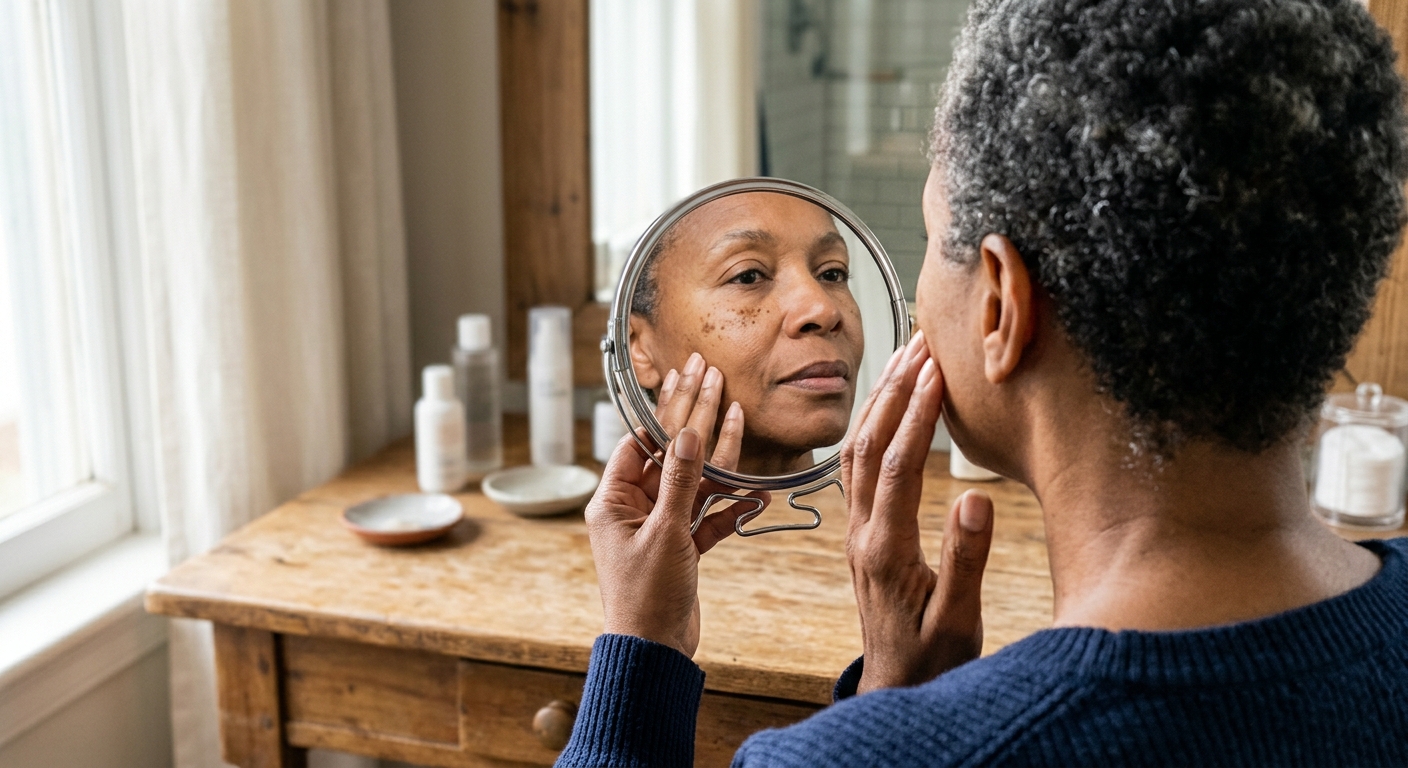
Dark spots on the face are one of the most common skin concerns brought to dermatologists, and one of the most frequently misunderstood. The term covers at least four distinct conditions — each with a different cause, different depth in the skin, and different optimal treatment. What works well for sunspots may do little for post-inflammatory pigmentation, and vice versa.
This guide explains what dark spots actually are, why they form, and ranks the major treatment ingredients by the strength of evidence behind them — so you can build a routine that targets your specific type rather than working from general advice.
What Causes Dark Spots on the Face?
Dark spots form when melanocytes — the pigment-producing cells in the lower epidermis — become overactive and release excess melanin into surrounding tissue. The trigger determines the type of pigmentation:
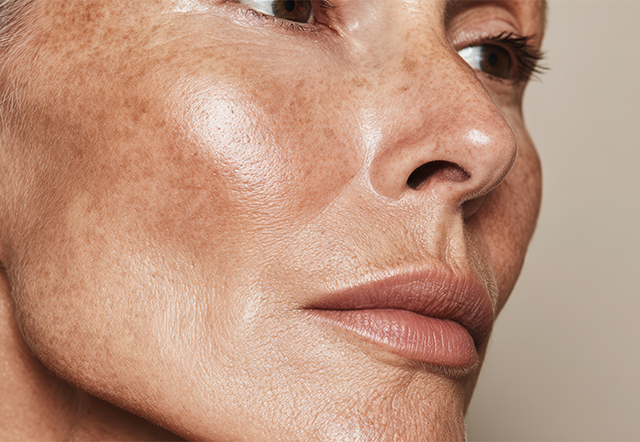
Solar lentigines (sunspots/age spots): Caused by cumulative UV exposure, these appear on areas with the most sun history — forehead, cheeks, upper lip, and hands. They are the most common form of hyperpigmentation in adults over 40 and typically have sharp, defined borders.
Melasma: Hormonally driven pigmentation, often triggered by pregnancy, hormonal contraception, or perimenopause. It appears as larger, diffuse patches — most commonly across the forehead, upper lip, cheeks, and bridge of the nose — and is notoriously difficult to treat because the hormonal trigger can sustain it indefinitely [1].
Post-inflammatory hyperpigmentation (PIH): Follows skin trauma — acne, cuts, procedures, or any inflammatory event. The skin produces excess melanin as part of the healing response. PIH tends to be shallower than melasma and more responsive to topical treatment.
Seborrheic keratoses: Benign growths that appear tan to dark brown, raised, and waxy. These are not responsive to skincare ingredients and require in-office treatment if removal is desired.
The depth of the pigment matters. Epidermal pigmentation (closer to the surface) responds well to topical actives. Dermal pigmentation — particularly in deeper melasma — is significantly harder to treat because the melanin sits below the reach of most skincare molecules.
The Key Treatment Ingredients — Ranked by Evidence
1. Retinol (Strongest Long-Term Evidence)
Retinol is the most extensively studied topical ingredient for hyperpigmentation. It works through multiple pathways: accelerating epidermal cell turnover (which physically sheds pigmented surface cells faster), inhibiting the enzyme tyrosinase (which initiates melanin synthesis), and increasing dermal collagen density, which improves the overall optical appearance of skin [2].
The clinical record on retinol for dark spots is long. Studies dating back to the 1990s document measurable reduction in solar lentigines and post-inflammatory hyperpigmentation with consistent use. The effect builds over months, not weeks — most clinical protocols run 24 weeks or longer to capture full efficacy.
The known limitation is tolerability. Retinol causes a desmosing effect in the skin’s surface layers, which can produce dryness, flaking, and temporary redness. Many people reduce or stop use before the ingredient has had enough time to show results. This is why the delivery mechanism matters as much as the ingredient: a retinol that can reach target cells without disrupting the barrier produces better outcomes in real-world use than a higher-concentration formula that triggers persistent irritation. For a detailed look at how encapsulation changes retinol’s behaviour in the skin, see our article on encapsulated retinol.
2. Vitamin C (Best for UV-Induced Spots, AM Use)
L-ascorbic acid inhibits tyrosinase and also neutralizes the reactive oxygen species generated by UV exposure — which are the initiating signal for melanocyte activation after sun exposure [3]. This makes it particularly valuable as a preventive ingredient when applied in the morning before sun exposure.
Clinical studies show that stabilized vitamin C at 10–20% concentration reduces the density of solar lentigines and improves overall skin luminosity over 12 weeks.
Clinical studies show that stabilized vitamin C at 10–20% concentration reduces the density of solar lentigines and improves overall skin luminosity over 12 weeks. The combination with retinol is especially productive: vitamin C addresses daytime UV-mediated pigment formation, retinol drives nighttime cellular renewal. For guidance on combining both, see our guide on retinol and vitamin C.
The main challenge with vitamin C is formulation stability — L-ascorbic acid oxidizes rapidly in water and air, losing potency before it reaches the skin. Stabilized derivatives (ascorbyl glucoside, ascorbyl tetraisopalmitate) are more shelf-stable but slightly less bioavailable.
3. Azelaic Acid (Best for Inflammatory Pigmentation and Sensitive Skin)
Azelaic acid inhibits tyrosinase and selectively targets hyperactive melanocytes — leaving normally functioning pigment cells largely undisturbed. This selective mechanism makes it particularly suited to post-inflammatory hyperpigmentation, where overactive melanocytes in scarred tissue are the target [4].
At prescription strength (15–20%), azelaic acid is also a first-line treatment for rosacea-associated redness, which frequently co-occurs with hyperpigmentation in skin over 40. The over-the-counter concentration (10%) produces more modest but still measurable brightening over 12 weeks.
For a comprehensive look at this ingredient, see our article on azelaic acid for skin.
4. Niacinamide (Best Barrier Support + Pigment Reduction Combination)
Niacinamide does not inhibit melanin production — it interrupts the transfer of melanosomes from melanocytes to keratinocytes (surface skin cells). Less pigment transferred means less pigment visible at the surface, even if the melanocytes themselves remain active [5].
This mechanism makes niacinamide uniquely useful for melasma, where tyrosinase inhibitors alone often produce incomplete results because the root hormonal trigger persists. By acting at a different point in the pigmentation pathway, niacinamide adds a complementary layer of treatment.
It is also the ingredient most easily layered with others: it is water-soluble, stable, and does not require specific pH conditions. At 5%, it produces visible brightening over 8–12 weeks. For a full breakdown of what niacinamide does in skin, see our detailed guide on niacinamide benefits for skin.
5. Tranexamic Acid (Emerging Evidence, Strong for Melasma)
Tranexamic acid (TXA) works by interrupting the interaction between keratinocytes and melanocytes — specifically blocking the UV-induced release of plasminogen activator from keratinocytes, which is a key trigger for melanocyte activation [6].
Clinical trials have shown TXA to be effective for melasma at 3–5% topical concentration, with a tolerability profile significantly better than hydroquinone. It is particularly relevant for patients who have not responded to other brightening agents or who cannot tolerate them.
For a full clinical breakdown of this ingredient, see our article on tranexamic acid for dark spots.
The over-the-counter concentration (10%) produces more modest but still measurable brightening over 12 weeks.
6. Kojic Acid and Other Tyrosinase Inhibitors
Kojic acid, arbutin, and resveratrol all inhibit tyrosinase, the same enzyme targeted by vitamin C and retinol. The evidence base is thinner than for the top-tier ingredients, but they are reasonable additions to a brightening routine — particularly for those who cannot use prescription-strength agents.
Kojic acid has known stability challenges (it oxidizes readily) and can cause contact dermatitis in sensitized individuals. Formulation quality matters significantly for this category.
How to Build a Dark Spot Treatment Routine
For most people with epidermal hyperpigmentation (sunspots, mild PIH), a practical routine looks like this:
Morning: Vitamin C serum → SPF 30+ (non-negotiable: UV is the primary driver of most pigmentation; treating dark spots without daily sun protection produces limited results)
Evening: Retinol or retinoid → niacinamide as a supporting layer (to buffer barrier disruption from retinol and add complementary brightening)
Add-ons: Azelaic acid (2-3x/week) or tranexamic acid (daily) for stubborn patches or melasma
Sun protection is the single highest-leverage intervention. Without it, topical brightening ingredients are working against an ongoing trigger. The research is unambiguous: daily broad-spectrum SPF significantly reduces the rate of new pigmentation formation and allows existing treatments to maintain their gains.
Why Retinol Delivery Matters for Pigmentation
Of all the ingredients in this list, retinol has the strongest cumulative evidence for long-term hyperpigmentation improvement. But the frequently overlooked variable is how it is delivered.
Conventional retinol formulations use chemical penetration enhancers — surfactants and solvents — that disrupt the skin barrier to push the retinol through. This produces the classic retinol side effects: redness, peeling, and heightened sensitivity. Patients often stop using retinol during this phase, losing the continuity that the evidence requires.
Encapsulated retinol formats — those that use lipid nanoparticles to ferry the active molecule through the barrier intact — produce the same cell-turnover and tyrosinase-inhibiting effects without the barrier-disrupting mechanism. Nanoretinol® uses this approach: biomimetic lipid nanoparticles carry retinol to target cells while the skin’s surface architecture remains undamaged. In a head-to-head study against conventional retinol, Nanoretinol® produced 232% greater collagen recovery and 73% greater elastin recovery — at a 0.2% retinol concentration — by virtue of delivery efficiency rather than raw concentration.
For dark spot treatment, this matters because consistent, uninterrupted retinol use over 6–12 months is what produces the clinical outcomes documented in the literature. A formulation you can use every night without barrier disruption is worth more, mechanistically, than a higher-concentration product that forces you to alternate or stop.
What to Expect from Treatment
Dark spots do not disappear in weeks. The clinical timelines are:
- 4–6 weeks: Skin texture improvement; early brightness changes visible
- 8–12 weeks: Visible reduction in lighter surface spots; PIH begins to fade
- 6–12 months: Significant reduction in established solar lentigines with consistent retinol use
- Ongoing maintenance: Sun protection required indefinitely; most pigmentation will return without it
Melasma is the exception. Because the hormonal trigger can persist — particularly through perimenopause — melasma often requires ongoing management rather than a finite treatment course. This is where the multi-ingredient approach (retinol, niacinamide, tranexamic acid, and strict photoprotection) produces the most durable results.
References
-
Passeron T. “Melasma pathogenesis and influencing factors.” Journal of the European Academy of Dermatology and Venereology. 2013;27(Suppl 1):5–6. doi:10.1111/jdv.12049
-
Kang S, Bergfeld W, Gottlieb AB, et al. “Long-term efficacy and safety of tretinoin emollient cream 0.05% in the treatment of photodamaged facial skin.” American Journal of Clinical Dermatology. 2005;6(4):245–253. doi:10.2165/00128071-200506040-00005
-
Pinnell SR. “Cutaneous photodamage, oxidative stress, and topical antioxidant protection.” Journal of the American Academy of Dermatology. 2003;48(1):1–19. doi:10.1067/mjd.2003.16
-
Schulte BC, Wu W, Rosen T. “Azelaic acid: Evidence-based update on mechanism of action and clinical application.” Journal of Drugs in Dermatology. 2015;14(9):964–968. PMID: 26355614
-
Hakozaki T, Minwalla L, Zhuang J, et al. “The effect of niacinamide on reducing cutaneous pigmentation and suppression of melanosome transfer.” British Journal of Dermatology. 2002;147(1):20–31. doi:10.1046/j.1365-2133.2002.04834.x
-
Ebrahimi B, Naeini FF. “Topical tranexamic acid as a promising treatment for melasma.” Journal of Research in Medical Sciences. 2014;19(8):753–757. PMID: 25422661
-
Davis EC, Callender VD. “Postinflammatory hyperpigmentation: a review of the epidemiology, clinical features, and treatment options in skin of color.” Journal of Clinical and Aesthetic Dermatology. 2010;3(7):20–31. PMID: 20725554