Retinol for Crepey Skin: Does It Work on Your Neck, Arms, and Body?
The biology of crepey skin explained — and why retinol targets its root causes, not just the surface
What Crepey Skin Actually Is
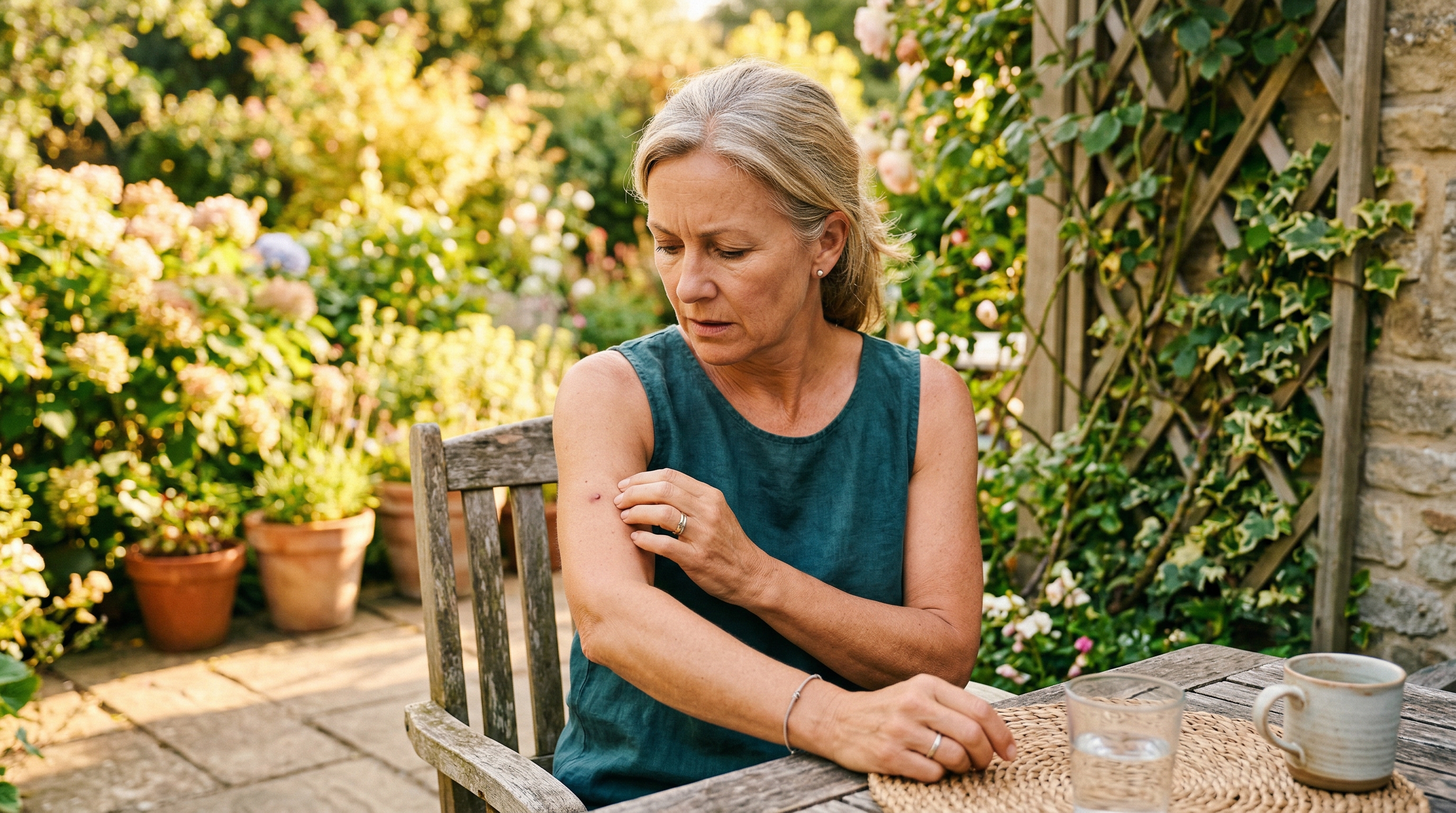
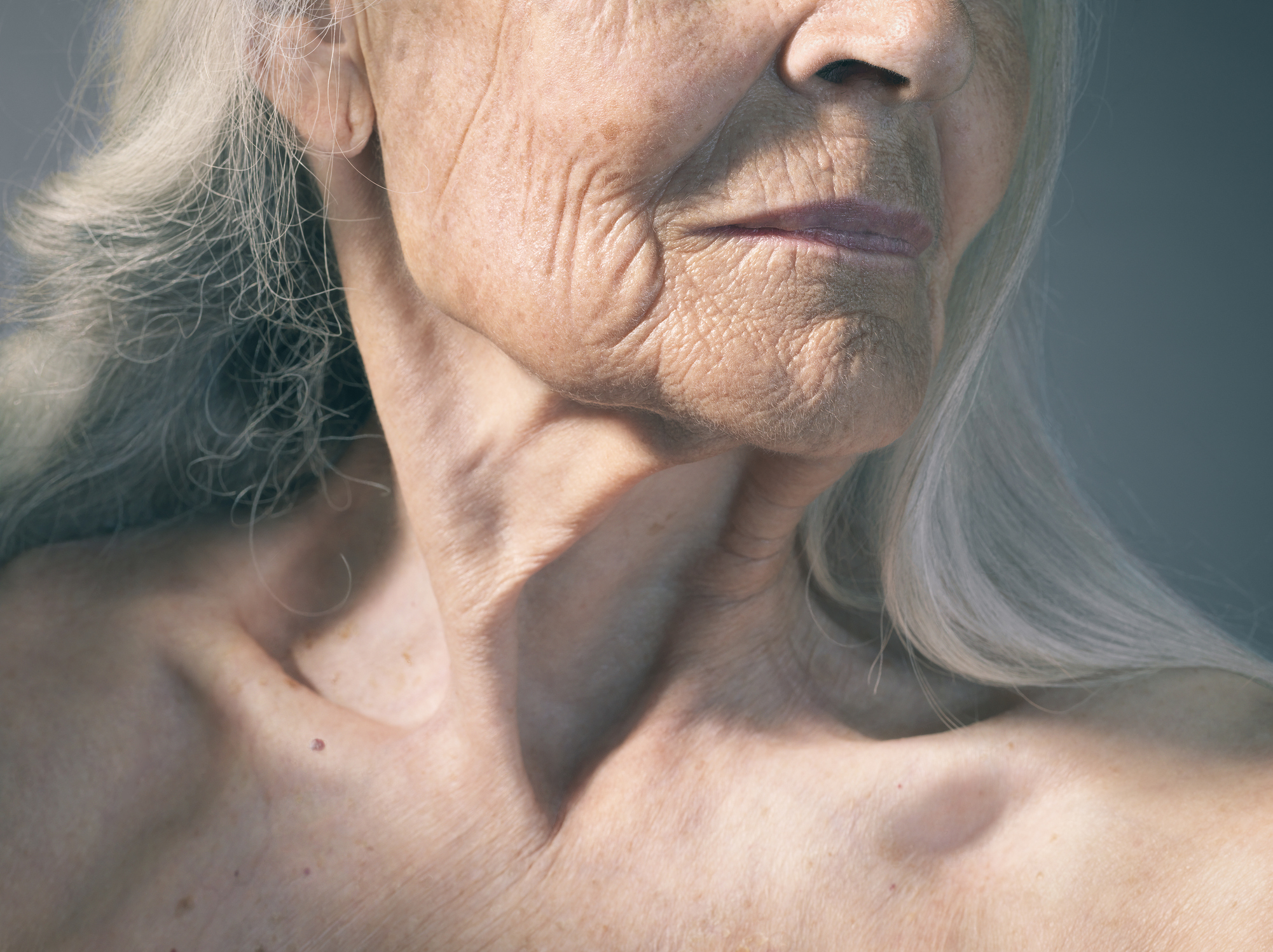
Crepey skin has a distinctive appearance that most people recognize immediately: fine, crinkly texture, a slightly loose or papery quality, skin that doesn’t bounce back the way it used to. It appears most prominently on the neck, inner arms, décolletage, and inner thighs — areas that tend to get less daily attention than the face.
The name comes from the resemblance to crêpe paper: thin, fragile-looking, and lightly wrinkled. But what makes skin look this way isn’t surface damage — it’s structural changes in the deeper layers.
Specifically, crepey skin results from:
-
Collagen loss. Collagen is the primary structural protein in the dermis. Intrinsic aging steadily reduces collagen production while increasing the activity of matrix metalloproteinases (MMPs) — enzymes that degrade existing collagen. The dermis literally loses its structural scaffold [1].
-
Elastin degeneration. Elastin is the fiber network that allows skin to snap back to its original position. In intrinsic aging, the elastic fiber network progressively degenerates. UV exposure compounds this dramatically: photoaging is characterized at the microscopic level by “a massive accumulation of elastotic material in the upper and middle dermis, a process termed solar elastosis” — abnormal, non-functional elastin that cannot provide recoil [1].
-
Volume loss. As collagen and elastin decline, the dermal matrix thins and loses volume. Skin that was once supported by a robust scaffold begins to sit loosely against underlying structures.
The combination of these three processes produces the crepey texture. Addressing crepey skin requires targeting the underlying biology — not just the surface appearance.
Why Retinol Is the Most Evidence-Based Option
Retinol (vitamin A) is the non-prescription retinoid with the most robust clinical evidence base. When converted to retinoic acid in skin cells, it binds to nuclear retinoic acid receptors (RARs) and directly regulates the expression of collagen genes, elastin-related structural proteins, and cell proliferation pathways [2].
For crepey skin specifically, retinol addresses all three root causes:
Collagen restoration. Multiple clinical studies have confirmed retinol increases procollagen I and procollagen III production in human skin. Kong et al. demonstrated that retinol treatment upregulated COL1A1 and COL3A1 gene expression with measurable increases in procollagen proteins within just four weeks of topical application [3]. Kafi et al.’s randomized controlled trial showed significant improvement in fine wrinkling and glycosaminoglycan content after 24 weeks of retinol use [4].
Elastin scaffolding support. Mellody et al. found that retinol significantly increased fibrillin-rich microfibril deposition (p < 0.01) in photoaged skin [5]. Fibrillin microfibrils are the scaffolding on which elastin is deposited — they’re essential for functional elastic tissue. Restoring this scaffolding is a key step toward recovering skin elasticity.
Crepey skin has a distinctive appearance that most people recognize immediately: fine, crinkly texture, a slightly loose or papery quality, skin that doesn’t bounce back the way it used to.
Dermal thickness. Shao et al. studied retinol’s effects on aged human skin in vivo, finding that it “significantly improved dermal extracellular matrix (ECM) microenvironment; increasing dermal vascularity by stimulating endothelial cell proliferation and ECM production (type I collagen, fibronectin and elastin) by activating dermal fibroblasts” [2]. The TGF-β/CTGF pathway — the primary regulator of ECM homeostasis — was also activated, driving sustained collagen and matrix deposition.
Critically: Studies Were Done on Body Skin, Not Just the Face
One common assumption is that retinol research applies only to facial skin. This isn’t accurate — and the distinction matters for crepey skin.
Shao et al.’s landmark study was specifically conducted on sun-protected buttock skin of elderly participants (average age 76 years). This is body skin, not facial skin — and the results showed dramatic improvements in both epidermal and dermal structure [2]. Kafi et al. similarly conducted their RCT on sun-protected skin (buttock), demonstrating retinol’s effects on aged body skin specifically [4]. Mellody et al.’s retinol concentration study was conducted on the extensor forearm of photoaged volunteers — directly relevant to the arm crepiness many people struggle with [5]. Retinol treatment induced epidermal thickening and fibrillin microfibril deposition on forearm skin, confirming its structural effects extend well beyond the face.
This matters because body skin and facial skin differ meaningfully: body skin is generally thicker but receives less consistent care, is exposed to UV differently, and has a lower density of sebaceous glands. The good news is that the retinol mechanism operates through nuclear receptors present in keratinocytes and fibroblasts throughout the body — not just in facial skin.
The Practical Challenge: Body Application
The face is 1% of your body’s total skin surface. The neck, décolletage, inner arms, and thighs represent a substantially larger area. Applying retinol effectively to these areas presents practical differences from facial use:
Larger surface area, more product needed. A pea-sized amount is the standard facial dose. For neck and décolletage, you need proportionally more. For arms, significantly more. This drives up both cost and the risk of overuse with conventional retinol.
Less conditioned tolerance. Body skin hasn’t been gradually adapting to retinol the way facial skin may have. Starting with a lower concentration and building up is particularly important for body areas — especially where skin is thinner or more sensitive (inner arms, neck).
Sun exposure on body areas. Retinol increases photosensitivity. For areas like the décolletage and forearms that receive substantial daily UV exposure, this makes daily SPF application non-negotiable when using retinol.
Application frequency. For body crepey skin, starting with 2-3 nights per week and building to nightly over 8-12 weeks is a reasonable approach. The adjustment period tends to be shorter than for facial skin in some people, longer in others — body skin’s individual response varies.
For body crepey skin, starting with 2-3 nights per week and building to nightly over 8-12 weeks is a reasonable approach.
What Results to Expect (and When)
Retinol doesn’t reverse crepey skin overnight. The structural changes — collagen rebuilding, microfibril deposition, dermal thickening — are slow processes operating at the cellular level.
A realistic timeline:
- Weeks 1-4: Adjustment phase. Possible dryness, flaking. Surface texture may look temporarily worse before it improves. Skin is adapting, not failing.
- Weeks 4-8: Surface texture improvement. Cell turnover accelerates, bringing newer, healthier cells to the surface. Fine crinkle lines may appear softer.
- Months 3-6: Structural improvement begins. Collagen rebuilding is visible in improved skin firmness and reduced loose texture. The crepey appearance starts diminishing.
- 6-12 months+: Continued improvement with consistent use. Retinol’s effects compound over time as collagen accumulation accelerates.
Consistency is the operative word. The research showing meaningful structural improvement involves months of consistent retinol exposure — not occasional use.
Combining Retinol With Other Strategies for Crepey Skin
Retinol addresses the root biology. A few complementary approaches can accelerate surface-level results and support the structural changes:
Hyaluronic acid. Applied before retinol, HA provides the hydration buffer that helps skin tolerate retinol’s adjustment phase and maintains plumpness while collagen rebuilds. This pairing is especially valuable for body skin where the adjustment period can be noticeable. See our article on retinol and hyaluronic acid for the full science.
Sun protection. UV damage is a primary driver of solar elastosis — the underlying pathology behind crepey photoaged skin. Using retinol without rigorous daily SPF is undermining the process. SPF 30+ on all sun-exposed areas, every day, is foundational to any anti-aging protocol. Read our article on retinol and sun damage for more on this relationship. Consistent moisturization. Crepey skin is often also dehydrated skin. Keeping body skin consistently hydrated supports the barrier integrity that makes retinol tolerable and the results more visible.
Why Delivery Efficiency Matters More for Body Use
For crepey skin treatment on the body, retinol delivery efficiency becomes especially critical for two reasons:
First, larger surface areas amplify the cost of formulations with poor bioavailability. If a conventional retinol product delivers only a fraction of its labeled dose to dermal fibroblasts, you’re using much more product to achieve clinical effect — particularly over large areas like arms and décolletage.
Second, conventional retinol formulations cause barrier disruption as part of their penetration mechanism, which increases irritation risk on body areas unaccustomed to retinol exposure.
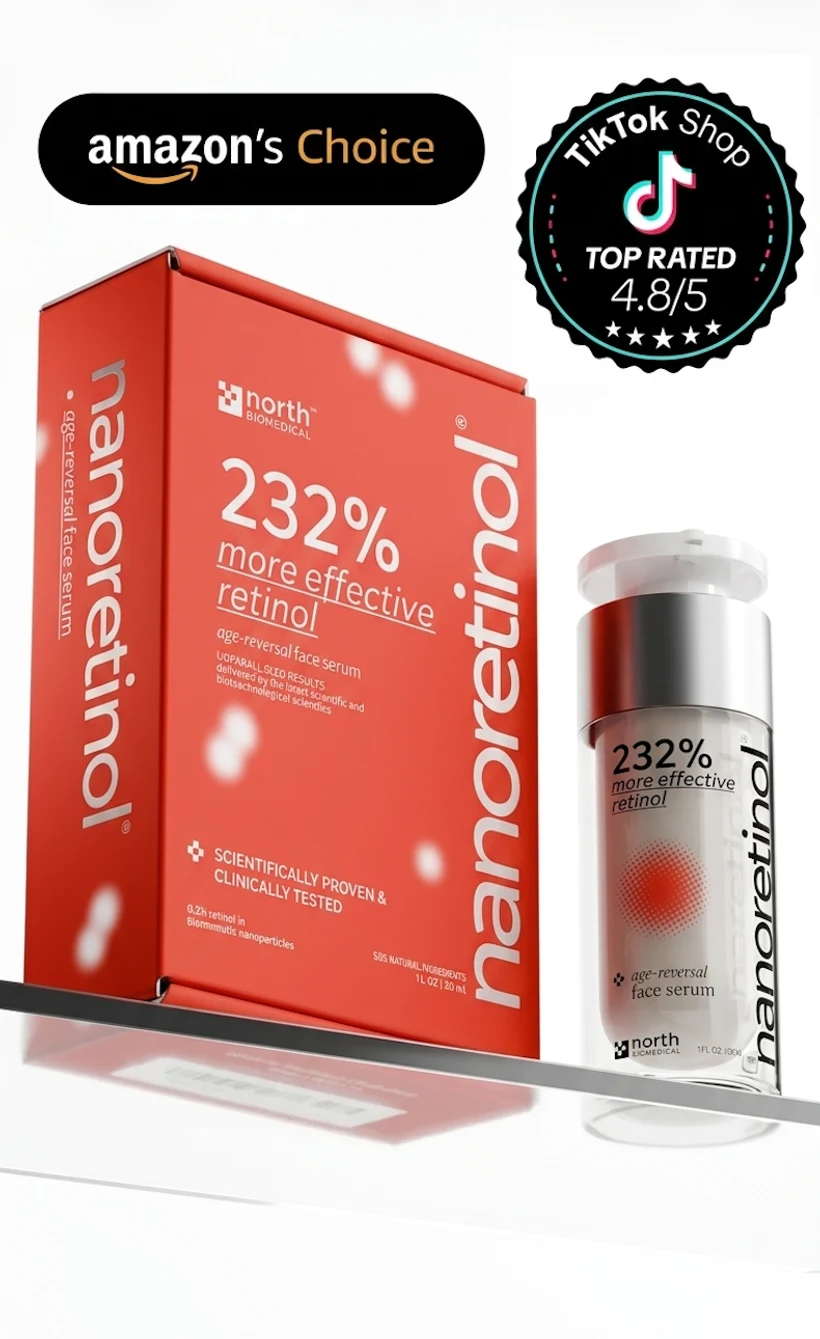
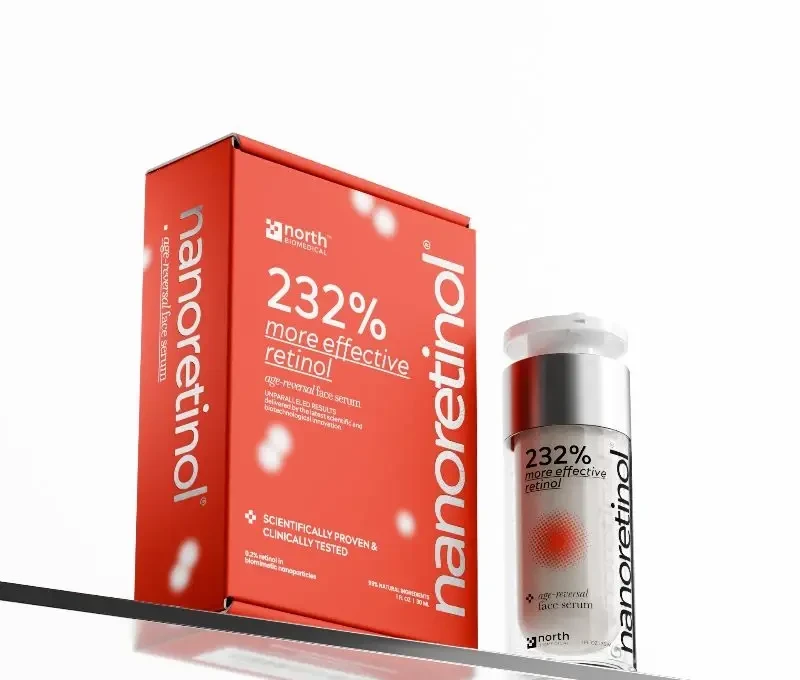
Nanoretinol® by North Biomedical® addresses both issues through lipid nanoparticle encapsulation. Biomimetic particles deliver retinol directly through the epithelial barrier via physiological lipid exchange — no barrier disruption required, and significantly higher bioavailability at the dermal fibroblasts where collagen synthesis is triggered. The result is more collagen-stimulating effect per application, with reduced adjustment-period irritation.
For body crepey skin specifically, this means: effective retinol treatment over larger areas, with better tolerability, and without the barrier damage that would counteract the structural rebuilding you’re trying to achieve.
The science of crepey skin points directly toward retinol. The evidence was built, in part, on body skin. With the right delivery, the gap between clinical data and your bathroom results is significantly smaller than it used to be.
References
-
Uitto J. “The role of elastin and collagen in cutaneous aging: intrinsic aging versus photoexposure.” J Drugs Dermatol. 2008;7(2 Suppl):s12-6. PMID:18404866
-
Shao Y, He T, Fisher GJ, Voorhees JJ, Quan T. “Molecular basis of retinol anti-ageing properties in naturally aged human skin in vivo.” Int J Cosmet Sci. 2017;39(1):56-65. doi:10.1111/ics.12348
-
Kong R, Cui Y, Fisher GJ, et al. “A comparative study of the effects of retinol and retinoic acid on histological, molecular, and clinical properties of human skin.” J Cosmet Dermatol. 2016;15(1):49-57. doi:10.1111/jocd.12193
-
Kafi R, Kwak HSR, Schumacher WE, et al. “Improvement of naturally aged skin with vitamin A (retinol).” Arch Dermatol. 2007;143(5):606-612. doi:10.1001/archderm.143.5.606
-
Mellody KT, Bax DV, Roberts SA, et al. “Multifaceted amelioration of cutaneous photoageing by (0.3%) retinol.” Int J Cosmet Sci. 2022;44(6):625-635. doi:10.1111/ics.12799