Shea Butter for Skin: What It Really Does for Mature Skin (and Where It Falls Short)
A rich emollient with real anti-inflammatory science — but an honest look at why it can't rebuild aging skin on its own
Shea butter is everywhere — whipped into body butters, melted into lip balms, sold in raw blocks at the market. It has the kind of reputation that sounds almost too good: deeply moisturizing, natural, anti-inflammatory, anti-aging. For skin that has crossed 40 and started to feel drier, tighter, and less resilient, it’s a tempting one-jar answer. But “rich and natural” and “anti-aging” are not the same claim, and the gap between them is exactly where shea butter gets oversold. Here’s what the science genuinely supports, and the one thing it can’t do no matter how thickly you apply it.
What Shea Butter Actually Is
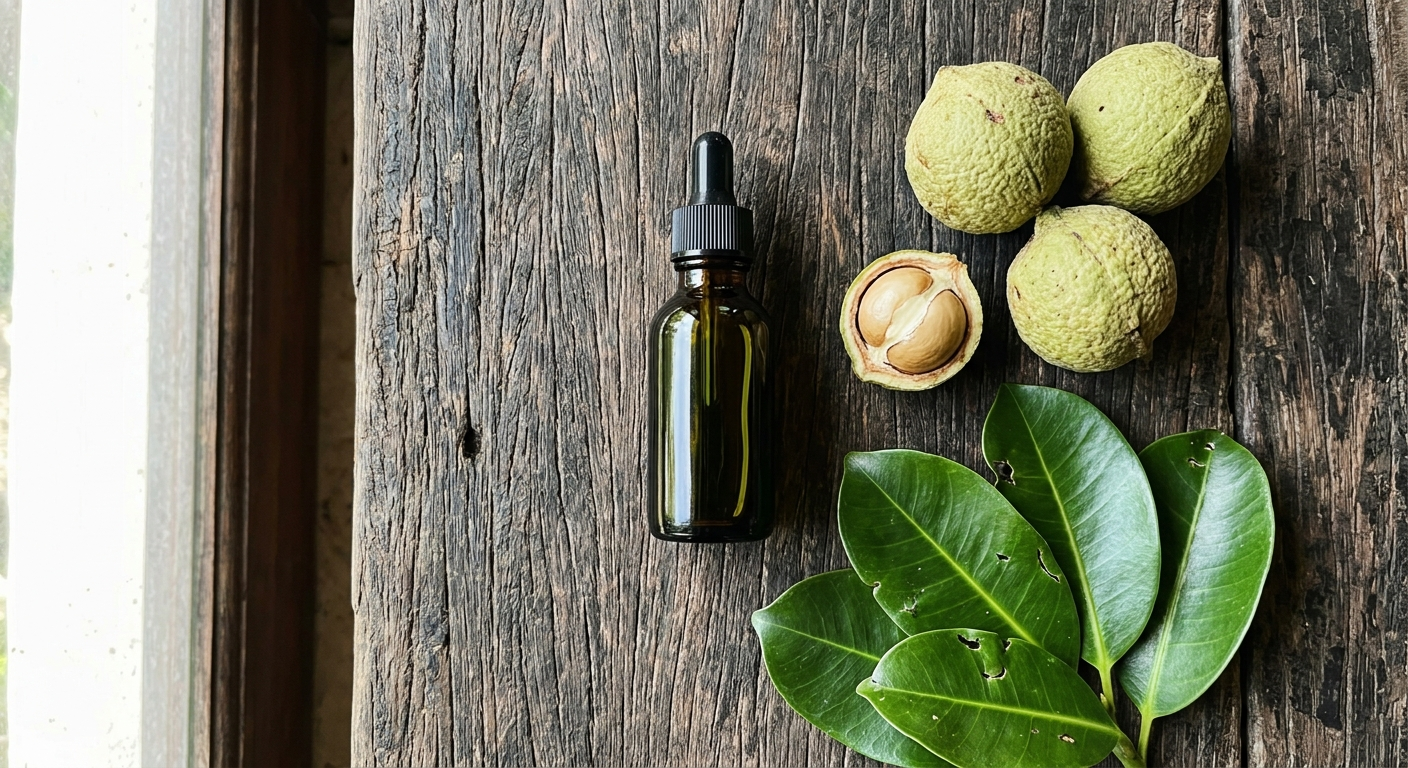
Shea butter is the fat pressed from the nut of the African shea tree. Chemically, it’s dominated by two fatty acids — oleic acid (around 46%) and stearic acid (around 44%) — arranged into triacylglycerols, with smaller amounts of squalene and tocopherols [1]. That profile alone makes it a competent emollient. The closest comparison in the same category is cocoa butter, which carries far more stearic acid and sets into a noticeably firmer film. But shea’s distinguishing feature is its unsaponifiable fraction: the part of a fat that doesn’t turn into soap.
Most vegetable oils carry less than 1% unsaponifiables. Shea butter can carry several percent, and that fraction is rich in triterpene esters — α-amyrin cinnamate, lupeol cinnamate, butyrospermol cinnamate — plus phytosterols [2]. This is unusual, and it’s the chemistry behind shea’s more interesting biological effects. It also explains why unrefined shea is worth seeking out: heavy refining strips away much of this bioactive fraction [1].
What Shea Butter Does Well
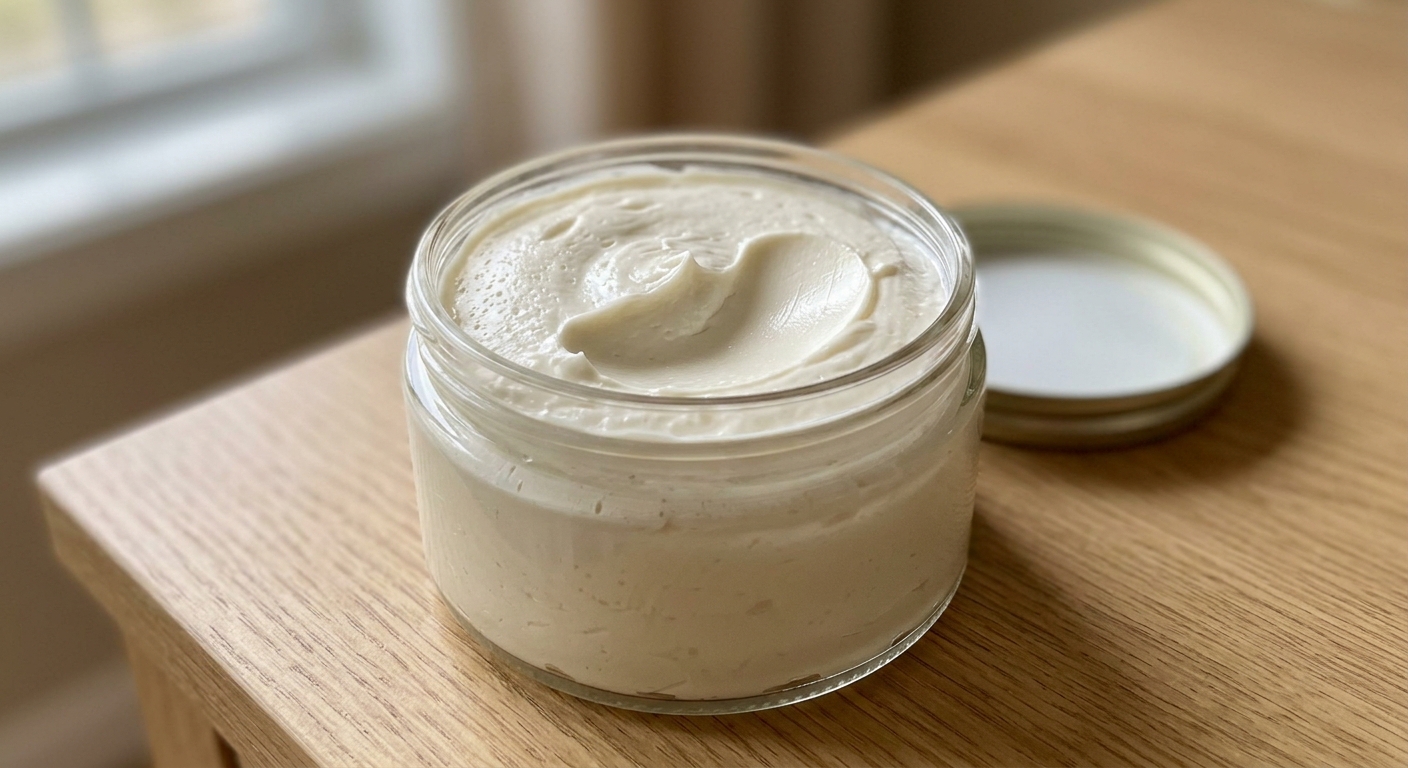
It seals in moisture. Shea butter is, first and foremost, an occlusive emollient. Occlusives work by laying down a hydrophobic film that slows transepidermal water loss — the constant evaporation of water out through the skin. One comparative study in 80 women found that plant-derived emollients reached occlusion comparable to petrolatum (the gold-standard occlusive) over a six-hour window, though petrolatum still edged them out on immediate effect [3]. For mature skin that struggles to hold water, that sealing action is genuinely useful and felt within minutes. Shea is the backbone of most jars in the body butter category for exactly this reason.
Here’s what the science genuinely supports, and the one thing it can’t do no matter how thickly you apply it.
It calms inflammation — through a real mechanism. This is where shea outperforms a plain moisturizer. Laboratory work showed shea butter extract suppresses NF-κB signaling — a master switch for inflammation — and dose-dependently lowered inflammatory messengers including TNF-α, IL-1β, and IL-12, while reducing iNOS and COX-2 [4]. The triterpene esters do their own work too: isolated shea cinnamates, with lupeol cinnamate the most potent, blunted induced inflammation in living tissue [5]. For reactive, easily irritated mature skin, that’s a meaningful, mechanism-backed benefit.
It delivers antioxidants. Shea’s tocopherol content — mostly α-tocopherol, a form of vitamin E — adds modest antioxidant support, again best preserved in unrefined butter [1]. It’s not a high-dose antioxidant treatment, but it’s a real contribution.
The Limit Shea Butter Can’t Cross
Now the honest part. Everything shea butter does well happens at the surface — at the stratum corneum and upper epidermis. It seals, it soothes, it supplies a little antioxidant. What it does not do is reach into the dermis and rebuild the collagen and elastin scaffolding that actually determines whether skin looks firm or sags.
That distinction matters because the structural causes of aging skin live below where shea butter works. As skin ages past 40, it loses barrier lipids, lipid organization, and water-holding capacity — measurable declines documented in studies of the aging stratum corneum [6][7]. An occlusive like shea slows the water loss that results from a weakened barrier, which makes skin feel and look better in the short term. But slowing a symptom is not reversing the cause. Nothing in shea butter’s chemistry signals fibroblasts to produce new collagen, and its anti-inflammatory data come from immune-cell and inflammation models — not from any study showing dermal remodeling [4][5].
Nanoretinol takes a different route: a fully stabilized 0.2% retinol encapsulated in biomimetic lipid nanoparticles the skin recognizes as “self,” carried through the barrier without tearing it down.
It’s also worth retiring one persistent myth: shea butter is not sunscreen. Its cinnamate esters absorb a little UV, but the level of protection is far too low to count as sun defense — and unprotected UV exposure remains the single biggest driver of visible skin aging. Treat shea as care, never as a shield.
How to Actually Use Shea Butter
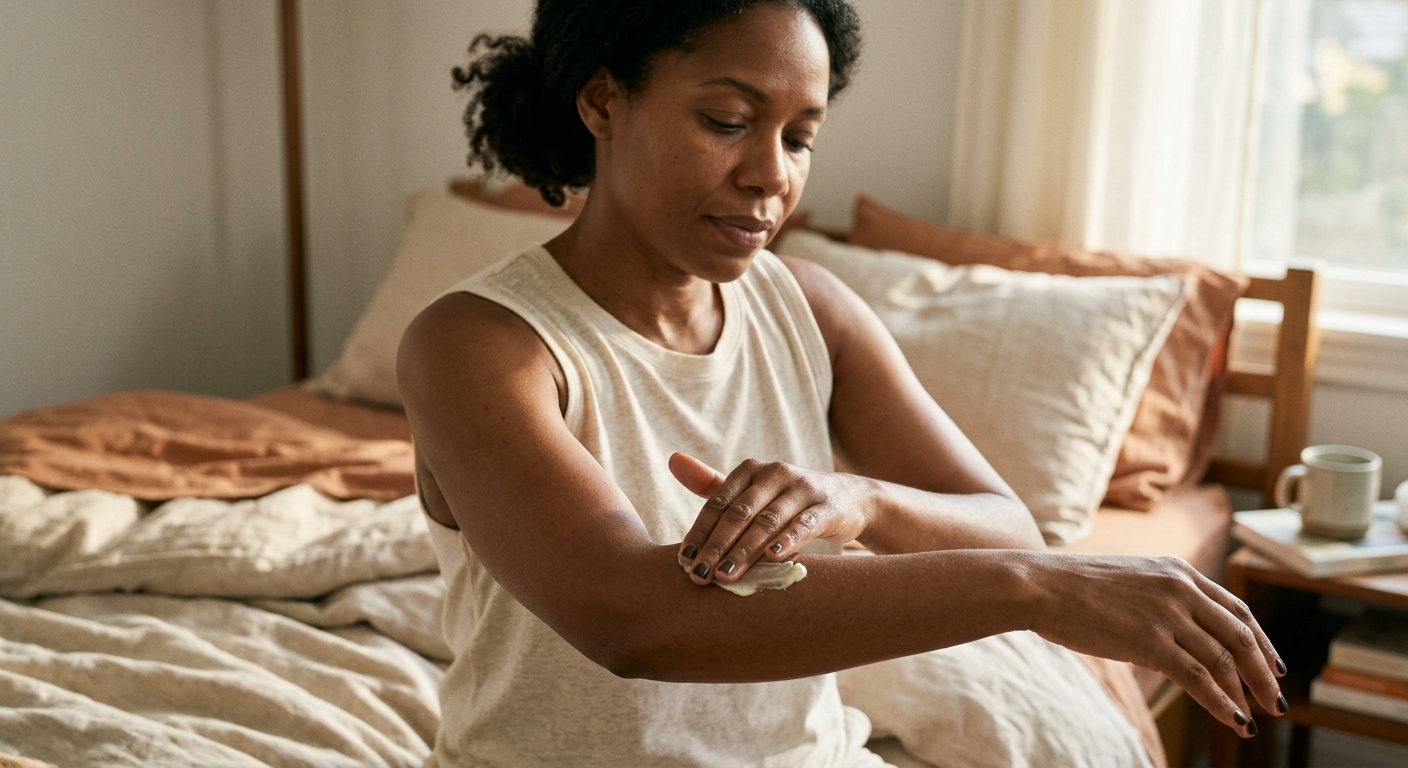
Used for what it’s good at, shea butter is excellent. It shines on the body — arms, legs, elbows, the décolletage — where skin is thicker, drier, and benefits from heavy occlusion; our guide to the best body lotion for aging skin puts it in context. On the face, it suits dry or mature skin types as a final sealing step, ideally applied over your water-based and active layers to lock them in. If your skin is oily or congestion-prone, shea’s richness can feel heavy, and lighter options like squalane or a ceramide cream may serve the barrier better. The principle is simple: shea is the seal at the end, not the correction in the middle. For more on what actually repairs the barrier itself, see skin barrier repair.
The Smarter Pairing
This is the case for treating shea as one layer in a complete routine rather than the whole routine. A rich occlusive comforts and protects the surface; a proven active does the structural work underneath. The most evidence-backed active for that structural job is a retinoid, which signals skin cells to rebuild collagen — precisely the work shea butter cannot do.
The challenge has always been that conventional retinol is harsh, often leaving skin red and peeling because it works partly by disrupting the barrier. Nanoretinol takes a different route: a fully stabilized 0.2% retinol encapsulated in biomimetic lipid nanoparticles the skin recognizes as “self,” carried through the barrier without tearing it down. In testing, that delivery achieved 232% greater collagen recovery and 73% greater elastin recovery than conventional retinol, with skin firmness up 61% and elasticity up 56% over 56 days — the kind of dermal-level change no emollient can produce. Layer a gentle active like that for structure, then seal with shea for comfort, and each ingredient finally does the job it’s actually suited to.
Putting Shea in Its Place
Shea butter is a genuinely good ingredient that’s been asked to do a job it was never built for. As an occlusive, soothing, mildly antioxidant emollient, it earns a spot in most mature-skin routines — especially on the body and on dry, reactive skin. As an anti-aging treatment, it’s the comfortable blanket, not the renovation. Keep it for what it does beautifully, and pair it with an active that reaches the depth shea simply can’t.
References
- Abdel-Razek AG, Abo-Elwafa GA, Al-Amrousi EF, et al. “Effect of Refining and Fractionation Processes on Minor Components, Fatty Acids, Antioxidant and Antimicrobial Activities of Shea Butter.” Foods. 2023;12(8):1626. doi:10.3390/foods12081626
- Akihisa T, Kojima N, Katoh N, et al. “Triacylglycerol and Triterpene Ester Composition of Shea Nuts from Seven African Countries.” Journal of Oleo Science. 2011;60(8):385-391. PMID: 21768739. PubMed
- Pinto JR, Monteiro e Silva SA, Holsback VSS, Leonardi GR. “Skin Occlusive Performance: Sustainable Alternatives for Petrolatum in Skincare Formulations.” Journal of Cosmetic Dermatology. 2022;21(10):4775-4780. doi:10.1111/jocd.14782
- Verma N, Chakrabarti R, Das RH, Gautam HK. “Anti-inflammatory Effects of Shea Butter Through Inhibition of iNOS, COX-2, and Cytokines via the NF-κB Pathway in LPS-activated J774 Macrophage Cells.” Journal of Complementary and Integrative Medicine. 2012;9(1):4. PMID: 22499721. PubMed
- Akihisa T, Kojima N, Kikuchi T, et al. “Anti-inflammatory and Chemopreventive Effects of Triterpene Cinnamates and Acetates from Shea Fat.” Journal of Oleo Science. 2010;59(6):273-280. PMID: 20484832. PubMed
- Wang Z, Man MQ, Li T, Elias PM, Mauro TM. “Aging-associated Alterations in Epidermal Function and Their Clinical Significance.” Aging (Albany NY). 2020;12(6):5551-5565. doi:10.18632/aging.102946
- Boireau-Adamezyk E, Baillet-Guffroy A, Stamatas GN. “Age-dependent Changes in Stratum Corneum Barrier Function.” Skin Research and Technology. 2014;20(4):409-415. doi:10.1111/srt.12132