Acne Scar Treatment: Evidence-Based Options That Actually Work
What dermatology research says about treating icepick, boxcar, and rolling scars
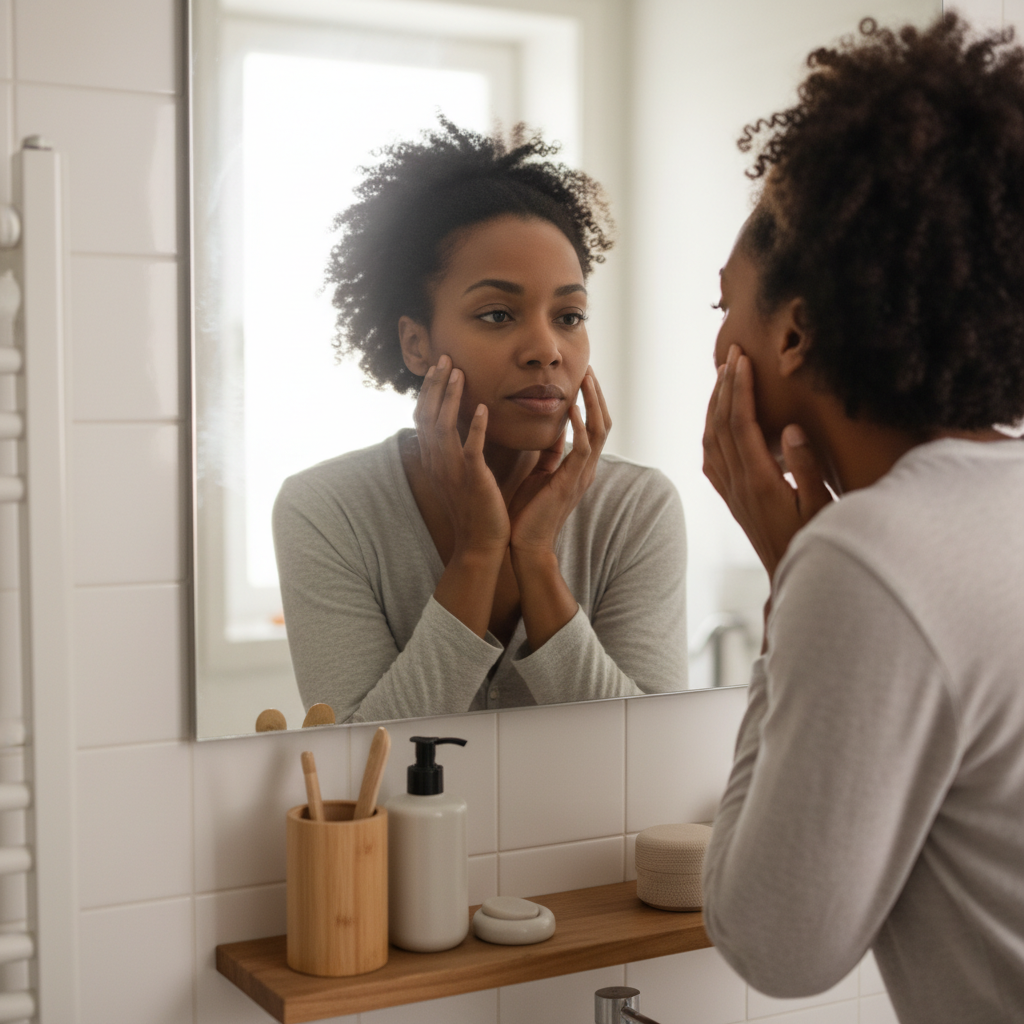
Acne scars affect up to 95% of people who experience acne vulgaris, and their impact goes far beyond cosmetics. Research shows that visible scarring can significantly reduce quality of life, leading to social withdrawal and even depression [1]. The good news? Dermatology has made remarkable progress in treating these scars — and you have more options today than ever before.
This guide breaks down the most effective acne scar treatments based on current clinical evidence, so you can make informed decisions about your skin.
Understanding Acne Scar Types
Before choosing a treatment, it helps to understand what you’re dealing with. Atrophic acne scars — the most common type — form when the skin loses collagen during the healing process. Researchers have identified three distinct subtypes [2]:
- Icepick scars — Narrow, deep, V-shaped depressions that extend into the dermis. These are the most difficult to treat.
- Boxcar scars — Round or oval depressions with sharp, well-defined edges. They can be shallow or deep.
- Rolling scars — Wide, shallow indentations with sloped edges that give skin an uneven, wave-like texture.
Each type responds differently to treatment, which is why dermatologists increasingly recommend a multimodal approach — combining two or more therapies for the best results [3].
Microneedling: The Collagen Booster
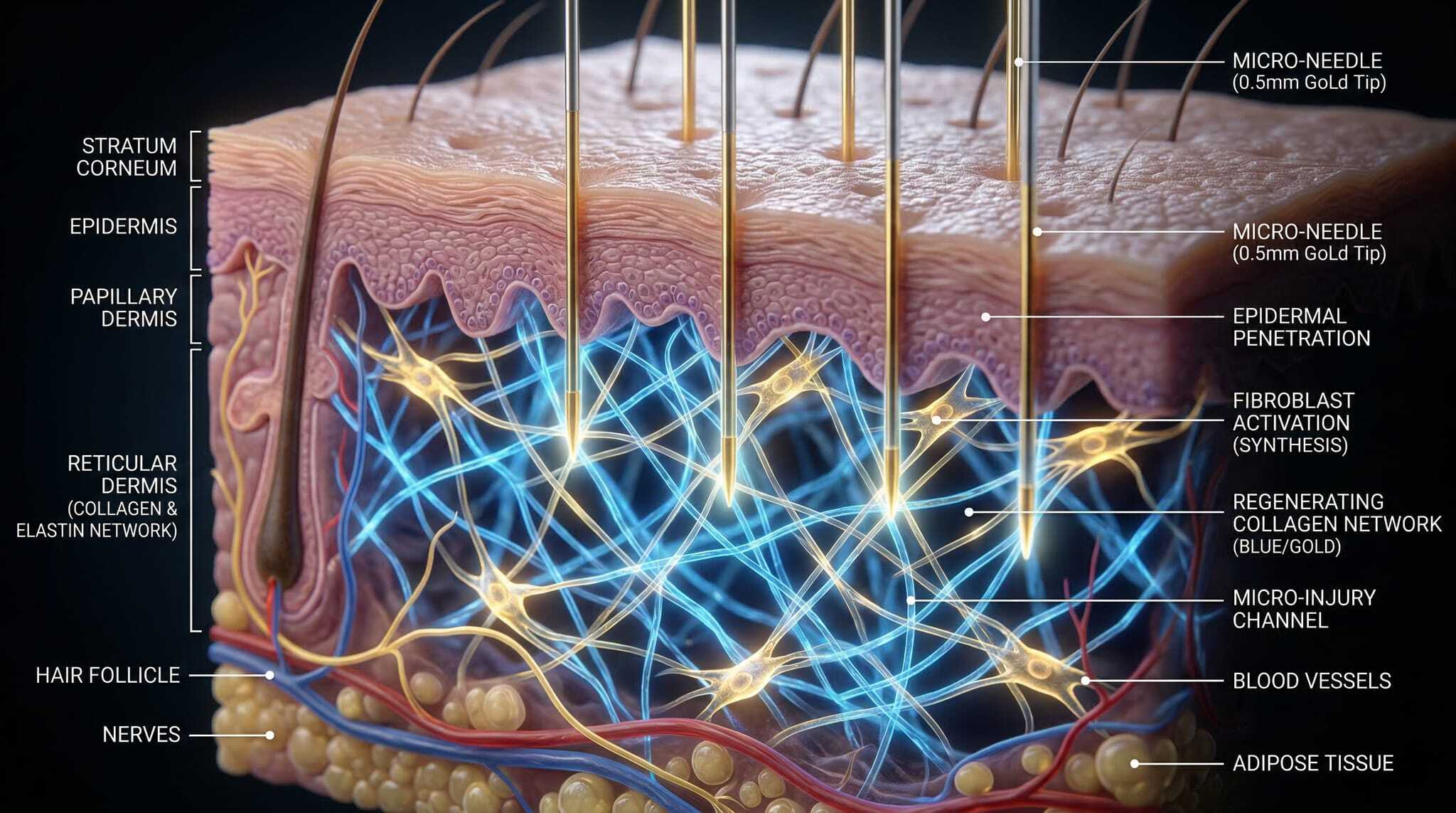
Microneedling (also called collagen induction therapy) uses tiny needles to create controlled micro-injuries in the skin. This triggers your body’s wound-healing response, stimulating new collagen and elastin production.
A 2017 review in Clinical, Cosmetic and Investigational Dermatology confirmed that microneedling produces significant improvements in atrophic acne scars, with the added benefit of minimal downtime compared to ablative laser treatments [4]. It’s particularly effective for:
- Rolling and boxcar scars
- All skin tones (lower risk of post-inflammatory hyperpigmentation)
- Patients who want gradual improvement over multiple sessions
Most protocols involve 3–6 sessions spaced 4–6 weeks apart. Results continue improving for months after treatment as new collagen forms beneath the surface.
Microneedling With PRP
Combining microneedling with platelet-rich plasma (PRP) — sometimes called a “vampire facial” — has shown enhanced results in several clinical trials. The growth factors in PRP appear to accelerate collagen remodeling, particularly for deeper scars [5].
Acne scars affect up to 95% of people who experience acne vulgaris, and their impact goes far beyond cosmetics.
Chemical Peels: Controlled Resurfacing
Chemical peels use acids to remove damaged outer skin layers, promoting regeneration. For acne scars, the most studied options include:
- Trichloroacetic acid (TCA) peels — Medium-depth peels at 15–35% concentration. The CROSS technique (Chemical Reconstruction of Skin Scars) applies high-concentration TCA directly into individual icepick scars.
- Glycolic acid peels — Superficial peels that improve texture over a series of treatments.
- Salicylic acid peels — Particularly useful for darker skin tones due to lower hyperpigmentation risk.
A review in Clinics in Dermatology found that the TCA CROSS technique is one of the most effective standalone treatments for icepick scars, with improvement visible after 2–3 sessions [6].
Laser Treatments: Precision Resurfacing
Laser therapy remains the gold standard for moderate to severe acne scarring. Two main categories exist:
Ablative Fractional Lasers
Fractional CO₂ and Er:YAG lasers vaporize microscopic columns of damaged skin while leaving surrounding tissue intact. This triggers intense collagen remodeling. Studies show 50–70% improvement in scar appearance after a series of treatments [5].
Trade-off: More effective than non-ablative options, but with longer downtime (5–10 days of redness and peeling).
Non-Ablative Fractional Lasers
These lasers heat deeper skin layers without breaking the surface. Recovery is faster (1–3 days), but more sessions are typically needed.
A 2024 network meta-analysis found that combining fractional laser with PRP or other adjunctive therapies consistently outperformed any single treatment modality [5].
Topical Retinoids: The At-Home Foundation
While professional treatments handle the heavy lifting, topical retinoids are the foundation of any long-term scar-improvement strategy. Retinoids work by:
Studies show 50–70% improvement in scar appearance after a series of treatments.
- Accelerating cell turnover to smooth texture
- Stimulating collagen production in the dermis
- Improving skin thickness and elasticity
- Reducing post-inflammatory hyperpigmentation
Research confirms that retinoids boost collagen synthesis at the molecular level, making them a valuable complement to in-office procedures. Early treatment with retinoids can also prevent new scars from forming during active breakouts [7].
For best results, look for formulations that deliver retinol deep into the skin without the irritation issues common with traditional retinol products. Understanding how retinol works can help you choose the right formulation.
Building a Complete Scar Treatment Plan
The expert consensus from the 2024 ASAP (Practical Aspects of Acne Scar Management) panel is clear: combination therapy produces the best outcomes [3]. A practical approach might look like:
- Control active acne first — Scarring can’t heal properly if new breakouts keep occurring
- Start topical retinoids — Build collagen over time and improve overall skin quality
- Add professional treatments — Choose based on your scar type, skin tone, and tolerance for downtime
- Maintain results — Continue retinoid use and sun protection to preserve improvements
Don’t Forget Sun Protection
UV exposure can darken scar tissue and slow healing. A broad-spectrum SPF 30+ is non-negotiable during any scar treatment program. Pair it with antioxidant skincare for added protection against free radical damage, but keep antioxidant creams off fresh wounds: our guide to vitamin E cream explains why a controlled scar trial found no cosmetic benefit and frequent rashes.
Supporting Your Skin From Within
Scar healing is fundamentally a collagen-remodeling process. Beyond topical treatments, supporting your skin’s repair mechanisms can make a measurable difference:
- Niacinamide — This powerhouse ingredient strengthens the skin barrier and reduces inflammation, creating a better environment for healing
- Peptides — Signal peptides can support your skin’s own collagen production
- Barrier repair — Keeping your skin barrier intact ensures treatments work effectively without causing additional irritation
How Nanoretinol® Fits Into Scar Treatment
Traditional retinol products often cause dryness, peeling, and irritation — which can actually worsen scar appearance in the short term. That’s where advanced delivery systems become important.
Nanoretinol® by North Biomedical® uses nanotechnology to deliver retinol directly to target cells in the dermis, bypassing many of the surface-level irritation issues. This means you can support collagen remodeling consistently — the key factor in long-term scar improvement — without the start-stop cycle that undermines results.
If acne scars are part of your skincare concern, a well-tolerated retinoid should be your daily foundation while you explore professional treatments with your dermatologist.
References
-
Moon JY, Yoon JY, Yang JH, Kwon HH, Min S, Suh DH. “Atrophic acne scar: a process from altered metabolism of elastic fibers and collagen fibers based on transforming growth factor-β1 signaling.” British Journal of Dermatology. 2019;181(6):1226-1237. doi:10.1111/bjd.17851
-
Boen M, Jacob C. “A review and update of treatment options using the acne scar classification system.” Dermatologic Surgery. 2019;45(3):411-422. doi:10.1097/DSS.0000000000001765
-
Tahiliani S, et al. “Practical Aspects of Acne Scar Management: ASAP 2024.” Cureus. 2024;16(4):e57680. PMID:38595878
-
Iriarte C, Awosika O, Rengifo-Pardo M, Ehrlich A. “Review of applications of microneedling in dermatology.” Clinical, Cosmetic and Investigational Dermatology. 2017;10:289-298. doi:10.2147/CCID.S142450
-
Zhang M, Liu C, Zhang S, Chu R, Ren X. “Advances in the treatment of acne scars.” Frontiers in Medicine. 2025;12:1643035. doi:10.3389/fmed.2025.1643035
-
Kontochristopoulos G, Platsidaki E. “Chemical peels in active acne and acne scars.” Clinics in Dermatology. 2017;35(2):179-182. doi:10.1016/j.clindermatol.2016.10.011
-
Shalita AR, et al. “The Role of Topical Retinoids in Prevention and Treatment of Atrophic Acne Scars.” Journal of Drugs in Dermatology. 2019;18(3):s152-s155. PMID:30909329