
How to Get Rid of Crepey Skin: What Actually Firms Thin, Wrinkled Skin
Crepey skin has three causes at once. Fixing it means treating all three — here's what works and what's just moisturizer theater.
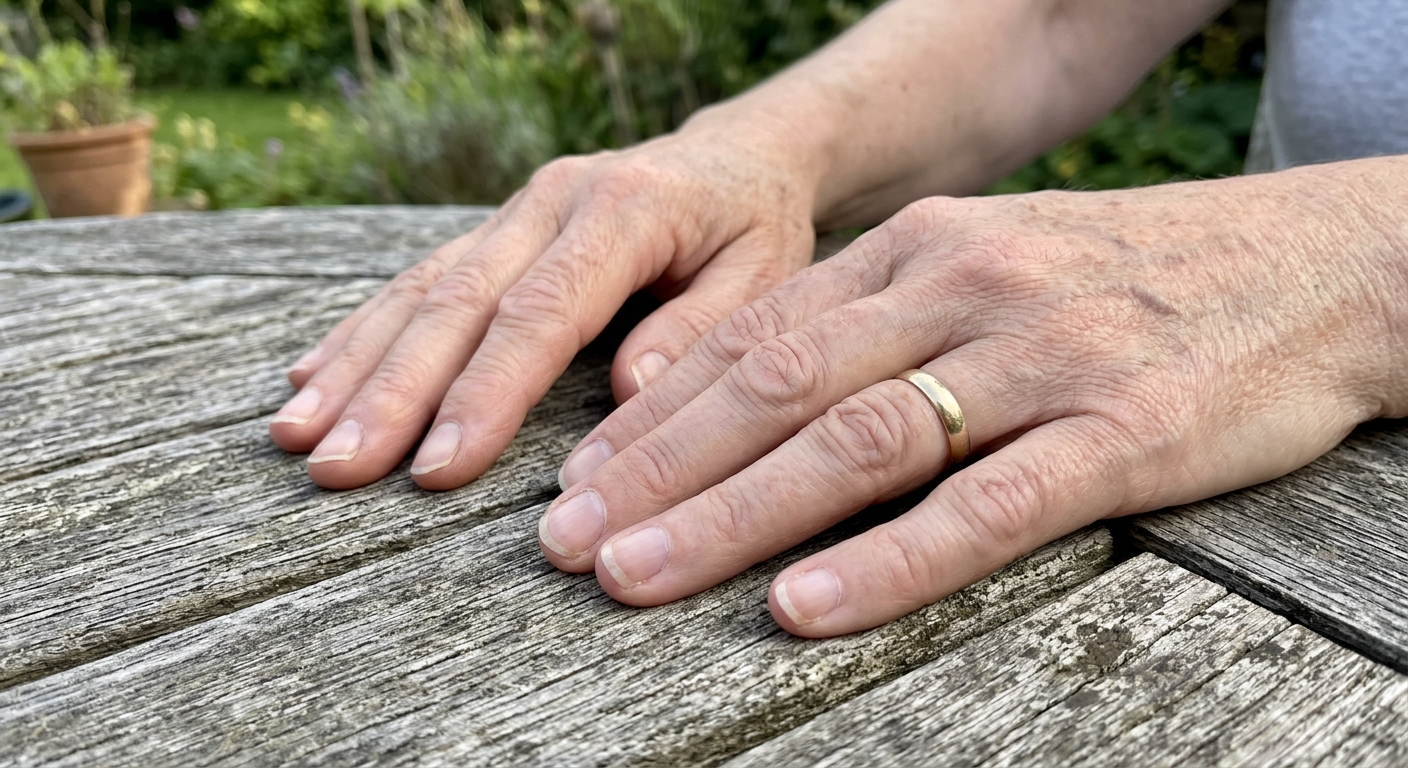
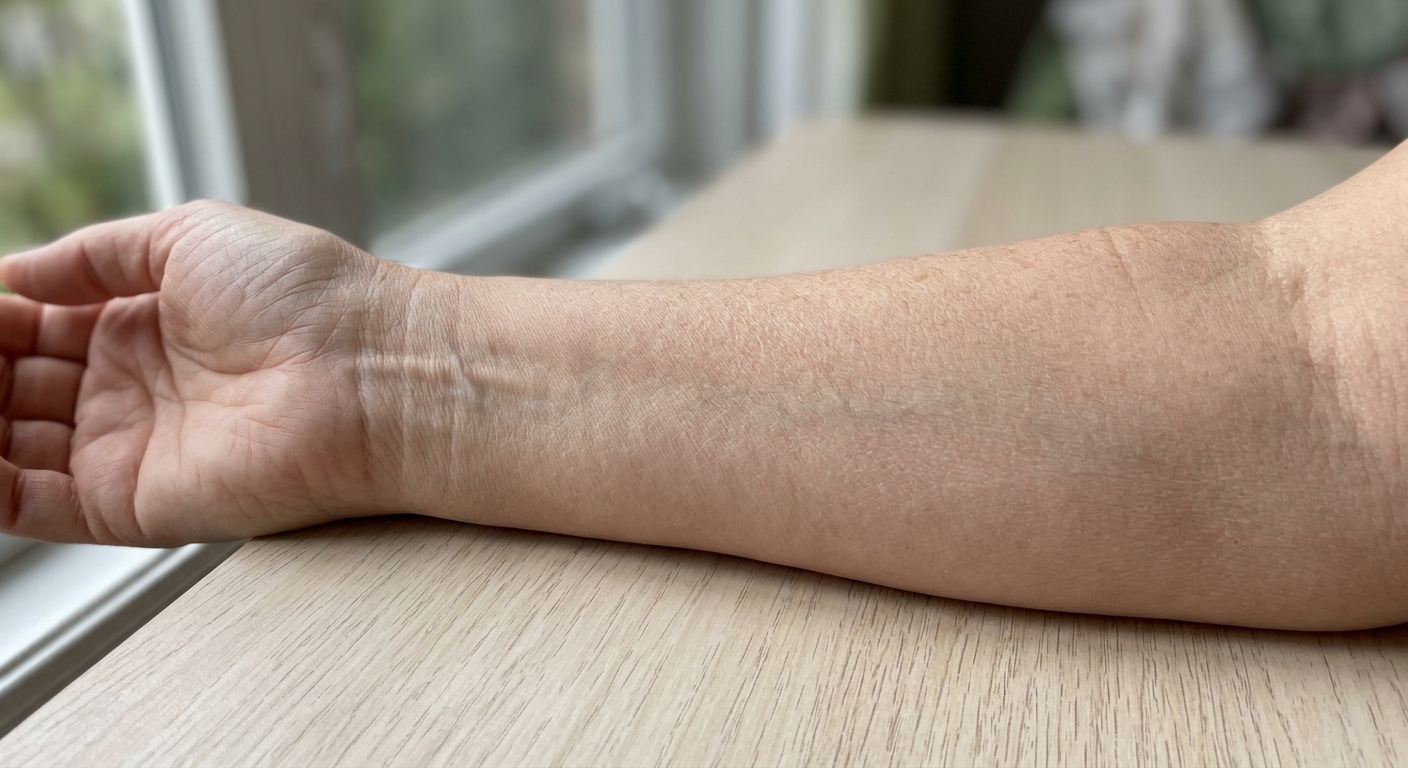
Crepey skin has a texture all its own — fine, close-set lines that look less like a deep wrinkle and more like tissue paper that’s been crumpled and smoothed back out. It shows up on the under-eyes, the neck, the inner arms, the chest, and the knees, often years before deep wrinkles arrive. And it frustrates people because the usual anti-wrinkle advice doesn’t quite fit. Crepiness isn’t one problem. It’s three happening at the same time, and treating only one of them is why so many expensive creams disappoint.
Crepey Skin Is Not the Same as Wrinkles
A wrinkle is a fold — a crease pressed into the skin by repeated muscle movement or a loss of underlying support. Crepiness is a quality of the skin itself: thin, slack, and finely textured across a whole area rather than folded along a single line. That distinction is practical, not academic. Wrinkles respond to things that fill or relax a crease. Crepey skin only improves when you rebuild the thickness and springiness of the skin sheet as a whole.
The Three Forces That Turn Skin Crepey
First, collagen quietly disappears. Collagen is the dense scaffolding that gives skin its thickness and strength, and it declines measurably with age — beginning in the mid-twenties and running at roughly one percent lost per year, faster in women and faster still after menopause [1]. Thinner scaffolding means skin that folds and crinkles under its own weight.
Second, sunlight wrecks the springs. Ultraviolet light activates enzymes that fragment collagen and, crucially, damage elastin — the protein that lets skin snap back after it’s stretched. Over years, UV exposure replaces healthy elastic tissue with a disorganized tangle called solar elastosis, and it suppresses the fibroblasts that would otherwise rebuild [2]. This is why crepiness lands hardest on sun-exposed real estate: the backs of the hands, the forearms, the chest, the neck.
Crepey skin only improves when you rebuild the thickness and springiness of the skin sheet as a whole.
Third, the skin dries out and thins on the surface. As we age, skin holds less water and produces fewer of the lipids that seal moisture in. A dehydrated surface layer exaggerates every fine line, turning skin that is merely thinning into skin that looks visibly crepey. This third factor is the most superficial — and, happily, the fastest to improve.
So Can You Actually Reverse It?
Partly, and it’s worth being honest about which part. The collagen you lost to time won’t fully return, but the damage from sun exposure is a wound the skin can still partially repair once you stop re-inflicting it and give it the right tools. The dryness component can improve in weeks; the structural, collagen-and-elastin component takes months of consistent work. Anyone promising overnight results is selling you the moisture layer and calling it a cure.
Moisture First: The Fastest Visible Win
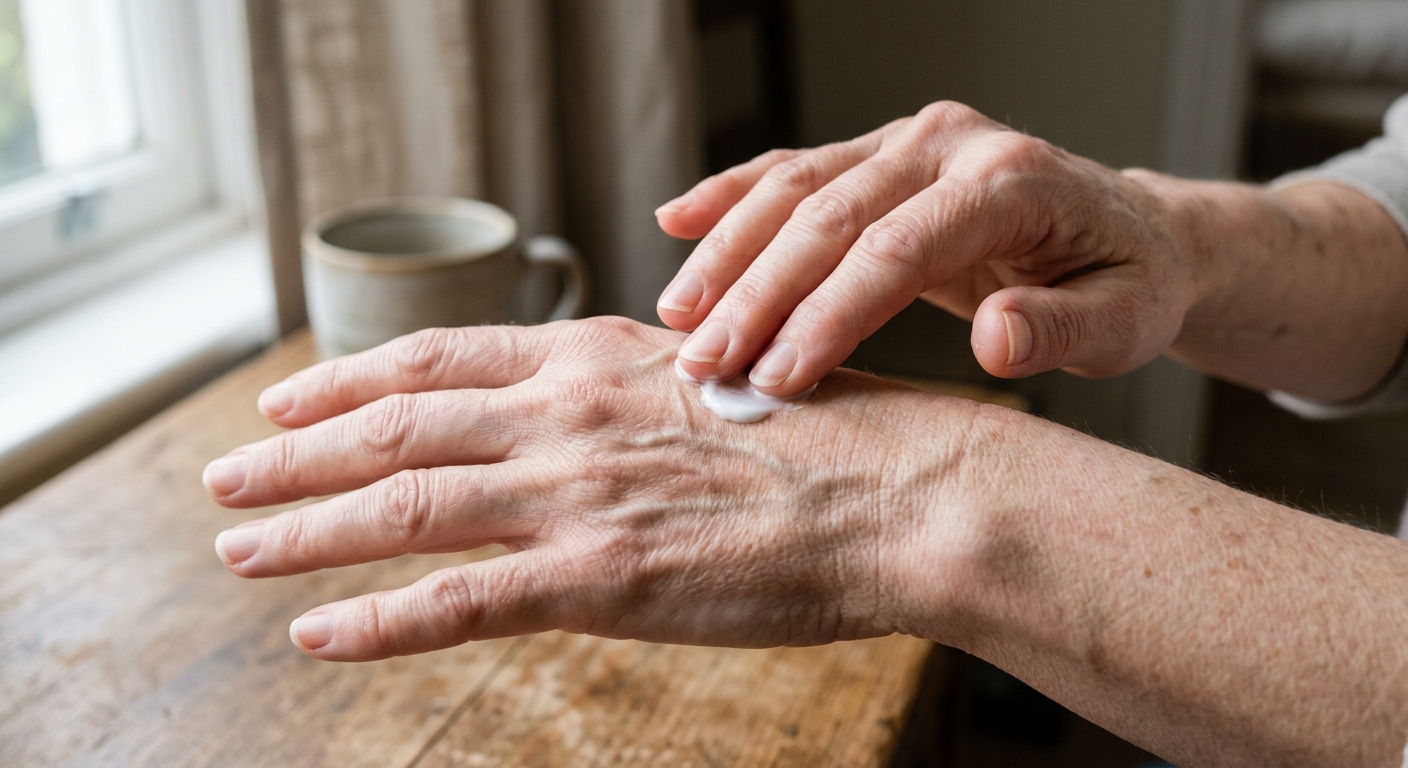
Because surface dehydration amplifies crepiness so much, the quickest improvement comes from aggressive, intelligent hydration — but not all moisturizers are equal here. Humectants like glycerin and hyaluronic acid pull water into the surface, and occlusives seal it in, which visibly plumps fine crinkles within days.
The bigger lever is the alpha-hydroxy acid family. In a controlled study, twice-daily 12% lactic acid didn’t just smooth the surface — it measurably increased the thickness and firmness of both the epidermis and the dermis, along with clinical improvement in lines and texture [3]. That’s an acid doing genuine structural work, not just exfoliating. It’s why a well-formulated AHA belongs in any serious crepey-skin routine; our guide to lactic acid for skin covers how to use it without over-exfoliating.
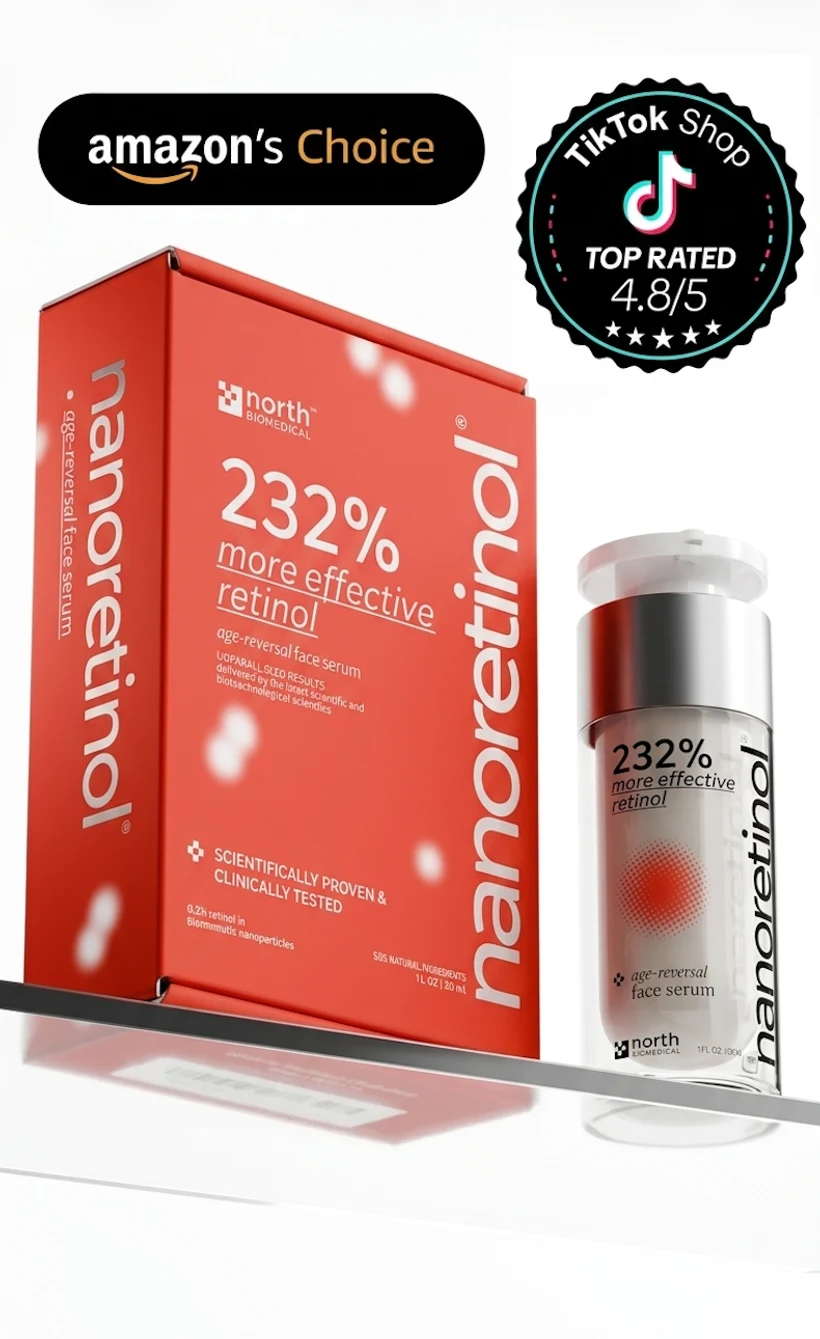
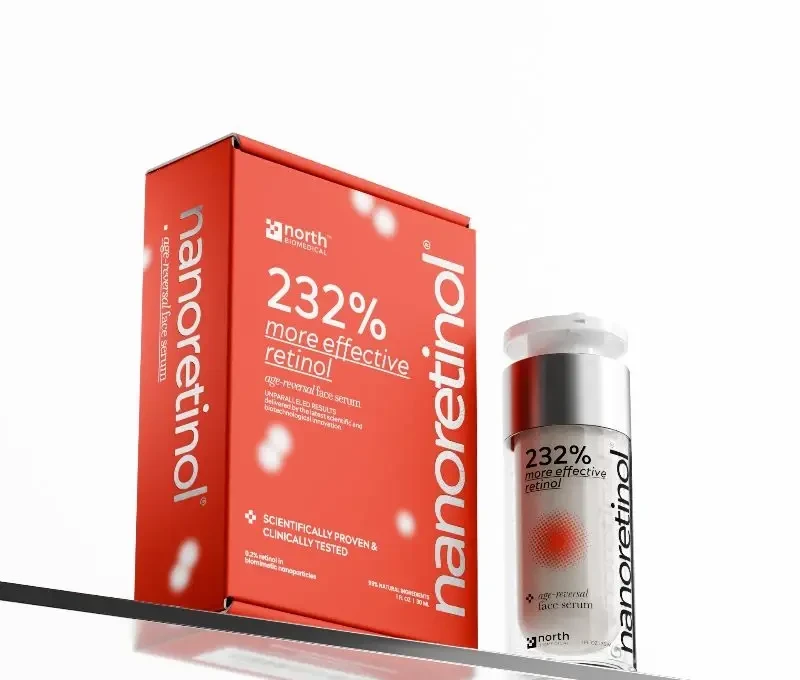
In North Biomedical’s testing, it outperformed conventional retinol by 232% in collagen recovery and 73% in elastin recovery, targeting both proteins that crepiness depends on.
Retinoids: The Structural Fix
For the deeper problem — the thinned, collagen-poor scaffolding — the most evidence-backed topical is a retinoid. In photodamaged skin, tretinoin produced measurable new collagen in the upper dermis versus placebo [4], and across the wider retinoid family the mechanism is consistent: more collagen synthesis, less collagen breakdown, and faster cell turnover [5]. Rebuilding dermal collagen is exactly what crepey skin needs, which is why retinoids outperform any moisturizer for long-term firming. The catch is time and consistency — collagen remodeling is measured in months, and the studies that showed dermal change ran for half a year or more.
Crepey Skin Shows Up Everywhere — Treat It by Region
The same biology drives crepiness wherever it appears, but the practical approach shifts by body part. Thin, delicate zones like the eyelids and neck need gentler actives and slower ramp-ups, while thicker, more resilient skin on the arms and legs can tolerate stronger, more frequent treatment. We’ve covered the specifics for crepey skin on the arms, the neck, the hands, and the face — the ingredient logic is shared, but the dosing is not.
Where Penetration Decides the Outcome
There’s a reason two people can use retinol products with the same percentage on the label and get completely different results. A retinoid only firms skin if it reaches the fibroblasts in the dermis that actually build collagen — and conventional retinol is fragile, degrading in light and air and struggling to cross the skin barrier before it can act. On thin, already-compromised crepey skin, that penetration problem is often the difference between a product that works and one that just sits on top.
This is the specific gap Nanoretinol was engineered to close. It wraps retinol in biomimetic lipid nanoparticles the skin recognizes as its own and lets pass through the barrier, delivering the active to the cells that matter instead of leaving it to break down on the surface. That delivery efficiency is why it works at a gentle, stabilized 0.2% — an important detail when crepey skin is often thin and easily irritated. In North Biomedical’s testing, it outperformed conventional retinol by 232% in collagen recovery and 73% in elastin recovery, targeting both proteins that crepiness depends on. To keep the surface layer supported while the deeper work happens, pair it with a rich moisturizer built for crepey skin.
Firmer Skin Is a Layered Job
Crepey skin never yields to a single hero product, because it isn’t a single problem. Hydrate the surface for the fast win, add an AHA to thicken and smooth, and let a well-delivered retinoid rebuild the collagen and elastin underneath — then protect all of it from the sun that started the damage. Handle all three layers at once, and thin, crinkled skin becomes firmer, smoother, and noticeably more resilient over time.
References
- Shuster S, Black MM, McVitie E. “The Influence of Age and Sex on Skin Thickness, Skin Collagen and Density.” British Journal of Dermatology. 1975;93(6):639-643. doi:10.1111/j.1365-2133.1975.tb05113.x
- Fisher GJ, Kang S, Varani J, Bata-Csorgo Z, Wan Y, Datta S, Voorhees JJ. “Mechanisms of Photoaging and Chronological Skin Aging.” Archives of Dermatology. 2002;138(11):1462-1470. doi:10.1001/archderm.138.11.1462
- Smith WP. “Epidermal and Dermal Effects of Topical Lactic Acid.” Journal of the American Academy of Dermatology. 1996;35(3 Pt 1):388-391. doi:10.1016/S0190-9622(96)90602-7
- Griffiths CEM, Russman AN, Majmudar G, Singer RS, Hamilton TA, Voorhees JJ. “Restoration of Collagen Formation in Photodamaged Human Skin by Tretinoin (Retinoic Acid).” New England Journal of Medicine. 1993;329(8):530-535. doi:10.1056/NEJM199308193290803
- Mambwe B, Mellody KT, Kiss O, O’Connor C, Bell M, Watson REB, Langton AK. “Cosmetic retinoid use in photoaged skin: A review of the compounds, their use and mechanisms of action.” International Journal of Cosmetic Science. 2025;47(1):45-57. doi:10.1111/ics.13013