Crepey Skin on Face: Best Treatments That Actually Work
Why facial skin turns thin and tissue-papery — and the science-backed actives that reverse it
The Tissue-Paper Problem
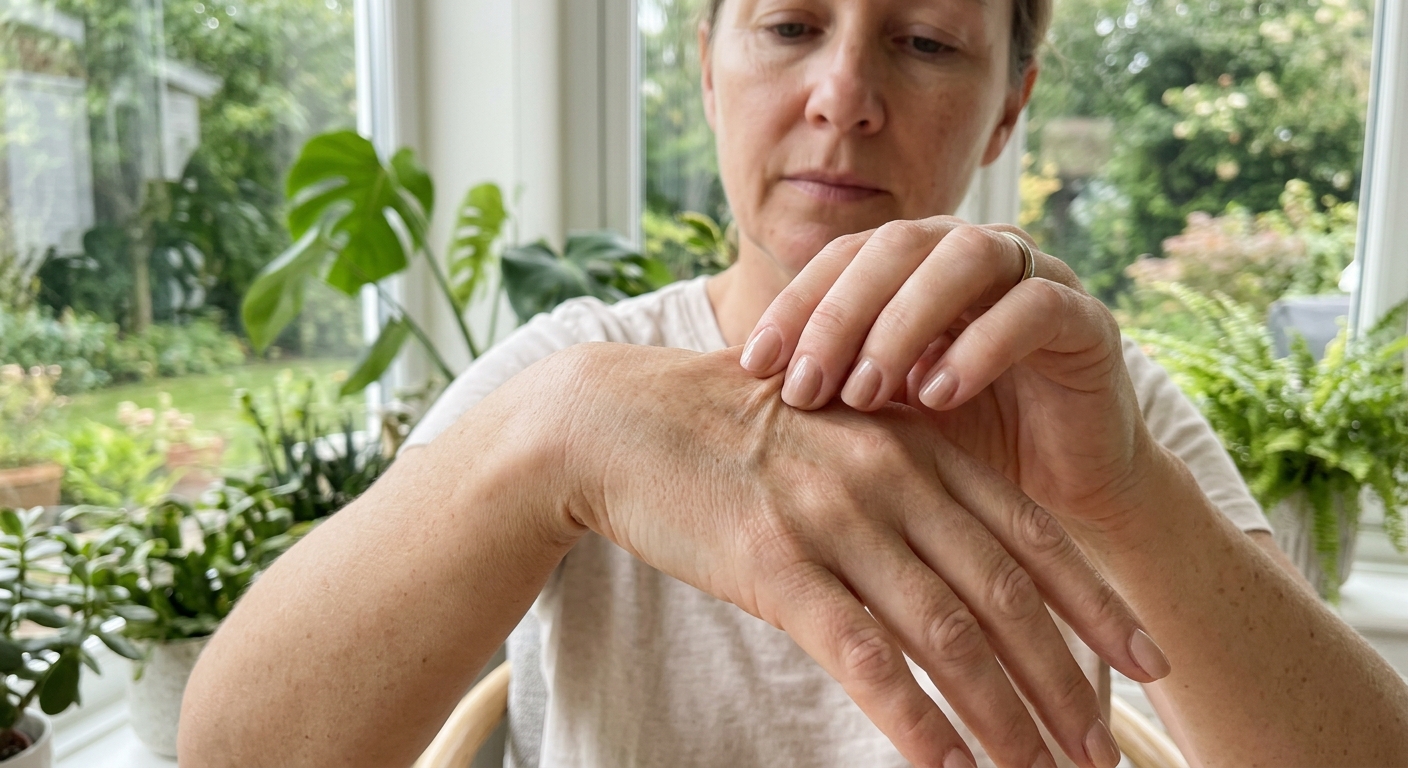
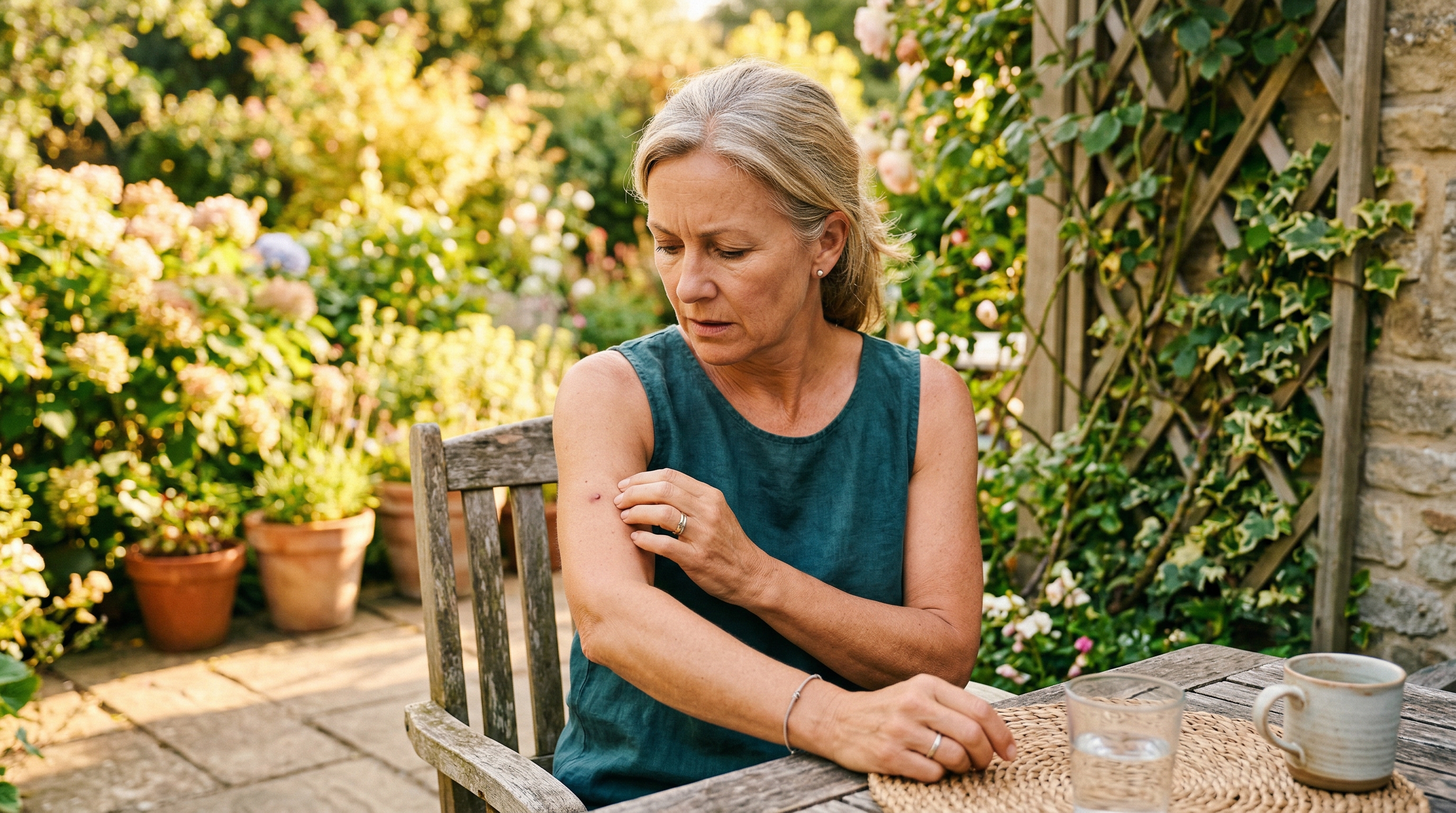
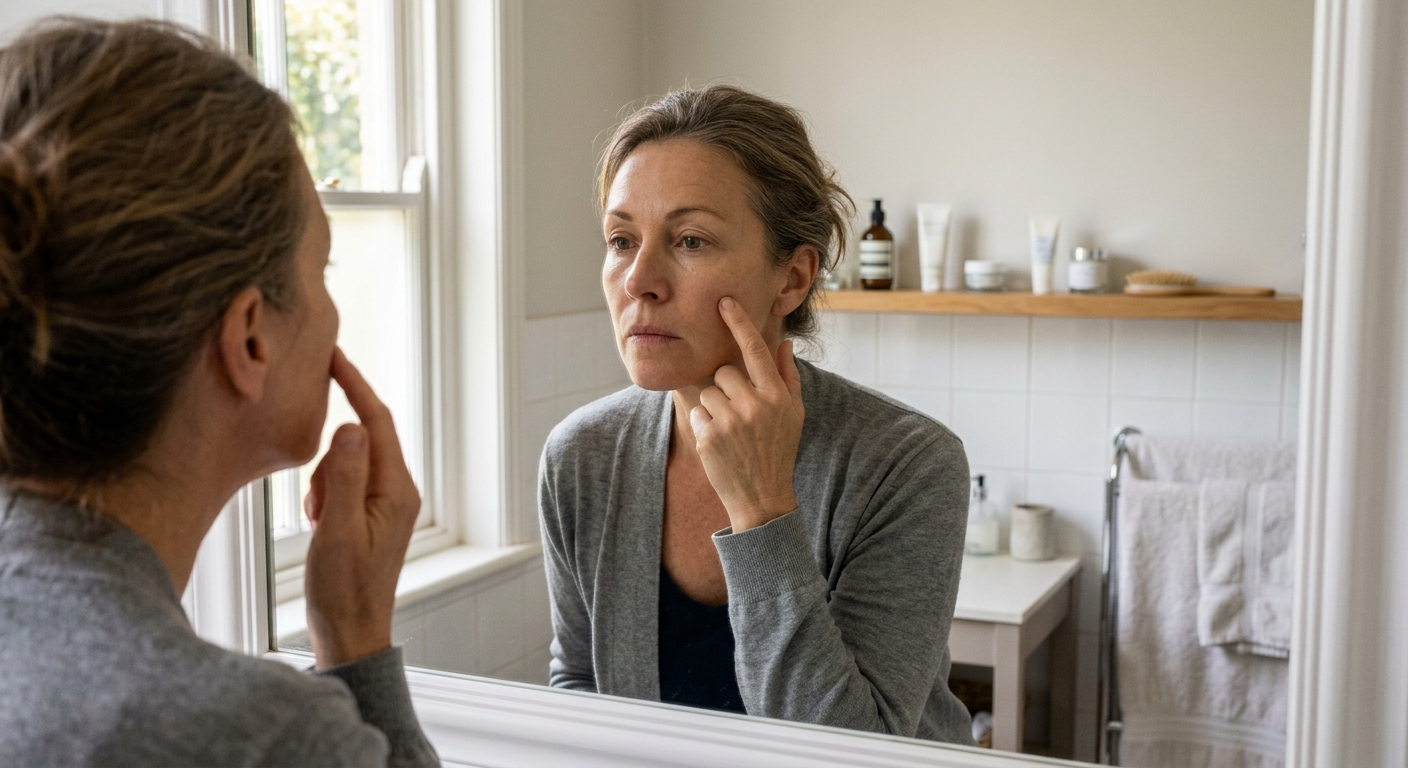
There’s a specific moment most women notice it. You’re talking to someone, maybe laughing, and you catch your reflection in a window. The skin on your cheeks has acquired a faint but unmistakable crinkle — not quite a wrinkle, not just dryness, but a fine cross-hatching that makes the surface look thin and papery. It’s most obvious on the cheeks, the forehead just above the brows, and the area around the mouth.
This is crepey facial skin, named for its resemblance to crêpe paper. And unlike the prominent lines that form in high-movement zones, crepey texture is diffuse — it spreads gradually across the face as the underlying structural network breaks down.
Understanding what actually causes this shift is the first step to reversing it.
Two Structures That Hold Your Face Together
Skin elasticity and firmness depend on two interlocking proteins: collagen and elastin [1]. Collagen provides the scaffolding — the dense fibrous network that keeps skin plump and resistant to mechanical stress. Elastin, as the name implies, gives skin its snap. Press your fingertip against young skin and release it; the instant recoil is elastin at work.
Both decline with age. After thirty, collagen production drops at roughly 1% per year. Elastin fiber networks begin to fragment and accumulate in a degraded, non-functional form — a process accelerated by UV exposure and visible on histological slides as what dermatologists call solar elastosis [1].
The result is skin that can’t bounce back, can’t maintain volume, and begins to crinkle at the surface.
The face, particularly the cheeks and forehead, is especially vulnerable. Unlike the body, facial skin is thinner, experiences constant movement, and receives decades of UV exposure without the protection of clothing.
What Makes Crepey Facial Skin Different From Regular Wrinkles
Standard wrinkles — crow’s feet, frown lines, forehead creases — are primarily caused by repeated muscle contractions. Over time, the skin above those muscles develops a permanent fold.
You’re talking to someone, maybe laughing, and you catch your reflection in a window.
Crepey texture operates on a different mechanism. It results from global structural deterioration: loss of collagen density, elastin fragmentation, and declining hyaluronic acid [2]. You can see crepey texture even in areas that don’t move much — the cheeks at rest, the temples, the area just below the eyes.
This distinction matters because it determines what actually helps. Botox and muscle-relaxing treatments target dynamic wrinkles. Addressing crepey skin requires ingredients that rebuild structural proteins from within — and chief among them is retinol.
Why Retinol Is the Anchor Ingredient for Facial Crepe
Retinol is the only cosmetic ingredient with extensive clinical evidence demonstrating it can [3]:
- Stimulate fibroblast-level collagen synthesis
- Upregulate elastin gene expression, leading to new functional elastin fiber formation [4]
- Accelerate epidermal cell turnover, replacing thinned, degraded surface cells with thicker, denser ones
- Increase epidermal hyaluronic acid, which restores the water-binding capacity that gives plump skin its taut appearance
A 2016 split-face study comparing retinol and retinoic acid (the prescription-strength version) found that retinol significantly improved skin thickness, wrinkle depth, and collagen content after 12 weeks of daily application [5]. The key finding: retinol stimulates collagen type I and type III simultaneously — both structural components that thin with age.
The crepey-to-firm shift requires time. At 6–8 weeks you’ll notice a texture change. The real structural improvement — measurable collagen density increase — accumulates over 3–6 months.
This brings up a rarely discussed limitation of conventional retinol: penetration. Most retinol products rely on formulations that disrupt the skin’s lipid barrier to drive the molecule through. This is why redness, flaking, and sensitivity are so common — the delivery mechanism is inherently irritating. For crepey, already-thin facial skin, that irritation can set back the regenerative process.
The real structural improvement — measurable collagen density increase — accumulates over 3–6 months.
Supporting Ingredients Worth Looking For
Retinol works best alongside a complementary cast:
Hyaluronic acid replenishes the water-binding matrix in the dermis, immediately plumping skin and restoring the smooth surface tension that makes texture less visible.
Peptides — particularly Matrixyl and copper peptides like GHK-Cu — send collagen-synthesis signals to fibroblasts through a different pathway than retinol, making the combination synergistic rather than redundant. The science behind copper peptides and what GHK-Cu actually does for skin is covered in full in our separate guide.
Ceramides repair the epidermal barrier, reducing transepidermal water loss and making skin less susceptible to environmental damage that accelerates crepey deterioration.
Sunscreen is arguably the most important supporting player. UV radiation is the single largest extrinsic driver of elastin fragmentation [1]. No topical treatment can fully reverse damage faster than ongoing sun exposure can create it.
What About Rich Facial Creams?
Heavy moisturizers address a visible component of crepey skin — transepidermal water loss that makes texture look worse. They do not reverse the underlying structural deficit. In terms of active repair, there’s a meaningful difference between a product that fills the gap temporarily and one that rebuilds it.
The best face cream for crepey skin combines barrier repair (ceramides, fatty acids) with proven actives (retinol, peptides) rather than relying purely on occlusive moisturization. Emollient-rich products improve the appearance within hours; structural change takes months of active-ingredient use.
For a deeper look at how retinol concentration and formulation affect outcomes on crepey texture specifically, our guide on retinol for crepey skin covers the practical choices in detail.
The Delivery Problem — and a Newer Approach
One of the most consistent findings in retinology is that delivery efficiency matters as much as concentration. A 1% retinol that barely crosses the stratum corneum may deliver less active ingredient to dermal fibroblasts than a 0.2% retinol in an advanced system [3].
This is the principle behind Nanoretinol — retinol encapsulated in biomimetic lipid nanoparticles. In a head-to-head clinical study, Nanoretinol delivered +232% improvement in collagen recovery and +73% improvement in elastin recovery compared to conventional retinol. Clinical results over 56 days showed +61% increase in skin firmness and +56% increase in skin elasticity.
Because the nanoparticles are biomimetically designed to be recognized by skin cells as “self,” penetration happens without the barrier disruption that makes conventional retinol irritating — particularly relevant for the thinner, more reactive skin of the face where crepey texture is most visible.
The Practical Plan
To visibly improve crepey facial skin:
- Apply a retinol or encapsulated retinol product nightly — start 3× per week if new to retinol, build to daily
- Layer hyaluronic acid (apply on damp skin) and a ceramide-rich moisturizer after
- Add a peptide serum in the morning routine
- Use broad-spectrum SPF 30+ every morning without exception
- Reassess at 3 months, then 6 months — structural change is cumulative
The tissue-paper appearance of facial crepey skin is one of the more reversible signs of aging, provided you’re working with the right ingredients at sufficient depth.
References
- Uitto J. “The role of elastin and collagen in cutaneous aging: intrinsic aging versus photoexposure.” Journal of Drugs in Dermatology. 2008;7(2 Suppl):s12-16. PMID 18404866
- Quan T. “Human Skin Aging and the Anti-Aging Properties of Retinol.” Biomolecules. 2023;13(11):1614. doi:10.3390/biom13111614
- Mukherjee S, Date A, Patravale V, Korting HC, Roeder A, Weindl G. “Retinoids in the treatment of skin aging: an overview of clinical efficacy and safety.” Clinical Interventions in Aging. 2006;1(4):327–348. doi:10.2147/ciia.2006.1.4.327
- Rossetti D, Kielmanowicz MG, Vigodman S, et al. “A novel anti-ageing mechanism for retinol: induction of dermal elastin synthesis and elastin fibre formation.” International Journal of Cosmetic Science. 2011;33(1):62-69. doi:10.1111/j.1468-2494.2010.00588.x
- Kong R, Cui Y, Fisher GJ, et al. “A comparative study of the effects of retinol and retinoic acid on histological, molecular, and clinical properties of human skin.” Journal of Cosmetic Dermatology. 2016;15(1):49-57. doi:10.1111/jocd.12193