Crepey Hands: Why They Happen and How to Firm Thin, Wrinkled Skin
Hands age faster than almost anywhere else on the body. Here's the biology behind crepey skin — and what genuinely rebuilds it.
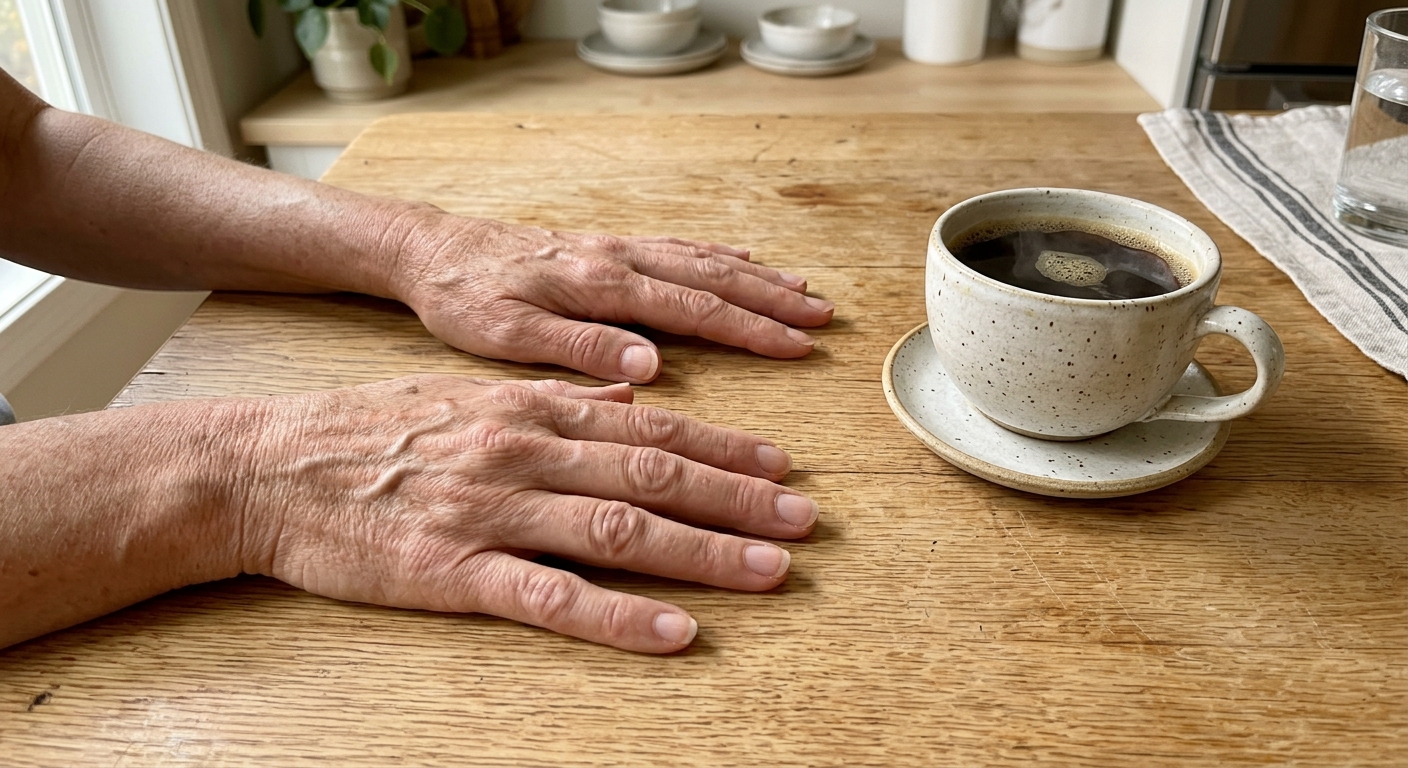
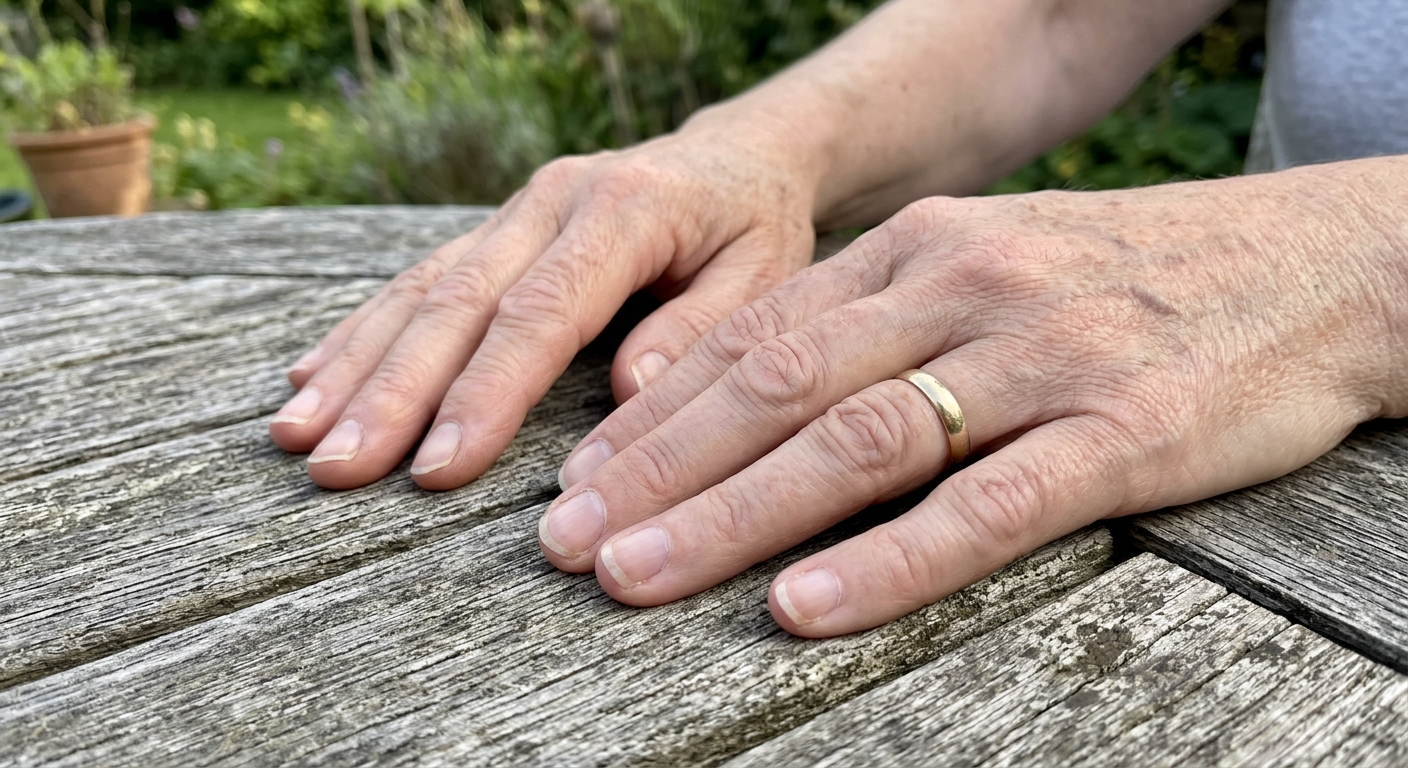
You can get a great haircut, a flattering outfit, and a perfect night’s sleep — and still be given away by your hands. The skin on the back of the hands is among the first to look aged, and “crepey” is the word almost everyone reaches for: thin, loose, finely wrinkled, with the texture of tissue paper that has been crumpled and smoothed back out.
Crepey hands are not just dryness, and they are not inevitable. They are the visible signal of specific structural changes happening below the surface — and once you understand those changes, the fix becomes obvious.
What “Crepey” Actually Means
Healthy young skin is plump and springy because of two proteins in the dermis, the layer beneath the surface. Collagen is the dense scaffolding that provides firmness and thickness. Elastin is the coiled fiber network that lets skin stretch and snap back.
With age, both decline. Collagen production slows — the body loses roughly 1% of its collagen per year from the mid-twenties onward — and the dermis literally gets thinner. At the same time, the elastin network degrades and fragments rather than being cleanly replaced [1][2]. A thinner scaffold plus a failing spring equals skin that no longer fills its own space. Under the lighter, looser conditions of the hand, that reads as fine, parallel crinkling: crepe.
Why Hands Age Faster Than Your Face
Hands are in a uniquely bad position for staying youthful.
Most people apply sunscreen to their face daily and never think about the backs of their hands, yet hands are exposed every time you drive, walk, or sit near a window.
First, the skin there is naturally thin, with less fat padding underneath than the face — so any loss of dermal thickness shows immediately. Second, hands receive an enormous, unprotected UV dose. Most people apply sunscreen to their face daily and never think about the backs of their hands, yet hands are exposed every time you drive, walk, or sit near a window. UV radiation is the single biggest accelerator of crepey skin: it switches on enzymes that fragment existing collagen and elastin and stalls the synthesis of new fibers [2]. Third, hands are washed and sanitized constantly, stripping the protective lipid barrier and worsening the dryness that makes crepey texture look even worse.
The result is that hands often look a decade older than the face of the same person — not because they age differently, but because they get more damage and less care.
What Helps a Little — and Why It Is Not Enough
Two habits genuinely matter and should not be skipped.
Moisturizer improves things temporarily. A good emollient cream fills the surface gaps between skin cells and slows water loss, so crepey skin looks smoother and less papery right after application [6]. Occlusion under a glove pushes that surface effect further for a night, which is what a hand mask actually delivers. But this is a surface effect. It does not add collagen or rebuild elastin, so the improvement disappears as the cream wears off.
Daily SPF on the hands is the most important preventive step there is — it stops further UV damage. But prevention is not repair. Sunscreen protects the collagen you still have; it cannot put back what is already gone. To actually firm crepey skin, you need something that reaches the dermis and tells it to rebuild. That is a different category of ingredient entirely.
The same biology applies whether the skin in question is on your face, your arms, or the backs of your hands.
What Actually Rebuilds Crepey Skin
The most evidence-backed topical for this job is retinol, a form of vitamin A.
Retinol is not an occlusive or an emollient — it is a cell-communicating active. It penetrates to the dermis, binds receptors inside skin cells, and switches collagen production back on while normalizing cell turnover. The evidence is unusually strong. In a landmark study, topical tretinoin — prescription-strength vitamin A — was shown to restore collagen formation in photodamaged skin, directly reversing one of the core mechanisms behind crepey texture [3]. A randomized controlled trial of over-the-counter retinol on naturally aged skin found significant improvement in fine wrinkles alongside increased collagen [4]. And a 2025 network meta-analysis pooling 23 randomized trials ranked retinol among the most effective topical agents for fine wrinkles [5].
The same biology applies whether the skin in question is on your face, your arms, or the backs of your hands. Crepey skin is crepey skin — the treatment target is dermal collagen.
The Delivery Problem — and the Fix
If retinol is this good, why doesn’t everyone use it on their hands? Two reasons: irritation, and the fact that traditional retinol does not penetrate especially well in the first place. Conventional formulations get through the skin barrier by partially disrupting it, which is exactly what causes the redness, peeling, and stinging that make people quit.
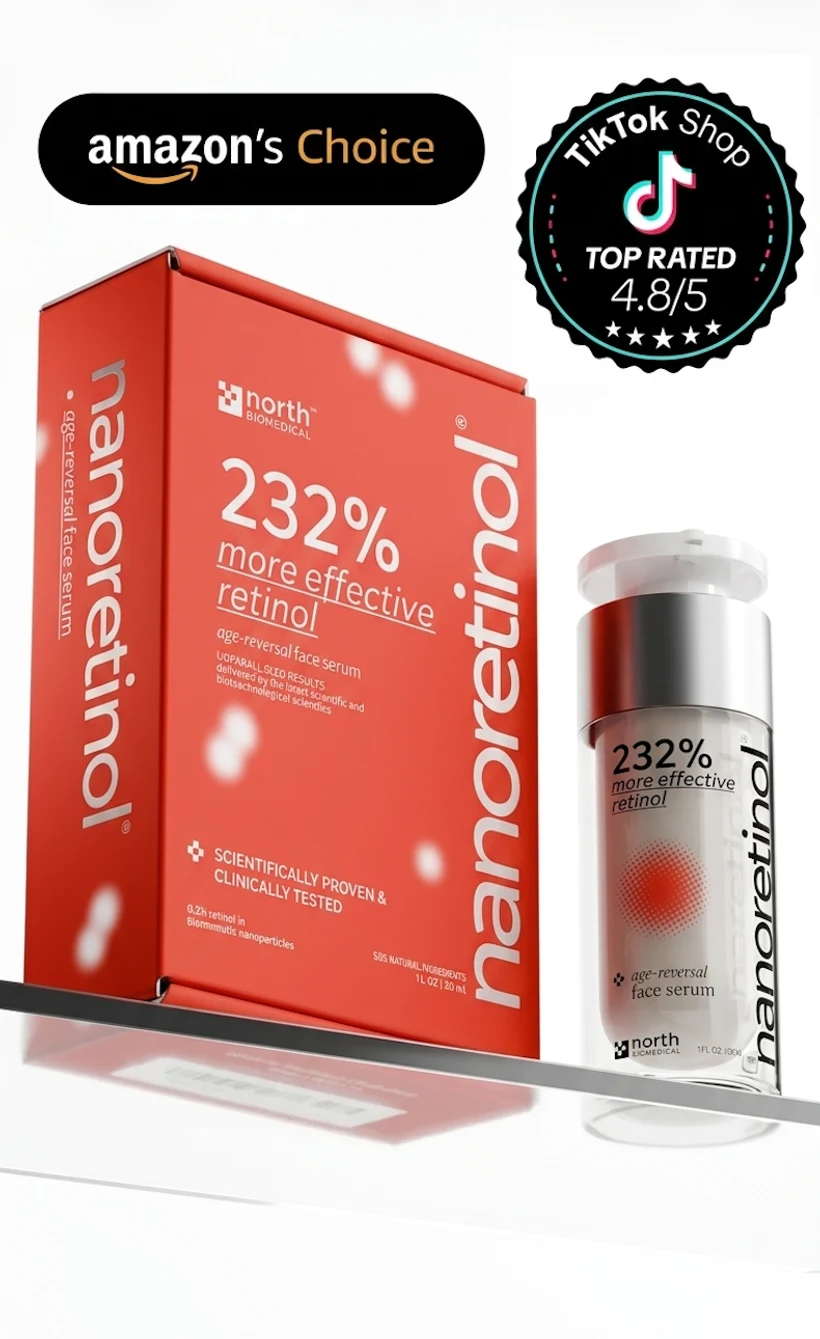
Nanoretinol was engineered to remove that trade-off. It encapsulates retinol inside biomimetic lipid nanoparticles — particles the skin recognizes as “self” and allows through the barrier intact, no damage required. More retinol reaches the dermis where collagen is made, and clinical testing shows side effects that are minimal and, when they occur, milder than those of conventional retinol. Because it is water-based, lightweight, and 99% natural, it absorbs without the greasy film that makes people skip hand products.
A Simple Routine for Crepey Hands
Treating crepey hands is not complicated:
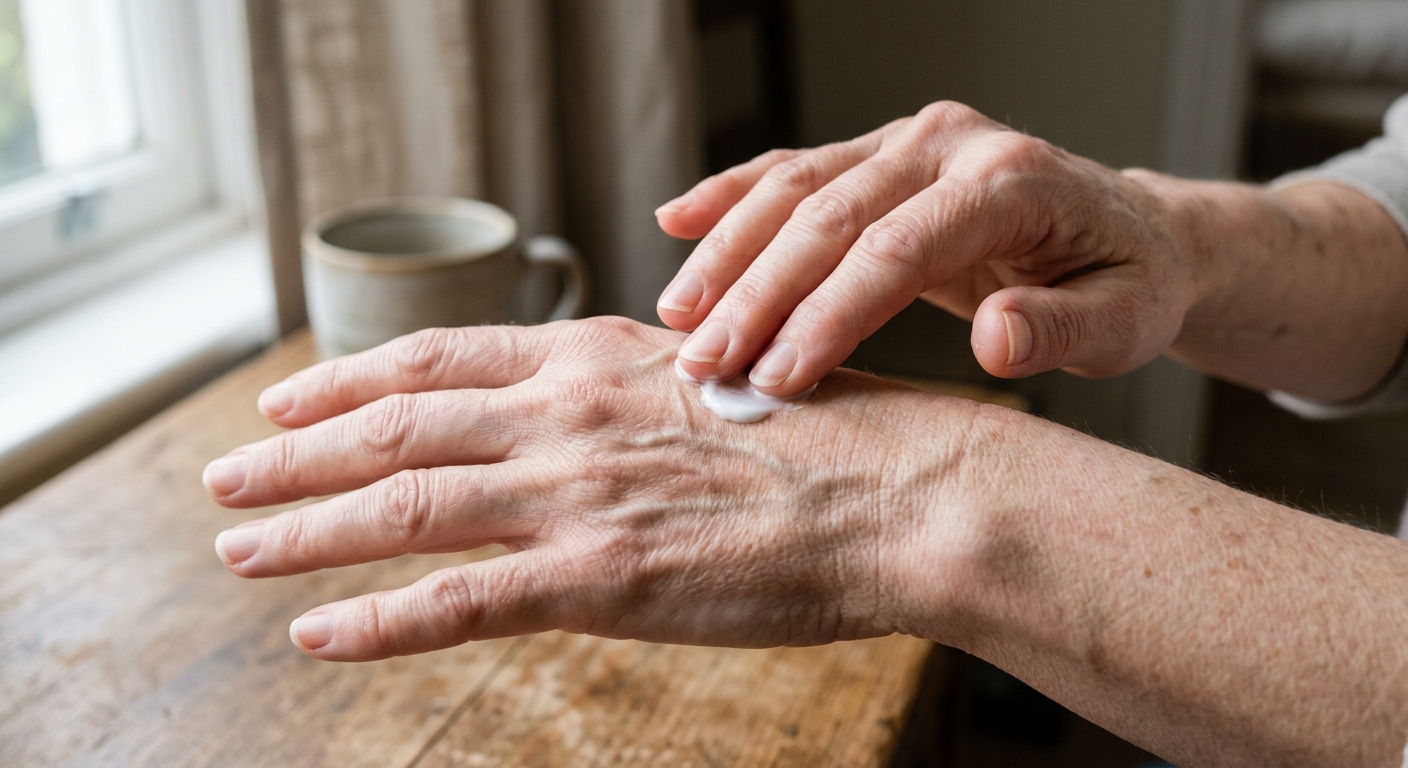
- At night, apply a pea-sized amount of Nanoretinol to clean, dry hands. This is the active step — the one doing structural work.
- Follow with a moisturizer to lock in comfort and support the barrier that frequent washing strips.
- Every morning, apply broad-spectrum SPF to the backs of the hands — and reapply after washing. This protects the collagen your nighttime routine is rebuilding.
Consistency is everything. Collagen is built slowly; meaningful change in crepey skin is measured over months, not days. But unlike a moisturizer that resets every morning, this routine compounds.
Hands Worth Showing
Crepey hands are a structural problem — thin dermis, lost collagen, fragmented elastin, accelerated by a lifetime of unprotected sun. Moisturizer and sunscreen manage and prevent. Rebuilding takes an active that actually reaches the dermis. Treat your hands with the same seriousness you give your face, and they will stop being the detail that gives everything away.
References
- Uitto J. “The role of elastin and collagen in cutaneous aging: intrinsic aging versus photoexposure.” Journal of Drugs in Dermatology. 2008;7(2 Suppl):s12-16. PMID: 18404866
- Shin JW, Kwon SH, Choi JY, Na JI, Huh CH, Choi HR, Park KC. “Molecular Mechanisms of Dermal Aging and Antiaging Approaches.” International Journal of Molecular Sciences. 2019;20(9):2126. doi:10.3390/ijms20092126
- Griffiths CE, Russman AN, Majmudar G, Singer RS, Hamilton TA, Voorhees JJ. “Restoration of collagen formation in photodamaged human skin by tretinoin (retinoic acid).” New England Journal of Medicine. 1993;329(8):530-535. doi:10.1056/NEJM199308193290803
- Kafi R, Kwak HSR, Schumacher WE, Cho S, Hanft VN, Hamilton TA, et al. “Improvement of naturally aged skin with vitamin A (retinol).” Archives of Dermatology. 2007;143(5):606-612. doi:10.1001/archderm.143.5.606
- Lin L, Chen X, Liu C, et al. “Comparative efficacy of topical interventions for facial photoaging: a network meta-analysis.” Scientific Reports. 2025;15:26889. doi:10.1038/s41598-025-12597-0
- Rajkumar J, Chandan N, Lio P, Shi V. “The Skin Barrier and Moisturization: Function, Disruption, and Mechanisms of Repair.” Skin Pharmacology and Physiology. 2023;36(4):174-185. doi:10.1159/000534136