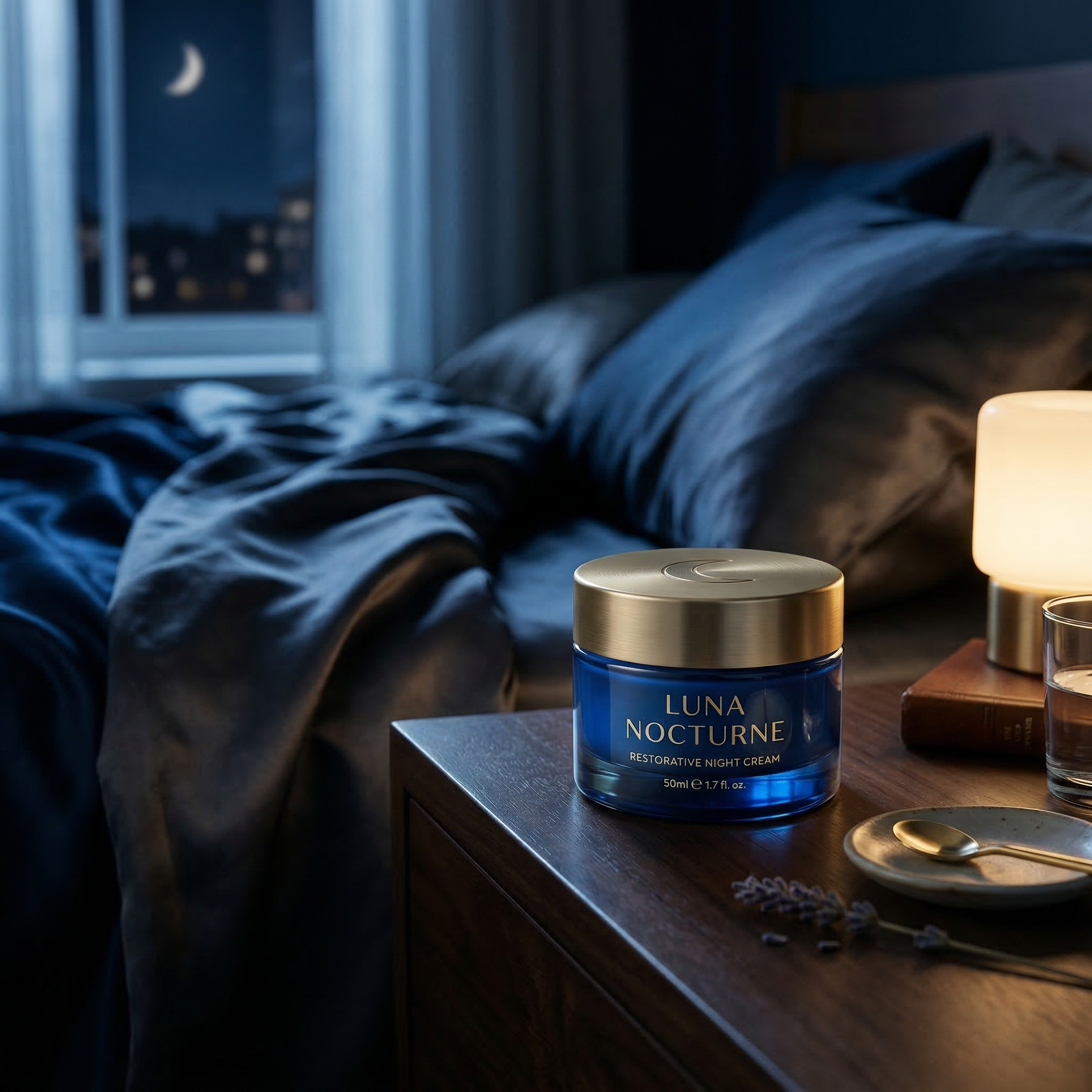
Anti Wrinkle Night Cream: What Actually Works While You Sleep, According to Science
Why your skin repairs itself at night, which ingredients matter in a night cream, and how delivery technology separates effective formulas from expensive moisturizers
Your skin runs on a circadian clock — a 24-hour rhythm that dictates when it defends, when it repairs, and when it is most receptive to active ingredients. If you have ever wondered whether an anti wrinkle night cream is worth the investment or just clever marketing, the answer lives in this biology.
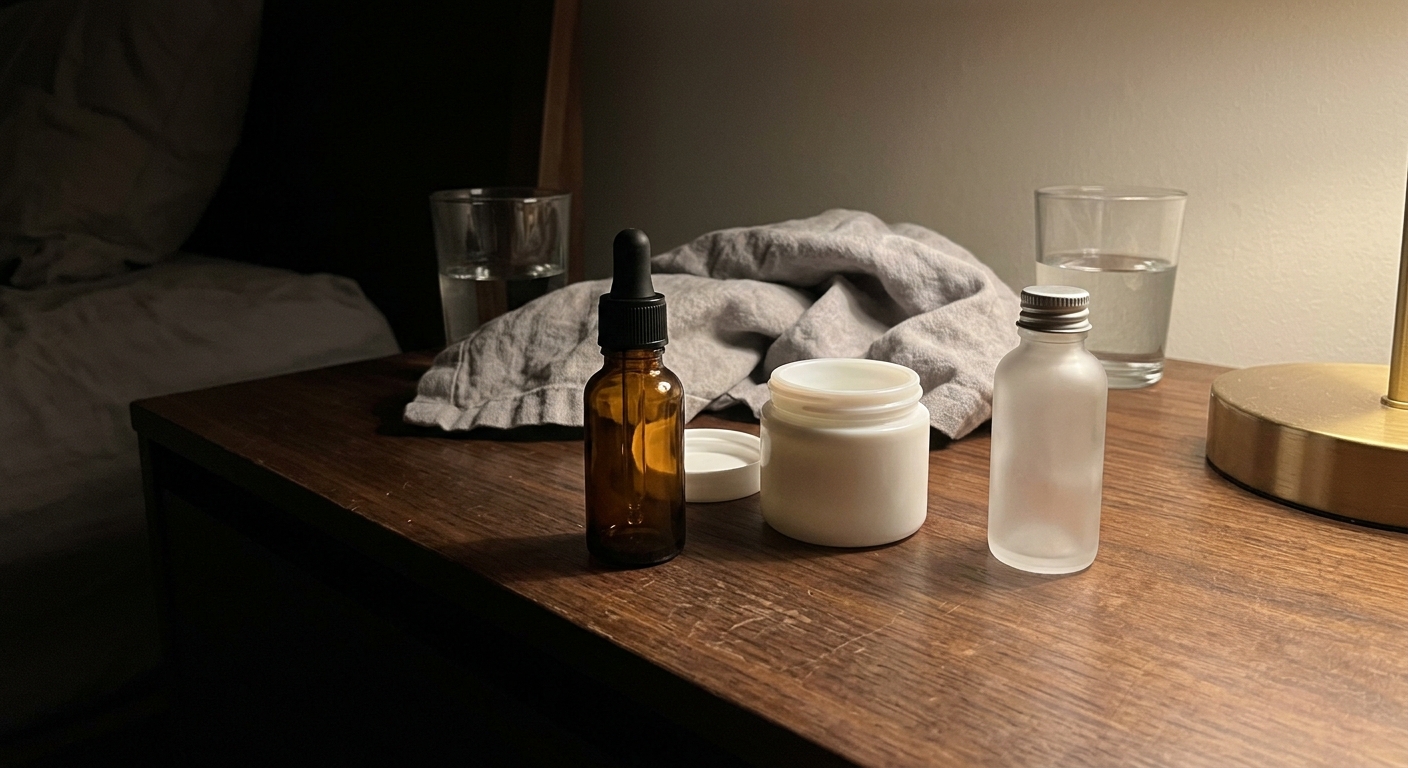
Nighttime is when your skin shifts from defense mode to repair mode. The right night cream takes advantage of that window. The wrong one is an expensive moisturizer in a dark jar.
Your Skin Has a Night Shift
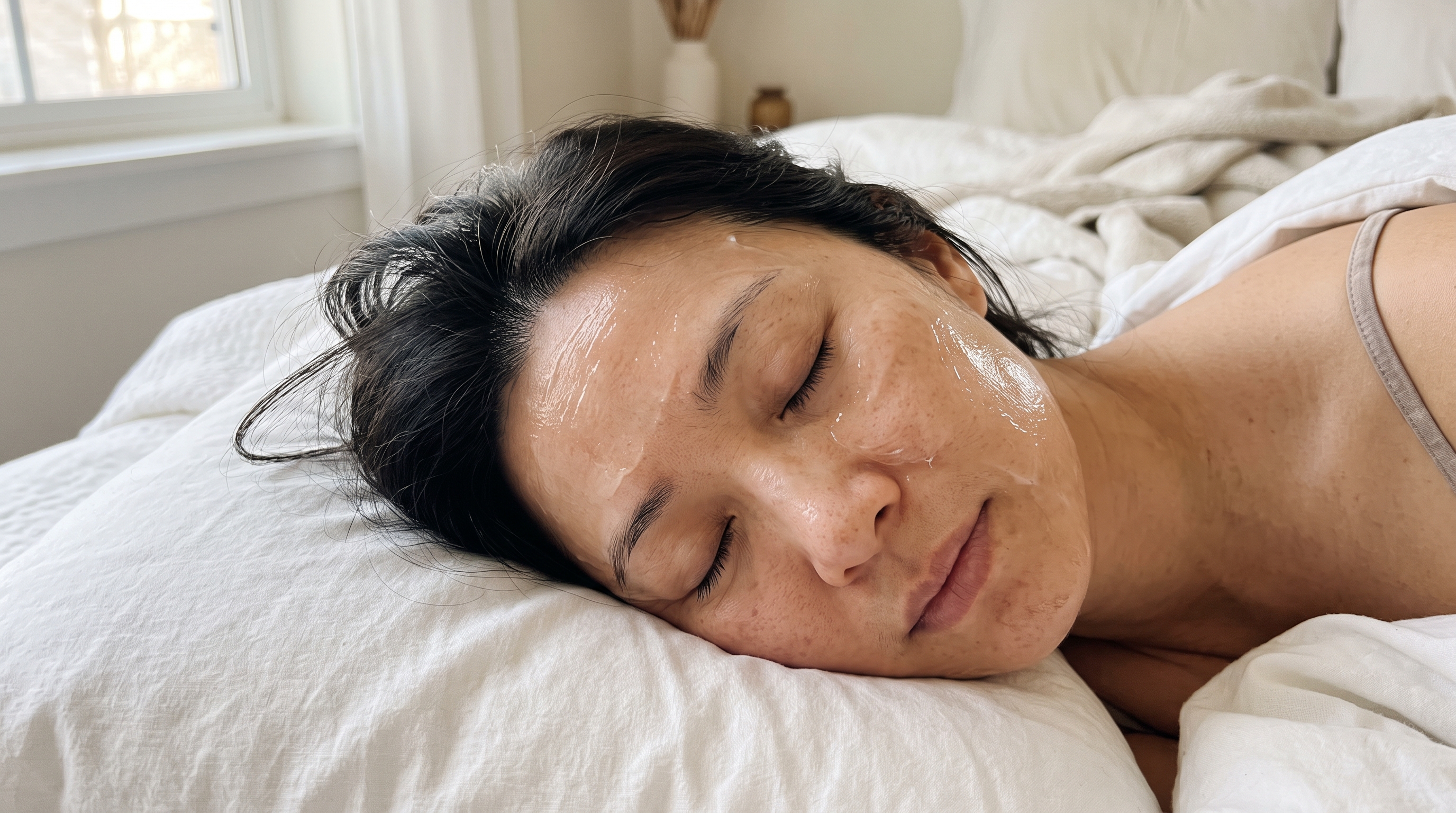
During the day, your skin is a fortress — blocking UV radiation, resisting pollution, maintaining its barrier against water loss. Blood flow is relatively low, the barrier is at its tightest, and cell division is suppressed. At night, everything reverses.
Yosipovitch et al. found that transepidermal water loss (TEWL) — a measure of barrier permeability — increases significantly overnight [1]. The barrier is more open, with two consequences: the skin loses moisture faster, and topically applied ingredients penetrate more deeply.
Simultaneously, cell turnover accelerates. Matsui et al. documented that epidermal cell proliferation peaks during sleep, driven by circadian regulation of growth factors and DNA repair enzymes [2]. Your skin is literally rebuilding itself at night — replacing damaged cells, synthesizing new proteins, and repairing UV-induced DNA damage accumulated during the day.
This creates a window of opportunity. Active ingredients applied at night, whether in a cream or a night serum, encounter a more permeable barrier and arrive when the cellular machinery for repair is most active. A night cream formulated with the right actives is not just moisturizing sleeping skin — it is supplying raw materials to a construction site during its busiest shift. It is also the window in which the skin’s own melatonin, produced within the tissue itself, does its antioxidant work. It is the same window an overnight face mask is built to exploit.
The Ingredients That Earn Their Place
Not every ingredient benefits from nighttime application. Some are photostable and work fine during the day. Others are photosensitive, best absorbed through a relaxed barrier, or synergistic with the skin’s nocturnal repair processes. Here is what the evidence supports for an anti wrinkle night cream.
Retinol: The Cornerstone
Retinol is photosensitive. UV exposure degrades it and reduces its efficacy, which is why virtually every dermatologist recommends nighttime application. But the timing advantage goes deeper than photostability.
Retinol converts to retinoic acid in the skin, binding nuclear receptors that upregulate collagen synthesis and accelerate cell turnover [3]. These are precisely the processes the skin’s circadian rhythm amplifies at night. Applying retinol during this window means the ingredient and the biology are working in the same direction — like swimming with the current instead of against it.
Mukherjee et al. confirmed retinoids’ ability to increase dermal collagen, reduce fine lines, and improve skin texture [3]. No other over-the-counter ingredient has a comparable evidence base for anti-wrinkle efficacy.
The challenge has always been tolerability — the same mechanism that makes retinol effective can cause irritation and peeling. This is where formulation and delivery technology become critical factors.
Your skin runs on a circadian clock — a 24-hour rhythm that dictates when it defends, when it repairs, and when it is most receptive to active ingredients.
Ceramides: Barrier Repair During the Vulnerable Window
Ceramides — lipids comprising roughly 50% of the stratum corneum — are essential for barrier integrity. With nighttime TEWL elevated, replenishing them matters more while you sleep.
Spada et al. demonstrated that creams mimicking the skin’s natural moisturizing systems significantly increased hydration [5]. In a night cream, ceramides serve a dual purpose: replenishing barrier lipids depleted during sleep and creating an environment where retinol can work without causing excessive dryness. Think of ceramides as mortar between bricks — at night, when that mortar is naturally more permeable, replenishing it prevents dehydration while preserving ingredient penetration.
Hyaluronic Acid: The Hydration Buffer
Hyaluronic acid holds up to 1,000 times its weight in water. In a night cream, it counteracts increased overnight moisture loss by binding water in the upper skin layers.
The benefits of hyaluronic acid are primarily supportive — it creates the hydrated environment in which collagen synthesis and cell turnover function optimally. Adequate hydration is not a luxury; it is a precondition for effective cellular renewal.
Peptides: Signaling Support
Peptides are short chains of amino acids that act as signaling molecules, prompting fibroblasts to increase production of collagen, elastin, and other extracellular matrix components. Applied at night when fibroblast activity is naturally elevated, peptides amplify the skin’s own repair signals.
Lupo’s review of antioxidant and vitamin formulations in cosmetics noted the growing evidence for peptide efficacy in supporting skin structure [4]. While the data is less extensive than for retinoids, certain peptides — particularly palmitoyl pentapeptide-4 and copper tripeptide-1 — have shown measurable improvements in skin firmness and fine line reduction.
Niacinamide: The Versatile Support Player
Niacinamide (vitamin B3) strengthens the barrier, reduces inflammation, and regulates sebum. Its anti-inflammatory action buffers retinol’s irritation potential, making it one of the most broadly beneficial supporting ingredients in a nighttime formula.
What to Avoid in a Night Cream
Not everything belongs in a nighttime anti-aging formula.
SPF. Sunscreen in a night cream is pointless and signals that the formulator is not thinking about circadian skin biology. It adds unnecessary ingredients to a formula where they serve no purpose and may interfere with the penetration of active ingredients.
High concentrations of AHAs or BHAs combined with retinol. Both exfoliate; using them simultaneously increases the risk of barrier damage, irritation, and sensitivity. If you use glycolic acid or salicylic acid, alternate nights with retinol rather than layering them.
If you use glycolic acid or salicylic acid, alternate nights with retinol rather than layering them.
Fragrance in high concentrations. Ingredients sit on the skin for 6-8 hours under occlusion. Fragrance compounds tolerable during short daytime wear can cause sensitization overnight.
Alcohol denat as a primary solvent. It strips barrier lipids — exactly what you do not want when TEWL is already elevated.
Why Delivery Technology Matters More Than You Think
Here is where most night cream conversations go wrong. They focus on which ingredients are listed on the label and ignore the fundamental question: can those ingredients reach the cells where they need to work?
Baumann emphasized that the efficacy of topical anti-aging agents depends not just on the active molecule but on the delivery vehicle [6]. A retinol molecule that degrades on the surface or cannot penetrate past the stratum corneum is clinically irrelevant regardless of concentration.
This is why encapsulated delivery systems represent a genuine advance rather than a marketing gimmick. Lipid nanoparticle encapsulation — the technology behind Nanoretinol® from North Biomedical® — protects retinol from oxidative degradation, facilitates transport across the skin barrier, and enables controlled release into the dermis where retinoic acid receptors reside.
The practical impact: more active ingredient reaches its target, less is wasted to degradation, and controlled release reduces the irritation-causing peak concentration. For a night cream — where the product sits on skin for hours — sustained delivery is particularly advantageous.
Building an Effective Nighttime Routine
An effective anti wrinkle night cream does not need to contain every beneficial ingredient in a single jar. In fact, layering gives you more control.
Step 1: Cleanse. Remove sunscreen, pollution, and sebum. A clean surface ensures maximum penetration. The full sequence this step belongs to is set out in our night skincare routine guide.
Step 2: Active treatment. Apply retinol on clean, dry skin. It should go on first to ensure direct contact.
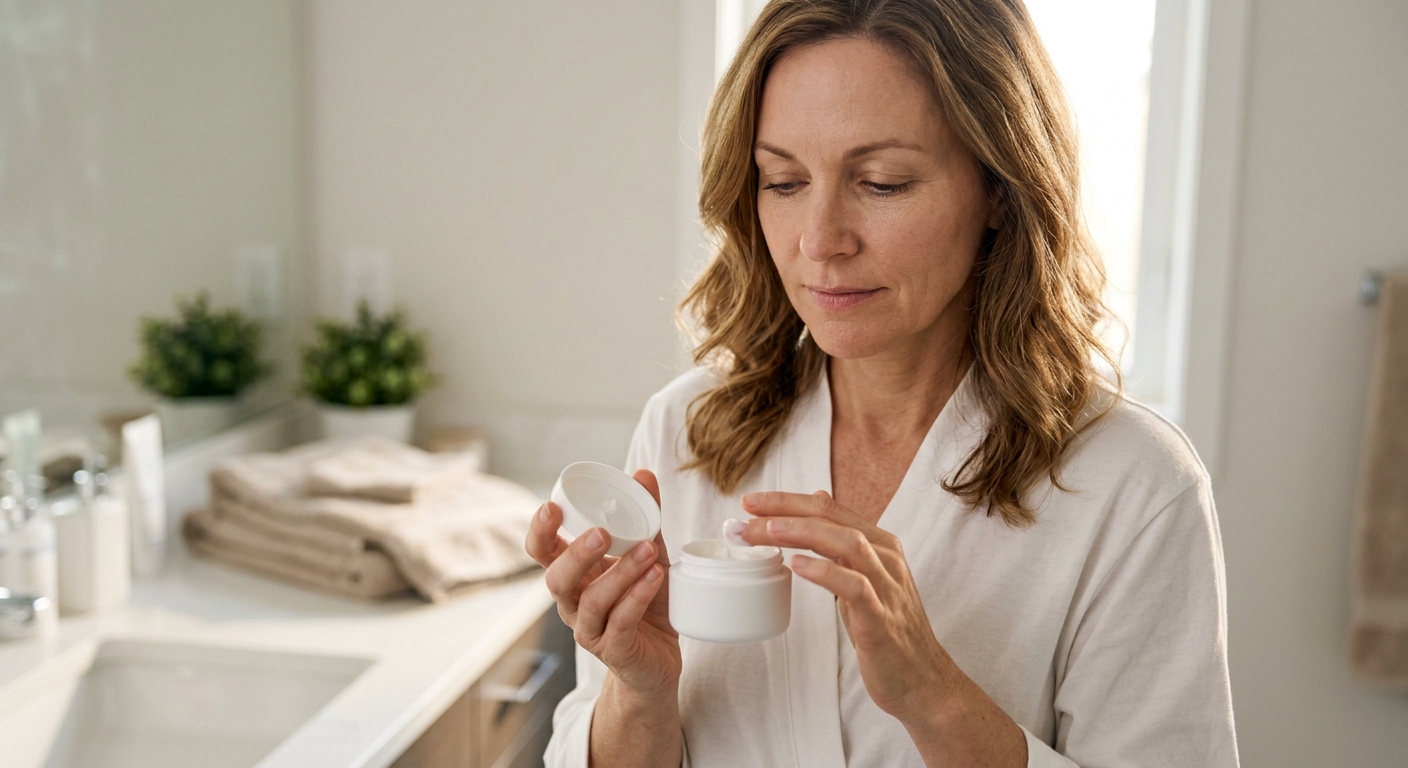
Step 3: Support and seal. Follow with a night cream containing ceramides, hyaluronic acid, peptides, and niacinamide. This layer supports barrier function and creates an optimal environment for retinol to work.
For those new to retinol, begin with two to three nights per week and increase gradually. Tolerance builds over 4-6 weeks — a process called retinization. Sensitive skin approaches exist for a reason.
Putting It Together
The difference between an effective anti wrinkle night cream and an expensive moisturizer is not price — it is alignment with your skin’s biology. The science is clear: nighttime brings increased permeability, accelerated cell turnover, and upregulated repair processes. A properly formulated night cream leverages all three.
Choose evidence-backed actives. Prioritize delivery technology that gets them where they need to go. Support the process with barrier-repairing and hydrating ingredients. And apply consistently — a circadian repair cycle that runs seven nights a week requires support seven nights a week.
Your skin is already doing the work while you sleep. The right night cream simply ensures it has the tools to do it well.
References
-
Yosipovitch G, Xiong GL, Haus E, et al. “Time-dependent variations of the skin barrier function in humans: transepidermal water loss, stratum corneum hydration, skin surface pH, and skin temperature.” Journal of Investigative Dermatology. 1998;110(1):20-23. doi:10.1046/j.1523-1747.1998.00069.x
-
Matsui MS, Pelle E, Dong K, Pernodet N. “Biological rhythms in the skin.” International Journal of Molecular Sciences. 2016;17(6):801. doi:10.3390/ijms17060801
-
Mukherjee S, Date A, Patravale V, et al. “Retinoids in the treatment of skin aging: an overview of clinical efficacy and safety.” Clinical Interventions in Aging. 2006;1(4):327-348. doi:10.2147/ciia.2006.1.4.327
-
Lupo MP. “Antioxidants and vitamins in cosmetics.” Clinics in Dermatology. 2001;19(4):467-473. doi:10.1016/S0738-081X(01)00188-2
-
Spada F, Barnes TM, Greive KA. “Skin hydration is significantly increased by a cream formulated to mimic the skin’s own natural moisturizing systems.” Clinical, Cosmetic and Investigational Dermatology. 2018;11:491-497. doi:10.2147/CCID.S177697
-
Baumann L. “Skin ageing and its treatment.” Journal of Pathology. 2007;211(2):241-251. doi:10.1002/path.2098