PRX-T33: The 33% TCA Peel That Doesn't Actually Peel
How a caustic acid gets into the dermis without stripping the epidermis — and what the evidence really shows
Every chemical peel makes the same bargain with you: damage now, improvement later. You accept a week of flaking, redness, and social hiding in exchange for smoother skin on the other side. It is a bargain most people over forty have made at least once, and a fair number have decided never to make again.
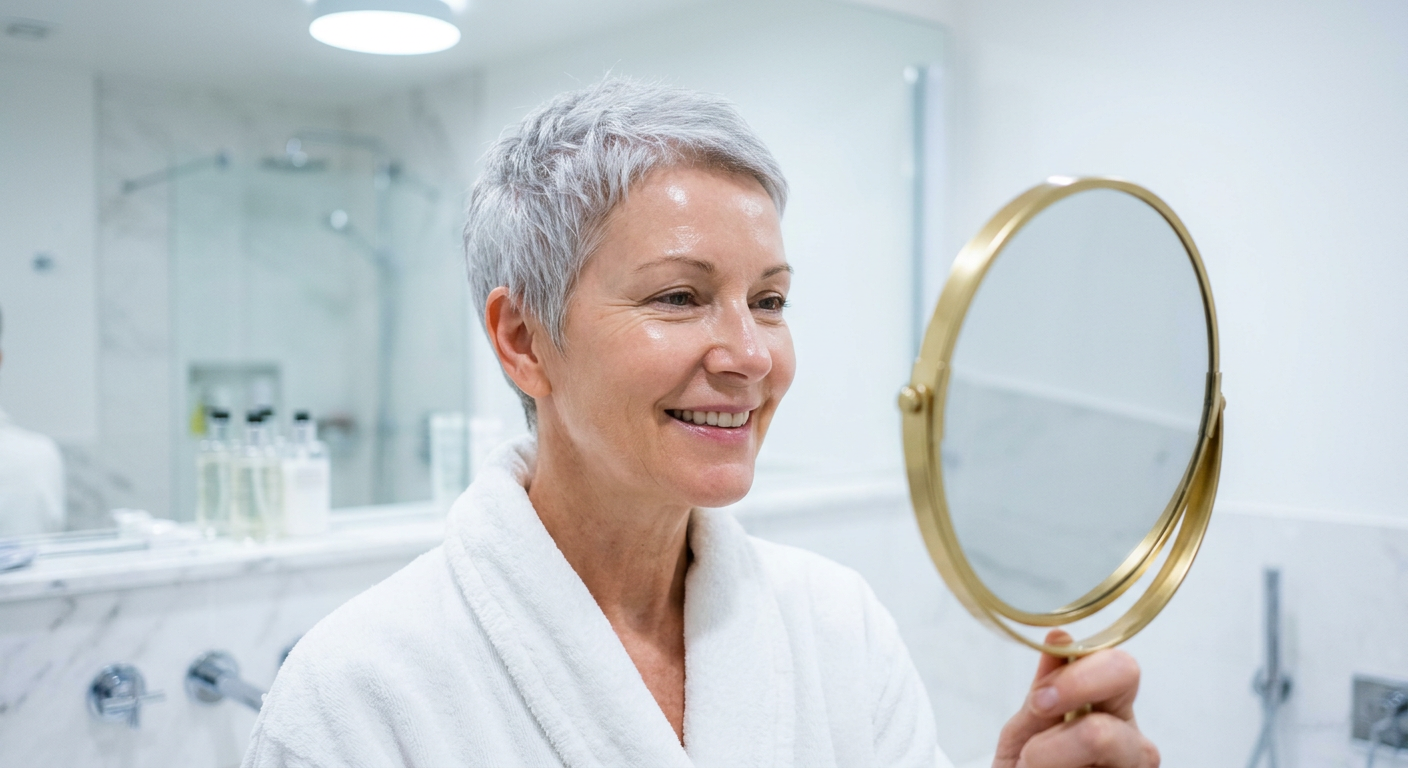
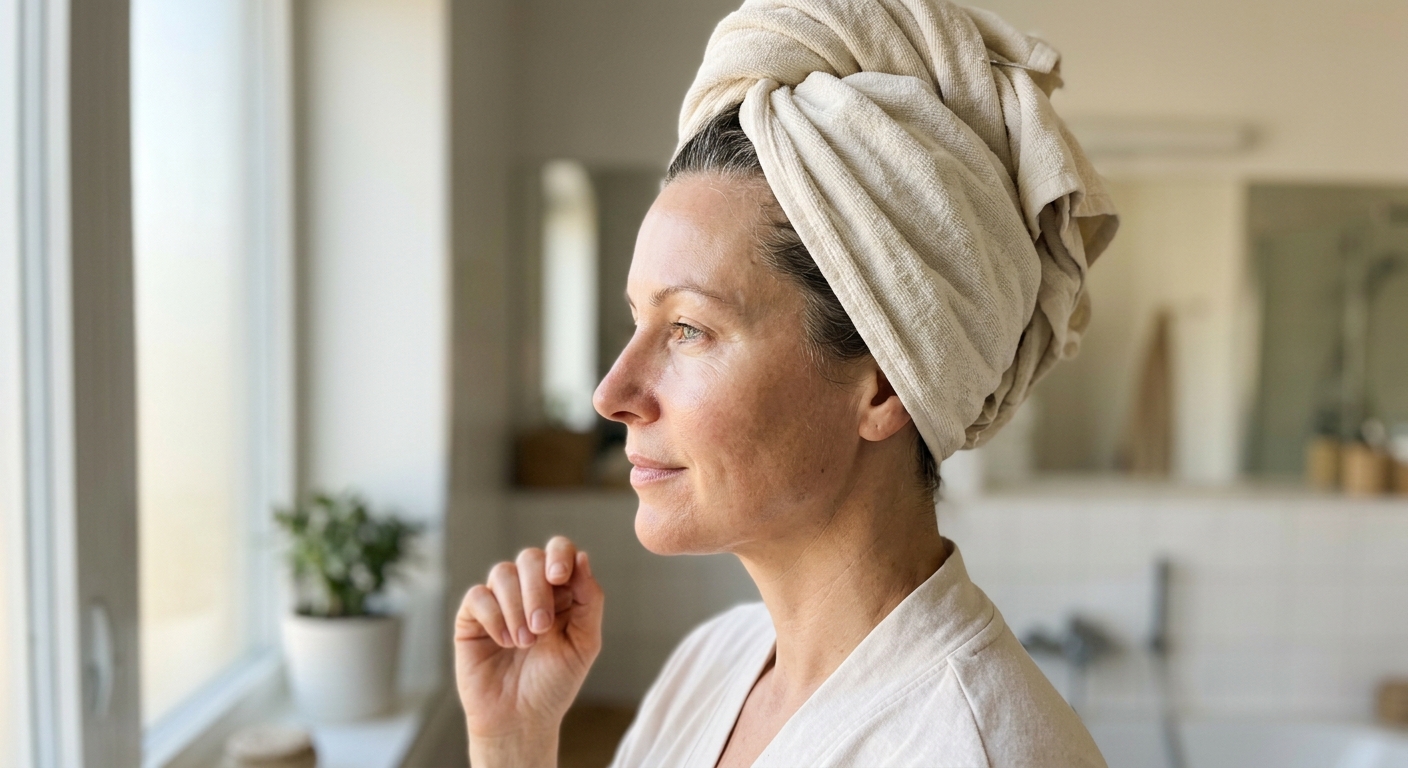
PRX-T33 is interesting because it appears to break the bargain. It contains 33% trichloroacetic acid — a concentration that would ordinarily produce a medium-depth peel with all the shedding that implies — and yet patients walk out of the appointment with skin that looks slightly flushed and go back to work. Nothing peels.
That is not marketing. It is chemistry, and it is worth understanding before you decide whether the treatment is for you.
What Trichloroacetic Acid Normally Does
TCA works by denaturing proteins. When it contacts skin, it coagulates keratin in the epidermis, producing the characteristic white “frost” that clinicians use to judge depth. That coagulated epidermal layer then dies and sheds over the following days, and the wound-healing response underneath drives new collagen deposition. The visible peeling is not a side effect of the treatment — under normal circumstances it is the treatment.
Depth scales with concentration. Standard classifications put superficial peels at roughly 10-20% TCA, medium-depth peels around 35%, and higher concentrations into territory that requires real caution [1]. At 33%, you are firmly in medium-depth range, which conventionally means five to seven days of visible shedding and a meaningful risk of post-inflammatory pigmentation in darker skin types.
The Trick: Hydrogen Peroxide
PRX-T33 pairs its 33% TCA with hydrogen peroxide and 5% kojic acid. The hydrogen peroxide is the component that changes everything.
PRX-T33 pairs its 33% TCA with hydrogen peroxide and 5% kojic acid.
Hydrogen peroxide blunts the caustic action of TCA at the epidermal surface, attenuating the coagulation that would normally kill the top layer. The acid still penetrates and still reaches the dermis, where it stimulates the fibroblast activity and matrix remodeling that make peels worth doing. But the epidermis is largely spared. No frost of the usual kind, no necrotic layer to shed, no week of flaking.
The formulation is also massaged in rather than painted on and neutralized, which is why practitioners call it “biorevitalization” rather than a peel — the intent is dermal stimulation without epidermal ablation. The kojic acid is there for pigment: it inhibits tyrosinase, the rate-limiting enzyme in melanin synthesis, and is the most widely used agent of its class in cosmetic formulation [2]. Worth a caveat, though — the same comprehensive review notes kojic acid is a comparatively weak inhibitor of human tyrosinase, outperformed by a number of other compounds. Expect a modest brightening contribution, not a hydroquinone-grade result.
What the Clinical Data Actually Shows
This is where enthusiasm should be tempered. PRX-T33 has been in use since 2007 and has a large real-world treatment record, but the published peer-reviewed literature on it is thin.
The most direct study is a 2022 single-center, open-label pilot published in the Journal of Clinical and Aesthetic Dermatology [3]. Five women aged 49 to 72, Fitzpatrick types II-III, with mild to moderate facial wrinkling, received four treatments at weekly intervals plus at-home care, and were followed over 51 days. Investigator-assessed scores improved significantly for smoothness (p=0.0014), texture (p=0.0017), redness (p=0.0013), overall appearance (p=0.0073), and tone (p=0.0174). By the third visit, 100% of subjects showed improvement in smoothness, texture, and redness. Adverse effects were limited to transient tingling and mild erythema — no edema, no peeling, no prolonged complications.
Those are encouraging numbers with an obvious asterisk: five participants, no control group, no blinding, one center. It is a pilot study in the truest sense — a signal, not a proof.
By the third visit, 100% of subjects showed improvement in smoothness, texture, and redness.
A separate double-blind randomized trial of 120 patients offers a useful adjacent finding. Comparing microneedling alone, chemical peeling alone, and the two combined for atrophic scarring, only the combination group achieved statistically significant objective improvement [4]. Peels work better as part of a strategy than as a standalone.
Where PRX-T33 Fits — and Where It Doesn’t
The honest positioning: PRX-T33 is a low-risk, no-downtime option for improving skin texture, radiance, and mild surface irregularity, particularly for people who cannot afford visible recovery time. It is generally delivered as a course of four sessions a week apart, then maintained.
It is not a substitute for a medium-depth TCA peel when significant photodamage needs resurfacing, and it will not lift, tighten, or replace volume. Compared with the broader category of chemical peels for anti-aging, it trades depth of result for absence of downtime, which is exactly the trade many people want and some people should not make.
And like every in-clinic treatment, it is episodic. Four appointments compress a stimulus into a month. Your skin then spends the following months doing whatever your daily routine tells it to do.
The Maintenance Half of the Equation
That daily half is where retinoids earn their reputation. In a randomized, double-blind, vehicle-controlled study of naturally aged skin — participants averaging 87 years old — 0.4% retinol applied up to three times weekly for 24 weeks significantly increased glycosaminoglycan levels and collagen production versus vehicle, with reduced fine wrinkling [5]. Aging skin retains its capacity to rebuild; it simply needs the signal delivered consistently rather than four times in a month.
The obstacle has always been getting retinol to living cells without wrecking the barrier on the way. Conventional formulations frequently rely on solvents and penetration enhancers that disrupt the barrier to push retinol through, which is why so many people experience retinol as burning and peeling — the same downtime PRX-T33 patients came specifically to avoid.
Nanoretinol approaches the delivery problem differently. Retinol is encapsulated in biomimetic lipid nanoparticles that the skin recognizes as “self” and admits through the epithelial barrier without damaging it — the same delivery principle used in modern pharmaceutical nanomedicine. In North Biomedical’s clinical study, the encapsulated form proved 232% more effective in collagen recovery and 73% more effective in elastin recovery than conventional retinol, with 56 days of clinical use producing a 61% increase in firmness and a 56% increase in elasticity. The concentration is only 0.2%, in a water-based, 99% natural formulation — low, because when delivery is efficient, dose stops being the constraint. For anyone drawn to PRX-T33 specifically because they refuse to peel, a retinol that works without barrier disruption is the philosophically consistent daily counterpart.
Worth Booking?
If your complaint is dull, rough, slightly uneven skin and your constraint is that you cannot disappear for a week, PRX-T33 is a reasonable and low-risk thing to try — with the understanding that the published evidence behind it is early and small.
If your complaint is deep wrinkling, significant laxity, or heavy photodamage, a no-downtime treatment is unlikely to deliver what you want, and you would be better served by something that asks more of you. And whichever you choose, the appointment is the smaller half. What you do on the other 350 days decides most of the outcome.
References
- Soleymani T, Lanoue J, Rahman Z. “A Practical Approach to Chemical Peels: A Review of Fundamentals and Step-by-step Algorithmic Protocol for Treatment.” Journal of Clinical and Aesthetic Dermatology. 2018;11(8):21-28. PMID: 30214663
- Zolghadri S, Bahrami A, Hassan Khan MT, et al. “A comprehensive review on tyrosinase inhibitors.” Journal of Enzyme Inhibition and Medicinal Chemistry. 2019;34(1):279-309. doi:10.1080/14756366.2018.1545767
- Gold MH, Wilson A, Biron JA. “Treatment of Mild to Moderate Facial Chrono- and Photodamage with a Novel Intense Liquid Trichloroacetic Acid Peel.” Journal of Clinical and Aesthetic Dermatology. 2022;15(1):E61-E65. PMID: 35309276
- Pakla-Misiur A, Grochowiec M, Lesiak A, Bednarski IA. “Double-blind, randomized controlled trial comparing the use of microneedling alone versus chemical peeling alone versus a combination of microneedling and chemical peeling in the treatment of atrophic post-acne scars.” Postepy Dermatologii i Alergologii. 2021;38(4):629-635. doi:10.5114/ada.2021.108913
- Kafi R, Kwak HSR, Schumacher WE, et al. “Improvement of Naturally Aged Skin With Vitamin A (Retinol).” Archives of Dermatology. 2007;143(5):606-612. doi:10.1001/archderm.143.5.606