North Biomedical topic guide

Retinoids & Retinol: Benefits, Choices, and Safe Use

A complete guide to retinol, retinal, tretinoin, adapalene, retinyl esters, Nanoretinol®, combinations, side effects, and routines.

48 evidence-led articles, organized in one place

How to use this guide

Retinoid is the family name; retinol, retinal, tretinoin, adapalene, and retinyl esters are different members with different evidence, conversion steps, tolerability, and regulatory status. Treating them as equivalent creates much of the confusion around strength and results.

Use this hub to choose a starting point, understand realistic timelines, combine actives deliberately, and troubleshoot irritation. Pregnancy and prescription-treatment questions deserve clinician guidance rather than a generic routine.

Go deeper by goal

Follow a short sequence when you want a focused answer without scanning the entire library.

Browse all 48 articles

48 articles shown

  1. 7 Proven Benefits of Retinol for Skin — Backed by Decades of Clinical Research Review seven evidence-backed retinol benefits, from wrinkles and collagen to acne and uneven pigment, plus realistic timelines, side effects, and safe use.
  2. Adapalene vs Retinol — What's the Difference and Which Should You Use? Adapalene vs retinol: understand the key differences in mechanism, potency, side effects, and best uses. Science-backed guide to choosing the right retinoid.
  3. Adenosine for Skin: How This Anti-Wrinkle Active Works (and Where Retinol Still Wins) Adenosine in skin care smooths wrinkles by signaling fibroblasts to make collagen. Learn how it works, what the studies show, and how it compares to retinol.
  4. Bakuchiol vs Retinol: What the Science Actually Says Bakuchiol vs retinol: compare the clinical evidence, mechanisms, and real-world tolerability of both ingredients for anti-aging skincare.
  5. Can Retinol Reverse Sun Damage? What Science Says About Photoaging Can retinol reverse sun damage? Review evidence for fine lines and uneven pigment, what it cannot undo, how long results take, and why sunscreen remains essential.
  6. Can You Use Retinol Around Your Eyes? The Complete Guide to Eye Area Retinol Can you use retinol around your eyes? Learn the science of periorbital skin, safe application techniques, and why nanoparticle delivery changes the game.
  7. Can You Use Retinol Every Night? Finding Your Ideal Frequency Should you use retinol every night? A science-based guide to retinol frequency, building tolerance, and finding the schedule that works for your skin.
  8. Can You Use Retinol While Pregnant or Breastfeeding? Is retinol safe during pregnancy or breastfeeding? Learn the science behind retinoid risks, what dermatologists recommend, and effective alternatives.
  9. Can You Use Retinol with Glycolic Acid? What Dermatologists Actually Say Can you use retinol with glycolic acid? Review how each works, when alternating reduces irritation, who may tolerate combining them, and how to start safely.
  10. Carrot Seed Oil for Skin: What the Science Says (and Why It's Not a Retinol) Carrot seed oil for skin: the real science on its benefits, why it's not a natural retinol or a sunscreen, and what actually delivers retinol's anti-aging results.
  11. Does Retinol Build Collagen? The Science of Collagen Restoration Does retinol build collagen? Yes — here's exactly how it works at the cellular level, what the clinical trials show, and why delivery determines results.
  12. Does Retinol Help Dark Spots? How It Works and Timelines Does retinol help dark spots? See which types may respond, how retinoids affect hyperpigmentation, realistic timelines, and when to seek care.
  13. Does Retinol Really Reduce Wrinkles? What the Clinical Evidence Says Does retinol reduce wrinkles? We review the clinical trials and peer-reviewed evidence behind retinol's anti-wrinkle effects, and what actually makes it work.
  14. Does Retinol Thin Your Skin? The Science Behind Skincare's Scariest Myth Does retinol thin skin? It can compact the outer dead-cell layer while supporting a thicker living epidermis and dermis. Review the clinical evidence and safe use.
  15. Encapsulated Retinol: Why Delivery Technology Matters More Than Concentration Encapsulated retinol uses a delivery system to improve stability and control release. See how encapsulation affects irritation, penetration, and product performance.
  16. Glycolic Acid vs Retinol: Which One Should You Actually Use? Glycolic acid vs retinol: understand how each works, what the research shows for wrinkles and tone, and which ingredient fits your skin goals best.
  17. Granactive Retinoid: What HPR Is and How It Compares to Retinol Granactive Retinoid is a cosmetic retinoid based on HPR. Learn how it compares to retinol, retinal, and Nanoretinol® for aging skin.
  18. How Does Retinol Work? The Science of Skin Renewal, Explained Simply How does retinol work? Follow its conversion to retinoic acid and effects on gene signaling, cell turnover, collagen, pigmentation, and visible-result timelines.
  19. How Long Does Retinol Take to Work? A Science-Based Timeline How long does retinol take to work? A dermatologist-level timeline from week 1 to month 6, based on clinical trials. Learn what to expect and when.
  20. How to Use Retinol — The Step-by-Step Method Dermatologists Actually Recommend Learn how to use retinol: how much to apply, when and how often to use it, how to build tolerance, and which products reduce avoidable irritation.
  21. Hyaluronic Acid vs Retinol: What Each One Actually Does (and Which Your Skin Needs) Hyaluronic acid vs retinol: one hydrates the surface, the other rebuilds collagen underneath. Here is what each actually does and which one your skin needs.
  22. Mugwort for Skin: What It Really Does (and Where Retinol Still Wins) Mugwort skincare is promoted for soothing and antioxidant effects, but human evidence is limited. Review what Artemisia may do, allergy risks, and its limits.
  23. Nanoretinol® Formulation Update: What Changed, Why, and What It Means for Your Skin See what changed in the December 2025 Nanoretinol formulation, why vitamin C was added to the base, how it supports stability, and what causes the golden tint.
  24. Natural Retinol Alternatives: What Actually Works (and What's Hype) Compare natural retinol alternatives such as bakuchiol with peptides and vitamin C. See what evidence supports, what is overhyped, and when retinoids remain best.
  25. Retinol and Hyaluronic Acid: Why These Two Ingredients Are Better Together Retinol targets renewal while hyaluronic acid hydrates. Learn how to use them together, the correct order, and how the pairing can reduce dryness.
  26. Retinol and Niacinamide: The Science Behind Skincare's Best Combination Can you use retinol and niacinamide together? Yes — and the science shows they're better together. Learn how they complement each other for anti-aging results.
  27. Retinol and Peptides: Should You Use Them Together? Can you use retinol and peptides together? Learn how they complement each other, which peptides pair best with retinol, and how to layer them for maximum results.
  28. Retinol and Vitamin C Together: Can You Use Both in Your Routine? Can you use retinol and vitamin C together? Learn the science behind layering these powerhouse ingredients and the best strategies for your routine.
  29. Retinol and Your Skin Barrier: How to Protect While You Transform Retinol can temporarily disrupt the skin barrier during adjustment. Learn to distinguish expected retinization from damage and build a barrier-supportive routine.
  30. Retinol for Beginners: Everything You Need to Know Before Your First Application A retinol guide for beginners: learn what it does, how often to start, how much to apply, which side effects are normal, and how to protect your skin barrier.

  31. Retinol for Crepey Skin: Does It Work on Your Neck, Arms, and Body? Can retinol improve crepey skin on the neck, arms, and body? Review its effects on collagen and cell turnover, body-skin evidence, safe use, and limitations.
  32. Retinol for Menopausal Skin: How to Fight Hormonal Aging Menopause accelerates skin aging through estrogen loss. Learn how retinol fights hormonal aging, rebuilds collagen, and what menopausal skin actually needs.
  33. Retinol for Sensitive Skin: A Science-Based Guide to Getting Results Without the Damage Sensitive skin can often use retinol with slower dosing and barrier support. Learn how to choose a formula, start safely, manage irritation, and know when to stop.
  34. Retinol for Wrinkles: How to Use It, What to Expect, and Why Most People Give Up Too Soon Retinol is a well-studied topical for wrinkles. Learn how to start, expected timelines, irritation management, sunscreen needs, and why formulation affects results.
  35. Retinol for Your Body: Extending Your Skincare Routine Below the Neck Body skin ages too, often with less protection and more UV damage than the face. Here's the science of using retinol on hands, décolletage, and arms safely.
  36. Retinol for Your Neck and Décolletage: Why Anti-Aging Shouldn't Stop at Your Chin Learn how to use retinol on the neck and décolletage, where skin can be more irritation-prone. See dosing, frequency, buffering, sunscreen, and realistic results.
  37. Retinol Percentage Guide: 0.1%, 0.3%, 0.5% or 1%? Choose a retinol percentage based on tolerance, not strength alone. Compare 0.1%, 0.3%, 0.5% and 1%, plus why formulation and consistency matter.
  38. Retinol vs Retinal: Understanding the One-Step Difference That Changes Everything Retinol vs retinal (retinaldehyde): learn the scientific differences, clinical evidence, conversion pathways, and which form of vitamin A is right for your skin.
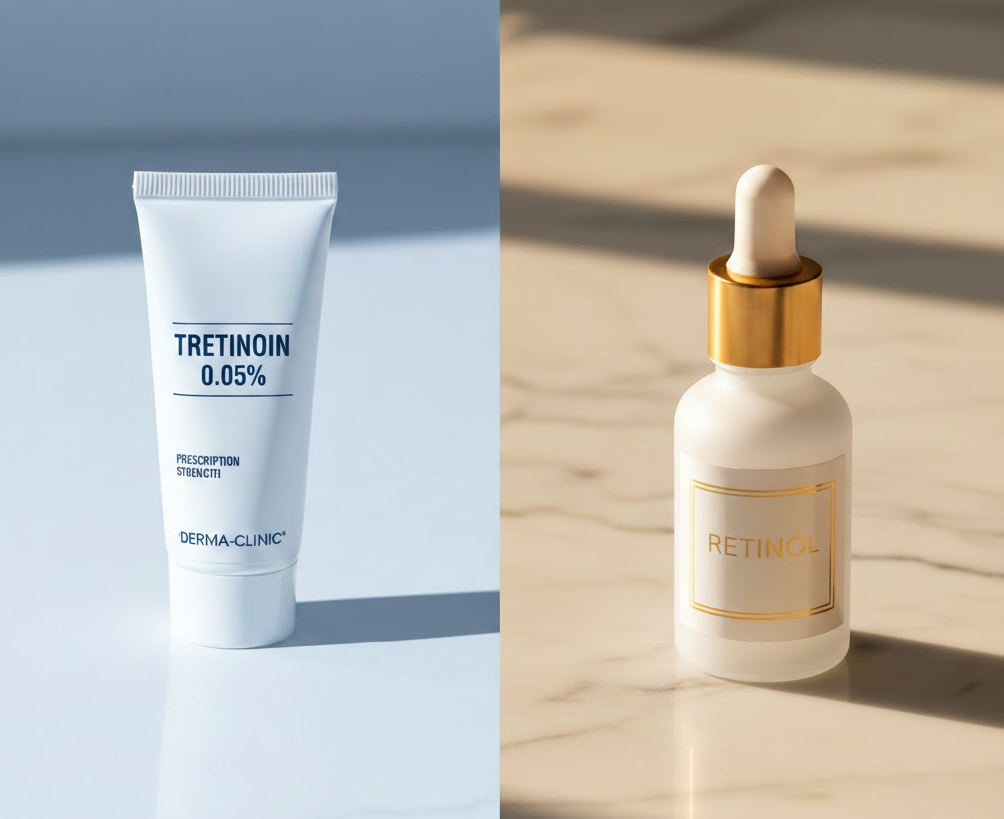
  39. Retinyl Palmitate: The Gentle Retinoid Hiding in Your Drugstore Moisturizer — And Why It Probably Isn't Doing What You Hope Retinyl palmitate is in nearly every drugstore anti-aging cream — but how well does it really work? A clinical look at conversion, efficacy, and smarter options.
  40. Skin Cycling With Retinol: Does the TikTok Trend Have Real Science Behind It? Skin cycling alternates exfoliation, retinoid, and recovery nights. Review the rationale, evidence gaps, who may benefit, and how to adapt the schedule safely.
  41. The Retinol Purge: Why Your Skin Gets Worse Before It Gets Better Learn what the retinol purge is, why it happens, how long it lasts, and how to tell the difference between purging and a real breakout. Science-backed guide.
  42. Tretinoin Alternatives: Gentler Options That Still Build Collagen Compare tretinoin alternatives—including retinol, retinal, bakuchiol, and peptides—by evidence, irritation, access, and ability to improve collagen and texture.
  43. Tretinoin Cream: What It Actually Does, How to Use It, and the Gentler Path to the Same Results Tretinoin cream is the most studied wrinkle treatment in dermatology. Here's how it works, how to use it without wrecking your skin, and a gentler alternative.
  44. Tretinoin vs Retinol: Which Is Better for Anti-Aging? Compare tretinoin and retinol by conversion, potency, evidence, irritation, access, cost, and results to choose the retinoid that fits your skin and routine.
  45. Vitamin A for Skin: Why It's the Most Studied Anti-Aging Ingredient on Earth Vitamin A skincare is the most clinically validated anti-aging category in dermatology. Learn how each form works, what the evidence says, and how to choose.
  46. Vitamin C vs Retinol: Which One Does Your Skin Actually Need? Vitamin C vs retinol: a science-backed comparison of how each works, what it treats, and why the smartest routines use both — strategically, not interchangeably.
  47. What Is Nanoretinol® by North Biomedical? Science and Evidence Nanoretinol by North Biomedical uses biomimetic lipid nanoparticles to deliver 0.2% retinol. Review its mechanism, evidence, formulation, and tolerability.
  48. Will Retinol Shrink Pores? What It Can—and Can't—Change Will retinol shrink pores? It cannot change pore structure, but it may reduce buildup, oiliness, and surrounding slack. See realistic timelines and limits.