How to Tighten Neck Skin: What the Science Says Actually Works
Loose, crepey neck skin responds to the right ingredients — here is the clinical evidence
Why the Neck Ages Faster Than Your Face
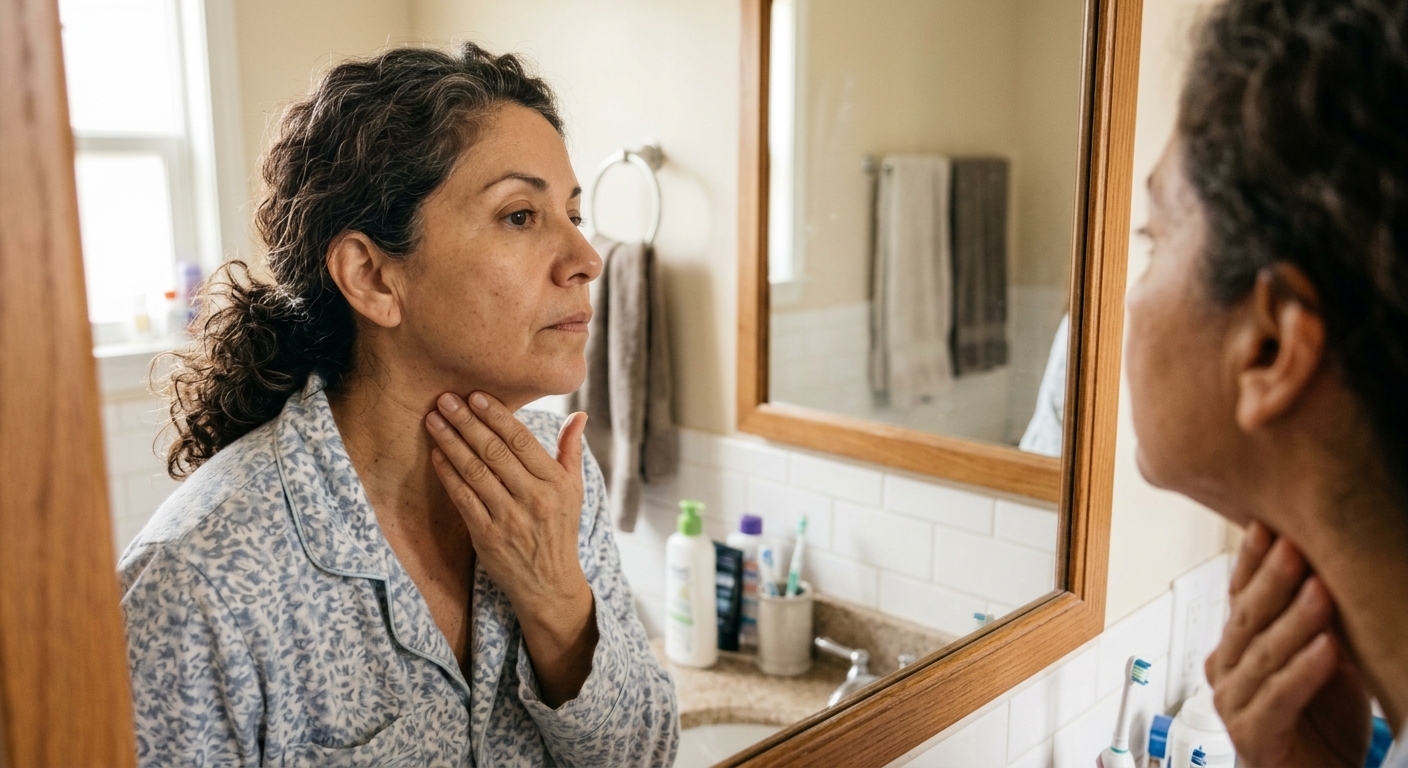
The neck is one of the first places aging becomes visible, and most skincare routines completely ignore it. The skin on your neck is structurally different: it is thinner than facial skin, contains fewer sebaceous glands to keep it moisturized, and is subjected to constant movement from looking down at phones and screens.
Add cumulative UV exposure to an area most people protect inconsistently, and the result is predictable. Collagen and elastin — the proteins that keep skin firm and snappy — break down faster in the neck than in more protected areas. The visible consequences are horizontal bands (called “necklace lines”), vertical cords that appear as the platysma muscle weakens, and the general looseness that turns into what dermatologists call submental laxity.
Understanding why neck skin ages differently is the first step to doing something effective about it.
What Actually Breaks Down in Aging Neck Skin
Skin firmness depends on two structural proteins working in tandem: collagen, which provides structural support, and elastin, which gives skin its snap-back quality. In the neck, both decline with age — but through different mechanisms.
Collagen loss is gradual and begins in your mid-twenties at roughly 1% per year. Elastin is more vulnerable to UV damage; photoaged neck skin shows pronounced solar elastosis, a condition where elastin fibers fragment and clump rather than forming organized networks. The result is skin that feels less springy and begins to sag.
A landmark review of retinoid research published in Clinical Interventions in Aging confirmed that both collagen synthesis and the structural integrity of the dermal matrix are primary targets for effective skin aging treatment [5].
The Ingredients With Real Clinical Evidence
Not everything marketed as a “neck firming” solution has science behind it. Several categories, however, have documented evidence.
Retinol
Retinol is the most studied topical ingredient for reversing visible aging, and its effects on neck skin specifically have been examined in clinical trials. A 2023 study published in the Journal of Cosmetic Dermatology — looking at a retinol-containing topical applied specifically to the neck — found significant improvements in horizontal neck lines, skin texture, and overall appearance after 12 weeks of use [1].
Collagen loss is gradual and begins in your mid-twenties at roughly 1% per year.
How retinol works is well understood: it binds to nuclear receptors inside skin cells, upregulating the genes responsible for collagen synthesis while simultaneously blocking matrix metalloproteinases — the enzymes that break down existing collagen. A comparative study on retinol vs. retinoic acid confirmed that retinol achieves similar histological outcomes (thickened epidermis, reorganized collagen) with considerably less irritation [2].
Peptides
Peptides are short chains of amino acids that act as cellular messengers. Certain peptides signal skin cells to produce more collagen, mimicking the wound healing cascade that triggers matrix renewal. Clinical research on collagen peptides found sustained improvements in skin elasticity, hydration, and density after 12 weeks [3].
More recently, novel synthetic peptides have entered clinical evaluation. A 2025 randomized controlled trial comparing a cyclized hexapeptide to retinol found statistically significant improvements in wrinkle depth and skin firmness — with the peptide matching retinol’s performance on several metrics [4].
Niacinamide and AHAs
Niacinamide (vitamin B3) supports the skin barrier and reduces inflammation, making it an ideal supporting ingredient in a neck routine. AHAs like glycolic acid improve cell turnover and help the skin surface appear smoother and more refined — particularly useful for the rough, uneven texture that develops on photo-damaged neck skin.
Building an Effective Neck Routine
The principles are simple: consistency matters more than concentration, and the neck needs the same products your face gets, applied every night.
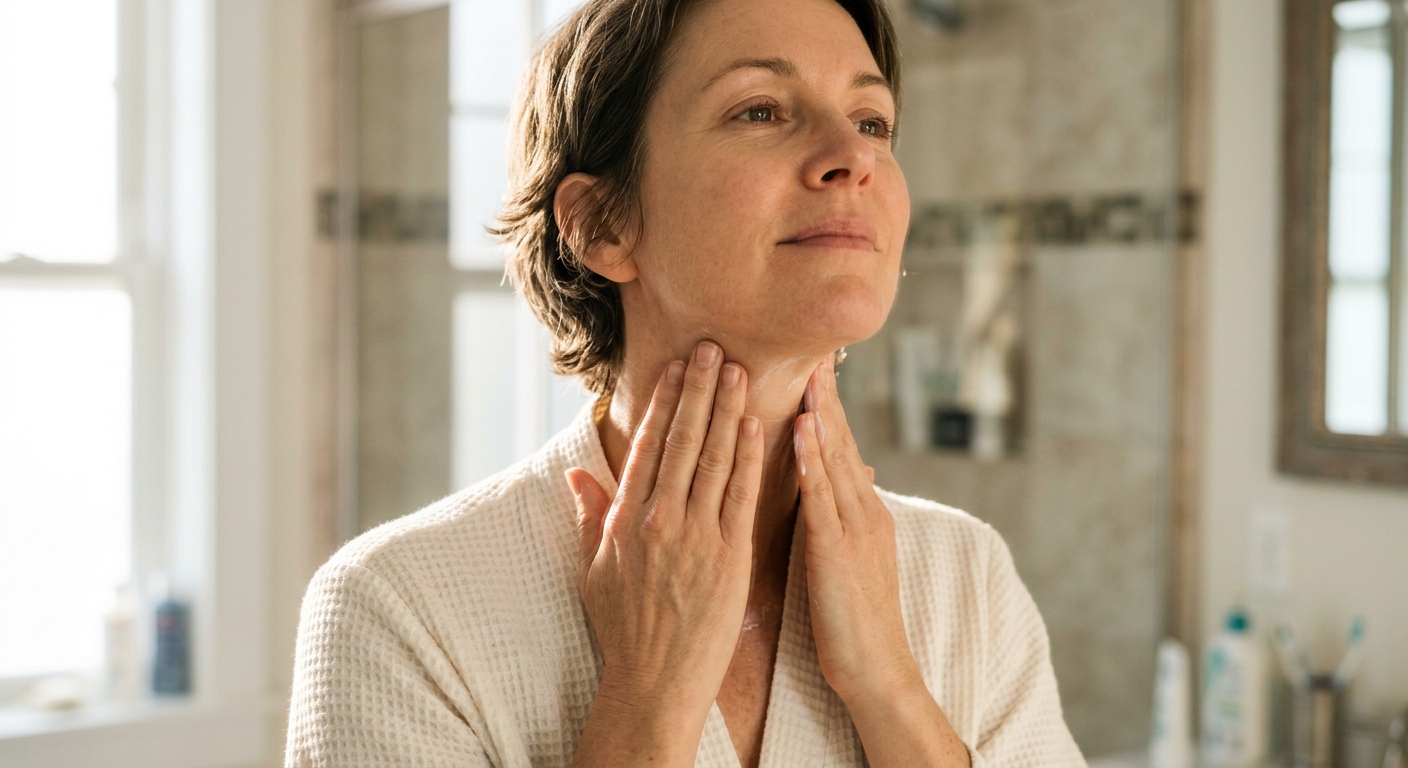
Step 1 — Extend actives to the neck Whatever retinol or active serum you use on your face should continue down your neck and onto your décolletage. Most people stop at the jawline and wonder why their neck looks different from their face a decade later.
Step 2 — Follow with a moisturizer The neck’s relative lack of oil glands makes moisturizing non-optional. Look for formulas containing ceramides, hyaluronic acid, or peptides to support the barrier while actives do their work.
Step 1 — Extend actives to the neck Whatever retinol or active serum you use on your face should continue down your neck and onto your décolletage.
Step 3 — SPF every morning UV damage is the primary driver of neck skin aging and specifically of elastin breakdown. A broad-spectrum SPF 30+ applied to the neck every morning is essential to preserve the results of any firming treatment.
What Doesn’t Work
Many “neck firming” products are essentially thick creams that temporarily tighten the skin surface through evaporation effects. They feel firming immediately after application but provide no durable structural changes. Similarly, devices marketed as “neck tightening wands” have sparse or no peer-reviewed evidence for lasting dermal remodeling.
The ingredients with documented structural effects on skin are retinoids, certain peptides, and growth factors. Everything else should be viewed skeptically.
The Delivery Problem — and Why It Matters for Retinol
Not all retinol works equally well. Traditional retinol formulations struggle to penetrate the epithelial barrier, and the solvents used to force deeper penetration can irritate the skin — particularly the thinner skin of the neck.
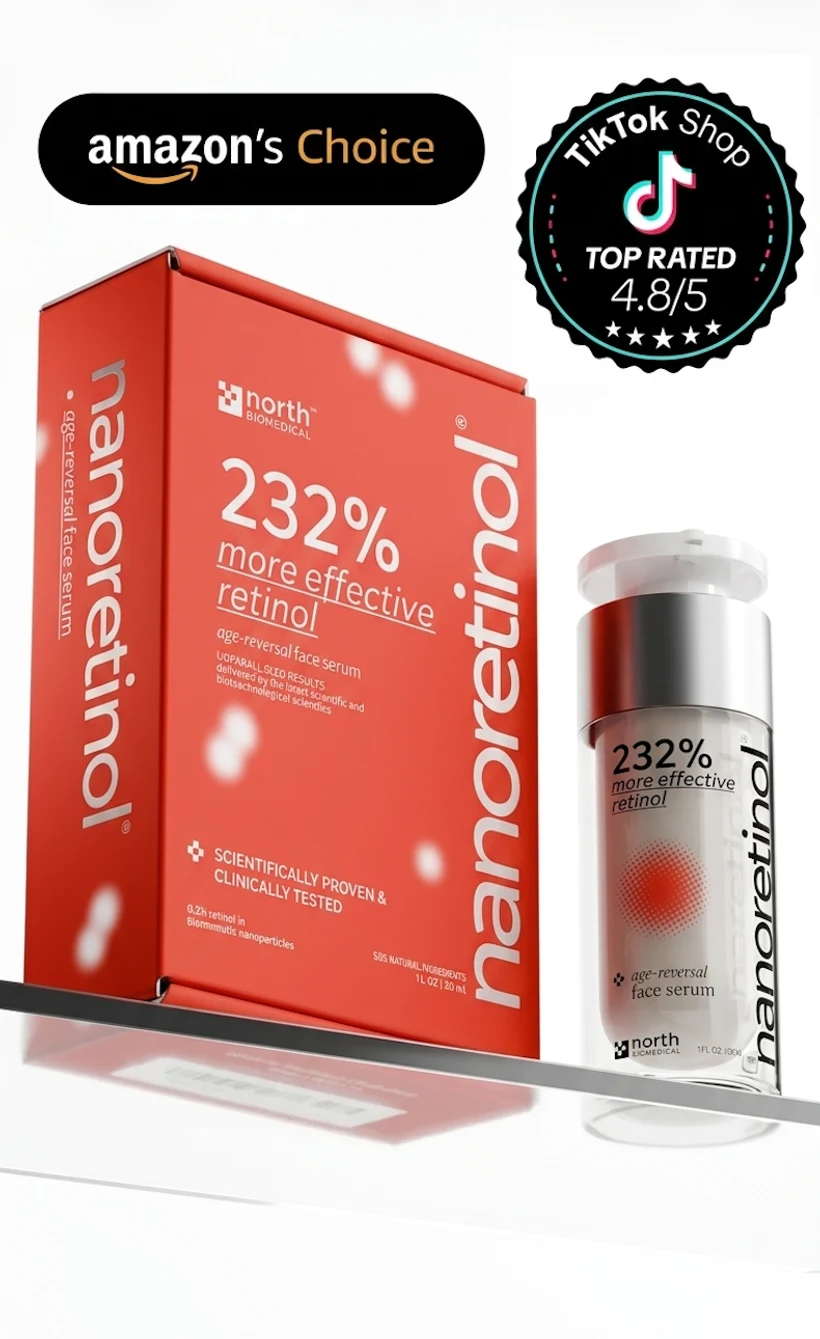
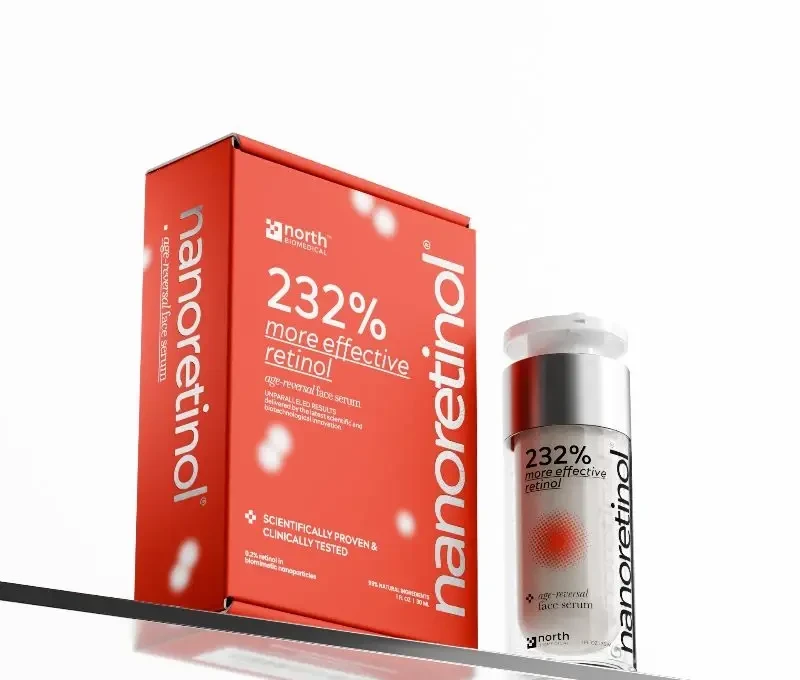
Nanoretinol addresses this through a different mechanism: retinol encapsulated in biomimetic lipid nanoparticles that are recognized by skin cells as “self” and allowed through the barrier without requiring chemical disruption. Clinical testing shows this delivery system achieves +232% greater collagen recovery and +73% greater elastin recovery compared to conventional retinol — both the structural proteins that determine how firm and snappy neck skin appears.
At 0.2% concentration, Nanoretinol delivers measurably more active ingredient to target cells than standard formulas at much higher concentrations. For neck skin specifically — thinner, more sensitive, more prone to irritation — a high-efficiency, low-irritation delivery system matters even more than it does for the face.
What to Expect and When
Collagen and elastin remodeling is slow by biological necessity. New fibers take weeks to months to form, cross-link, and become structurally meaningful. The clinical trials referenced here show measurable results at 12 weeks — the minimum timeline you should expect before evaluating whether a routine is working.
Pair retinol with SPF. Extend it to the décolletage. Be patient with the timeline. Those three principles, applied consistently, produce the results the clinical evidence actually supports.
References
-
Sullivan K, Law RM, Lain E, Jiang LI, Acevedo SF, Choudhary H, Lee B, Patel K, Lynch S. “Evaluation of a retinol containing topical treatment to improve signs of neck aging.” Journal of Cosmetic Dermatology. 2023;22(10):2755–2764. doi:10.1111/jocd.15904
-
Kong R, Cui Y, Fisher GJ, Wang X, Chen Y, Schneider LM, Majmudar G. “A comparative study of the effects of retinol and retinoic acid on histological, molecular, and clinical properties of human skin.” Journal of Cosmetic Dermatology. 2016;15(1):49–57. doi:10.1111/jocd.12193
-
Wang Y, Zhu W, Luo W, Ma Y, Zhou Y. “The Sustained Effects of Bioactive Collagen Peptides on Skin Health: A Randomized, Double-Blind, Placebo-Controlled Clinical Study.” Journal of Cosmetic Dermatology. 2025;24(12):e70565. doi:10.1111/jocd.70565
-
Chang H, Tao K, Yang Y, Wang Y, Ge M, Wang X, Tang S, Yu H. “Novel Cyclized Hexapeptide-9 Outperforms Retinol Against Skin Aging: A Randomized, Double-Blinded, Active- and Vehicle-Controlled Clinical Trial.” Journal of Cosmetic Dermatology. 2025;24(7):e70290. doi:10.1111/jocd.70290
-
Mukherjee S, Date A, Patravale V, Korting HC, Roeder A, Weindl G. “Retinoids in the treatment of skin aging: an overview of clinical efficacy and safety.” Clinical Interventions in Aging. 2006;1(4):327–348. doi:10.2147/ciia.2006.1.4.327
-
Kafi R, Kwak HSR, Schumacher WE, Cho S. “Improvement of naturally aged skin with vitamin A (retinol).” Archives of Dermatology. 2007;143(5):606–612. doi:10.1001/archderm.143.5.606