Adenosine for Skin: How This Anti-Wrinkle Active Works (and Where Retinol Still Wins)
The quiet Korean-beauty ingredient with real fibroblast science behind it
Scan the ingredient list on a Korean anti-aging essence and you’ll almost always find it near the top: adenosine. It rarely gets the marketing spotlight that retinol or vitamin C command, yet it’s one of a very short list of cosmetic ingredients with government-recognized anti-wrinkle status in South Korea. So what is this quiet workhorse actually doing on your face — and how does it stack up against the heavy hitters?
What Adenosine Is
Adenosine isn’t an exotic botanical or a lab-invented peptide. It’s a nucleoside — one of the fundamental building blocks your own cells use to make DNA, RNA, and ATP, the molecule that carries energy inside every cell in your body. Because it’s already part of human biochemistry, skin recognizes it and tolerates it exceptionally well, which is a big part of its appeal: it delivers an anti-aging signal without the sting.
When applied topically, adenosine acts less like a scrub or an acid and more like a messenger. It doesn’t remove anything from the skin’s surface. Instead, it docks onto specific receptors on your skin cells and changes what those cells decide to do.
How It Works: The Fibroblast Connection
The interesting action happens in the dermis, with cells called fibroblasts — the factories responsible for producing collagen and elastin, the proteins that keep skin firm and springy.
Adenosine binds primarily to the A2A receptor on these fibroblasts. That binding switches on an internal signaling cascade — a cyclic-AMP and AKT pathway — that prompts the fibroblasts to ramp up collagen production. Notably, lab research shows it does this through a route independent of the usual TGF-β/Smad pathway, meaning adenosine can encourage collagen synthesis through its own distinct channel [1]. It also appears to boost dermal protein synthesis and support skin’s moisture, which together translate into smoother-looking surface texture.
Instead, it docks onto specific receptors on your skin cells and changes what those cells decide to do.
A comprehensive review of the science describes adenosine as a credible anti-aging agent precisely because it works with the skin’s native repair signaling rather than forcing a reaction, positioning it as one of the better-tolerated actives for reducing the look of wrinkles [2].
What the Clinical Studies Show
The evidence for adenosine is more than theoretical. In a blind, randomized, placebo-controlled study, participants applied adenosine-containing formulas twice daily and were measured with a precise skin-topography technique. Both products produced significant improvements in periorbital smoothness — the crow’s-feet area — detectable at three weeks and confirmed at two months, and the cream also significantly improved glabellar (frown) lines [3]. In practical terms: measurable softening of fine lines, not just a subjective glow.
Formulation scientists have taken it further, engineering adenosine into advanced delivery systems — including solid lipid nanoparticles — specifically to improve how well it penetrates and how effectively it treats wrinkles, an active area of cosmetic research [4]. That’s a recurring theme in modern skincare, and one worth keeping in mind: an active is only as good as the skin’s ability to actually receive it.
Where Adenosine Fits in a Routine
Adenosine is a gentle, everyday supporting player. Its strengths are that it’s non-irritating, layers well with almost everything, and is safe for sensitive skin and morning use. If your skin can’t tolerate stronger actives, or you want to reinforce a routine without adding irritation, adenosine is a smart, low-risk addition. It pairs comfortably with peptides and with soothing actives, and unlike some ingredients it won’t clash with your sunscreen or make you sun-sensitive.
If your skin can’t tolerate stronger actives, or you want to reinforce a routine without adding irritation, adenosine is a smart, low-risk addition.
But “gentle and everyday” also defines its ceiling — and this is where honesty about ingredients matters.
Adenosine vs. Retinol: An Honest Comparison
It’s tempting to treat every anti-wrinkle active as interchangeable. They’re not. Adenosine nudges fibroblasts through one receptor pathway and mainly improves the appearance of surface lines and texture. Retinol — vitamin A — does something broader and better documented: it works on multiple fronts at once, simultaneously suppressing the collagen-degrading MMP enzymes that break skin down and driving new collagen synthesis. In a direct comparison against prescription retinoic acid, topical retinol produced the same categories of deep histological and molecular remodeling — real structural change, not just smoother-looking skin [5].
If adenosine is a helpful nudge, retinol is the renovation. For anyone serious about reversing established wrinkles, loss of firmness, or sun damage, a retinoid is the evidence-based centerpiece; adenosine is a worthy companion, not a replacement. You can read more about that mechanism in our explainer on how retinol works.
The Catch With Retinol — and How Nanoretinol Answers It
There’s a reason so many people reach for gentle actives like adenosine in the first place: conventional retinol is notoriously hard to tolerate. Traditional formulas force retinol through the skin barrier by disrupting it, which is what causes the redness, flaking, and stinging that send people running back to milder ingredients.
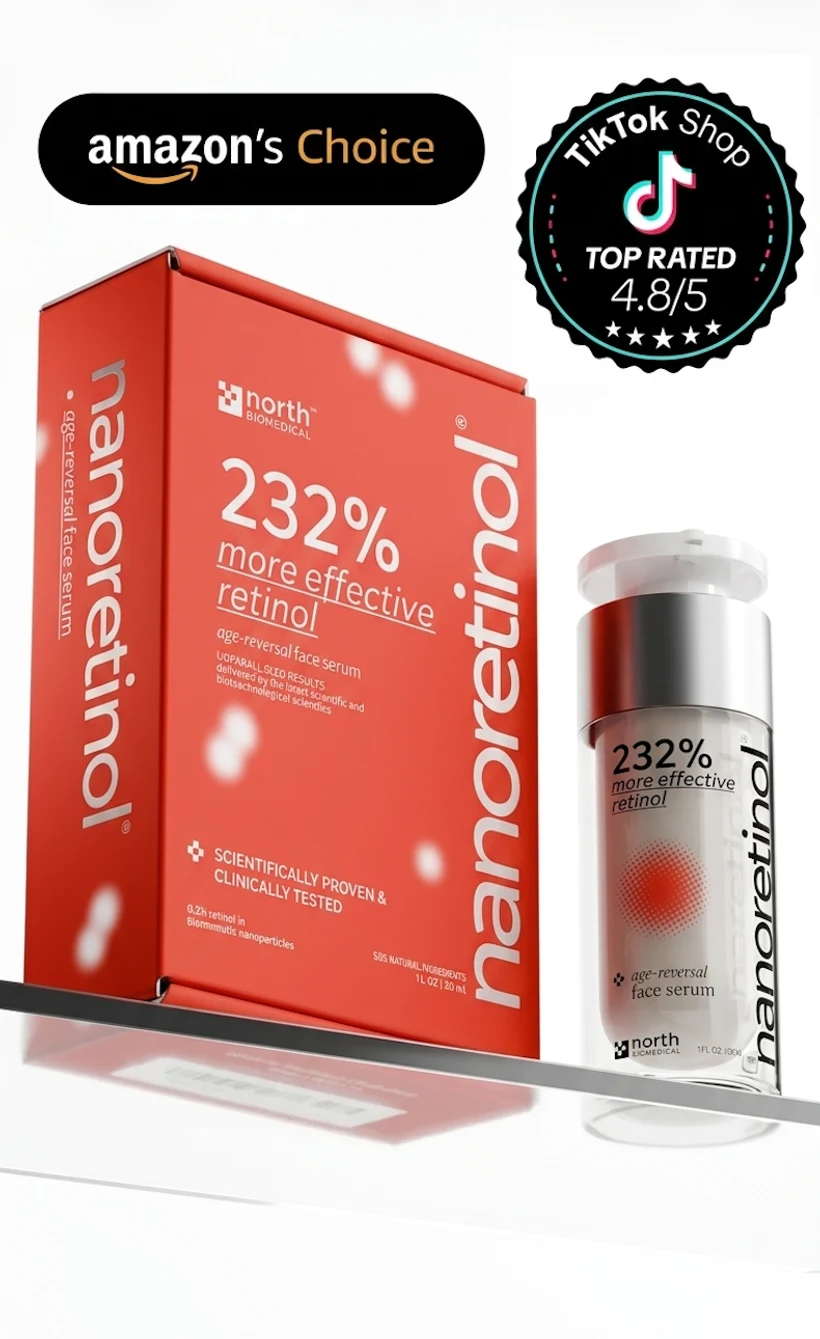
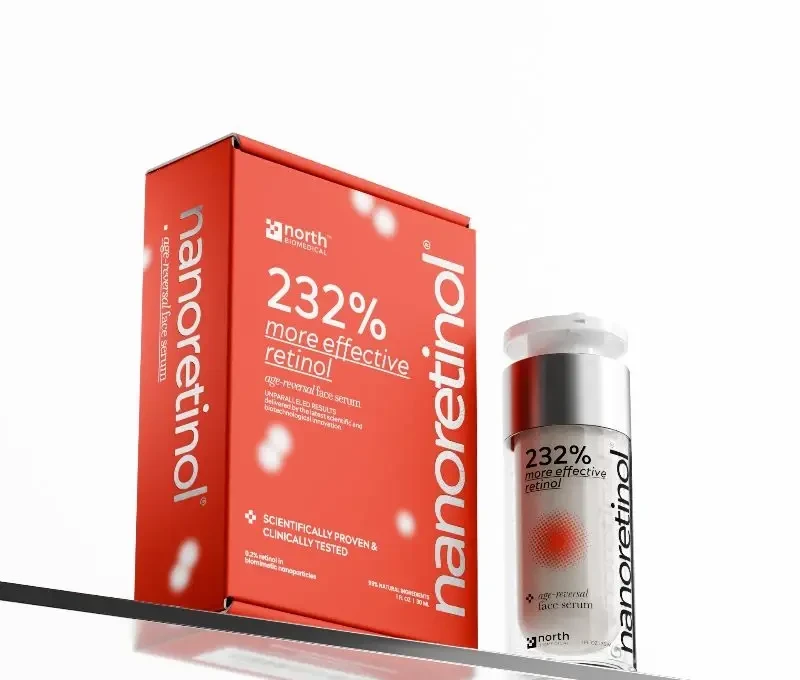
That trade-off — real results or comfort — is what Nanoretinol was built to eliminate. Instead of breaking through the skin barrier, Nanoretinol encapsulates retinol in biomimetic lipid nanoparticles that the skin recognizes as its own cells and lets pass intact, delivering the active deep to the fibroblasts without the barrier disruption that causes irritation. It’s the same nanoparticle-delivery principle used in advanced pharmaceutical medicine, applied to skincare.
The payoff is that you no longer have to choose gentleness over potency. Nanoretinol’s stabilized 0.2% formula proved 232% more effective at collagen recovery and 73% more effective at elastin recovery than conventional retinol in North Biomedical’s clinical study — while being significantly gentler on skin cells. That means the tolerability people seek from adenosine, combined with the deep collagen remodeling only vitamin A delivers.
The Verdict on Adenosine
Adenosine is a genuinely good ingredient: well-tolerated, backed by real fibroblast science, and clinically shown to soften fine lines. If you want a low-risk active that plays well with everything, it earns its place. Just keep its role in perspective — it’s a supporting act. The lead in any evidence-based anti-aging routine is still a well-delivered retinoid, and the modern goal is to get that retinoid’s full power without the irritation that made gentle alternatives so appealing in the first place.
References
- Perez-Aso M, Fernandez P, Mediero A, Chan ES, Cronstein BN. “Adenosine 2A Receptor Promotes Collagen Production by Human Fibroblasts via Pathways Involving Cyclic AMP and AKT but Independent of Smad2/3.” FASEB Journal. 2014;28(2):802-812. doi:10.1096/fj.13-241646
- Marucci G, Buccioni M, Varlaro V, Volpini R, Amenta F. “The Possible Role of the Nucleoside Adenosine in Countering Skin Aging: A Review.” BioFactors. 2022;48(5):1027-1035. doi:10.1002/biof.1881
- Abella ML. “Evaluation of Anti-Wrinkle Efficacy of Adenosine-Containing Products Using the FOITS Technique.” International Journal of Cosmetic Science. 2006;28(6):447-451. doi:10.1111/j.1467-2494.2006.00349.x
- Yeo S, Jung S, Cho HK, Kim YH, Kim GH, Kim D, Ko BH, Lee J. “Design and Characterization of Elastic Artificial Skin Containing Adenosine-Loaded Solid Lipid Nanoparticles for Treating Wrinkles.” Pharmaceutics. 2021;13(1):33. doi:10.3390/pharmaceutics13010033
- Kong R, Cui Y, Fisher GJ, et al. “A Comparative Study of the Effects of Retinol and Retinoic Acid on Histological, Molecular, and Clinical Properties of Human Skin.” Journal of Cosmetic Dermatology. 2016;15(1):49-57. doi:10.1111/jocd.12193