Alcohol's Effect on Skin: What a Night Out Actually Costs
Five separate mechanisms, four different timescales, and only one of them is fixed by drinking water
The standard advice about alcohol and skin is to drink a glass of water between drinks. It is not wrong, and it addresses roughly one fifth of what is actually happening.
Alcohol affects skin through at least five distinct mechanisms operating on completely different timescales — one that resolves by lunchtime, one that resolves over a few days, and two that do not resolve on their own at all. Knowing which is which is the difference between a useful routine and a pointless one.
The part that is genuinely dehydration
Start with the mechanism everyone knows, because it is real. Alcohol suppresses vasopressin, the hormone that tells your kidneys to hold onto water. Less vasopressin means more urine output than the volume you drank accounts for, and a net fluid deficit.
This has been measured carefully rather than assumed. In controlled work on hydration status following a small dose of alcohol, the diuretic effect showed up clearly in fluid balance [1]. Your skin looks flatter and finer lines look deeper the next morning partly because the tissue is genuinely holding less water.
This is also the easiest part to fix, and the reason the water advice persists. Rehydrate and it largely resolves within a day. If morning-after tightness and dullness is your main complaint, our guide to dehydrated skin covers the routine side of it.
Dehydration is the only part of alcohol’s effect on skin that a glass of water actually fixes, and it is the part that would have resolved anyway.
The part that is oxidative
Here is where it stops being about water. Your body does not excrete alcohol; it metabolises it, and the first step converts ethanol into acetaldehyde — a considerably more reactive and more toxic compound than the alcohol itself. Acetaldehyde is then broken down further, but the whole pathway generates reactive oxygen species and shifts the cell’s redox balance toward oxidative stress [2].
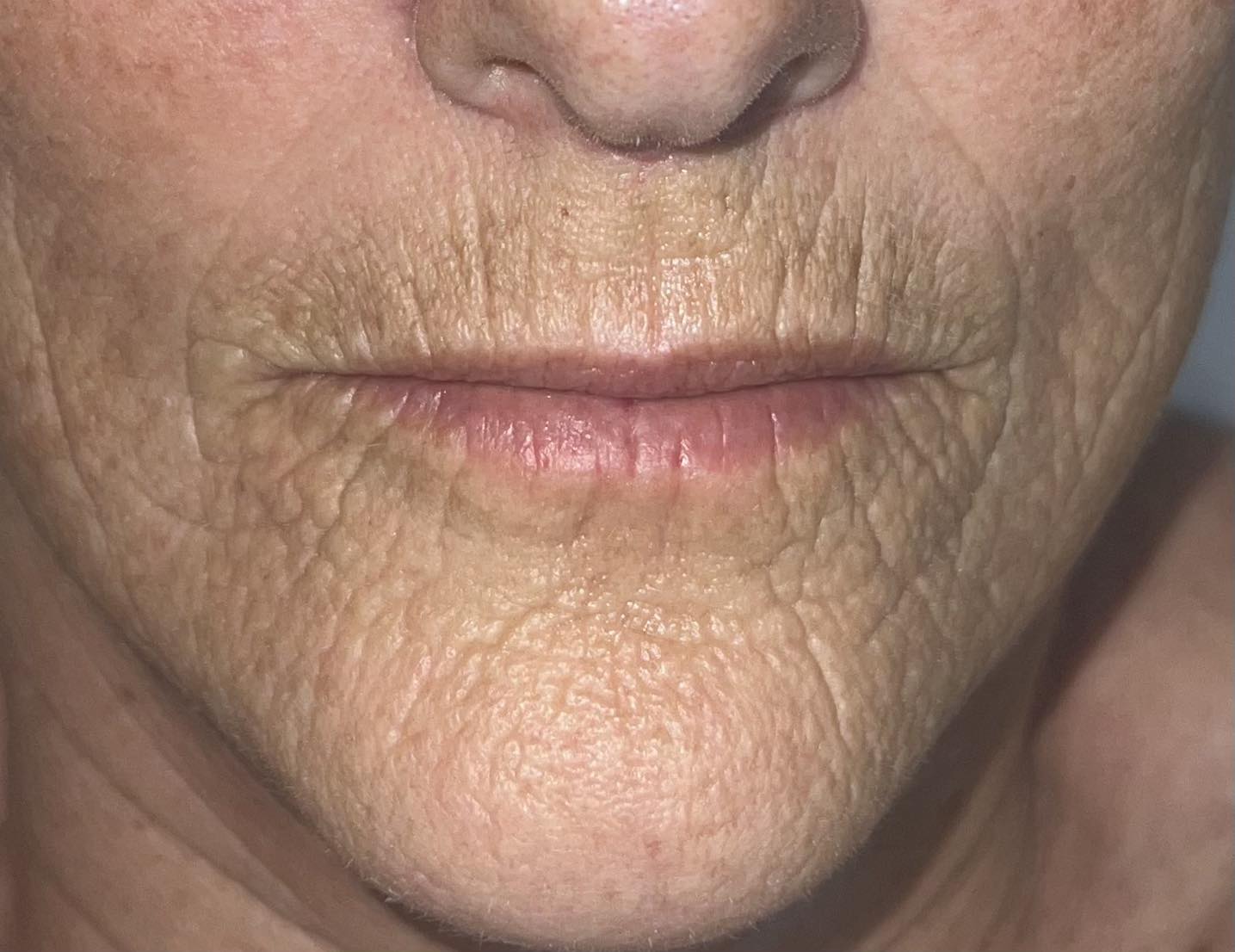
Oxidative stress is not a vague wellness word here. It means free radicals in excess of what your antioxidant systems can neutralise, causing direct damage to lipids, proteins, and DNA. In skin, that translates into the same cascade that drives photoaging: oxidative damage activates matrix metalloproteinases, the enzymes that degrade collagen and elastin faster than your fibroblasts replace them.
This is the mechanism behind the long-term picture. And the epidemiology backs it up: in a large multinational, multiracial cross-sectional survey of women, higher alcohol intake was associated with measurably increased facial aging, independent of smoking [3]. Not a next-morning effect. A years-later one.
The part that is vascular
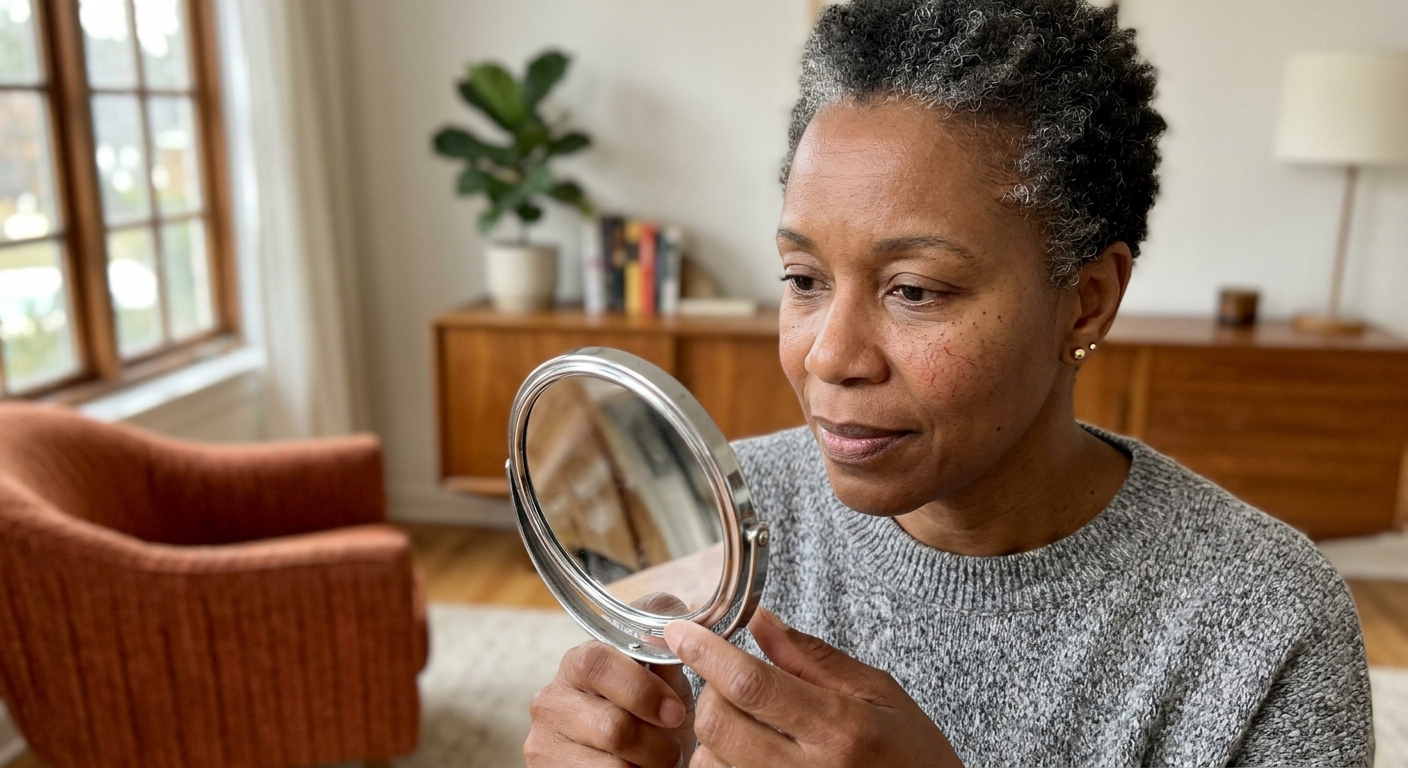
Alcohol is a vasodilator. Blood vessels near the skin surface widen, which is why the flush arrives within minutes and why it is most visible across the cheeks and nose where the vasculature is densest and the skin is thinnest.
A single flush is transient. The concern is repetition. Vessels that dilate and constrict thousands of times gradually lose elastic recoil and stay partly dilated — which is how transient redness becomes the permanent fine red threading of telangiectasia. Our guide to broken capillaries on the face covers what can and cannot be done once they are established.
There is also a documented relationship with rosacea. In a large prospective cohort of US women, alcohol intake was associated with increased risk of developing rosacea, with the association strongest for white wine and liquor [4]. That is an association in an observational study rather than proof of cause, but it is a substantial dataset and it aligns with the mechanism.
Repeated flushing is not the same as one flush, and the difference between them is the difference between an evening and a decade.
The part that is sleep
This mechanism is the most underrated, because it does not feel like a skin effect at all.
Alcohol is sedating, so people assume it improves sleep. It does the opposite in the half that matters. Alcohol shortens the time it takes to fall asleep and increases slow-wave sleep early in the night, then suppresses REM sleep and fragments the second half as it is metabolised [5]. You spend eight hours in bed and get considerably less than eight hours of useful sleep.
Skin runs most of its repair — cell division, barrier reconstruction, collagen synthesis — overnight. Compress and fragment that window regularly and you are not just tired; you are running a maintenance deficit that compounds. Much of what people read as “alcohol face” is chronic under-repair rather than any direct effect of ethanol on the dermis.
The part that is nutritional
The last mechanism is quiet and slow. Heavy or regular drinking interferes with the absorption and storage of several nutrients skin depends on directly — vitamin A among them, which the liver both stores and mobilises, along with zinc and several B vitamins. Alcohol competitively inhibits the oxidation of vitamin A to retinoic acid and induces the cytochrome P450 enzymes that catabolise it, so both storage and activation are affected [6]. Since vitamin A is the parent compound of the entire retinoid family, this is not an incidental deficiency. It undercuts the pathway most responsible for keratinocyte differentiation and collagen signalling.
Combine it with the oxidative load and you get a compounding effect: the same pathway is being depleted from one direction and attacked from the other. That interacts with the other slow drivers of skin ageing too — glycation works on a similar timescale and the two are frequently present together.
What actually reverses which
Sorting the mechanisms by timescale makes the routine obvious.
Resolves in a day: the fluid deficit. Water, electrolytes, a hydrating serum, patience.
Resolves in a few days: the acute inflammatory flush and puffiness. Cool compresses, gentle routine, no aggressive actives on visibly irritated skin.
Does not resolve on its own: cumulative collagen and elastin loss, and established telangiectasia. Vessels need a vascular laser. Collagen needs to be rebuilt.
Rebuilding is where the evidence is strongest and most specific. Topical retinoids remain the best-documented route to increasing dermal collagen in naturally aged skin — including the controlled trial of retinol on naturally aged (not sun-damaged) skin, which is the closer analogue to intrinsic and lifestyle-driven ageing [7]. Our guide to boosting collagen production covers the broader picture.
The practical obstacle is that skin recovering from repeated vasodilation and oxidative stress is often reactive, and conventional retinol formulations get through the epithelial barrier by chemically disrupting it — which is precisely the wrong move on skin that is already flushing. Nanoretinol was developed around that conflict. Its retinol sits inside biomimetic lipid nanoparticles that the skin reads as self and admits intact, with no need to break down the barrier. Tested against conventional retinol it produced 232% greater collagen recovery and 73% greater elastin recovery, and in clinical use over 56 days delivered a 61% increase in skin firmness and a 56% increase in elasticity — with drastically reduced cytotoxicity and side effects milder than conventional retinol when they occur at all.
Drinking less is a skincare decision
None of this is an argument for abstinence, and dose matters enormously — the difference between two drinks on a Saturday and a nightly habit is not a matter of degree. But it is worth being honest that cutting back is one of the higher-leverage skincare interventions available, and it is free. The routine handles what the routine can handle. The rest is arithmetic.
References
- Hobson RM, Maughan RJ. “Hydration Status and the Diuretic Action of a Small Dose of Alcohol.” Alcohol and Alcoholism. 2010;45(4):366-373. doi:10.1093/alcalc/agq029
- Wu D, Cederbaum AI. “Alcohol, Oxidative Stress, and Free Radical Damage.” Alcohol Research & Health. 2003;27(4):277-284. PMID: 15540798
- Goodman GD, Kaufman J, Day D, et al. “Impact of Smoking and Alcohol Use on Facial Aging in Women: Results of a Large Multinational, Multiracial, Cross-sectional Survey.” The Journal of Clinical and Aesthetic Dermatology. 2019;12(8):28-39. PMID: 31531169
- Li S, Cho E, Drucker AM, Qureshi AA, Li WQ. “Alcohol intake and risk of rosacea in US women.” Journal of the American Academy of Dermatology. 2017;76(6):1061-1067. doi:10.1016/j.jaad.2017.02.040
- Ebrahim IO, Shapiro CM, Williams AJ, Fenwick PB. “Alcohol and Sleep I: Effects on Normal Sleep.” Alcoholism: Clinical and Experimental Research. 2013;37(4):539-549. doi:10.1111/acer.12006
- Clugston RD, Blaner WS. “The adverse effects of alcohol on vitamin A metabolism.” Nutrients. 2012;4(5):356-371. doi:10.3390/nu4050356
- Kafi R, Kwak HSR, Schumacher WE, et al. “Improvement of Naturally Aged Skin With Vitamin A (Retinol).” Archives of Dermatology. 2007;143(5):606-612. doi:10.1001/archderm.143.5.606