Best Face Moisturizer for Men: What the Skin Science Actually Says
Why male skin fails on a different schedule, and what that means for the bottle you buy
Walk down the men’s grooming aisle and you will find a wall of dark bottles promising to be intense, maximum, or charcoal-powered. Almost none of them tell you the one thing that would help you choose: what is actually different about male skin, and what a formula has to do about it.
The differences are real, they are measurable, and they point to a specific kind of moisturizer. They just have nothing to do with the packaging.
Male skin is not simply tougher
The stereotype contains a fragment of truth. Men do have thicker skin with higher collagen density, and they produce more sebum than women do [1]. A study measuring skin physiology in 300 people found that male sebum production was consistently higher and stayed broadly stable across the lifespan, while female sebum production declined progressively with age. The same work found men had lower transepidermal water loss than women until around age 50, and a skin surface pH that sat below 5 at nearly every site measured [2].
That last point matters more than it sounds. The classic work on skin thickness and collagen found that dermal collagen content falls with age and that skin thickness tracks collagen content directly [3]. Men start from a higher baseline and lose it on a more linear slope, which is why male aging tends to arrive later and then look abrupt, rather than gradually.
The variable nobody accounts for: shaving
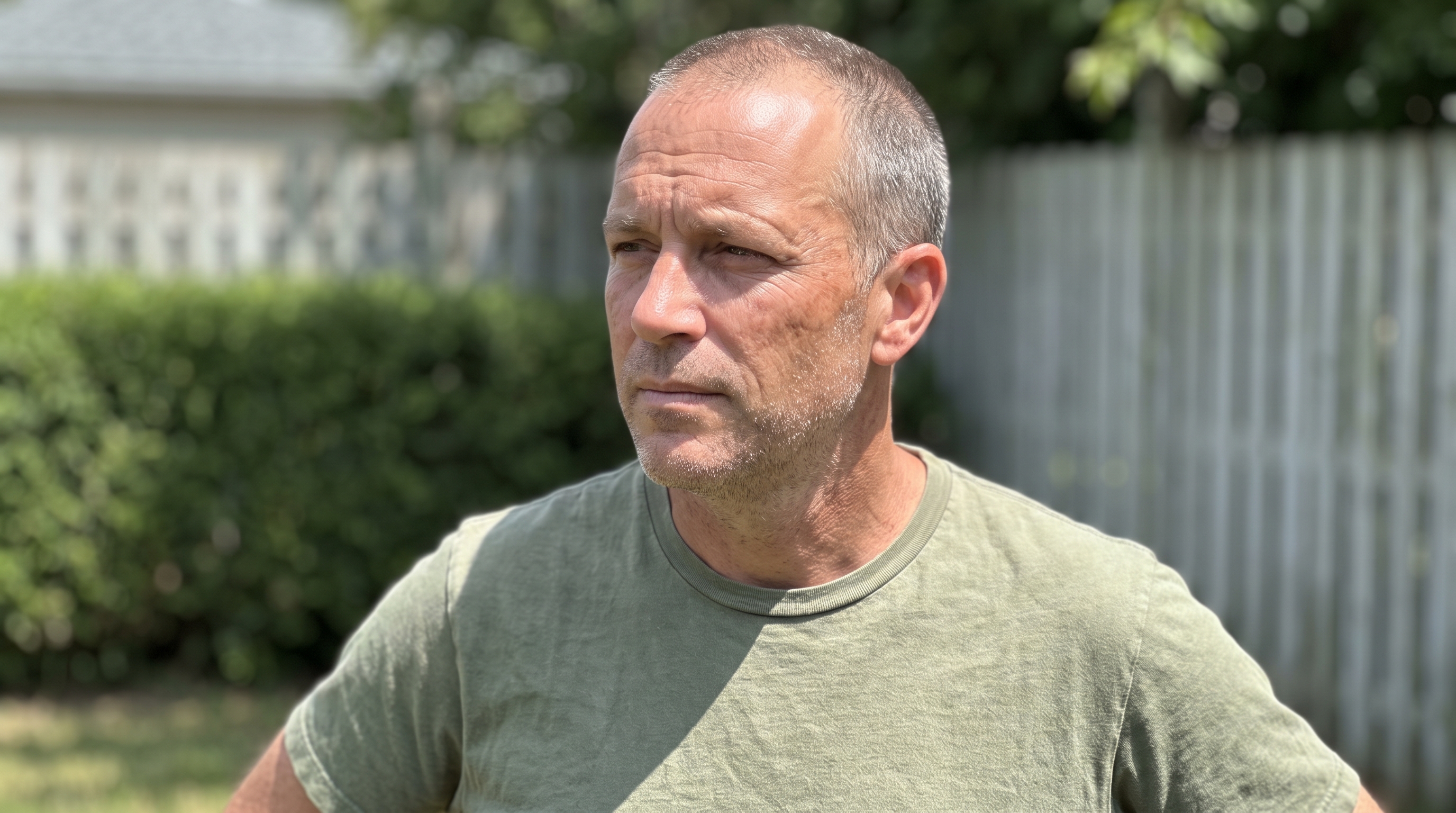
Here is the thing that genuinely separates men’s skincare from everyone else’s. A large share of men mechanically abrade the stratum corneum on their face several times a week, for decades.
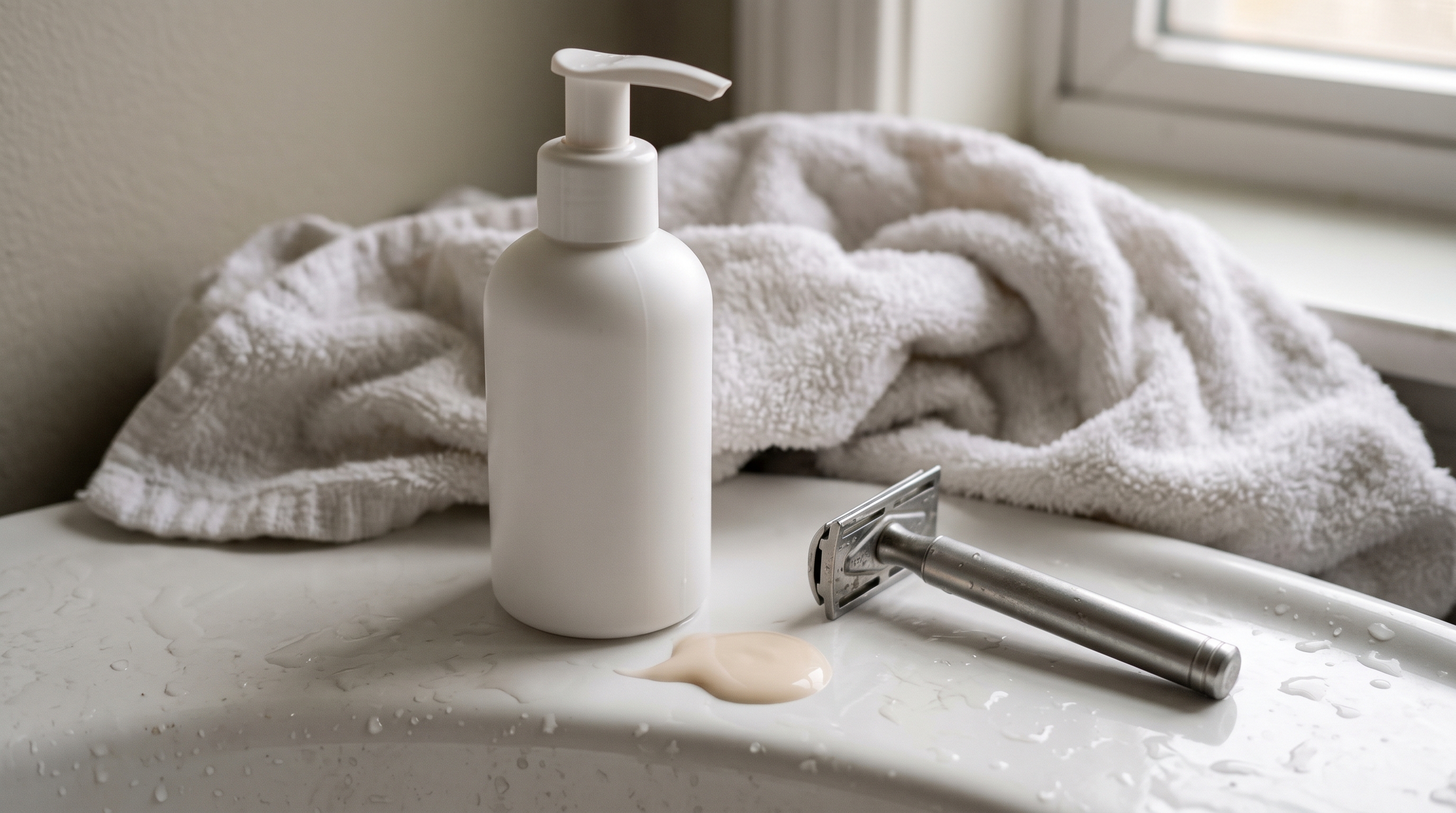
Dermatological reviews of male skin identify regular facial hair removal as the defining driver of men’s skincare needs, with razor burn and irritation as the predictable consequence [4]. A closer look at shaving mechanics confirms that shaving-related trauma is both common and routinely under-recognised [5]. More recently, researchers built a laboratory model combining tape-strip exfoliation with human skin equivalents to isolate what shaving actually does. The simulated shaving insult drove transepidermal water loss up to levels comparable with severe tape stripping, thickened the epidermis, increased cell proliferation and raised inflammatory cytokines in proportion to the severity of the insult. Critically, that damage was measurably reduced when a moisturizer was applied afterwards [6].
The product you actually use every day beats the richer one you quit.
That is the strongest available argument for a men’s moisturizer, and it has nothing to do with hydration as a comfort feature. It is barrier repair after a repeated mechanical injury.
What that physiology asks for in a bottle
Put those findings together and the specification writes itself.
Lightweight, not occlusive. Higher baseline sebum means heavy petrolatum-led creams sit on the surface, feel greasy and get abandoned within a fortnight. The product you actually use every day beats the richer one you quit.
Humectant plus barrier lipids, in that order. Draw water in, then hold it. A cream formulated to mimic the skin’s own natural moisturizing systems significantly increased stratum corneum hydration in clinical testing [7], which is the logic behind glycerin or hyaluronic acid paired with ceramides rather than either alone.
Calming agents that survive a razor. Glycerin, niacinamide and emollients are the ingredients repeatedly identified as supporting post-shave barrier recovery [4]. Fragrance and high-percentage alcohol denat are the ingredients working against you on freshly abraded skin.
In the clinical work behind it, it proved 232% more effective in collagen recovery than conventional retinol while being significantly gentler on skin cells.
Fragrance-free if you shave close. A compromised barrier is a permeable barrier, and permeability applies equally to the things you did not want getting in. If your skin stings after aftershave, that sting is information, not efficacy.
If your barrier is already visibly struggling with flaking, tightness or persistent redness, our guides to repairing a damaged skin barrier and the broader mechanics of skin barrier repair cover the recovery sequence in more detail. Persistent tightness that moisturizer does not fix is often dehydrated skin rather than dry skin, which is a different problem with a different solution.
The step most men skip
A moisturizer maintains the barrier. It does not rebuild collagen, and collagen is what determines whether skin looks structurally aged or not.
That job belongs to a retinoid. The evidence for topical retinoids improving fine wrinkles, roughness and mottled pigmentation through increased collagen synthesis is among the best established in dermatology, and retinol is meaningfully better tolerated than prescription-strength tretinoin [8]. For most men the practical routine is genuinely two steps: a nightly retinoid to rebuild, and a moisturizer to keep the barrier intact while it works.
The catch is tolerance. Skin that gets scraped with a blade four mornings a week is not skin with a large irritation budget, and conventional retinol formulations spend that budget aggressively, because they rely on chemicals and petroleum derivatives that break down the epithelial barrier to get the retinol through it. That is the mechanism behind the burning, redness and peeling that makes most men quit in week two.
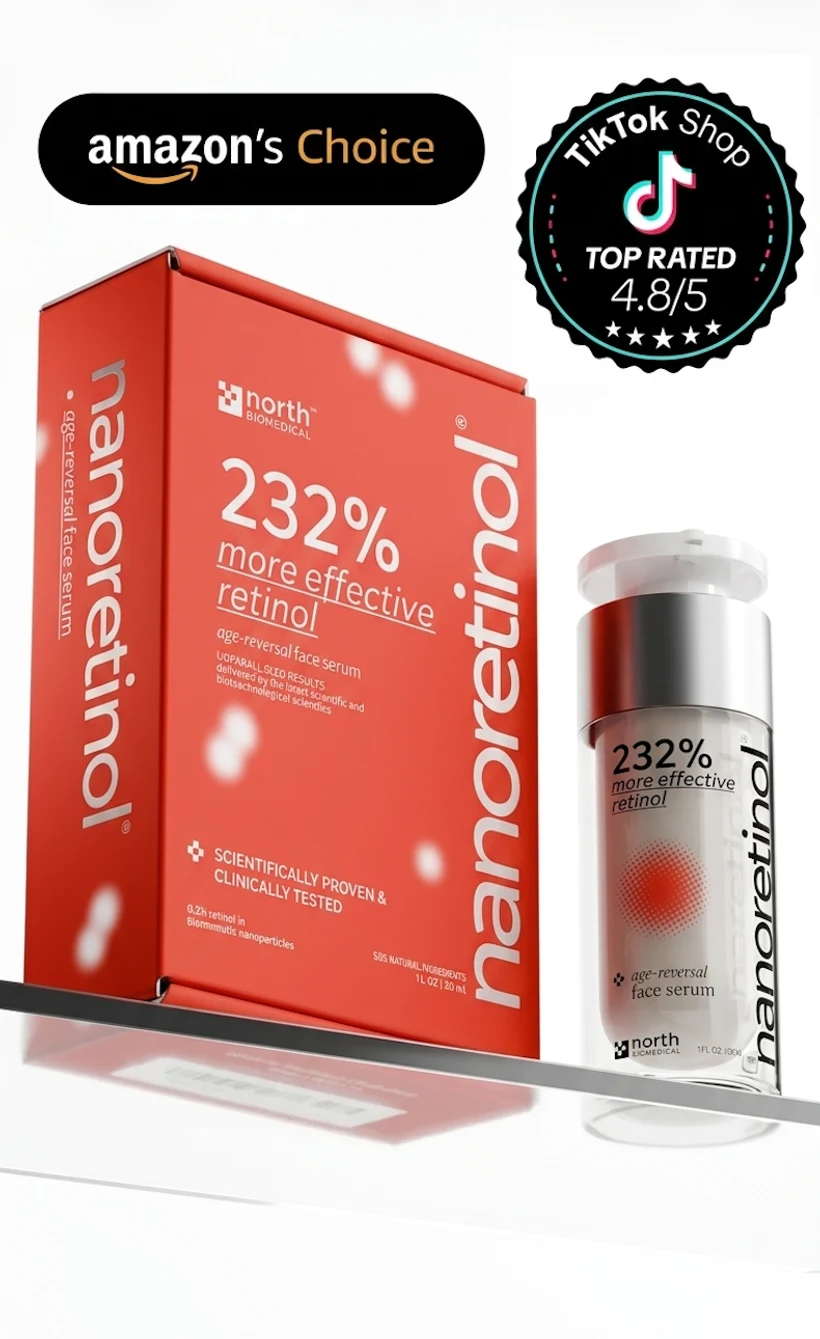
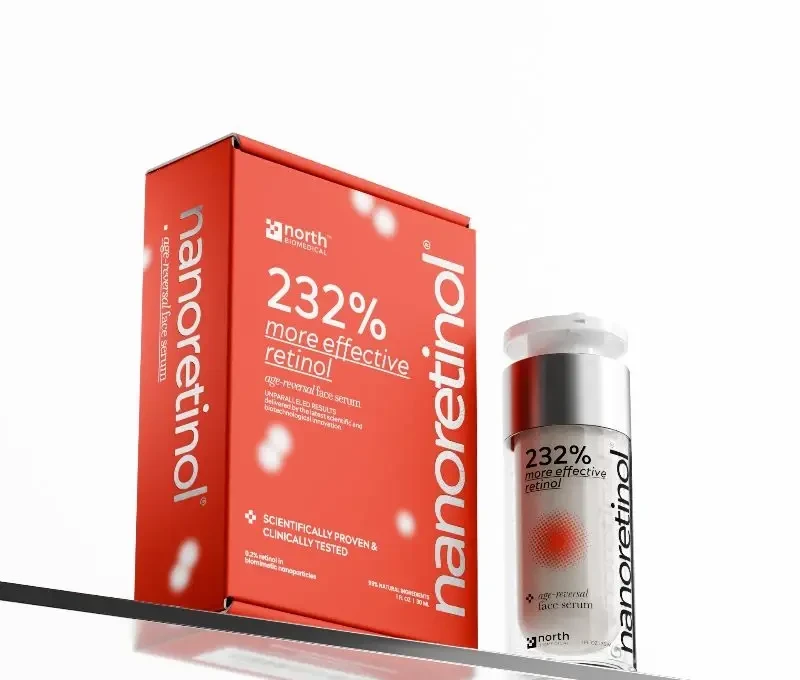
Nanoretinol was built to avoid that trade entirely. Its retinol is encapsulated in biomimetic lipid nanoparticles that the skin recognises as its own and allows through the epithelial barrier, so no barrier damage is required for delivery. It is water-based and gel-like rather than oily, absorbs completely to a matte finish, and is suitable for all skin types including oily and combination skin. In the clinical work behind it, it proved 232% more effective in collagen recovery than conventional retinol while being significantly gentler on skin cells. For a man already managing shaving irritation, that combination is the entire point. If you are weighing a dedicated anti-aging product alongside your moisturizer, our comparison of the best anti-wrinkle cream for men sets out the options.
How to choose in the aisle
Ignore the front of the bottle and read three things on the back. Is the texture a gel or light lotion rather than a heavy balm? Does it pair a humectant with ceramides or another barrier lipid? Is it free of fragrance and drying alcohol if you shave regularly?
A product that clears those three tests will outperform most of the aggressively marketed alternatives, at a fraction of the price. Apply it to slightly damp skin after washing or shaving, when the humectants have water available to hold, and give it eight weeks before judging anything.
The unglamorous truth is that men’s skin does not need a specialised men’s product. It needs a light, barrier-supporting formula used consistently on skin that gets injured more often than most, plus one active that does the structural work. Everything else in that aisle is packaging.
References
- Rahrovan S, Fanian F, Mehryan P, Humbert P, Firooz A. “Male versus female skin: what dermatologists and cosmeticians should know.” International Journal of Women’s Dermatology. 2018;4(3):122-130. doi:10.1016/j.ijwd.2018.03.002
- Luebberding S, Krueger N, Kerscher M. “Skin physiology in men and women: in vivo evaluation of 300 people including TEWL, sebum content and skin surface pH.” International Journal of Cosmetic Science. 2013;35(5):477-483. doi:10.1111/ics.12068
- Shuster S, Black MM, McVitie E. “The influence of age and sex on skin thickness, skin collagen and density.” British Journal of Dermatology. 1975;93(6):639-643. doi:10.1111/j.1365-2133.1975.tb05113.x
- Draelos ZD. “Male skin and ingredients relevant to male skin care.” British Journal of Dermatology. 2012;166(Suppl 1):13-16. doi:10.1111/j.1365-2133.2011.10784.x
- Cowley K, Vanoosthuyze K. “Insights into shaving and its impact on skin.” British Journal of Dermatology. 2012;166(Suppl 1):6-12. doi:10.1111/j.1365-2133.2011.10783.x
- Costello L, Goncalves K, Maltman V, et al. “Development of a novel in vitro strategy to understand the impact of shaving on skin health: combining tape strip exfoliation and human skin equivalent technology.” Frontiers in Medicine. 2023;10:1236790. doi:10.3389/fmed.2023.1236790
- Spada F, Barnes TM, Greive KA. “Skin hydration is significantly increased by a cream formulated to mimic the skin’s own natural moisturizing systems.” Clinical, Cosmetic and Investigational Dermatology. 2018;11:491-497. doi:10.2147/CCID.S177697
- Mukherjee S, Date A, Patravale V, Korting HC, Roeder A, Weindl G. “Retinoids in the treatment of skin aging: an overview of clinical efficacy and safety.” Clinical Interventions in Aging. 2006;1(4):327-348. doi:10.2147/ciia.2006.1.4.327