Best Face Wash for Oily Skin: The Two Label Details That Decide It
Surfactant system and pH do almost all of the work, and neither one appears on the front of the bottle
Every bottle in the oily-skin aisle sells the same promise, and most of them keep it. Oil comes off. The trouble arrives about four hours later, when the shine is back anyway and the skin underneath feels tight while the surface feels greasy again.
That combination is worth taking seriously. It usually means the cleanser did more than remove sebum.
What “oily” means at 45
Sebum is produced by sebaceous glands under androgen control, and output peaks in young adulthood. The curve after that is not the same for everyone. In women, sebum levels tend to fall after menopause. In men, no major change appears until the eighth decade of life [1].
The number of glands stays constant across a lifetime. What changes is turnover inside them: reduced androgen levels in older skin slow cellular turnover in the sebaceous gland, which produces hyperplasia of the facial glands in advanced age [1]. Enlarged glands read on the face as more prominent pores, which is why skin can look oilier and more porous while producing less oil than it did at 25.
A good number of people shopping this aisle after 40 are therefore not treating the condition they think they are. Afternoon shine on the forehead and nose, on a face that also feels tight straight after washing, is a different problem from genuinely high sebum output. Cleanser choice is where the distinction starts costing money.
The surfactant does almost all of the work
A face wash is a surfactant system with fragrance and marketing attached. Surfactants carry a water-loving head and an oil-loving tail, which lets them lift sebum into micelles that rinse away. They cannot distinguish between the sebum sitting on your skin and the lipids holding your barrier together.
Traditional soaps are alkaline salts of fatty acids. Synthetic detergents, known as syndets, exist because soap was too aggressive for daily facial use. The lower irritation and dryness measured with syndets traces back to a reduced tendency to denature skin protein, which is governed by the charge density of the protein-bound, micelle-like surfactant aggregates the cleanser forms [2].
They cannot distinguish between the sebum sitting on your skin and the lipids holding your barrier together.
That protein damage is the thing you actually feel. Harsh surfactants interact with stratum corneum proteins and with barrier lipids, and the documented consequences are after-wash tightness, dryness, barrier damage, irritation, and in some people itch [3].
Formulators solve this in predictable ways. Blending an anionic surfactant with amphoteric or non-ionic partners changes how micelles assemble and lowers the amount of free surfactant available to attack skin protein [3]. On an ingredients list that looks like sodium cocoyl isethionate, cocamidopropyl betaine, decyl glucoside, or coco-glucoside appearing alongside or instead of a lone sulfate.
pH is the second variable
Healthy skin surface sits acidic, roughly between 4.5 and 5.5. That acid mantle is not decorative. It appears to matter for permeability barrier formation and for cutaneous antimicrobial defence, and the enzymes that assemble barrier lipids and govern orderly shedding are pH-dependent [4].
True soap has a pH near 9 to 10. Washing with it lifts surface pH, and repeated alkaline washing holds the surface outside the range those enzymes work best in [4]. Syndet bars and most gel cleansers can be built at or close to skin pH, which is the entire reason they exist.
You can spot soap without a pH meter. If sodium tallowate, sodium palmitate, or sodium cocoate sits high on the ingredients list, it is soap, whatever the front of the pack claims.
The ceiling on what a cleanser can achieve
Contact time for a face wash is about thirty seconds, followed by dilution and a rinse. That is the hard limit on any active suspended in it.
Water alone in the morning is a fair experiment if your face feels tight by mid-morning.
Salicylic acid in a cleanser gets a fraction of the exposure it would get in a leave-on product at the same concentration, which is why our salicylic acid cleanser guide treats the wash as pore maintenance rather than treatment. Clay and charcoal adsorb surface oil and then leave down the drain with the water. None of it reaches sebaceous output, which is set by androgens and genetics rather than by washing.
The useful conclusion is a division of labour. Choose the cleanser on gentleness and pH. Put the actives in the steps that stay on your face.
How to choose in the shop
Read the surfactants first and look for a syndet or amphoteric-led system rather than soap. A gel or light foaming texture suits oily skin, since cream cleansers are generally built around richer emollients that oily skin does not need.
Once a day is enough for most people, at night, when there is sunscreen and a day of grime to remove. Water alone in the morning is a fair experiment if your face feels tight by mid-morning. Skip gritty scrubs, and skip anything that leaves you squeaking.
Follow with a light moisturizer for oily skin. Skin losing water reads as tight and rough no matter how much oil is sitting on top of it, and that sensation is what drives most people to wash more aggressively than they need to.
If washing already stings, or the face flushes and flakes in patches, treat it as a damaged skin barrier and simplify the whole routine for a fortnight before judging any single product.
The part the cleanser was never going to fix
Cleansing is maintenance. The complaints that bring most people to this aisle after 40, meaning enlarged-looking pores, rough texture, and the way makeup starts sitting badly, come from the dermis and from cell turnover rather than from the film of oil on the surface.
The ingredient class with the strongest evidence there is the retinoids. In aged skin, topical retinol increased glycosaminoglycan and procollagen I production and improved fine wrinkling in a vehicle-controlled trial [5]. The long-standing objection to retinoids is irritation, which is exactly the trade-off that oily, easily inflamed skin refuses to make.
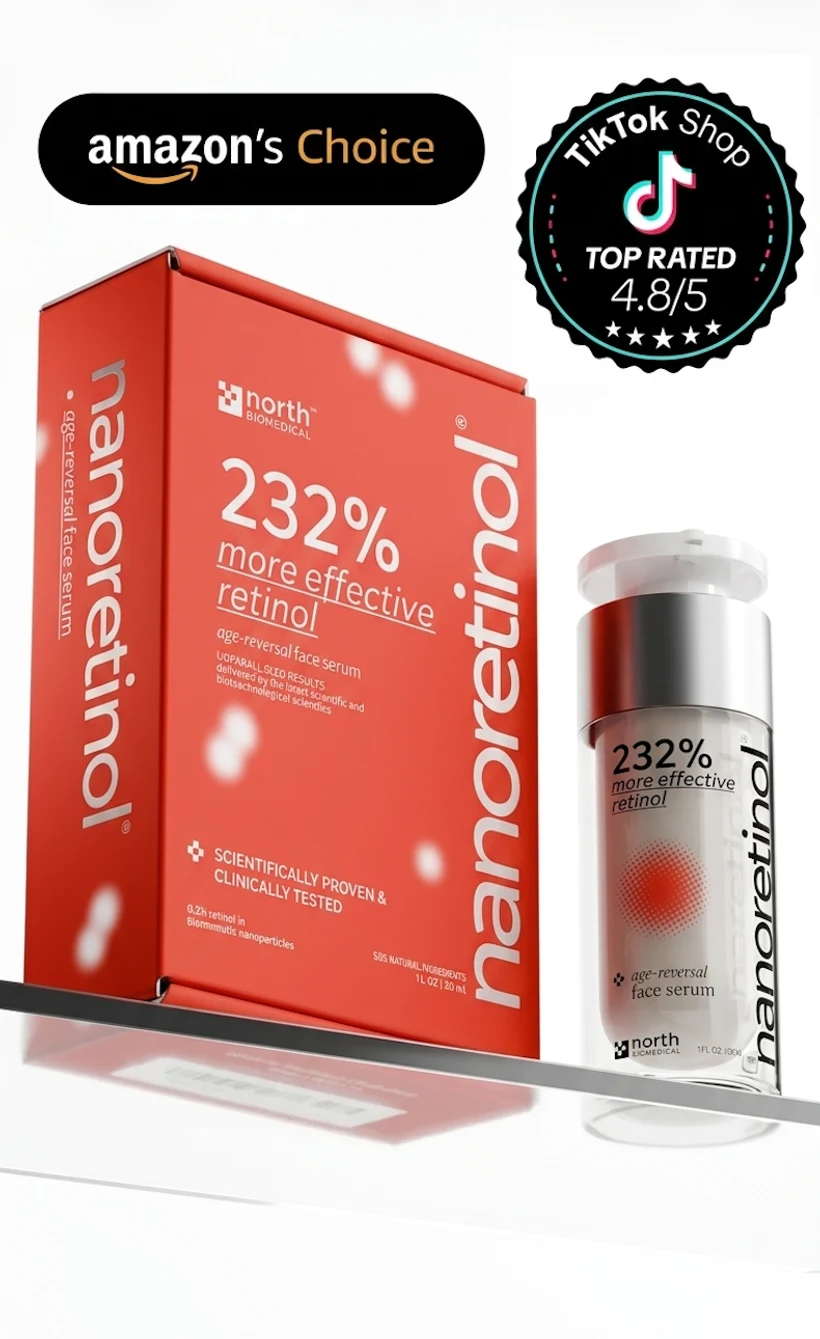
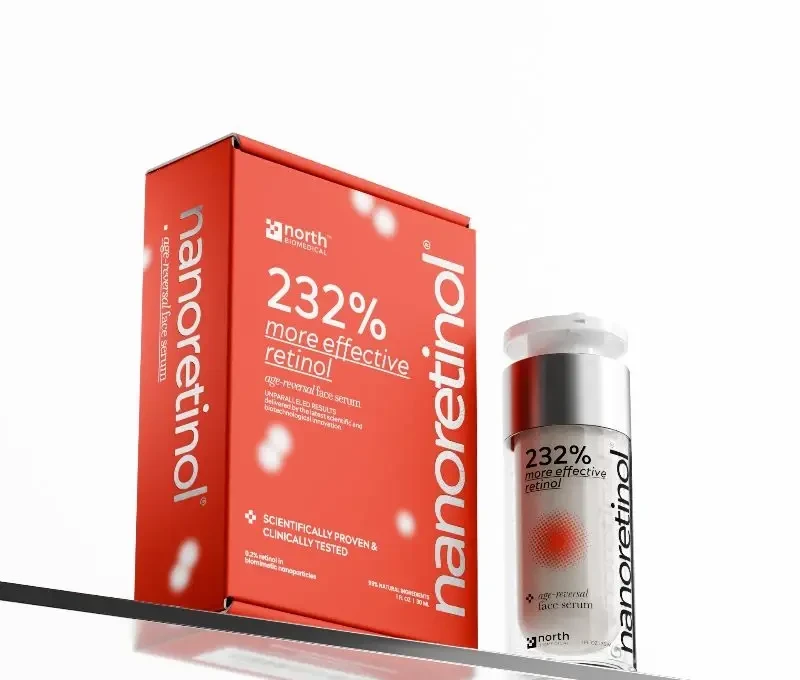
That objection is really about delivery. Traditional retinol barely crosses the epithelial barrier, and conventional formulations lean on chemicals and petroleum derivatives that break the barrier down to force a way through, which is where the burning, redness and peeling originate. Nanoretinol was developed to avoid that route entirely: 0.2% retinol encapsulated in biomimetic lipid nanoparticles that are externally identical to skin cells, so the body recognises them as its own and lets them pass. The base is water-based and gel-like, absorbs completely to a matte finish, and suits oily and combination skin, which is unusual for a retinoid. In North Biomedical’s clinical study, that delivery approach produced 232% greater collagen recovery and 73% greater elastin recovery than conventional retinol, with skin firmness up 61% and elasticity up 56% after 56 days of use.
If prominent pores are the main complaint, the relationship between retinol and pores is worth understanding before you spend anything else.
Putting it together
Buy the cleanser that leaves your face comfortable rather than clean-feeling. Use it once a day. Stop asking a rinse-off product to regulate oil production, because that job is beyond its contact time and always was. Then spend the rest of the routine on leave-on steps, which are the only ones with enough time on the skin to change anything structural.
References
- Zouboulis CC, Boschnakow A. “Chronological ageing and photoageing of the human sebaceous gland.” Clinical and Experimental Dermatology. 2001;26(7):600-607. doi:10.1046/j.1365-2230.2001.00894.x
- Draelos ZD. “The science behind skin care: Cleansers.” Journal of Cosmetic Dermatology. 2018;17(1):8-14. doi:10.1111/jocd.12469
- Ananthapadmanabhan KP, Moore DJ, Subramanyan K, Misra M, Meyer F. “Cleansing without compromise: the impact of cleansers on the skin barrier and the technology of mild cleansing.” Dermatologic Therapy. 2004;17(Suppl 1):16-25. doi:10.1111/j.1396-0296.2004.04s1002.x
- Schmid-Wendtner MH, Korting HC. “The pH of the skin surface and its impact on the barrier function.” Skin Pharmacology and Physiology. 2006;19(6):296-302. doi:10.1159/000094670
- Kafi R, Kwak HSR, Schumacher WE, Cho S, Hanft VN, Hamilton TA, King AL, Neal JD, Varani J, Fisher GJ, Voorhees JJ, Kang S. “Improvement of naturally aged skin with vitamin A (retinol).” Archives of Dermatology. 2007;143(5):606-612. doi:10.1001/archderm.143.5.606