
Best Face Wash for Combination Skin: One Cleanser, Two Very Different Zones
Combination skin is a measurable sebum gradient across the face, and the cleanser that suits your T-zone is usually the one damaging your cheeks
Shopping for a face wash with combination skin means being asked a question you cannot answer. Every shelf is organized by skin type, the categories are oily and dry, and you have both, roughly four inches apart. Pick the cleanser for oily skin and the cheeks go tight and start flaking by day three. Pick the one for dry skin and the forehead is shining before you have finished your coffee.
Most people resolve this by alternating, or by using the oily-skin cleanser and applying more moisturizer to compensate. Both approaches quietly make the situation worse, and the reason is that the shelf categories are describing something the face does not actually do.
Combination skin has a real, measured definition
This is not a marketing invention. Researchers measuring facial sebum region by region found secretion on the forehead, nose and chin consistently higher than on the cheeks, across seasons, and proposed defining combination skin by exactly that regional mismatch rather than as a separate skin type [1].
The mechanism underneath it was later pinned down. Sebocytes taken from the T-zone express significantly more androgen receptor, at both protein and messenger RNA level, than sebocytes from the cheeks [2]. Sebaceous glands respond to androgens, so the same circulating hormones produce a much stronger response in the centre of the face than at its edges. The gradient is built into the tissue, and no cleanser will flatten it.
What this reframes is the shopping problem. You are not looking for a product that somehow behaves differently in two places. You are looking for one that removes the T-zone’s surplus without stripping the zone that has no surplus to give.
Why the oily-skin cleanser is the wrong default
The intuitive move is to buy for the loudest complaint, which is the shine. That means a stronger surfactant system, and surfactants do not read maps.
Anionic surfactants such as sodium lauryl sulfate bind stratum corneum proteins and cause them to swell, while disordering the lipid lamellae packed between corneocytes. High-pH systems produce the same protein swelling even in the absence of surfactant, which is why old-fashioned soap remains a poor facial cleanser however oily the face [3]. On the T-zone, with its heavier lipid film and denser glandular supply, that damage is partly absorbed. On the cheeks it lands directly.
Most people resolve this by alternating, or by using the oily-skin cleanser and applying more moisturizer to compensate.
The damage also accumulates rather than resetting overnight. Repeated surfactant exposure over three weeks produced a progressive, measurable rise in transepidermal water loss, the standard instrumental readout of barrier integrity [4]. This is the part that misleads people: the cheeks were fine for the first week, so the cleanser gets a pass, and the tightness that shows up in week three is blamed on the weather or on a moisturizer that stopped working.
There is a second-order cost too. A stripped cheek makes the whole face feel dry, which prompts a heavier cream, which is often the thing that then congests the T-zone.
The rule: buy for your driest zone
The correct selection rule is unintuitive and reliably works. Choose the cleanser your cheeks would want, and handle the T-zone with the treatment steps that follow it, where actives can be applied where they are needed.
Three checks do almost all of the work.
Check the surfactants in the first five ingredients. Amphoteric and non-ionic surfactants such as cocamidopropyl betaine, coco-glucoside and decyl glucoside, and mild anionic esters such as sodium cocoyl isethionate, cleanse effectively while interacting far less aggressively with skin protein [3]. Sodium lauryl sulfate high in the list is the one clear disqualifier.
Look for a stated pH near 5. Skin surface is acidic by design. Measurement across 330 subjects found untreated skin averaging around pH 4.7, and skin held below pH 5 showed better barrier function, hydration and desquamation than skin above it [5]. A cleanser that leaves the surface alkaline works against the enzymes that assemble barrier lipids, and the T-zone is not exempt from that.
Distrust the squeak. The tight, clean, slightly squeaky feeling that combination skin is trained to chase is the sound of a barrier missing its lipid film. If your cheeks squeak, the wash is too strong for two-thirds of your face.
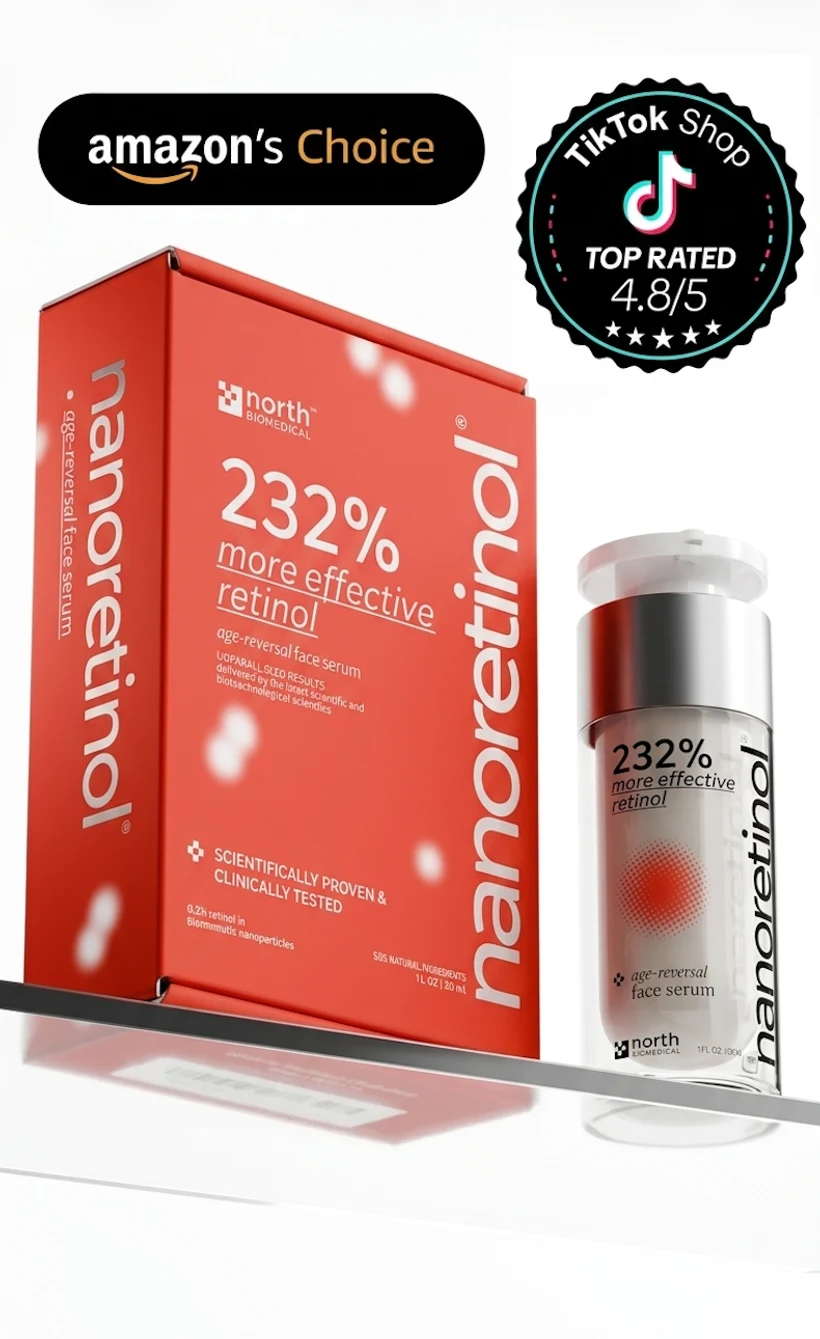
Nanoretinol takes a different route: 0.2% retinol encapsulated in biomimetic lipid nanoparticles that the skin recognizes as self and admits without the barrier being forced open.
The two-week zone test
Product reviews cannot tell you this, because reviewers do not share your gradient. Run the test instead.
Use the candidate cleanser twice daily for fourteen days with nothing else changing in the routine. Then check three things. Do the cheeks feel tight within ten minutes of rinsing? Is there fine flaking at the nose edges or along the jaw? Has the T-zone shine returned earlier in the day than it used to?
A yes to the first two means the surfactant system is too aggressive. A yes to the third, on its own, usually means the opposite of what people assume: skin that has been over-cleansed produces the same sebum but loses its barrier lipids, so the face reads as greasier while behaving worse. If all three are no, the cleanser is right, whatever the bottle claims it was made for.
Two habits sit alongside the product choice. Lukewarm water rather than hot, because heat strips lipids independently of chemistry. And a genuinely short contact time, since a facial cleanser needs about thirty seconds. If you wear heavy sunscreen or makeup, the cleaner solution is an oil-based first step rather than a harsher wash, which is the case for double cleansing done properly.
After the wash is where the zones diverge
Once the cleanser has stopped being the problem, the routine can finally treat the two zones differently, which is what it should have been doing all along. Lightweight hydration across the whole face, a heavier layer only where it is wanted, and actives placed by zone. The full logic of that layering is covered in our guides to combination skin and choosing a moisturizer for combination skin.
The treatment step is also where retinoids belong. Retinoids normalize keratinocyte differentiation and epidermal turnover, which is the mechanistic basis for their effect on follicular plugging, texture and pore appearance, alongside their well-established role in photodamaged skin [6]. For combination skin that has an interest in both the congested centre and the aging edges, that is a single active addressing both complaints.
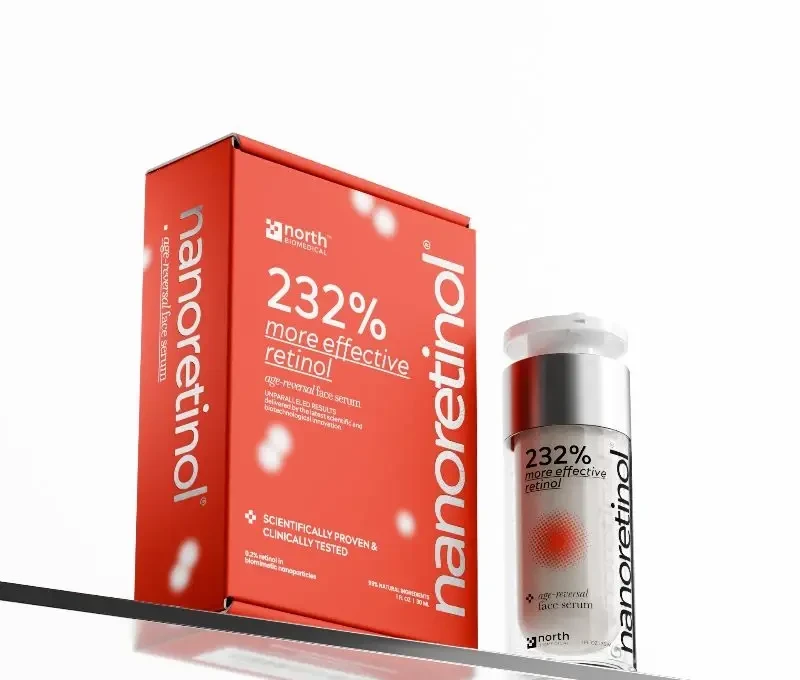
The obstacle has usually been tolerability, and tolerability is mostly a vehicle question. Conventional retinol formulations often depend on carriers that loosen the skin barrier to drive the molecule through it, and on cheeks that have spent years under an over-strong cleanser, that is the last thing the tissue needs. Nanoretinol takes a different route: 0.2% retinol encapsulated in biomimetic lipid nanoparticles that the skin recognizes as self and admits without the barrier being forced open. It is water-based, absorbs to a matte finish, and in laboratory comparison against conventional retinol proved 232% more effective in collagen recovery and 73% more effective in elastin recovery, with drastically reduced cytotoxicity.
None of that helps if the barrier is being dismantled every morning, so the sequence matters: fix the cleanser, allow a few weeks of barrier recovery, then introduce the active.
What to take to the shop
Ignore the skin-type label on the front. Read the first five ingredients, look for a pH near 5, and choose the formula your cheeks could tolerate twice a day for a fortnight. The T-zone will not riot. It has more oil than it needs and a full complement of glands that will keep producing regardless.
Combination skin is not two problems. It is one gradient, and cleansers only ever fail it in one direction.
References
- Youn SW, Na JI, Choi SY, Huh CH, Park KC. “Regional and seasonal variations in facial sebum secretions: a proposal for the definition of combination skin type.” Skin Research and Technology. 2005;11(3):189-195. doi:10.1111/j.1600-0846.2005.00119.x
- Seo YJ, Li ZJ, Choi DK, Sohn KC, Kim HR, Lee Y, Kim CD, Lee YH, Shi G, Lee JH, Im M. “Regional difference in sebum production by androgen susceptibility in human facial skin.” Experimental Dermatology. 2014;23(1):70-72. doi:10.1111/exd.12291
- Ananthapadmanabhan KP, Moore DJ, Subramanyan K, Misra M, Meyer F. “Cleansing without compromise: the impact of cleansers on the skin barrier and the technology of mild cleansing.” Dermatologic Therapy. 2004;17(Suppl 1):16-25. doi:10.1111/j.1396-0296.2004.04s1002.x
- Tupker RA, Pinnagoda J, Coenraads PJ, Nater JP. “The influence of repeated exposure to surfactants on the human skin as determined by transepidermal water loss and visual scoring.” Contact Dermatitis. 1989;20(2):108-114. doi:10.1111/j.1600-0536.1989.tb03117.x
- Lambers H, Piessens S, Bloem A, Pronk H, Finkel P. “Natural skin surface pH is on average below 5, which is beneficial for its resident flora.” International Journal of Cosmetic Science. 2006;28(5):359-370. doi:10.1111/j.1467-2494.2006.00344.x
- Riahi RR, Bush AE, Cohen PR. “Topical retinoids: therapeutic mechanisms in the treatment of photodamaged skin.” American Journal of Clinical Dermatology. 2016;17(3):265-276. doi:10.1007/s40257-016-0185-5